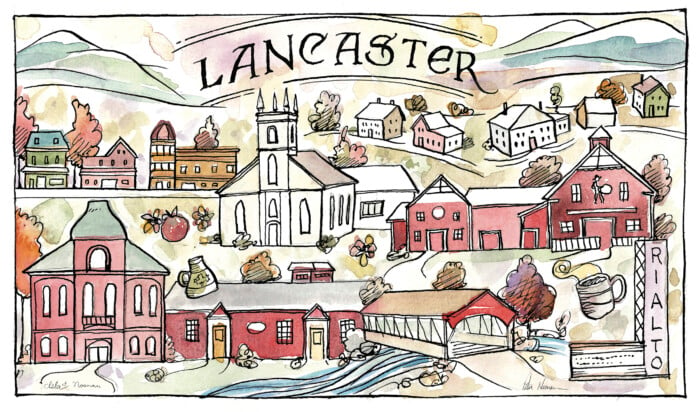
Our Town: Lancaster is the Gateway to the Great North Woods
Lancaster is home to 3,200 people, one 4,000-footer, a two-screen movie theater and the state’s northernmost bakery
Bound to the east by the Pliny and Pilot ranges of the northern White Mountains and to the west by the Connecticut River, Lancaster is the beneficiary of a choice location — home to both the northernmost movie theater and bakery in New Hampshire.
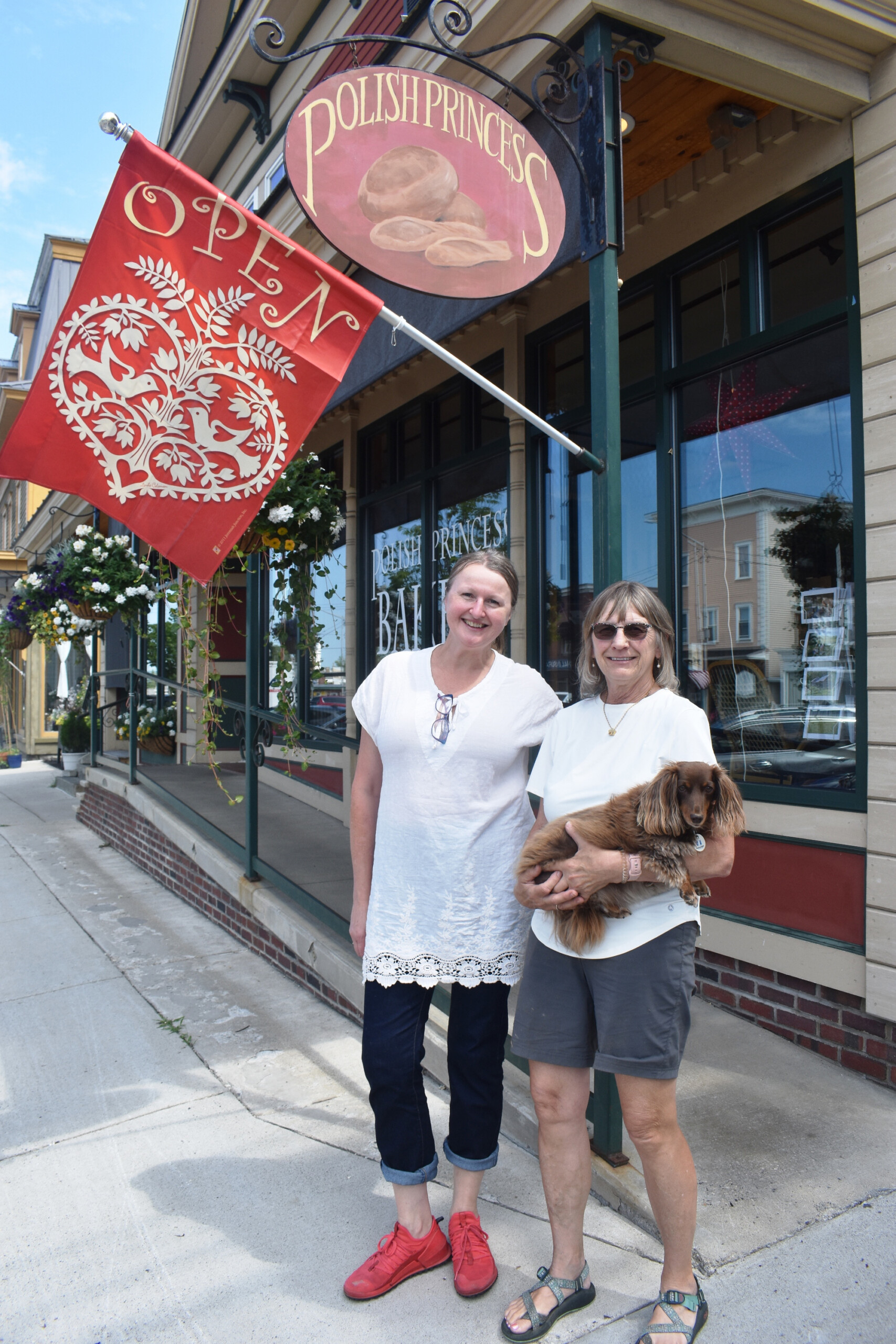
Magda Randall owns the Polish Princess Bakery. Rita Cloutier, holding her dachshund, Miss Tootsie,
owns the Rialto Theater.
It is also, like many communities in the Granite State, a place beloved by locals and those from away. These days, 3,200 people call it home.
Native-born luminaries include John Wingate Weeks, who was born near Lancaster in 1860. He became a successful banker in Boston before launching a political career that included serving as a U.S. senator and secretary of war.
Other transplants include successful painter and “Marlboro Man” Edward Widmayer, who moved to town in 1977. You can still find some of his works at an art gallery in town.
Lancaster hosts what is believed to be the largest privately-owned snowmobile museum in the U.S. and Canada. Every September, since 1902, the town has held the Lancaster Fair. The seat of Coos County and a destination in itself, the town is a through point to the Great North Woods and home to Mount Cabot, one of the state’s 48 4,000-footers.
In 1895, Parker Jewitt Noyes of Lancaster “patented the first machine for making and coating tablets in a single process, which produced 5,000 pills an hour coated with sugar or chocolate,” according to a Dec. 6, 2018, article by Michael Kitch in NH Business Review, a publication of Yankee Publishing.
William “Bill” Rugh, of Pittsburgh, Penn., moved to Lancaster in 1971 to be with the woman he loved. That relationship didn’t work out, but Rugh, the current owner of Williams Rugh Gallery on Main Street, has resided here ever since.
Rugh has no formal art training, but in college, he bought some prints that later turned out to be valuable. He also lucked out: While he was the service manager at North Country Ford in Lancaster, he met a customer who changed his life: Edward Widmayer.
A graduate of the prestigious Pratt Institute in Brooklyn, New York, Widmayer was a successful Madison Avenue ad man. From 1959 through 1968, he also appeared in many ads for Marlboro cigarettes as one of the many “Marlboro men” who pitched the smokes.
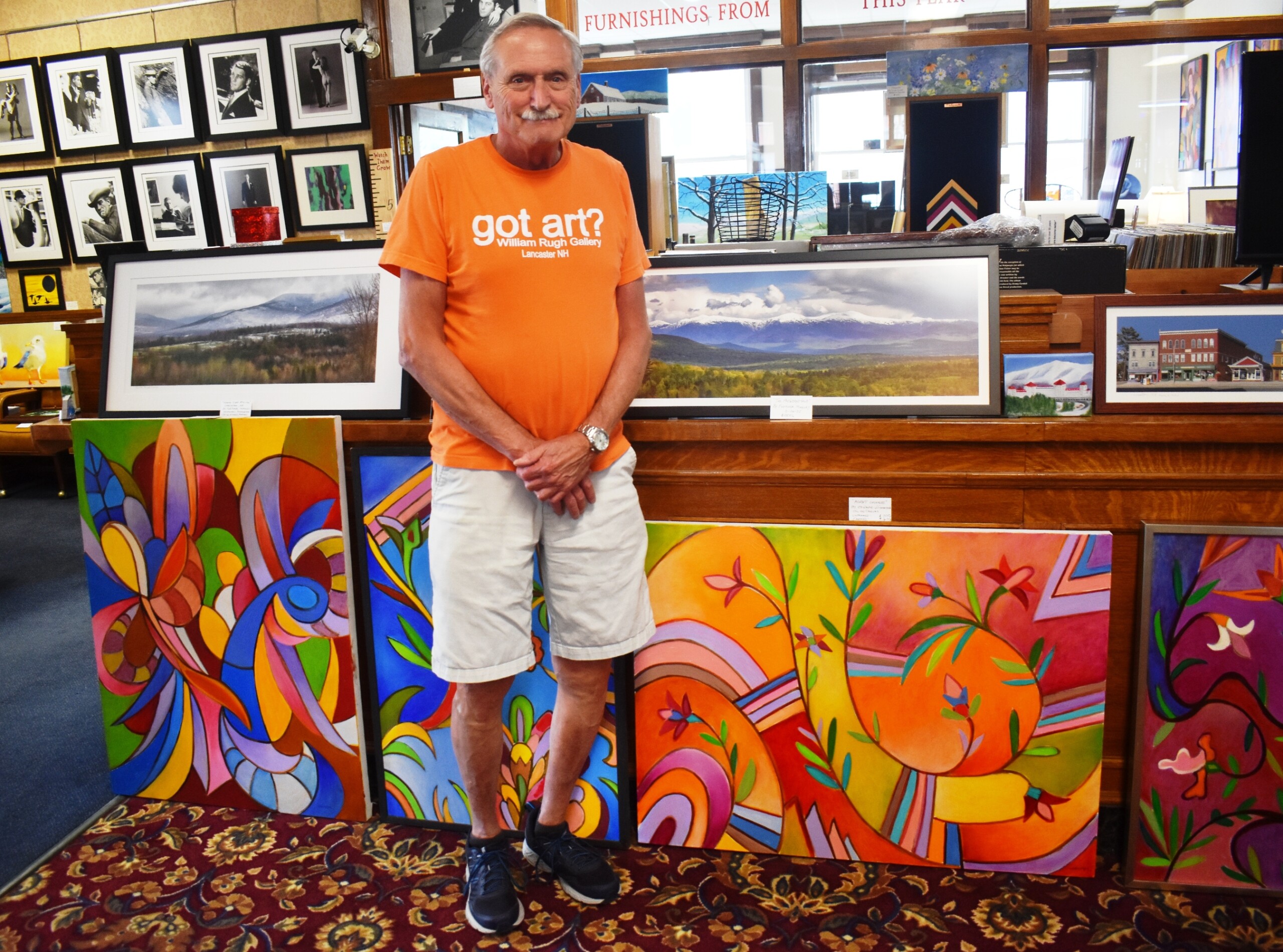
Art gallery owner Bill Rugh stands near brightly colored paintings by local icon Ed Widmayer, who died in 2010.
Back then, Marlboro men “were as common as the Lassie dogs,” Rugh notes. More significant was that Widmayer, who died in 2010, lived and painted in Lancaster. Many of Widmayer’s paintings were for sale at Rugh’s gallery on the first floor of the former Lancaster National Bank. Of the 93 artists in all mediums on display at the gallery, Widmayer is Rugh’s favorite, he says.
“I’ve told this to a thousand people, but he (Widmayer) is the best artist this gallery will ever see,” Rugh says.
Lancaster needs more retail stores, says Rugh, noting the town once tried to lure an Applebee’s but didn’t have enough daily traffic. Nonetheless, the town has a lot going for it, despite the long winters, Rugh says.
“It’s beautiful country here, a slice of God’s country, and we have a two-screen movie theater,” Rugh says. “How many towns have a movie theater?”
Weeks, who died at 66, is one of Lancaster’s best-known native sons. He lived at a sprawling estate of more than 400 acres atop Prospect Mountain that offered views of the Presidential Range of the White Mountains, the Green Mountains of Vermont and the Connecticut River Valley. The estate was given to the state of New Hampshire in 1941 by Weeks’ children.
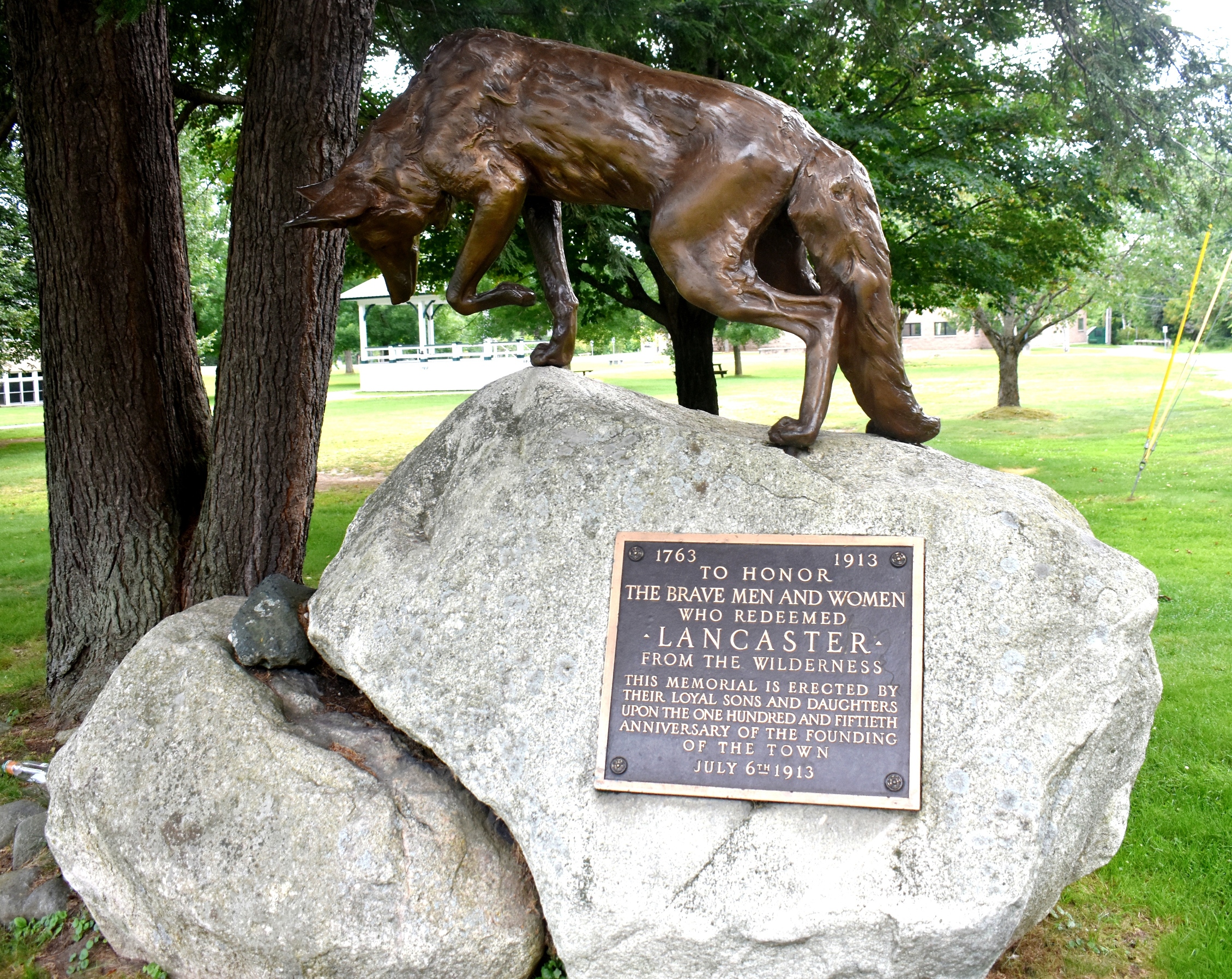
A wolf sculpture on the town green celebrates the 150th anniversary of Lancaster’s 1763 founding.
Weeks served as a U.S. representative and a senator from Massachusetts. As a congressman, he successfully introduced legislation that was signed into law in 1911 by then-President William Howard Taft that has since become known as the Weeks Act, considered by some to be “one of the most important pieces of environmental legislation in American history,” according to the U.S. Department of Agriculture.
The Act allowed the federal government to purchase land to protect the headwaters of rivers in the eastern part of the country and later, in the west, too. The White Mountain National Forest, which is almost entirely within New Hampshire, is a direct benefit of the Weeks Act.
While Rugh and Widmayer are some of Lancaster’s best-known residents from “away,” so are Magdalena “Magda” Randall and Rita Cloutier.
Randall, a native of Lodz, Poland, arrived in the U.S. on April, 11, 2003, “with a one-way ticket, a suitcase and $500.” Lancaster was her third and final home in America, after Marlboro, Mass., and Lyndonville, Vt. Randall came to Lancaster to meet a man named Herb whom she’d gotten to know online and who later became her husband.
“I fell in love with this town, the downtown and the setting between the mountains and valley,” Randall says. While she already had plans to open her own bakery, she says the late Greg Cloutier helped her clinch that goal.
A native of Northumberland, a town immediately north of Lancaster, Greg Cloutier owned several hydroelectric dams in New Hampshire and elsewhere. After selling the dams, Cloutier bought properties in downtown Lancaster, including the Rialto Theater, which his widow, Rita, now owns.
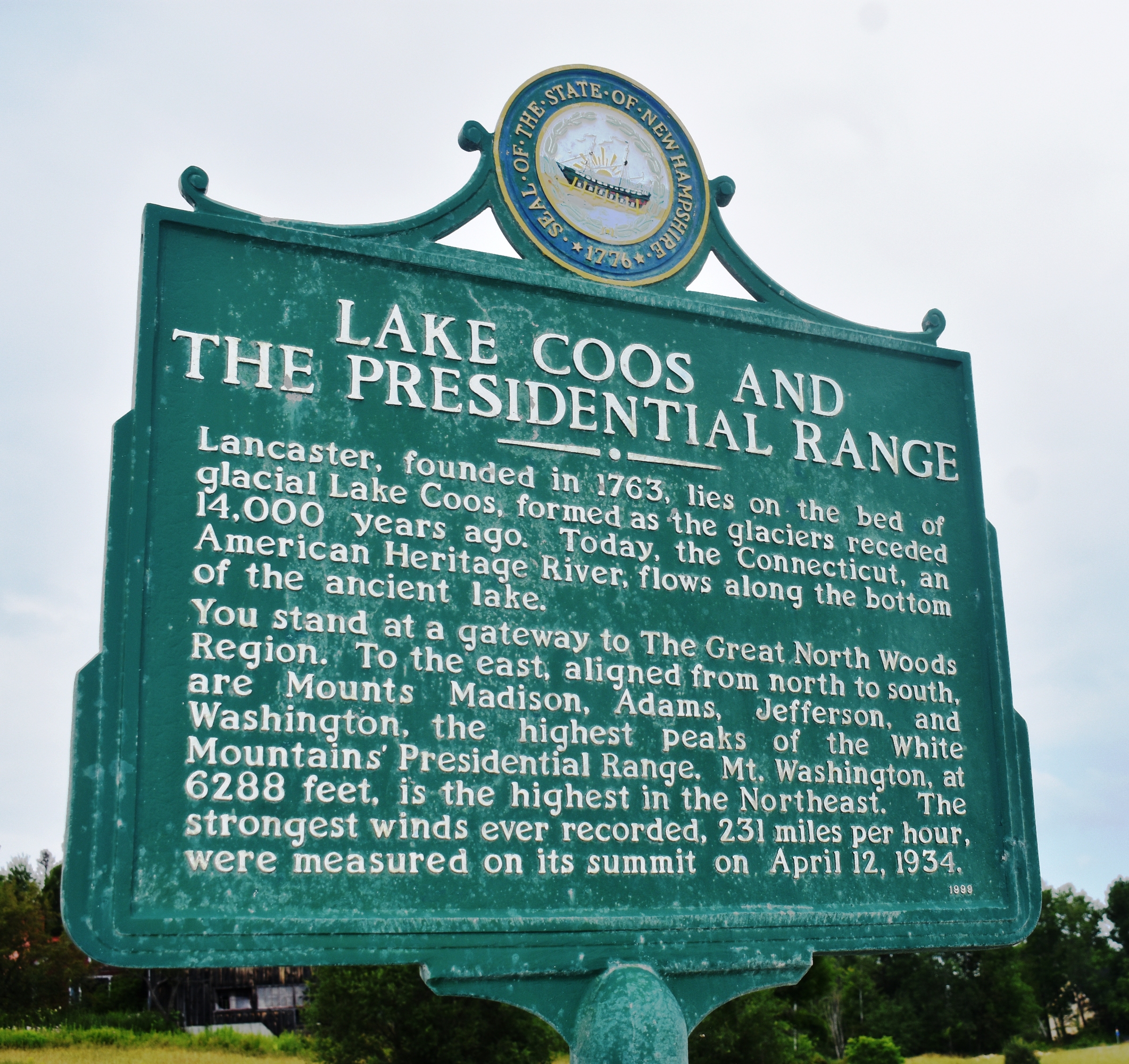
A state historical marker touts Lancaster’s status as the gateway to the Great North Woods.
Unhappy by the prospect of looking at a fire-damaged building across from the Rialto, Greg Cloutier purchased it from the town and fixed it up. Randall’s business, Polish Princess Bakery, has been there since 2015; Randall also owns the building.
Randall says the bakery’s name was inspired by the legend on a T-shirt her husband once gave her for Mother’s Day.
She recalls Greg Cloutier telling her that “I want to have businesses that bring people downtown.”
Business has been extremely good, Randall says, adding that, ironically, the COVID-19 pandemic helped her bottom line because many of Lancaster’s seasonal residents became permanent ones.
“We make everything from scratch,” she says, adding that her typical day starts at 4 a.m.
In a small town in northern New Hampshire, Randall says she is proud to offer her employees a paid vacation, sick leave and a retirement match. Her bakery is a popular meeting spot. One regular is Rita Cloutier, with Miss Tootsie, her longhaired dachshund in tow.
Like the Polish Princess Bakery, Cloutier says the Rialto has been successful. She credited much of that success to the theater’s manager and her business partner, David Fuller, who, when COVID temporarily shuttered movie houses, sold popcorn outside the Rialto and also rented its marquee to the public to share birthday wishes and condolences.
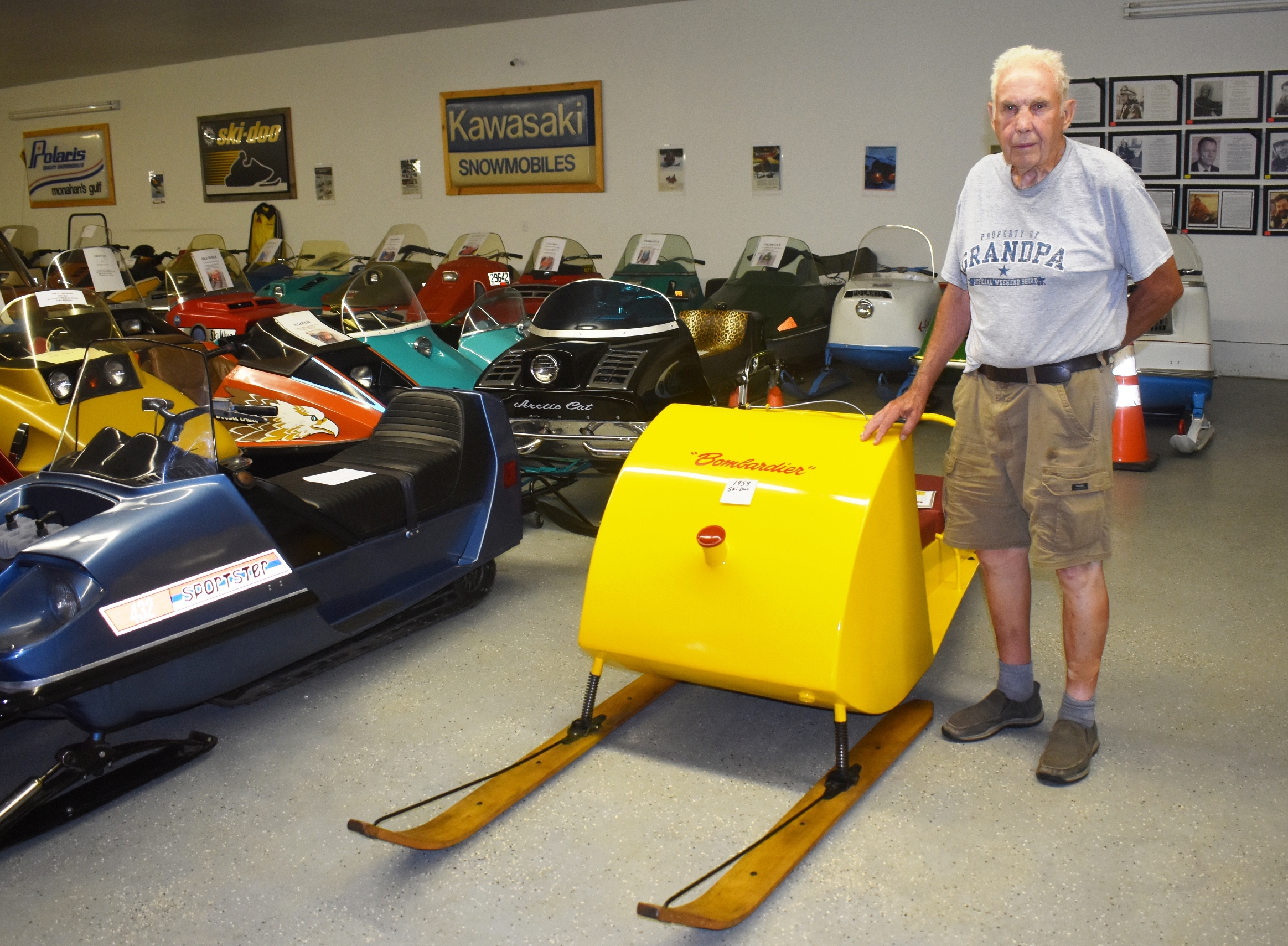
Paul Crane, who grew up in Lancaster, co-owns P&R Excavating with his son. The business is a short distance from Crane’s snowmobile museum.
In 2015, in a display of the best of Yankee ingenuity, Cloutier and her husband expanded the Rialto, but just a little bit.
Movie companies require that theaters show a movie for up to four weeks before a new movie can replace it, Cloutier explains. But now, she says the first movie can be shifted onto the smaller screen while a new movie is put on the big screen.
Randall thinks Lancaster “is in a good spot and in a better place than when I moved here.” People “have discovered northern New Hampshire,” she says, and they realized that the region is “not just the White Mountains and North Conway,” which is a great community that serves many visitors and offers the full array of outdoor activities, shopping
and dining.
By contrast, in Lancaster, people “come here for peace,” Randall says.
Some people also come to see Crane’s Snowmobile Museum, which is about a half-mile north of the Rialto and the bakery, and is home to the Eastern Snowmobile Racing Hall of Fame. The museum has almost 160 different snowmobiles, including a 1926 Ford Model T equipped with rear tracks and front skis.
Paul Crane, 87, who grew up in Lancaster, says the town has a long heritage of snowmobile racing and plays an important role in the history of snowmobiles, specifically the Ski-Doo.
Bombardier, a Canadian company that sold logging equipment in the Lancaster area for decades, introduced the Ski-Doo snowmobile in 1959; Crane says he was the first person to ride the prototype at the Bombardier factory and the first to ride it in the U.S. — in Lancaster.
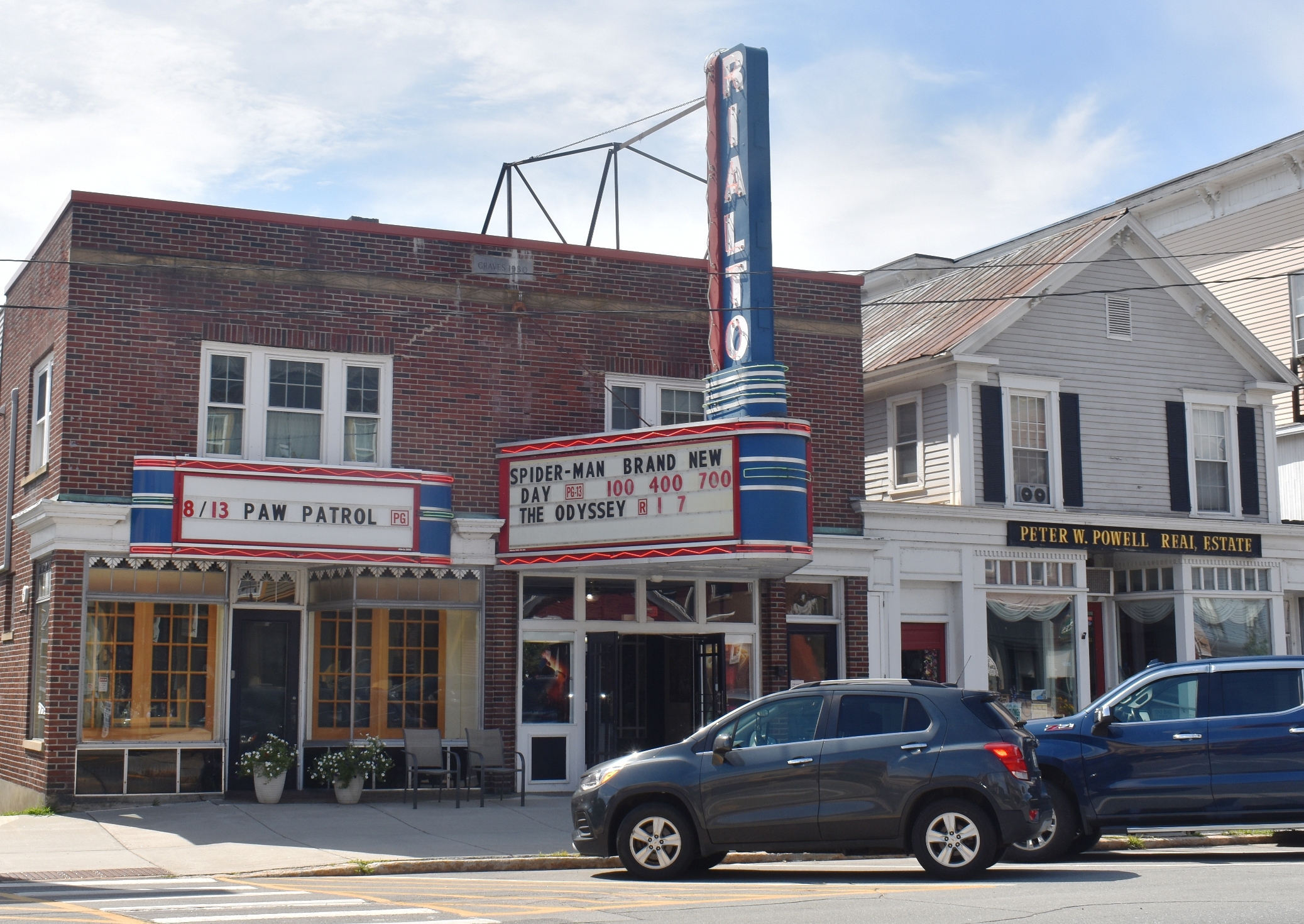
The two-screen Rialto Theatre is owned by Rita Cloutier, whose late husband, Greg, bought the theater and some other downtown properties.
“I’ve always wanted to have a museum,” full of snowmobiles,” says Crane, who, with his son Robert, owns and operates
P & R Excavating, a short distance from the museum.
Lancaster has and always will be Crane’s home, he says. His late father, also named Robert Crane, had an insurance business here, he says, adding that before he got his own place, a newcomer by the name of Ed Widmayer rented a room in his parent’s home.
Those connections are important.
“And all of my friends are here,” Crane says.
Cloutier credits her husband for helping transform Lancaster.
“Greg was the one with the vision and I was just his support,” she says. The Cloutiers moved from Jefferson to Lancaster in 1999. She and Randall are neighbors.
Crane, who is a graduate of the former Lancaster Academy, is ready to welcome visitors to his museum.
“I’ve got a lot of sleds here that people have never seen,” he says.