Our Town: Bristol is a Place Called ‘Home, Home’
Bristol is a lake town that keeps calling people back
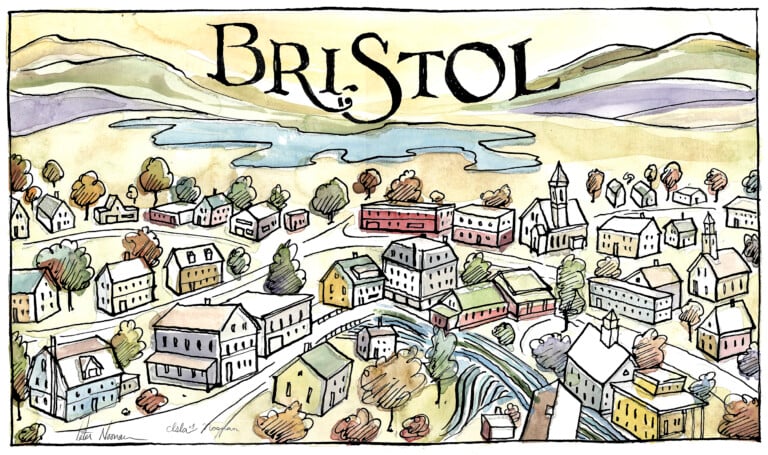
For Joe Denning, Bristol is “home home,” the Lakes Region town he loved as a youth and where he
returned years later after his wife died.
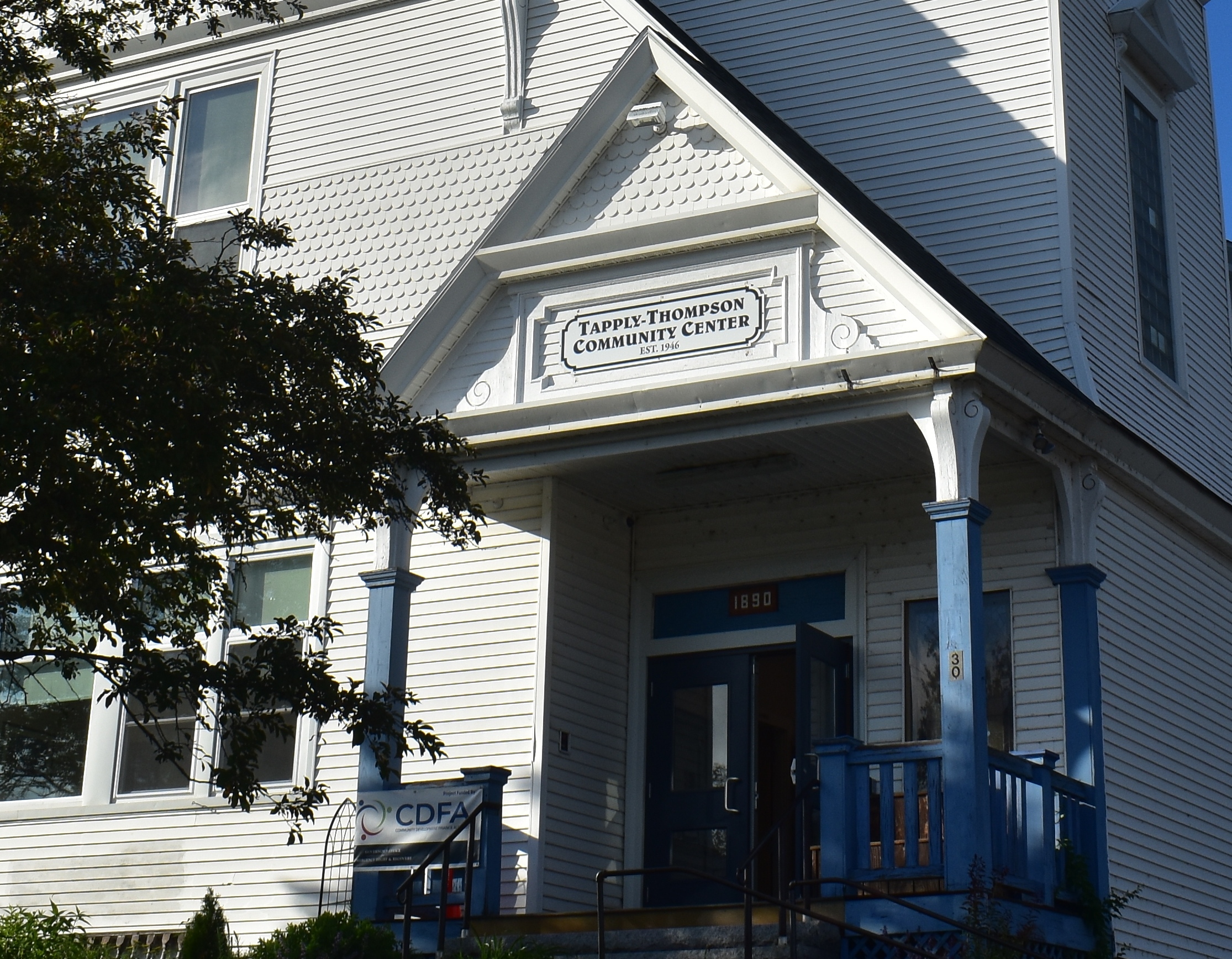
The Tapply-Thompson Community Center at 30 N. Main St. is the heart of the community in Bristol.
The town is blessed to be at the foot of Newfound Lake, one of the most pristine lakes anywhere, says Denning, a self-described “street kid from South Boston” who first moved to Bristol when he was 12.
The former Bristol selectman — a once and current Bristol resident — was a longtime special education teacher and author. His autobiography tells how Bristol accepted the newcomer and made sure he prospered there.
“Anything that’s been good that has happened to me has come from Bristol,” said Denning, 84.
First on that list, he placed his late wife, Paula Westfall Denning, who died from brain cancer on May 11, 2024. At the time of her death, she and Joe had been married for 62 years. They raised three children and had six grandchildren.
Paula taught Joe how to play tennis well, he recalled. When she died, they had been living in Charlotte, N.C. Recently, Denning moved back to Bristol and now lives with his daughter, Debbie.
They reside on North Main Street, across from Kelley Park, the green heart of the downtown and a short walk from the Tapply-Thompson Community Center. Known as the TTCC, the center was significant in Denning’s upbringing and continues to be important in the lives of children and adults not only in Bristol, but throughout the larger Newfound region.
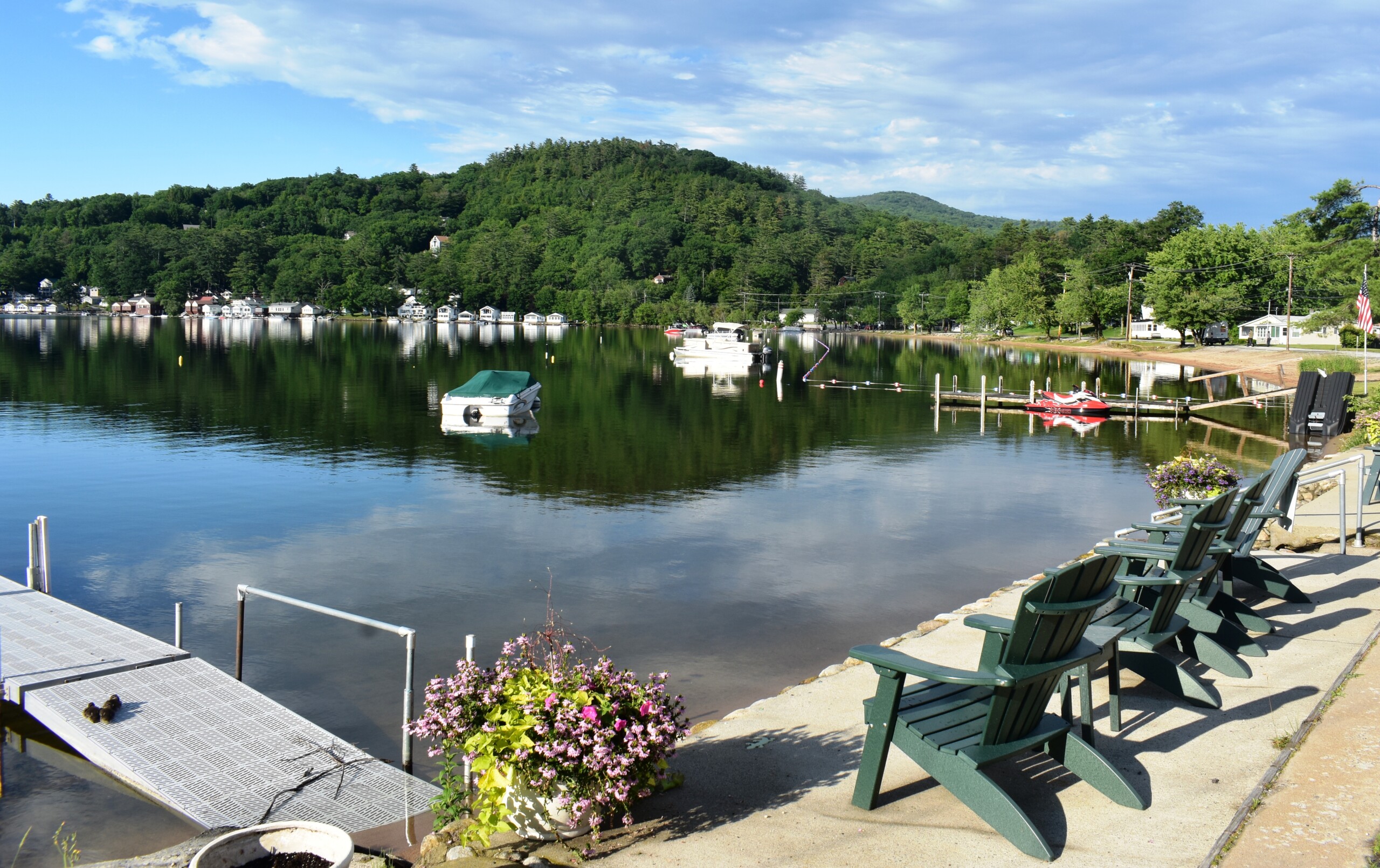
Private docks along Shore Drive in Bristol on Newfound Lake. Just to the east, to the right, is the municipal Avery-Crouse Town Beach.
Bristol can thank the late Wink Tapply for one of the town’s longtime Christmas traditions.
Tapply — one of the first municipal recreation directors in New Hampshire — borrowed an idea he heard about in the Midwest where every child gets a free Christmas gift and brought it to Bristol, where it is known as Santa’s Village. In turn, his son carried that tradition to Laconia, where Christmas Village has been a popular seasonal event since 1975.
A while back, Bristol lost its only pharmacy, but it still has a moderately-sized Hannaford grocery store that’s open year-round, as well as Shackett’s supermarket, which has operated seasonally near the lake since 1945.
There have been some changes on the dining scene in Bristol, but Gilly’s on Lake Street continues to serve up breakfast and lunch, and The Big Catch on Shore Drive, across from the lake, still reels them in for its seafood offerings.
Gina’s Place, the Bristol Diner and the Purple Pit Coffee Lounge bring folks into the downtown, while The Homestead on Route 104 remains the place for steaks and cocktails.
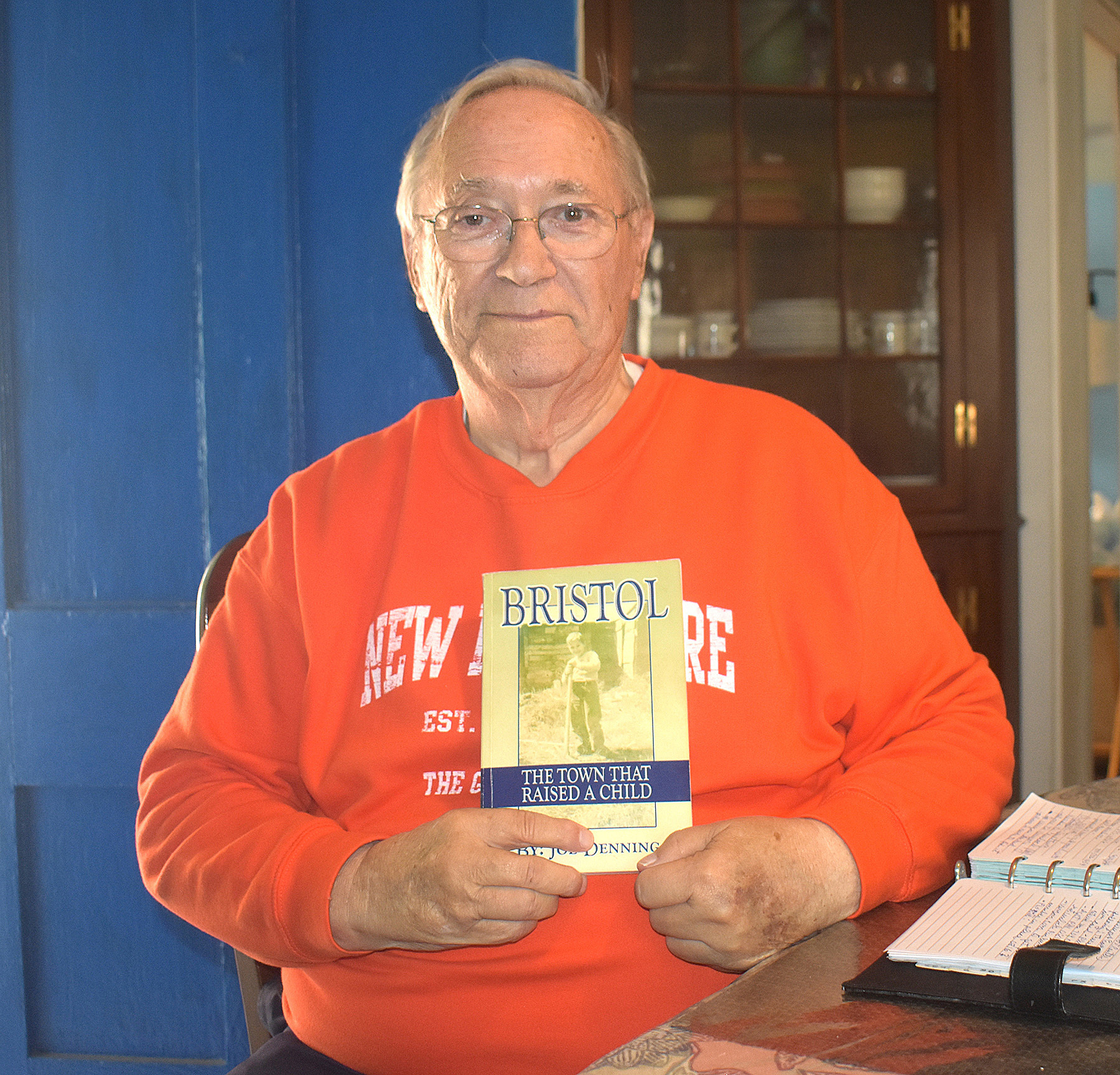
Longtime Bristol resident and former selectman Joe Denning wrote a book about growing up there.
More recently, Cielito Mexican Restaurant has brought an international flavor to Bristol. It has been joined by Odysea Coffee Roasters, which features coffee made from beans grown in Honduras.
And as Denning points out, “We have Newfound Lake and rivers, and places to hike, such as Little Round Top, aka Inspiration Point, from which you can see a long way.”
When asked why he returned to Bristol, Denning said the decision was easy and obvious: “My family’s here.”
It didn’t hurt, however, that Bristol was and is a very good place to be, not least because of its proximity to Alexandria, the town immediately northwest of Bristol. Once a week, Denning plays pool with a half-dozen former elementary school chums at Melvin Defosses’ home on Karl Gordon Road.
Defosses, his brother Roger and Denning used to lift weights at the TTCC, where Denning got his taste for tennis. As 11-year-olds, Denning remembers that he and Melvin were part of the “bucket brigade” at the TTCC, where, in lieu of heavy excavation equipment — which was eventually used — anyone who could fill and remove a bucket of sand from the basement was recruited to do so.
When asked whether Bristol has changed in the seven cumulative decades he has lived there, Denning replied, “yes and no.”
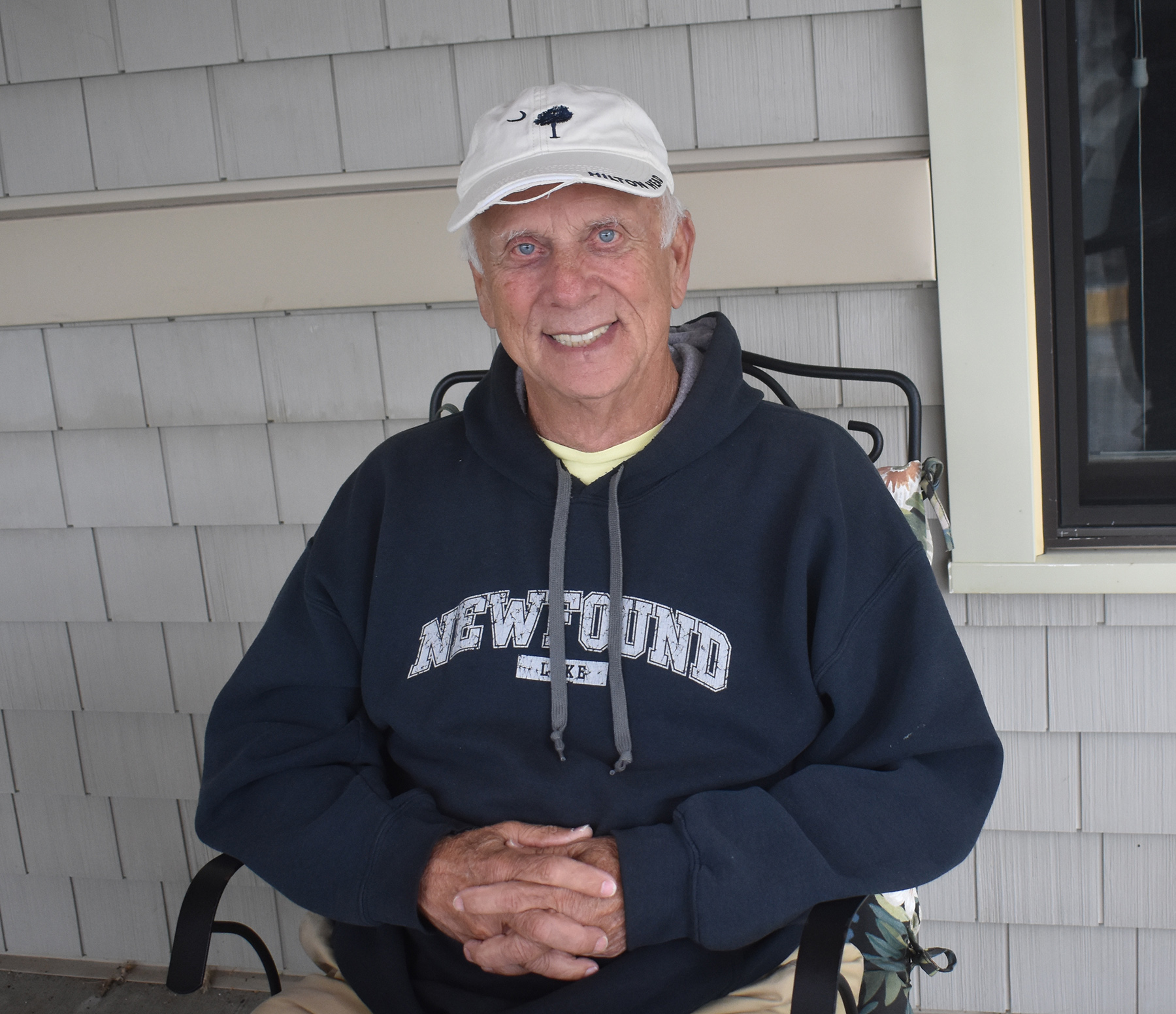
Peter Daniels, among the newer residents of Bristol, was born and raised in New Hampton, which is east of Bristol, But he went to school and participated in many activities in Bristol, and considers it to be home.
“The core is still the Central Square. There aren’t many in New Hampshire, but we have one,” he said, noting how the square was redone from the infrastructure up, in a move to make it more appealing to locals and visitors.
“Bristol looks great,” said Denning, whose enthusiasm for the place might merit him a job with the Chamber of Commerce. “It’s quaint,” he added.
“Home is home,” said Denning. “It isn’t that I didn’t enjoy being where I was,” he said in a reference to Charlotte, “but Bristol is home. Home-home.”
“It’s a good place to live and a good place to grow up in,” said Denning, which he recounted in “The Town That Raised a Child,” his 2010 book about how he learned that many people in Bristol had been committed to his success.
“I was — capital letters — fortunate — to come to Bristol, New Hampshire,” he summed up, and says it has always been “home” even when he didn’t live there.
Like Denning, Pete Daniels is a reverse snowbird, although he spent considerably more time down south than Denning.
Born in his grandmother’s house on Old Bristol Road in New Hampton, a town directly northeast of Bristol and separated from it by the Pemigewasset River, Daniels, 78, is a graduate of the Newfound Regional High School, Class of 1966. NRHS is in Bristol and serves students from several Newfound communities.
Bristol was the stomping ground for kids like himself, Daniels recalled, and, for the athletically-minded, it also had the TTCC.
After attending then-Plymouth State College for a year, when he played soccer and tennis, Daniels got married, got disenchanted, got divorced and “decided to go where the grass was greener.” Specifically, he settled on Hilton Head Island and was hired there as a teaching tennis pro.
More than a quarter-century later, after having watched Hilton Head’s population soar from 3,000 to 35,000, he retired and told friends he was going back to New Hampshire.
“That surprised everybody,” said Daniels, who, before his second, current retirement, served for several years as Bristol’s land use officer.
He lives on NH Route 3A, just north of downtown, and gets to watch car shows at the restaurant across the street.
“I grew up here. I know a lot of the kids here,” who Daniels said also went to NRHS and were regulars at the TTCC.
He said Bristol is attractive to him in part because it is small. “I guess I’m just a small-town guy,” he said.
Among Bristol’s newer residents are Benjamin Archibald and Alesha Borges, artists and principles behind Bliss NH LLC, which has decorated three buildings in the downtown with huge, colorful murals.
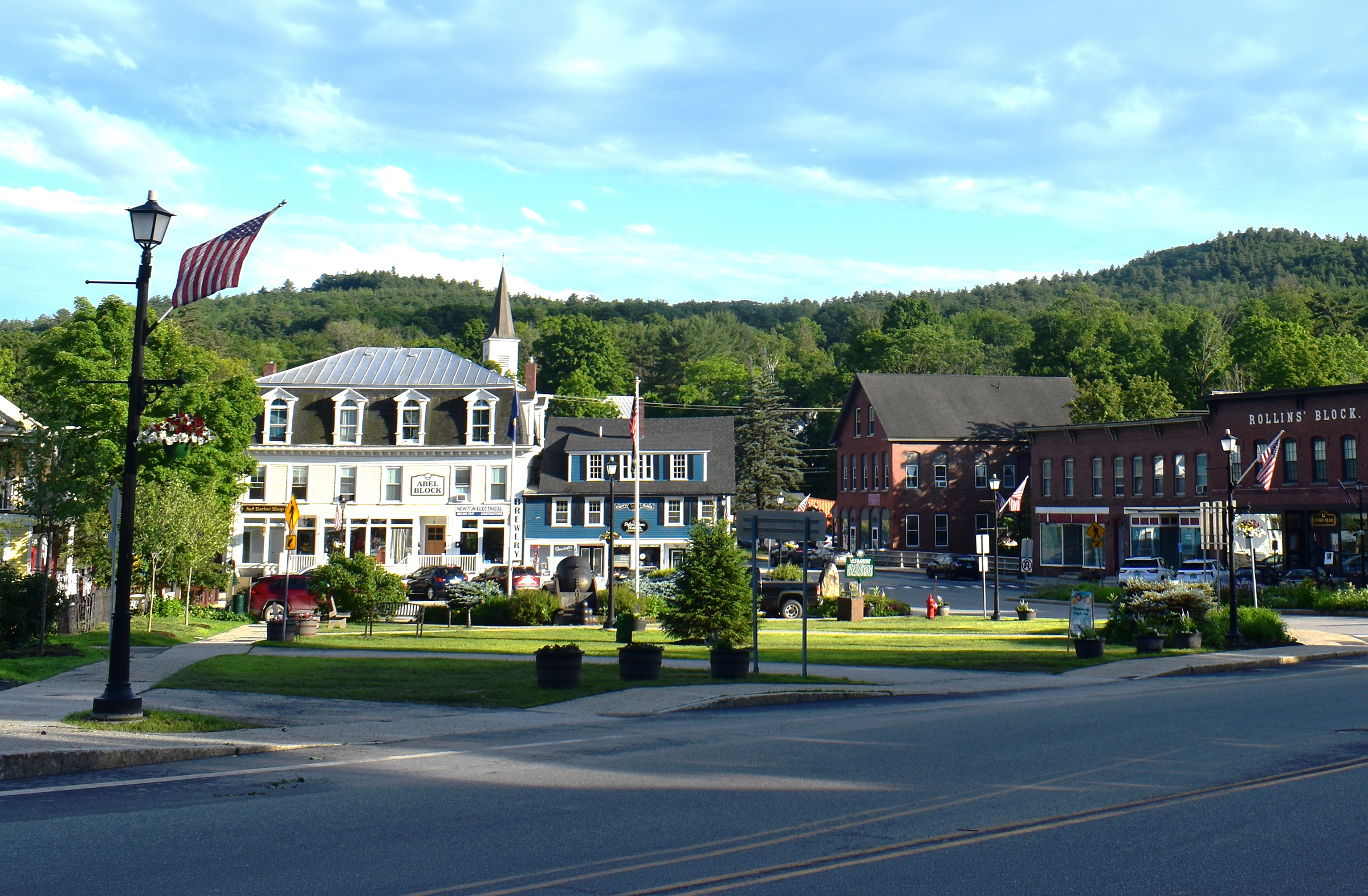
The Central Square Historic District in Bristol is a popular gathering spot for locals and tourists alike.
Archibald is a Sanbornton native, while Borges is a transplant from Somerville, Mass., who owns a laundromat in Bristol.
Together, “we create fine art, murals, teach youth art classes and facilitate collaborative community art projects that bring people together through creativity and participation,” the couple said in a joint e-mail.
Like Denning and Daniels, they say the attraction of Bristol is simple.
“Bristol is home — where our children are growing up, and where we can show them the impact one can have in their community. Creating and sharing positive experiences inspires others to do the same,” they said.
What makes Bristol special is the people, they said.

Alesha Borges poses with a mural that she and her partner, Benjamin Archibald, of BLISS- NH, painted on a building on Main Street in Bristol. Photo Courtesy Bliss Studios
“It has the character of a small town where relationships matter, where neighbors know one another, and where individuals genuinely invest in the success of their community, working together to get through the seasonal changes, which seem to come faster every year,” they said.
The natural beauty of Newfound Lake and the surrounding landscape inspires their art, but the town’s sense of connection and shared pride makes it a place where they want to create.
“We believe art can strengthen community identity, spark conversations, and help people see value in both their own stories and the stories of those around them,” they said.