Wellness Gives You the Opportunity to Begin Again
Taking care of yourself is more than just going to the gym
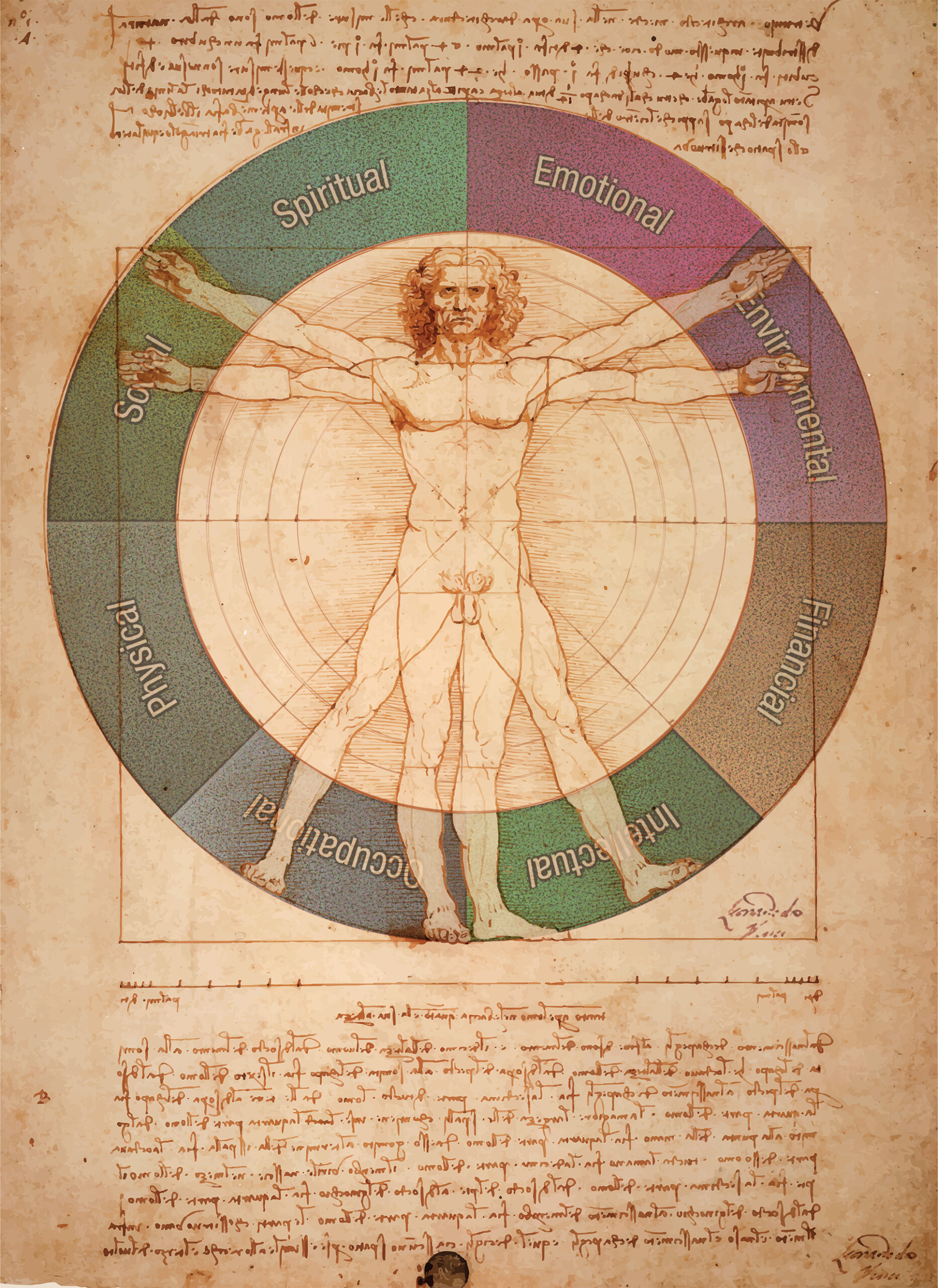
Illustration by John R. Goodwin
After Anchit Arora began his doctoral studies in nuclear physics, he quickly discovered that his greatest challenge was giving himself permission to recharge.
Arora, who is 33 and originally from India, has spent the last nine years in the United States earning degrees — first in Virginia, now at the University of New Hampshire. Like many high achievers, he worked long hours and pushed himself, often at the expense of sleep, diet and exercise.
Eventually, he reached a breaking point. The switch from mechanical engineering to nuclear physics was tough, and adjusting to a new culture added to the challenge. To cope with stress, Arora started exercising again, but he still felt something was missing.
“I started working out again and realized that it made a huge difference in my wellbeing,” he says. “That made me think, like, could there be a mental equivalent of that?”
That question eventually led him to Living Well Services at the University of New Hampshire, where he met Dawn Zitney, a board-certified wellness coach. Zitney also owns Begin Again Wellness, where she offers personalized wellness coaching, retreats and employee wellness workshops.
Living Well Services’ wellness coaching is different from traditional therapy. Wellness coaches do not diagnose or treat mental illnesses such as anxiety or depression. Instead, they help students build healthy habits for studying, sleep and exercise. Students also learn ways to manage chronic illness and improve their relationships.
Arora’s conversations with Zitney led him to explore hiking, spending time in nature, medication, journaling and finding a like-minded community. These activities directly affected his professional and personal life. He noticed he no longer shook before presentations, and he began to feel less guilty about putting his own needs first.
“It took me a while to really absorb it because it felt like, ‘this is not what I’m getting paid for,’ right?’ But it is actually, it helps a lot. You’re a better employee. You can work with others better. There’s less conflict, and there’s less anxiety before presentations. So, in all those ways, I feel like putting in time and well-being has definitely been worth it,” he says.
What is wellness?
Zitney says Arora’s story shows how people often misunderstand what wellness is. Even as more organizations offer workplace wellness programs, many narrow their focus to diet and exercise, which are just part of the bigger picture.
“Wellness is an active process through which people become aware of, and make choices toward, a more successful existence,” according to the National Wellness Institute. The Wellness Wheel was designed in 1976 by Dr. Bill Hettler, co-founder of the National Wellness Institute, to overall well-being.
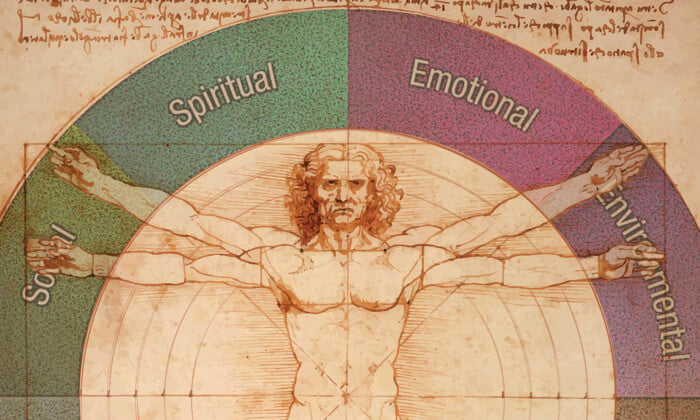
Today, the Wellness Wheel has been adapted to show the integration of eight important dimensions of wellness: emotional, financial, environmental, intellectual, occupational, physical, social and spiritual.
Using a Wellness Wheel can help people identify their core health values and goals and see the areas in which they might want to make changes, Zitney says.
“What I like about the Wellness Wheel is that it gives people a visual that helps them see that at the center of their well-being is them, and all around them are all these ways to be well,” she says. “We are a culture that focuses on our challenges or our deficits. The Wellness Wheel doesn’t ignore those things … but it helps us see both our challenges and our strengths.”
Wellness coaching doesn’t diagnose mental health conditions. Instead, it helps people move forward by helping them change their habits, set goals and reflect upon their values.
More than looking good, Zitney says there isn’t one simple answer for dealing with stress, sleeplessness or problems at home or work. Still, social media influencers often push products like supplements, beauty items, gadgets or workout plans that claim to improve well-being.
“In our culture, wellness has really become about consumerism. Like all these things you could buy to look good,” she says. “My definition of wellness that I really work from is that we are whole people. It’s not just about going to the gym — because our culture really narrows wellness down to food and body movement. It’s so much more.”
Zitney points out that social belonging, a key part of the Wellness Wheel, continues to erode as technology and social media become more common. People are more apt to talk over Zoom or connect on social media instead of at a class or local coffee shop. At the same time, social media shows people a steady stream of polished lives and wellness tips, along with a lot of misinformation.
“It’s really hard even for someone who’s in the field and knows all the misinformation,” she says. “We need to start teaching our young people more — and us too — critical thinking.”
Even if you try to keep your life balanced, you can’t expect things to be perfect. People lose jobs, go through divorces, or have a hard time adjusting to an empty nest or retirement. Some work for years toward a goal, only to find something is still missing. Wellness isn’t about acting like everything is OK. Zitney says it’s about reconnecting with what matters to you.
“The cultural value is the American dream,” she says. “Like we’ve made it if we have a car, we’re married and we have the nuclear family. But we could have all those things and maybe they aren’t connected with our value system.”
Instead, finding your own path to wellness means thinking about questions that help you figure out your core values. For example, you might ask yourself, “What gives your life meaning?” Zitney says your answers will be personal and can change over time.
“If you are living your best life, and you are thriving in all areas of your wellness, what would your life look like?” she says. “What would you be doing more of? What would you be doing less of?”
Reflecting on the reset
For Arora, academics and wellness activities used to compete with each other. He worried that if he made too much time for self-care, others might think he wasn’t serious enough about pursuing his academic goals. As he began experimenting with activities that supported his wellness, he found himself surrounded by people who quietly practiced many of the same habits.
“As I started getting into that space, I started meeting more and more people who were in that space, and this world sort of opened up,” he says. “My advisor, in fact, said, ‘I pretty much try to work out at least three times a week so that my brain’s in a good state.’ ”
Guiding students toward wellness doesn’t mean they should aspire to find balance every day or fulfill every part of the Wellness Wheel. It’s about noticing progress, being kind to yourself and starting fresh when needed.
“It’s about beginning again,” Zitney says. “We’re always going to be imperfect, but how do we recognize how we’ve gotten off track with compassion and give ourselves permission to begin again?”