Healthwise: Getting High After 55
Therapeutic cannabis use climbs in NH as researcher urges caution
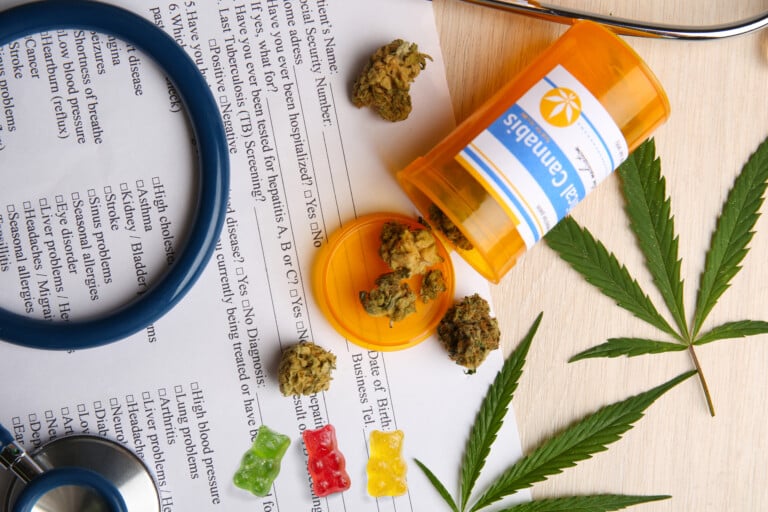
Cannabis use among older adults is rising rapidly nationwide, and New Hampshire’s most recent therapeutic cannabis data suggests the New Hampshire residents over age 56 may be following the same trend.
A 2025 analysis published in JAMA Internal Medicine found cannabis use among adults age 65 and older increased nearly 46% between 2021 and 2023. In New Hampshire, adults ages 56 to 65 represented the largest group of qualifying patients in the state’s Therapeutic Cannabis Program in both 2024 and 2025, according to state data. Adults ages 66 to 75 represented the second-largest group. Combined, data from the New Hampshire Therapeutic Cannabis program shows that just over 7,500 qualifying patients in 2025 were age 56 to 75, up nearly 12% from about 6,700 the previous year.
According to the New Hampshire Department of Health and Human Services, all age groups saw increased participation in the state’s Therapeutic Cannabis Program between 2024 and 2025. The total number of qualifying adult patients in 2025 was 16,838, up 14.6% from 14,698 in 2024.
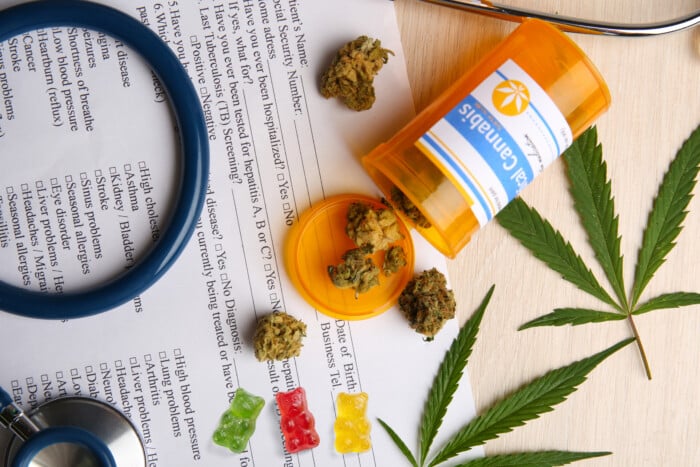
Cannabis is not legal for recreational use in New Hampshire. Residents must get certified by a health care provider under one of the program’s qualifying conditions, which could include Parkinson’s disease, Alzheimer’s disease, cancer, multiple sclerosis, chronic pain, severe pain, severe muscle spasms and wasting syndrome. Patients may also qualify through combinations of qualifying diagnoses and symptoms, found on the state website.
“Health care providers certify patients for participation in the DHHS Therapeutic Cannabis Program for a number of qualifying medical conditions,” DHHS said in a statement. “A patient must be diagnosed with a stand-alone medical condition or a combination of a qualifying diagnosis and a qualifying symptom.”
At the same time, health care provider participation in the program has expanded, offering residents increased access. State data shows the number of certifying physicians nearly doubled from 463 in 2016 to 861 in 2025. The number of advanced practice registered nurses, or nurse practitioners, exploded from 97 to 537 during the same period.
The Quest for Symptom Relief
As older adults turn to cannabis products that include the psychoactive ingredient THC for relief, they should pay close attention to dosing, potential medication interactions and any longer-term cognitive effects, according to Dr. Alan Budney, a professor of psychiatry and biomedical data science at Dartmouth’s Geisel School of Medicine.
“In my book, this is a sad movement of cannabis, medical cannabis, in that we’ve kind of told everybody that cannabis can be good for these things, and we’ve made it easily available,” he says. “And so, people are trying it. You can’t blame them for trying it because they’re suffering from different illnesses or different symptoms that our medical system can treat, but not that well.”
A clinical psychologist and long-time cannabis researcher, Budney has spent decades studying cannabis use disorder, withdrawal and patterns of use. While much of his work has focused on addiction and treatment, he says using cannabis for medical symptoms has become a major discussion.
“Symptom relief is important because people are suffering. They want their symptoms relieved,” he says. “And if you can provide symptom relief without consequences, bad side effects, then what the heck, right? So that’s the question with cannabis. Does it really provide symptom relief for Parkinson’s or Alzheimer’s, and is it safe? And in my mind, the answer certainly for this older group is there’s a lot of risk and a lot of unknowns.”
For example, more than 1,000 New Hampshire residents were approved for medical cannabis use in 2025 for “moderate to severe insomnia,” yet health claims linking cannabis to better sleep don’t mesh with the science, Budney says. Cannabis products may help you fall asleep easier, but they will not help you stay asleep, and it actually interrupts the quality of your sleep. That contradiction often appeared in patient surveys responses he’s collected throughout his research.
“(They say) it helps me with sleep,” hesays. “But then you ask, what does it hurt you with? They say sleep,” he says.
Not all Cannabis Compounds are Created Equal
One of his biggest concerns is that many people fail to distinguish between THC — the compound in cannabis that causes intoxication — and CBD, a non-intoxicating cannabis compound commonly marketed for wellness and sleep. (In New Hampshire, hemp-derived CBD products must contain no more than 0.3% Delta-9 THC by dry weight to be legal under both federal and state hemp laws. You do not need to be part of the New Hampshire Therapeutic Cannabis Program to purchase CBD products, which are sold in wellness and retail stores — in addition to dispensaries. However, CBD is not FDA-approved for sleep or other conditions.
“Most people just say cannabis or marijuana, and that could be CBD, THC. It’s usually a combination of all of those,” Budney said. “So isolating THC vs CBD is an important first step when you try to talk about this.”
Both THC and CBD can pose risks. When ingesting THC, older adults should be careful to avoid falls. They can also experience changes in perception, which could include making mistakes taking other medicines. While scientists have not conclusively shown THC causes dementia, significant questions remain about how long-term THC use may affect aging brains. And CBD, although technically legal, can also interact with prescription medications seniors may be taking.
“We know very clearly that CBD can mess with your metabolism through a certain enzyme that it affects,” he says. “So, you’re taking CBD for something, and you’re taking medications for something else — you’ve got to be careful.”
Buyer Be Aware
Even though a doctor, physician assistant or nurse practitioner certifies patients, therapeutic cannabis exists outside the framework patients associate with traditional prescription medications. It can even be challenging to find a doctor who will certify you in the first place. According to application language on the state website, “There is not a public
list of medical providers who participate in the Program. The Program cannot refer you to a provider. You must work with your
current providers or develop a relationship with a new provider to become certified.”
That leaves it up to patients to find a health care provider to certify them, apply to the state for a medical card, and then find and work with a state-approved cannabis dispensary to obtain the best strain, dosage, and method of ingestion.
“Health care providers do not prescribe therapeutic cannabis; rather, providers certify patients to participate in the program to address a qualifying medical condition or qualifying diagnosis and symptom,” DHHS confirmed in a statement.
Budney says this structure forces many patients to navigate products and dosing on their own. The commercial nature of cannabis purchases can make it difficult for consumers to evaluate safety or effectiveness, too.
“Although there’s some little language that happens in the state regulations, mostly it says, ‘yes, approved for this, approved for that.’ It just never says what you should take, how much you should take, how long you should take it for. You basically, you go to the candy store,” he says. “And the candy store has all these different products. You can smoke them, you can eat them, you can drink them. They have THC and CBD. They have combinations. They have names that are attached to them, advertising names. They have claims written below them of what they could help you (with) … there’s no FDA, because it’s not approved for anything.”
Despite his concerns, Budney doesn’t oppose cannabis legalization.
“I’m not an anti-cannabis guy,” he says. “I’m all for legalization. I’m just not for the therapeutic legalization.”
However, he does support cannabis for people with severe symptoms or those nearing the end of life.
“I had an uncle who was dying of cancer and had pain,” Budney says. “I was like, you know, it’s worth a try. You can see if it provides some relief. Some people say it does, other people hate it.”
But for older adults generally, Budney urges caution.
“You can’t afford to fall. Things break very easily and you can’t afford to get confused while you’re driving or trying to get to wherever you’re trying to go,” he says. “The risks in my mind outweigh the potential benefits, because the benefits are all mostly potential, and the risks are pretty well known.”