WDYK: The Penance of Billy Brown
Often described as a hermit, Billy lived alone, preferring the companionship of farm animals over that of humans, but he was not entirely averse to people.
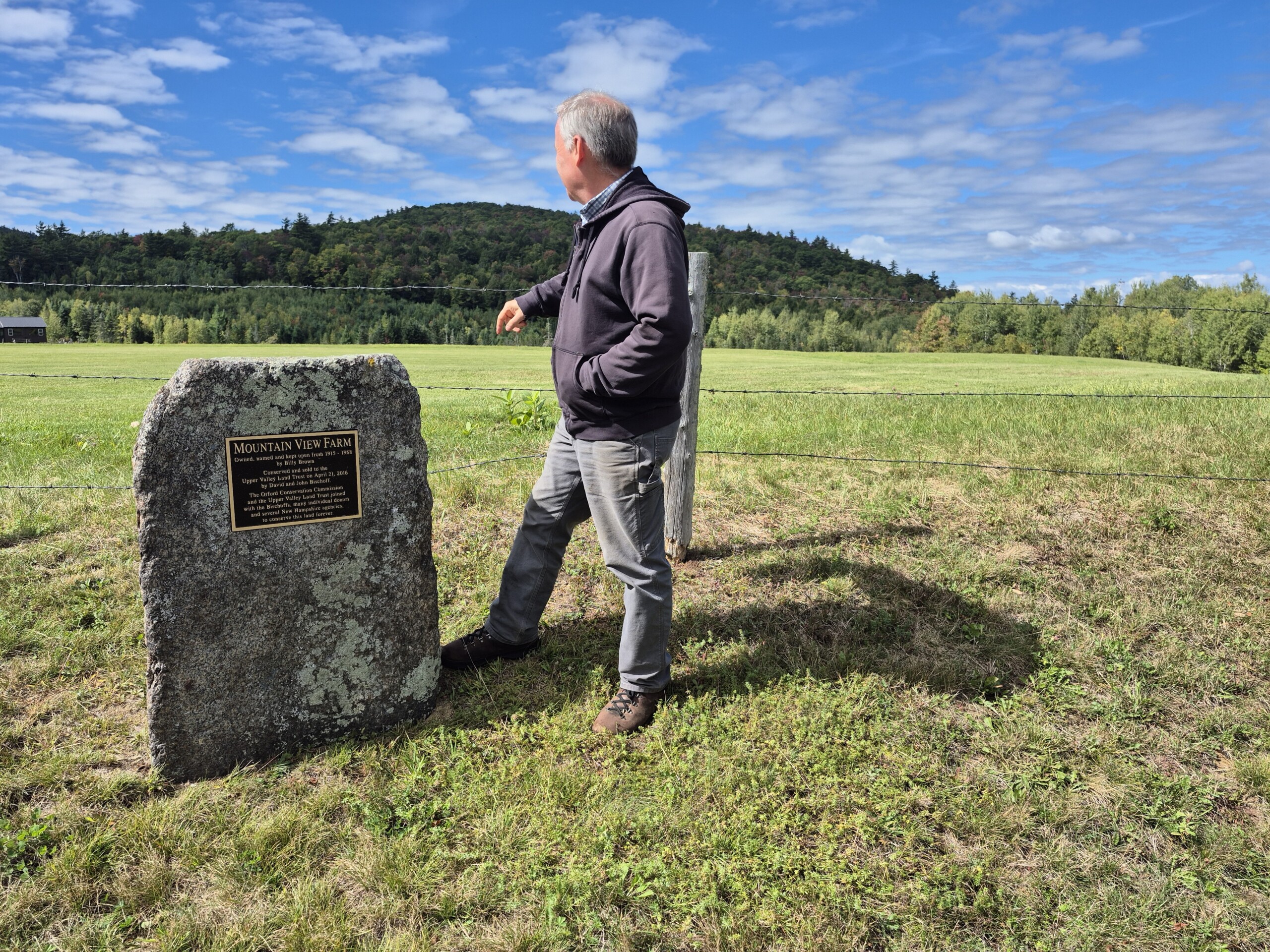
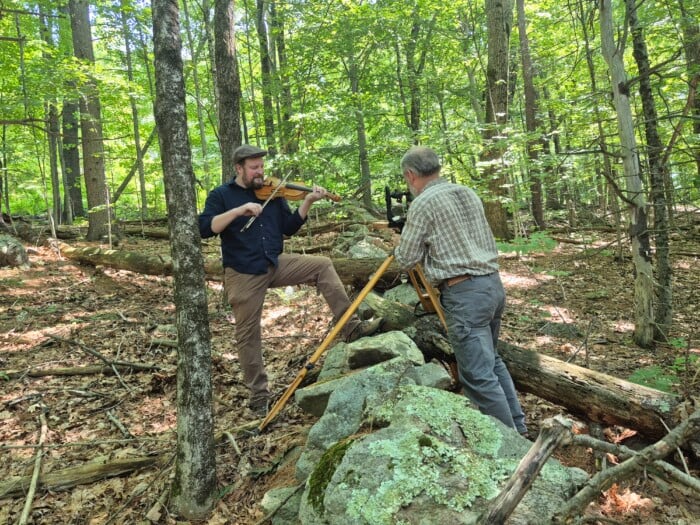
Marshall Hudson at Billy Brown’s monument wondering if the hermit was ever lonely out here.
I’m reading a brass plaque bolted to a rock on a remote isolated hilltop near the end of a dirt road in “Quinttown.” Once a thriving farming settlement, Quinttown now is a largely forgotten corner of Orford.
The plaque informs me this is where “Billy Brown” chose to live out a mostly solitary life from 1915 until his death in 1968. Sources conflict, but his age at death was between 83 and 91. I’m curious about the man and his reason for living out here all those years. Fortunately, Billy Brown left a paper trail for me to follow.
Often described as a hermit, Billy lived alone, preferring the companionship of farm animals over that of humans, but he was not entirely averse to people. Billy sold produce off his farm and went into town to purchase supplies and conduct business.
Occasionally, he worked as day labor for local farmers, or for the town shoveling snow to break out roads. Billy kept a journal, and his entries indicate these human interactions were the exception and not the rule. Most days were spent working alone on his farm, spending long periods without any human contact.
He built a little dirt-floor cabin and covered the exterior with wooden shingles he milled himself. The cabin was furnished with a cot, a woodstove, an armchair and little else. Electricity and running water were unimportant to him. Later, he upgraded the cabin to include a wooden floor and dug a cellar lined with fieldstones which he gathered and stacked.
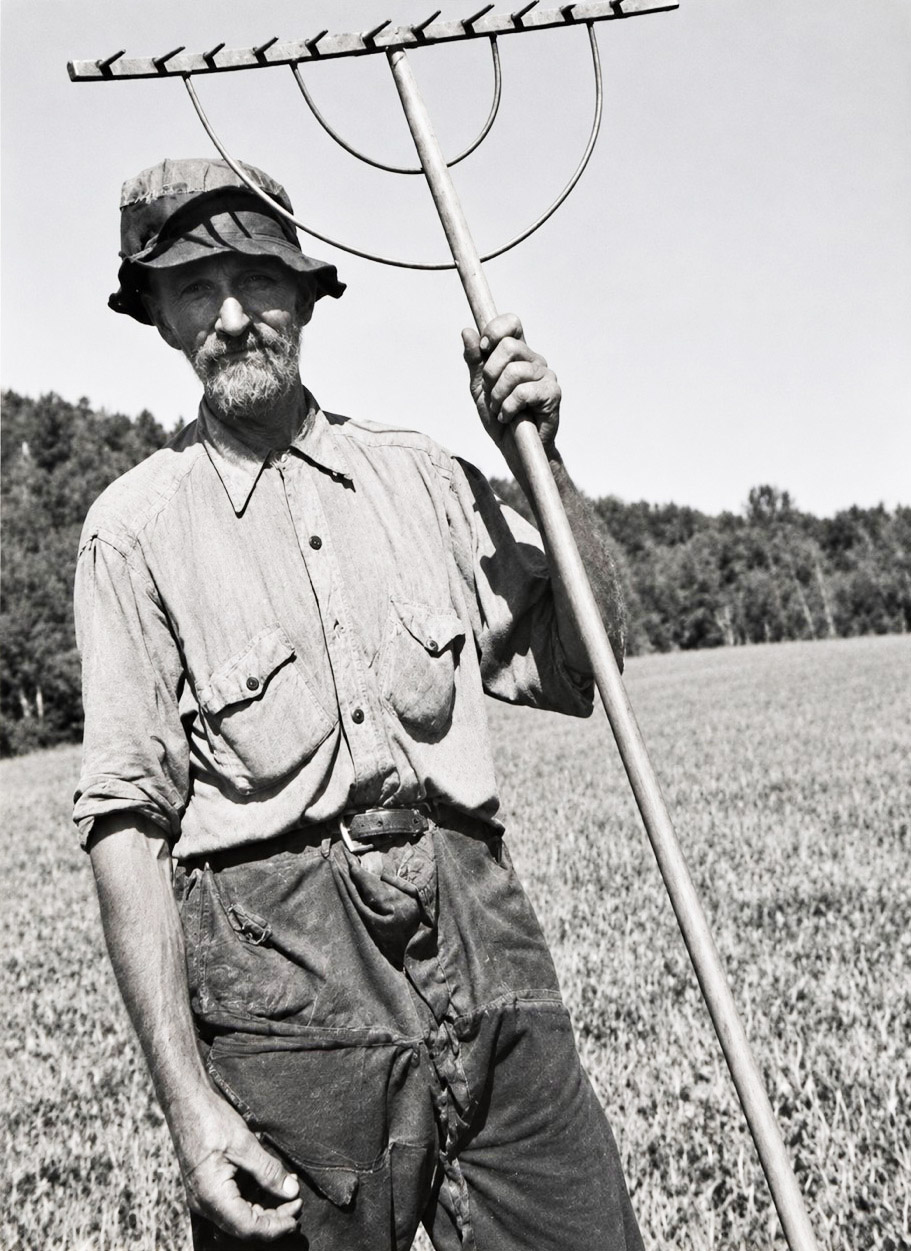
People who knew Billy Brown describe him as a hardworking, small-statured, lean man, who always wore clothes with many patches. Photo Courtesy Orford Historical Society
Billy erected a barn suitable for a few cows, a horse or two, some sheep, pigs, oxen and chickens. He also constructed a workshop with a blacksmith forge so he could repair iron equipment and shoe horses. He kept a large vegetable garden but was not much for cooking. Suppers commonly consisted of beans, potatoes and salt pork. Billy was fond of “coon meat” and canned it for suppers on cold winter nights.
Working alone, he plowed and harrowed his fields, maintained fences, cut brush, put up hay, cut firewood, tended his garden, thrashed oats, husked corn and made maple syrup. He butchered the animals he raised and occasionally sold eggs, fleece, mutton, beef, maple syrup and cordwood.
His journal suggests he might also have made some small income by lending money to trusted individuals and charging them 5% interest. Whatever money he had he chose to spend sparingly and used very little of it for his comfort. Billy opted to patch and repatch his ill-fitting clothes, and he shivered through the winters in an uninsulated cabin with thin walls and loose drafty windows. After he died, an heir found wads of cash hidden between upturned maple syrup buckets and in musty shirt pockets.
Town records reveal that when it came time to pay his annual property taxes, Billy had a ready answer. He paid up in hedgehog noses. The town of Orford regarded “hedgehogs” (porcupines) as a public nuisance and paid a bounty of 20 to 50 cents for every hedgehog nose turned in. Billy collected noses all year long, saving them in an old rusty pail of salt brine so they wouldn’t spoil completely.
When he had enough, he would deliver his fermenting hedgehog noses to town officials. I don’t know if anyone counted the noses to verify the tally, but town records report that he earned between $25 and $90 yearly on hedgehog bounties. And … after removing the nose, Billy added the rest of the animal to his winter provisions, writing that he liked it better than woodchuck.
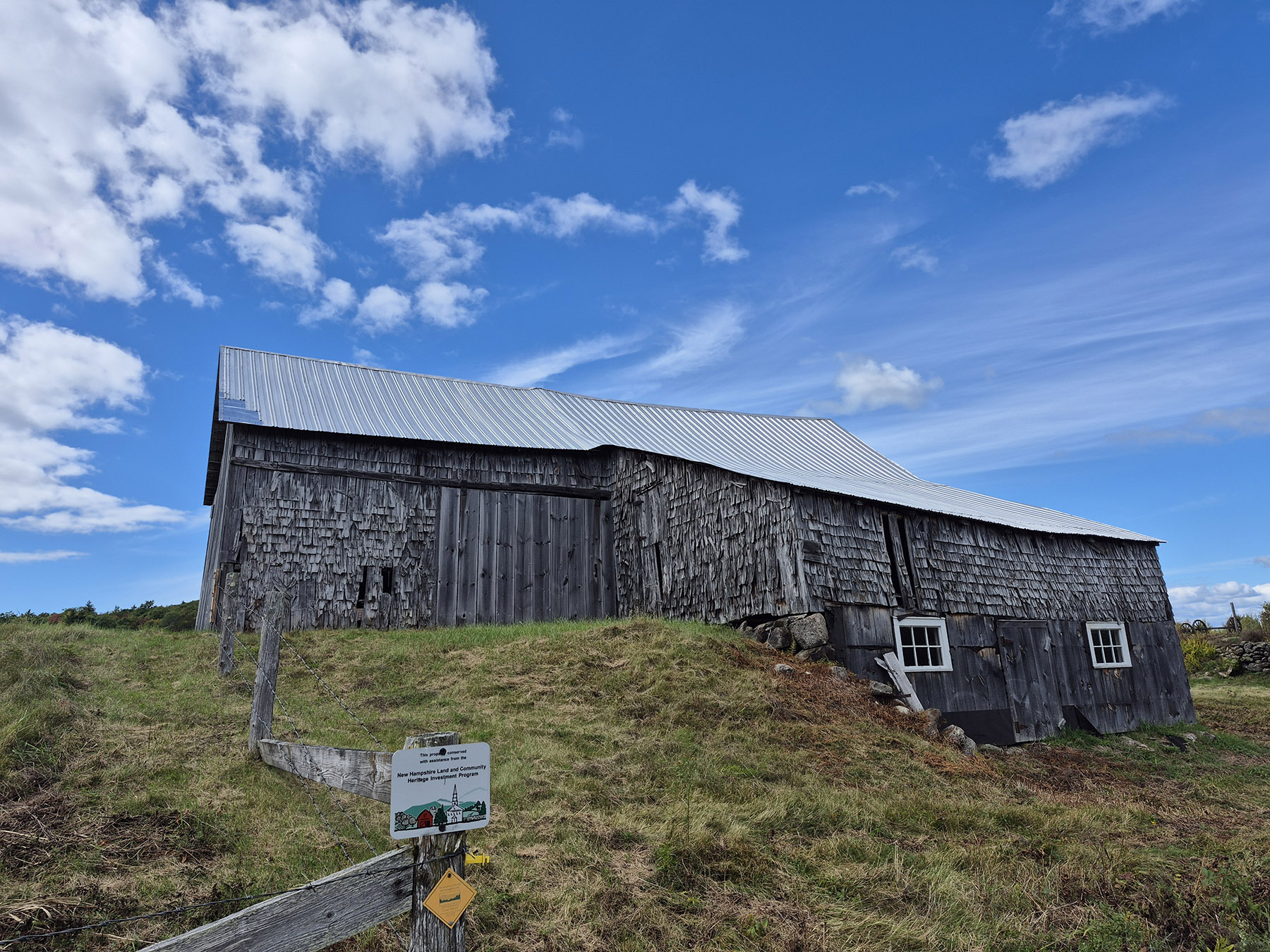
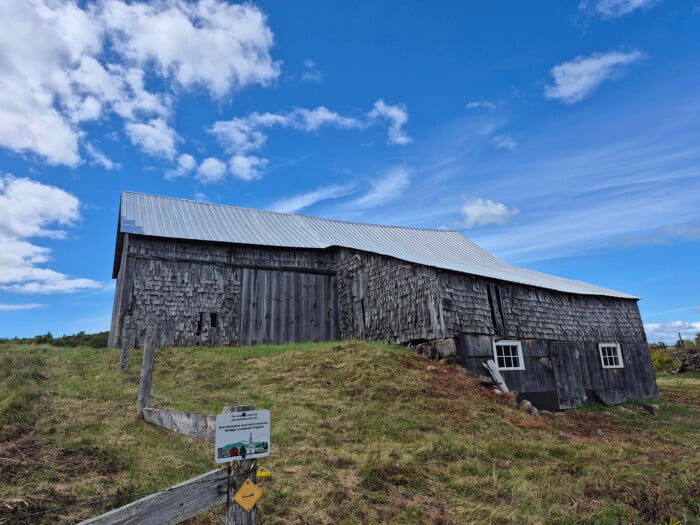
Only a barn in disrepair remains at the Billy-Brown-named Mountain View Farm.
Rumors circulated about who Billy Brown really was and where he came from. There was a persistent story that he had changed his name to start a new life and did not want to be found. Some speculated he was a wanted man. One rumor alleged he struck his brother with a scythe and killed him. Another story told he was involved in a Canadian train robbery and was hiding out in Orford with the loot.
Historical research does not support these stories, but perhaps the truth is revealed in his journals and other saved paperwork. Letters from a sister indicate Billy’s real name was Frederick Salls, and he was born in 1884 in South Bolton, Quebec. Early life in Canada for Frederick (aka Billy) does not seem to have been happy. In 1907, he wrote that his mother loved whiskey and tramps more than him. She took in these vagabonds and expected Billy to work and support both her and the group of them. He also writes that his mother once sold his horse without his consent and used the money to buy whiskey.
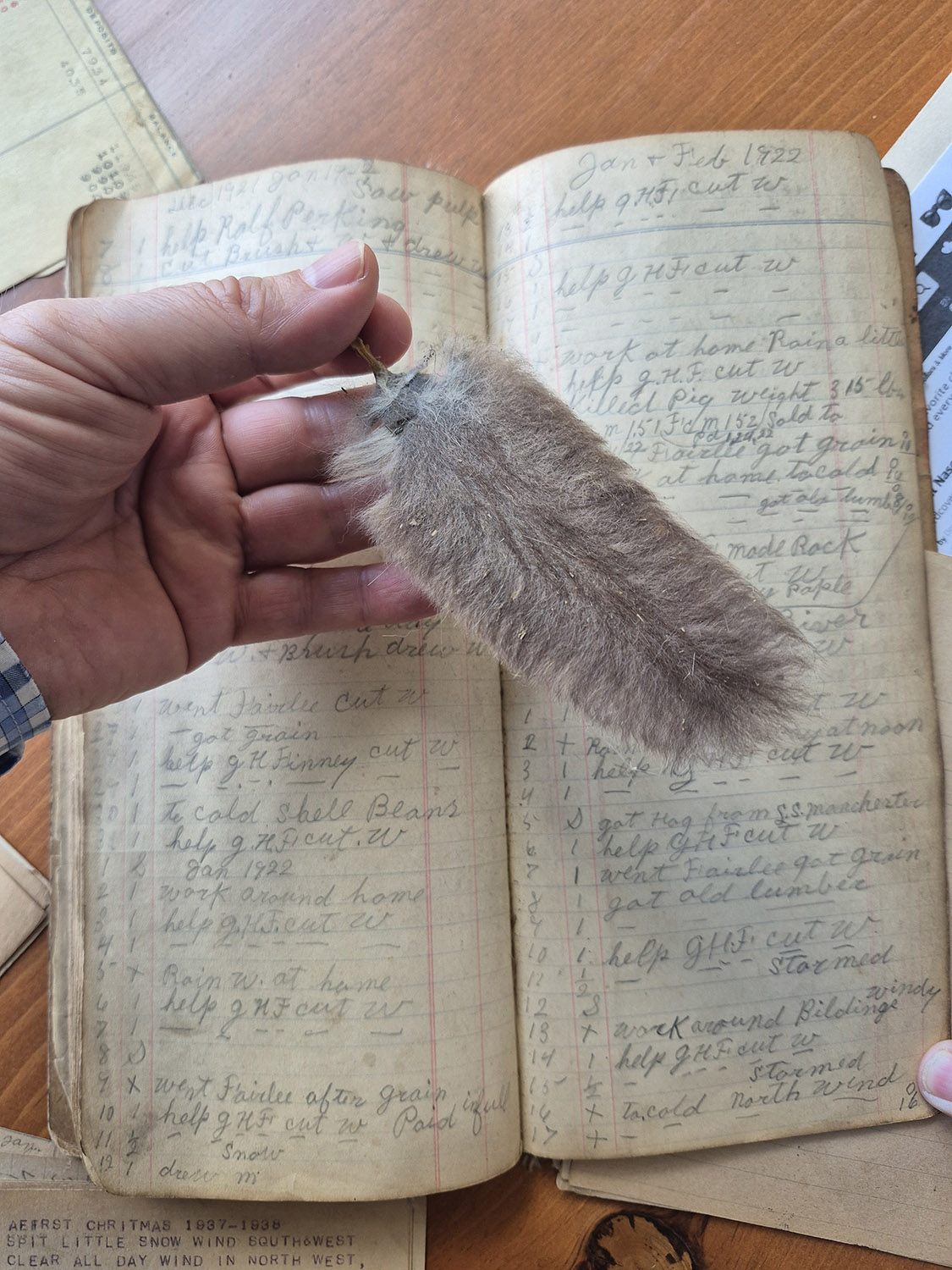
A pressed and dried squirrel’s tail serves as a bookmark in this journal.
Another entry dated April 23, 1908, reads cryptically, “have gone away for 3 months” with no additional details. But a newspaper clipping from Sweetsburg, Canada, with a similar date reveals that Frederick Salls was sentenced to serve time in “the common jail at hard labor.” The journal does not describe the time in confinement, but it does keep track of days served in one column and a countdown of days until freedom in another column.
As for the crime that Fred Salls was convicted of, the newspaper clipping describes a neighborhood bull that had broken loose and escaped onto the farm where Fred was working. The bull got into the garden and was causing damage, so Fred shot it. The bull’s owner protested that the bull was worth $12 and the shooting wasn’t necessary. Fred was convicted of criminal mischief and sentenced to jail.
Upon his release, Fred Salls decided to leave his name, prison record, alcoholic mother and all of Canada behind him. He headed south, changed his name, and found temporary employment in northern Vermont and New Hampshire for a few years before settling into his hermit life on this isolated hilltop.
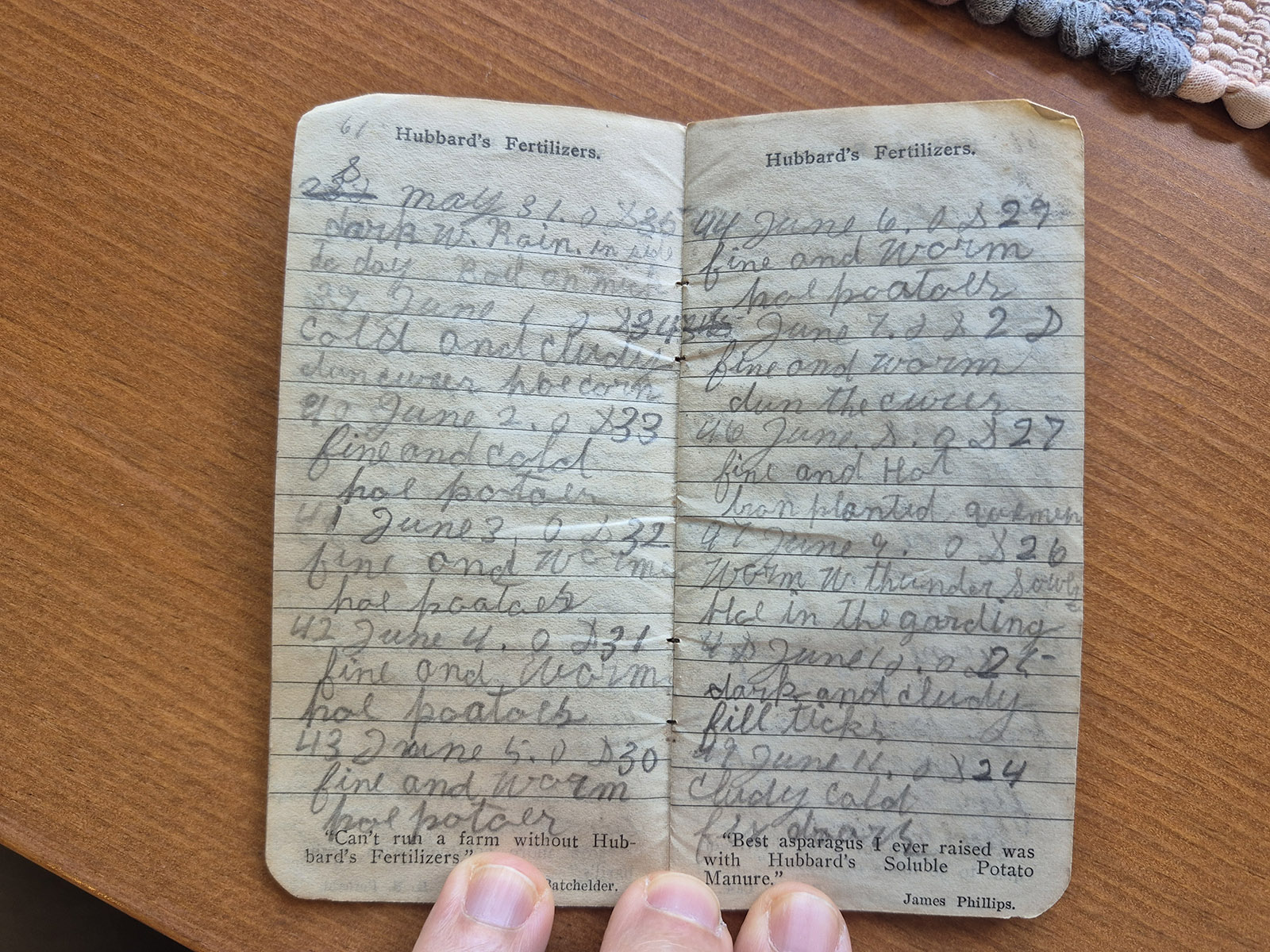
Brown’s journal indicates he spent the entire month of June hoeing potatoes while serving out his hard labor jail sentence.
While it appears he was happy here, I’m left wondering if there might be more to Billy’s story. His lifetime of self-exile and silence seems a severe, yet ironic, penance for someone just for “shooting the bull.”