In Their Own Words… with Astronaut and Ironman, Scott Poteet
Scott Poteet reflects on the Polaris Dawn flight as he trains for more triathlons
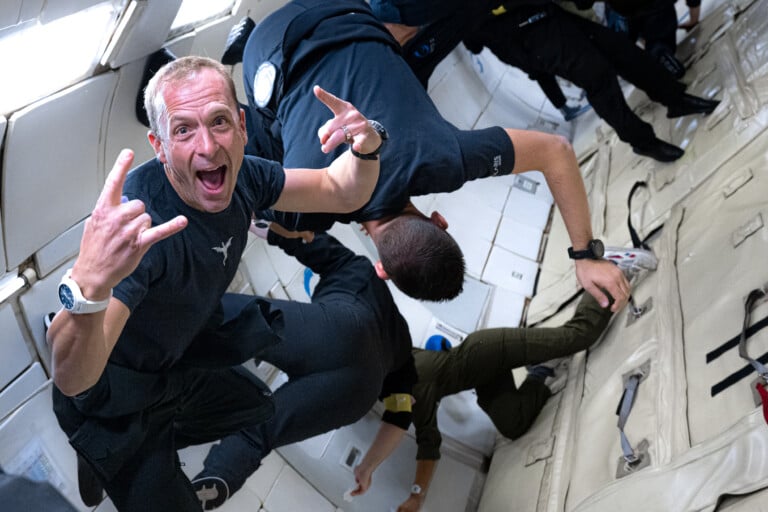
It has been nearly two years since Scott Poteet rocketed into space on SpaceX’s groundbreaking Polaris Dawn flight. Poteet was mission pilot, and becoming an astronaut was a long-held dream — though one he was surprised to achieve at age 50.
A former combat fighter pilot, and member of the Air Force’s elite Thunderbird aerial precision team, Poteet is now back at home in his native New Hampshire. He reflects on his experience journeying to the stars.
New Hampshire Magazine: Space flight is in the news again with the Artemis launch. Has it hit you that you’ve actually been to space?
Scott Poteet: Enough time has passed that I’ve been able to reflect on that experience and what it meant, not just to me, but to space travel. There were so many elements to that journey, and it was 10 years in the making, so the build-up was enormous. Humans aren’t built to survive in space so the fact that we successfully go there and do what we do is pretty amazing.
NHM: Take us back to what it was like to “ride the rocket” and journey into space.
SP: The most challenging part is saying farewell to your family. You don’t say “good-bye,” you say “see you soon,” but you know they are left with this burden of fear and anxiety. You may feel nerves and fear, but there are so many things to do that a certain calm takes over; your training kicks in. It’s like being in combat — once the mission is underway, you compartmentalize and do your job. You don’t think of anything else.
With the rocket launch, as you ride over and go up the tower, it’s more anticipation than anything else — you are eager to finally be underway. Then you are in your suit, your helmet is on, visor is down; you are buckled into a bucket seat and you realize, you no longer have any physical control over what is going to happen. It is out of your hands. It brings a kind of peace because you have to surrender to the moment and put your faith in others. Then the countdown begins …
We do launch simulations in training, but I don’t know if anything truly prepares you for launch. It is like an earthquake going off all around you; the rocket is accelerating and you are experiencing all of these G forces. It takes about 10 minutes for the rocket to get to space and go through the various stages. For those 10 minutes, your body has to endure what is a pretty violent experience. Then, suddenly you are in space and all is calm. It is almost a meditative feeling, being so high and floating above the Earth.
NHM: What was it like, looking back at Earth? Other astronauts have described a spiritual experience.
SP: It was incredible. It does make you very emotional, very humble. It’s called the Overview Effect. You are traveling at 17,500 mph orbital velocity, so you circle the globe every 90 minutes; you are seeing a sunset or a sunrise every 45 minutes, and they are incredibly beautiful. I think the constant evolution of light is part of what makes it so powerful.
Different times of day bring different colors; you see thunderstorms moving across the planet, expanses of cultural lighting, the Northern Lights, shifting cloud patterns. You realize that there are 8 billion people on the planet below you, and there you are looking down from a place few ever go. You also see the radiance of the atmosphere surrounding Earth, and realize what a very thin layer it is that protects us.
NHM: Is there such a thing as “daily life” in space?
SP: Our five-day trip was heavily scheduled. We had a lot of research projects to do. When not engaged in those, we slept about four hours; we ate three meals a day, at pretty normal times and also fueled up on things like Clif bars and beef jerky. Since we weren’t in space for that long, working out was not as much a priority as it is for astronauts who are there for long periods like on the International Space Station, but we did engage in fitness. I liken space travel to mountaineering — expect to be sleep-deprived, hungry and dehydrated while being in cramped quarters and adjusting to altitude. It’s not ideal, but the experience is ultimately worth it.
NHM: How did it feel to be back on Earth?
SP: Amazing. A huge relief, not just for me but for my family. I was so glad to be home and lift that burden from them. It was a privilege to achieve this dream, but my wife warned me not to sign up for anything else!
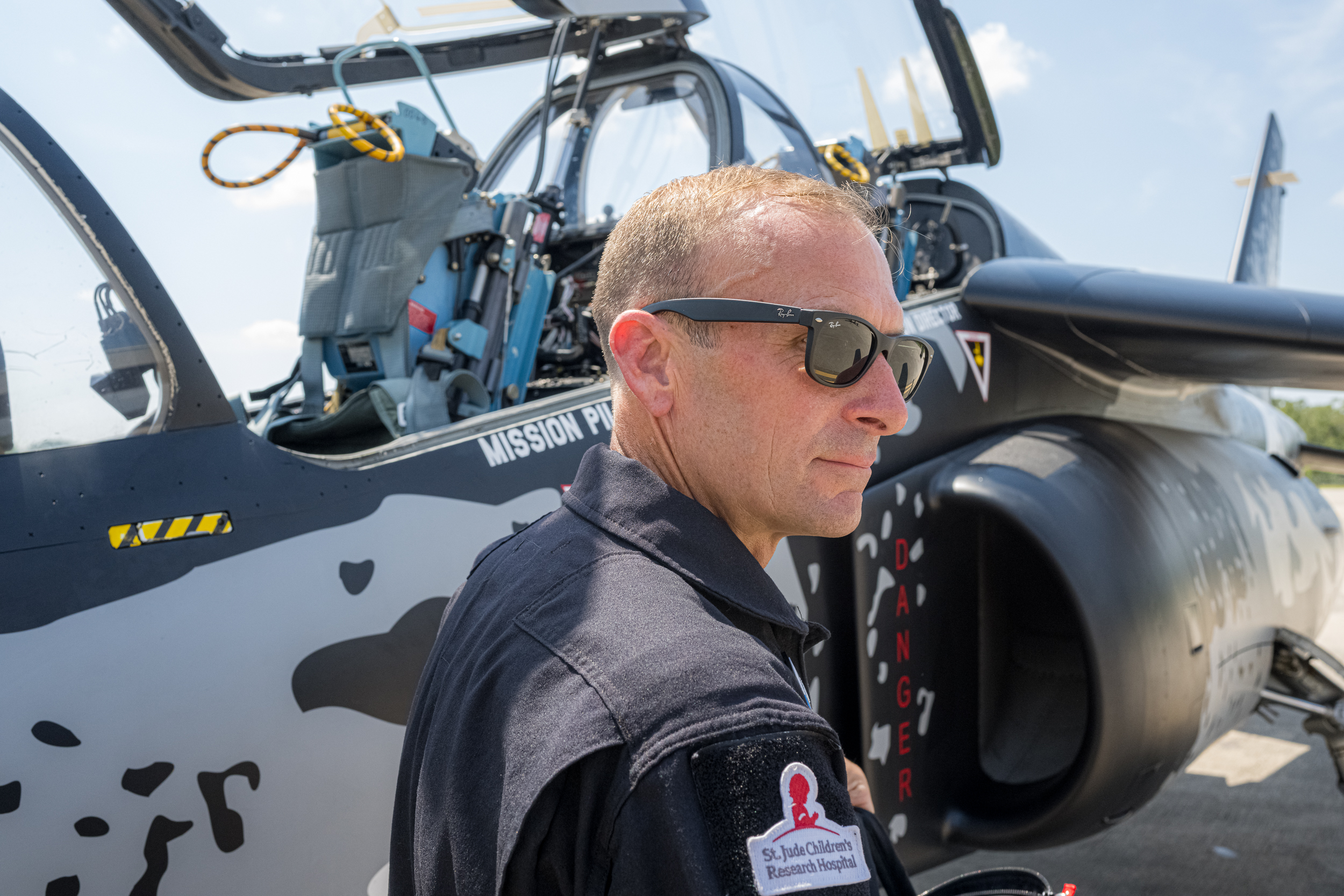
Poteet does a preflight check on an Alpha Jet before a training mission.
NHM: What’s next now that space is in the rearview mirror? I hear Ironman Triathlons are planned? (An Ironman is a 2.4-mile swim, 112-mile bike ride and 26.2-mile run; they can take 17 hours to finish.)
SP: I have competed in Ironman Triathlons around the globe for 16 years, although I took a decade off while prepping for Polaris Dawn. They are a passion of mine and I was eager to get back to them. My first event was one two weeks after the Polaris mission. This year, I am competing in Lake Placid, Cozumel and the World Championships in Kona, Hawaii. I hope to become the fastest age 50+ competitor.
NHM: Do you find it harder to compete as you get older or easier because you have done so many and know your training needs?
SP: It’s easier. I know what I need to do, and I’ve competed in so many places that I know how to adapt. Technology has also made it easier to be competitive with things like carbon-plated shoes and lighter bikes.
Staying Engaged, Giving Back
Poteet is also doing podcasts, motivational videos and speaking engagements locally and around the country. He gave the keynote address at the University of New Hampshire’s 2025 commencement (he is a proud alumnus), and has spoken at the Laura Bush Institute and St. Jude’s Hospital. Equally important to him are his engagements at elementary and middle schools and military installations. Whether speaking to students, veterans or the general public, he hopes to provide motivation for others to live their dreams.
“I’m very humbled by what I’ve been able to achieve in life, and if what I’ve done helps inspire someone else, then I’m grateful,” he says. “What I try to convey is, don’t let fear or anxiety paralyze you. We are all afraid of something, but we also know that we can push beyond our limits. We can overcome more than we think.”
“I remind people not to be afraid to ask for help. Everyone needs help at some point. I’ve also learned that you can do more when you are motivated by helping others. Sacrificing for a person or cause unleashes tremendous power in you. Nothing comes easy in life, but with the right mindset, you can achieve your dreams. Your will and your drive will see you through.”