Free to Roam in a New Home at Tomten Farm and Sanctuary
Rescued animals enjoy a second life at Tomten Farm and Sanctuary
Life is filled with beautiful, wonderful things, few more awesome to behold than the sheer physicality and the speed with which a horse goes from a gentle trot to a full, head-up gallop.
Even more compelling than watching a horse doing “zoomies,” however, is knowing that just a short time earlier, when he was rescued this past December from an abusive situation in New York State by Tomten Farm and Sanctuary and others, the horse was emaciated and could barely stand, having been shut up in a pen for five years.
Now, at the ripe age of 22, BenAgain, as he is affectionately known, is living his new, forever best life at Tomten, in Haverhill, along with a hundred animals similarly blessed.
Located between the Connecticut River to the west and the White Mountains to the east, Tomten is a place where, through the generosity and compassion of many people, good things happen for animals.
It is a place where the animals’ burdens are laid aside, where theirs is a natural life filled with affection and friends of many species, not the specter of the slaughterhouse.
Tomten, which is named after a Scandinavian elf who, at night, comforts farm animals and their humans, was born through the love of all animals and the death of one in particular.
Jenifer “Jen” Vickery grew up in Massachusetts with deep feelings for all of God’s creatures.
A champion equestrienne, she parted ways with her horse, Sturgeon Moon, when she went to college. She thought she was leaving Sturgeon Moon in good hands, only to learn that the horse had been sold by its caretakers, not returned to her as their contract stipulated. To her horror, Vickery was told that Sturgeon Moon had been acquired by a meat merchant and that there was nothing she could do.
Fast-forwarding a few years, Vickery opened a sanctuary in Bolton, Mass., but when it got to be too constrained, she relocated in 2014 to Haverhill, where Tomten occupies about 100 acres of mostly rolling farmland.
There, visitors — who need to call ahead and make an appointment and, ideally, come as part of a group, Vickery urged — can see chickens and roosters walking around like they own the place.
In separate paddocks and other parts of Tomten are geese, cats, rabbits, goats, sheep, pigs, a llama, alpacas, horses, donkeys, mules and cows, all with new, colorful names in celebration of their new lives.
Lucinda Longneck, an alpaca, likes to hang out with her best friend, Lilith Lightfoot, a sheep, who has a gray goose shadow who is friends to both of them and is simply known as “Lilith’s Goose.”
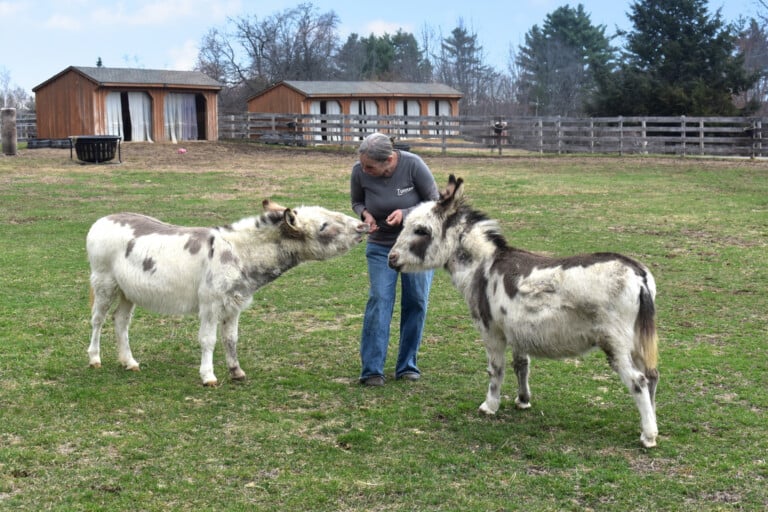
The goats chill out together, and so do the donkeys, joined by SaMule Halfhorse, a ponderously large but charming mule. Tomten is home to two miniature donkeys — Hotey (who is a donkey and hence known as “Donkey Hotey,” and his longtime best pal, Cowboy.
Marsha, who weighs in at around 600 pounds, is a contented sow who enjoys belly rubs, while equally contented are Tomten’s cows, among them Marilyn Moo-nroe. Yes, that is her name.
Vickery said when the donkeys first arrived at Tomten they were wary of humans and would flee to the far end of their paddock. Now they cautiously come to check out visitors, and while not lap dogs, let visitors get up close to them.
BenAgain, meanwhile, has gained weight and strength since coming to Tomten and he, too, is more welcoming of people. He likes carrots, he likes being outdoors and he likes doing zoomies, the latter of which make Vickery happy to her core.
For all the good news coming out of Tomten, there is sadness and struggle, too.
Like many rescues/sanctuaries, Vickery has discovered that she has to say “no” more often than “yes” in accepting animals. Tomten has limited resources, she explained, and taking in more animals than it is able to care for means that all the animals suffer.
It is expensive to take care of an animal for its entire life, and the cost increases as the animal gets older, Vickery said.
Tomten is dedicated to helping farm animals, and is what Vickery calls a “life-long sanctuary for unwanted, unaffordable and unadoptable animals,” but it also helps human beings.
Petunia’s Pantry at Tomten is “a short-term food-assistance program serving the Grafton County community,” designed to help keep animals “fed and safely at home during times of temporary hardship.”
Earlier this year, Tomten posted its “Planning Ahead” guide on its website.
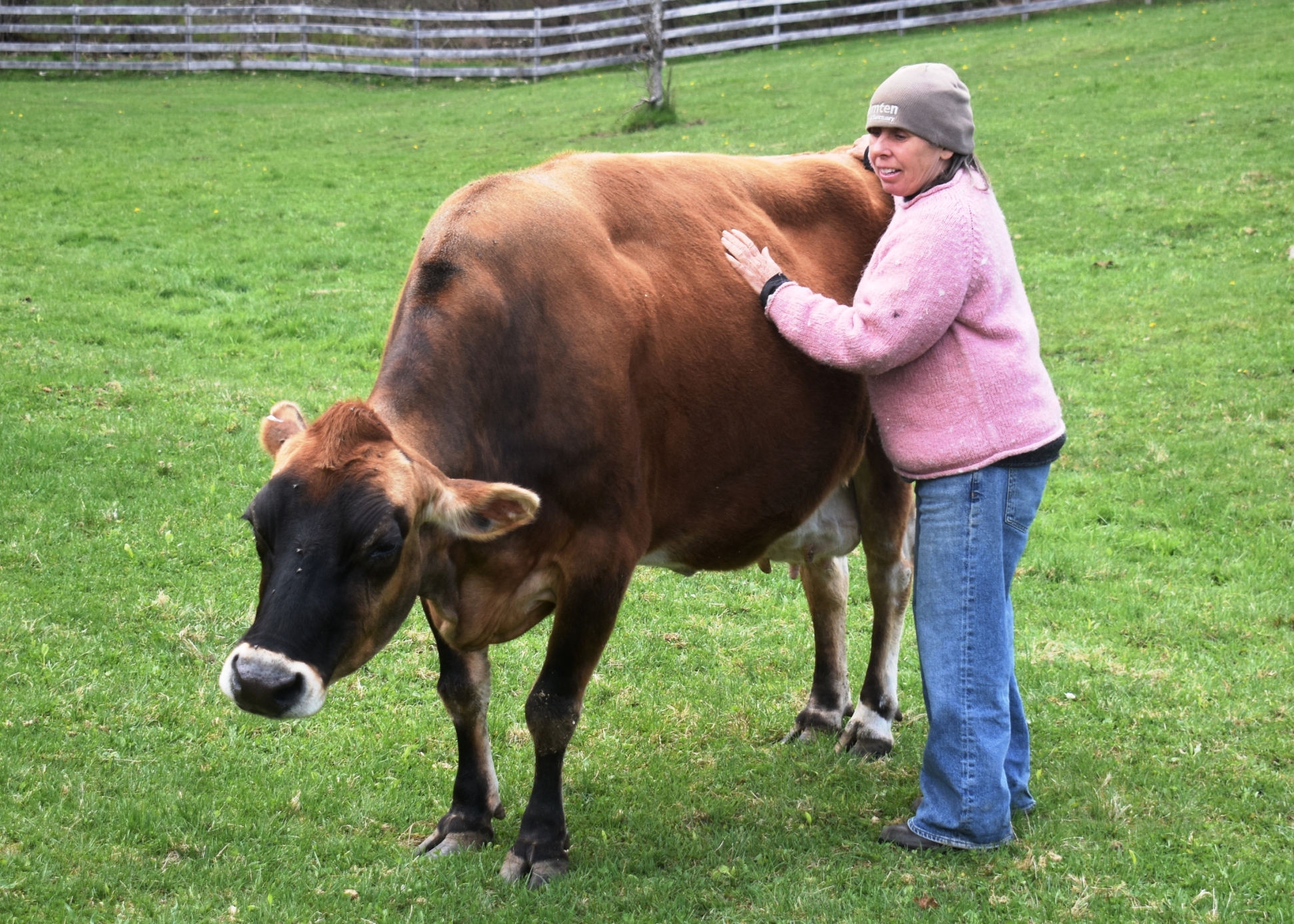
Vickery tends to Marilyn Moo-nroe at Tomten Farm and Sanctuary in Haverhill.
On the website, Vickery explains that pre-planning is a smart thing to do for all animal lovers.
“Hardship can happen to anyone at any time. Even the most devoted guardians can face illness, financial strain, or circumstances none of us see coming. Here at Tomten, we have learned that a little planning can go a long way in keeping beloved animals safe and in gifting the people who love them something equally precious: peace of mind.”
Tomten has an annual operating budget of about $750,000 and is currently completing a fundraising effort to put aside enough money to run, under a worst-case scenario, for one year. Tomten, which is overseen by a seven-person board of directors, has multiple succession plans in place, said Vickery, and she herself is insured so that Tomten can remain open and hire an executive director as well as a barn manager in case anything happens to her.
Because donations are critical to it, Tomten is careful to present an open, transparent face to the public. It has a platinum rating from Candid, formerly GuideStar, and merited three out of four stars from Charity Navigator. Vickery said Tomten could have earned four stars if it conducted an audit, choosing, however, to spend that $20,000 on the animals rather than the audit.
The long-term goal is to make Tomten “a sustainable organization,” she said, and to offer more educational opportunities.
She thanked “everyone who has joined us on our journey,” including partners such as the Massachusetts and New Hampshire societies for the Prevention of Cruelty to Animals and the Dorset Equine Rescue in East Dorset, Vermont. Several groups, among them the DER, helped rescue BenAgain, six other stallions and a cow that had been standing atop a 5-foot-tall mound of manure.
BenAgain was the most fragile of the horses, which is why Tomten wanted to help him.
Jen Straub, the DER’s founder and executive director, said Tomten “is an organization that we at The Dorset Equine Rescue have come to know and trust deeply over the years. In the animal rescue world, having reliable and knowledgeable partner organizations is incredibly important, especially during large-scale rescue cases when resources and capacity can quickly become stretched.”
Straub said the willingness of Vickery and Tomten “to help a variety of species … speaks to both the depth of their compassion and their commitment to animal welfare. We have always been impressed not only by the care they provide, but also by the professionalism, integrity and thoughtfulness with which they operate. Their dedication to giving animals a safe and loving future truly sets them apart.”
Vickery and Laima Whitty, a vice president and founding member of Tomten, agree that Tomten transforms lives by helping to save them.
The need for life-long sanctuaries is great, they said, and not every animal can be saved, but the effort has to be made and every rescue is a gift to be celebrated.
Tomten, said Whitty, wants to give animals “the dignity they didn’t have in life.”
For more information about Tomten Farm and Sanctuary, go to tomtenfarmandsanctuary.org.