WDYK: Detoured Into the Past
An unexpected traffic stop and a dispatch rider reveal an unsolved crime
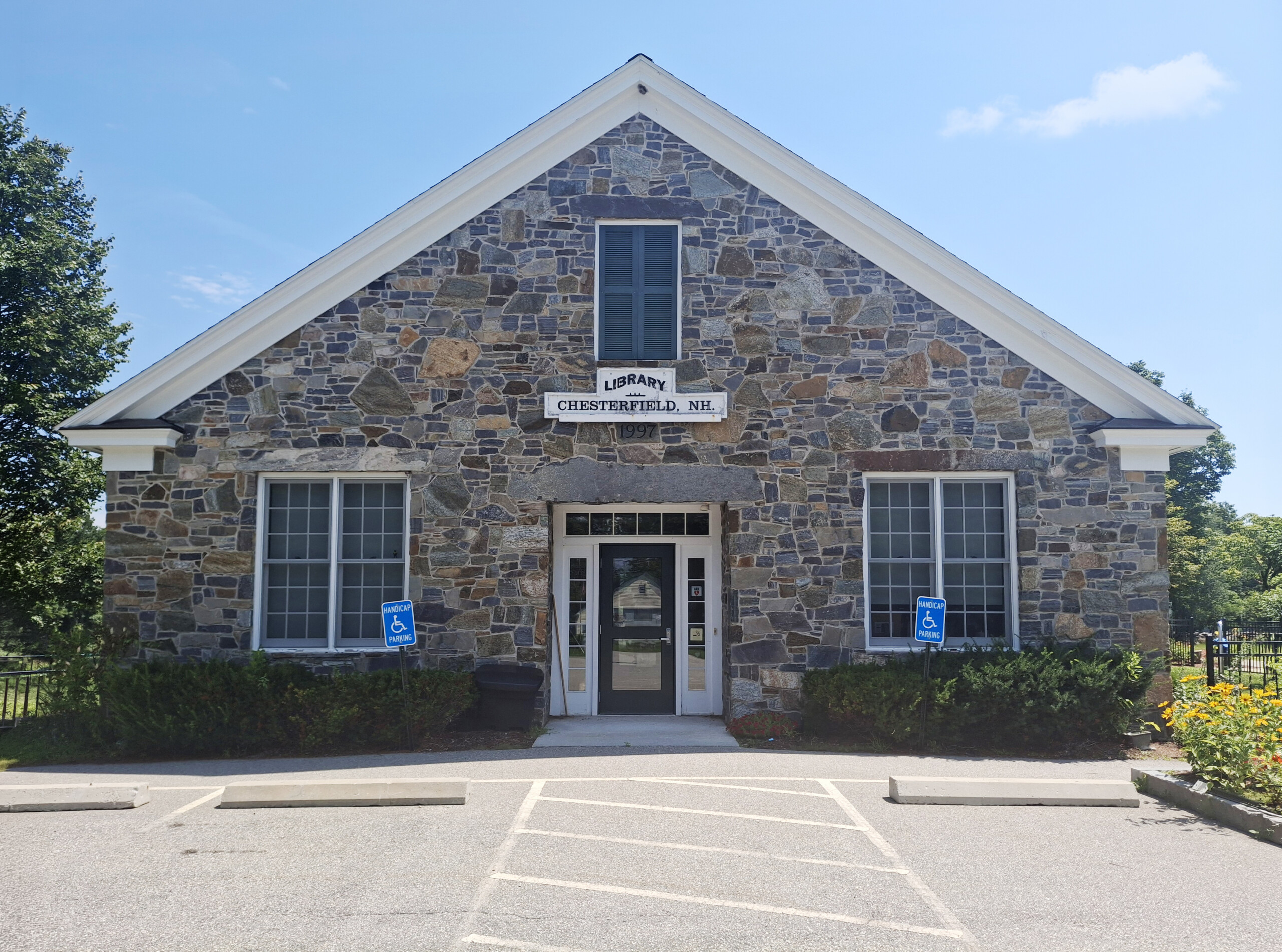
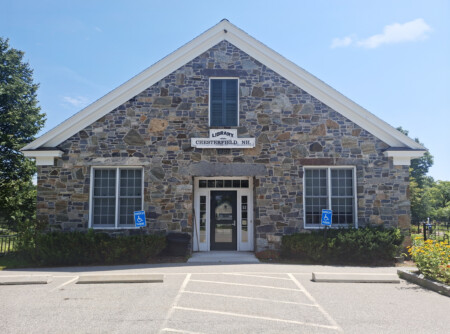
Chesterfield’s library was built in 1996, when it moved out of another stone building that is now home to the town’s historical society.
I was driving south from Spofford and headed toward Hinsdale, enjoying the twists, turns and rollercoaster-like dips in the road. Rounding a bend and cresting a small hill, traffic suddenly stopped at the Chesterfield town center. From my now-stationary vantage point, I was able to observe the many stone buildings Chesterfield is known for.
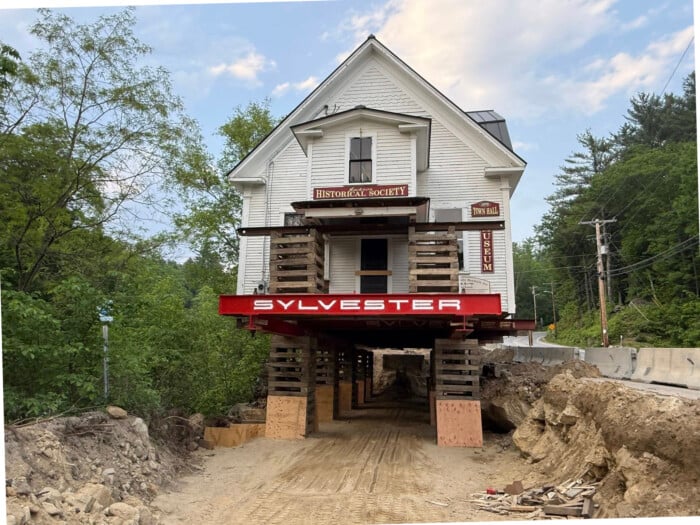
On the east side of the road is a tall, narrow, 2½-story building that houses the post office. On the opposite side is the town hall, or meetinghouse, with its church-like steeple. Other stone buildings in the area include the old town library, now home to the Chesterfield Historical Society, and the “new” and larger town library.
Nearby is a private residence and a former tavern that is now a museum. All are constructed of these same gray and rust-colored, irregular shaped, granite stones. On the south end of the common is a municipal office building constructed in 2008, which attempts to mirror the look of the historic stone buildings. I’m left wondering why Chesterfield chose to erect stone buildings during an era when most buildings were made of hand-hewn timber frames and rough sawed boards.
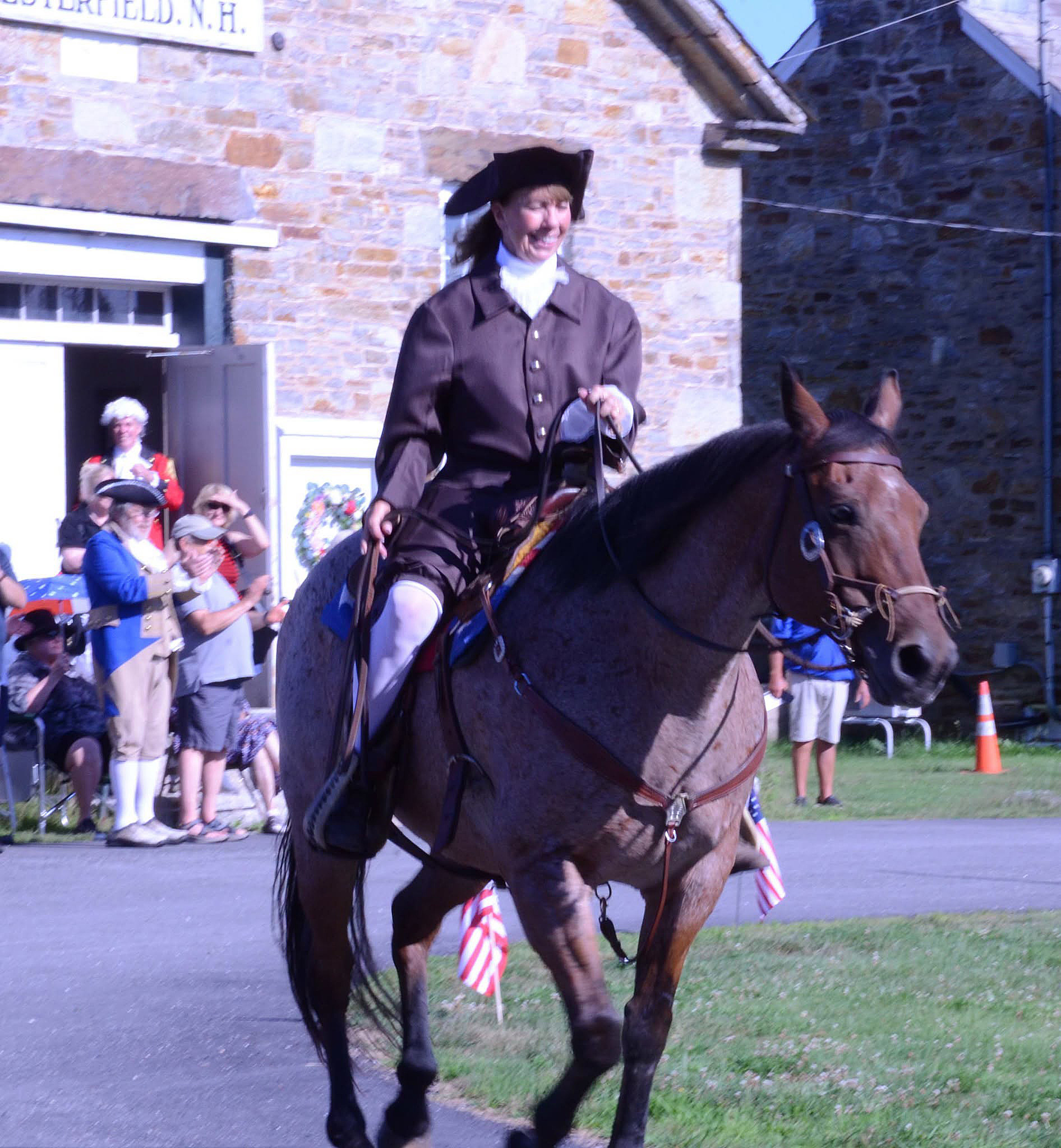
A dispatch rider on a horse named Sheriff Higgins delivers a message. Photo Courtesy Chesterfield Historical Society
As I pondered this stone construction, a dispatch rider dressed in 1770s costume trotted down the middle of the road bringing a message to the crowd assembled on the green. Many in the crowd were also wearing Colonial costumes, and I realized I had just driven into a 250th celebration reenactment. I pulled the truck over and parked.
The dispatch rider presented a “Declaration of Independence,” recently signed in Philadelphia, to a town official who read it aloud to the shocked crowd. The Colonies were now in open rebellion against the king! The Union Jack was taken down from the flagpole and replaced with a new, 13-star, red, white and blue flag favored by the rebelling Patriots. Volunteers were then called forward to sign up as Minutemen.
The reenactment was well done, and when it ended, I spoke to some knowledgeable locals and members of their historical society. Inquiring about the uncommon number of stone buildings in our midst resulted in a surprising answer. It was due to an arsonist.

This former tavern and private residence is now a museum operated by the Chesterfield Historical Society.
During the winter of 1845-46, buildings belonging to Ira Wetherbee burned in an intentional fire. Wetherbee’s insurance company was suspicious he had set the fire himself, and a lawsuit followed. Wetherbee was never formally charged with arson, but rumors circulated and some townspeople were drawn into the lawsuit or forced to choose sides and give testimony. This resulted in bitter feelings between Wetherbee and his fellow citizens.
The next few years saw several fires of unexplained and suspicious origin that resulted in the loss of many buildings around the village center. Two barns and the store / post office belonging to Asa Marsh caught fire under mysterious circumstances and burned to the ground in 1847. Marsh rebuilt his store and post office in 1849, choosing to build out of stone this time to thwart future arson attempts. Marsh’s building remains standing today and still serves as the post office, although the store closed in 1970.
A barn belonging to Charles Darling also burned down and an unsuccessful attempt was made to set fire to the barn of Elias Mead, but it was saved by a vigilant owner and neighbors. All of these suspicious fires took place within a few years following Wetherbee’s lawsuit. Some residents believed there was a fire-bug arsonist on the loose and worried their home might be next. Others suspected the fires were being set in retaliation or revenge by someone unhappy with the handling of the Wetherbee lawsuit.
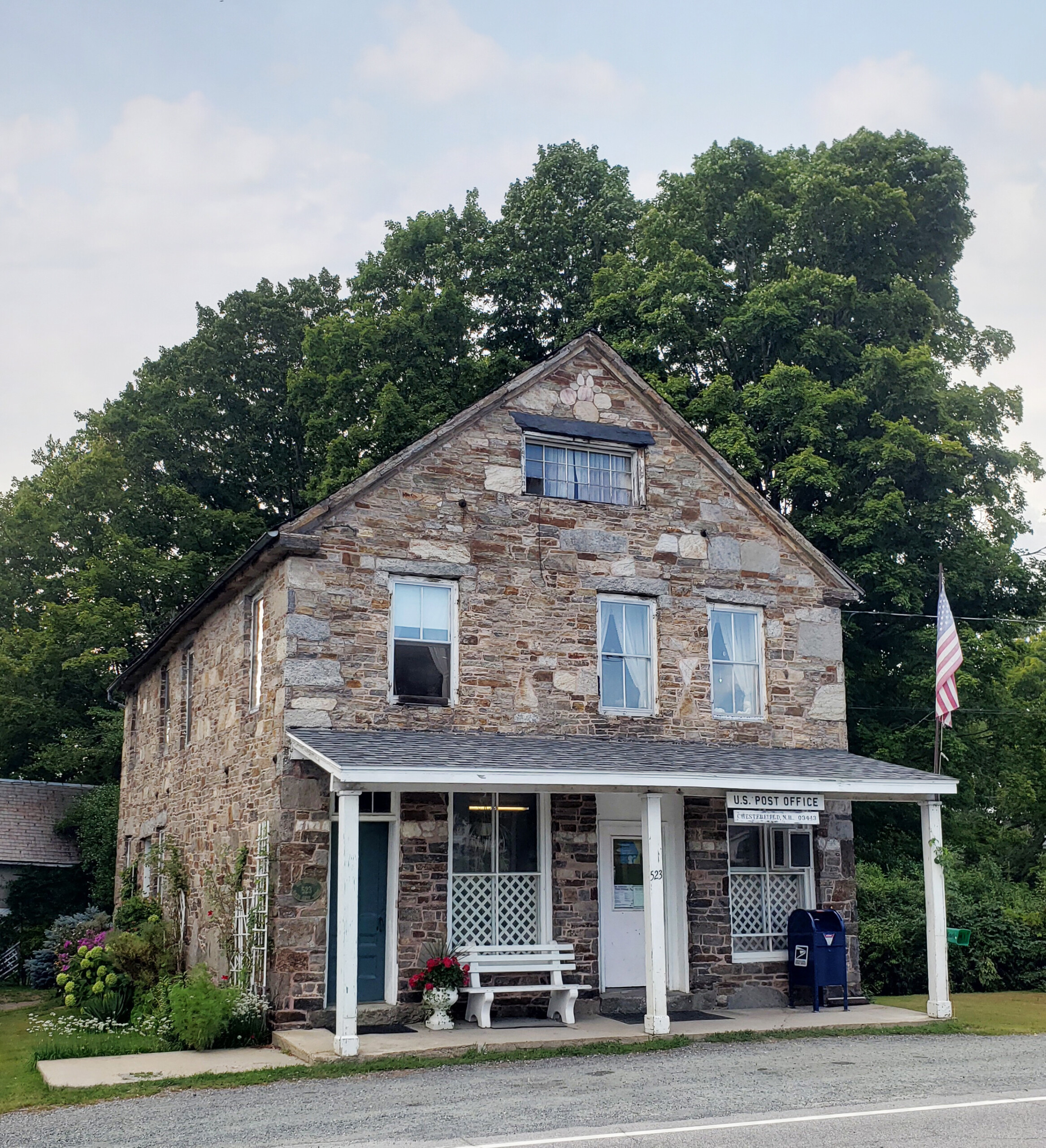
This building, one of several stone structures in town, serves as the Chesterfield post office.
The town meetinghouse was lost to fire on the first day of March 1851. A few days later at the annual Town Meeting, residents voted to instruct the selectmen to “offer a reward of $500 for the detection of the incendiaries who burned it, and another of $500 for the detection of those who burned Charles Darling’s barn.” A “Committee of Vigilance” was chosen at the meeting to find and bring to justice the guilty arsonist(s).
A new town hall, constructed of stone, was built to replace the old wooden 1770 Meetinghouse lost to fire. The stone for this new town hall came from a nearby quarry, and residents slept better knowing their new town hall would not be an easy target for the still-uncaught arsonist. The new building, which serves as town hall today, cost roughly $1,700 to build in 1851. Beside it, another stone building built in 1938 is used by the historical society but was constructed and served as the town’s library until the new library was built in 1996.
In 1850 a blacksmith shop was constructed using the same locally quarried granite stone.
It remained a working blacksmith shop until 1930, when it was taken apart, stone by stone, and moved to the Storrowton Vil-lage Museum, on the grounds of the Eastern States Exposition, in West Springfield, Mass. It was reassembled there and today functions as a working blacksmith shop in a living history museum.
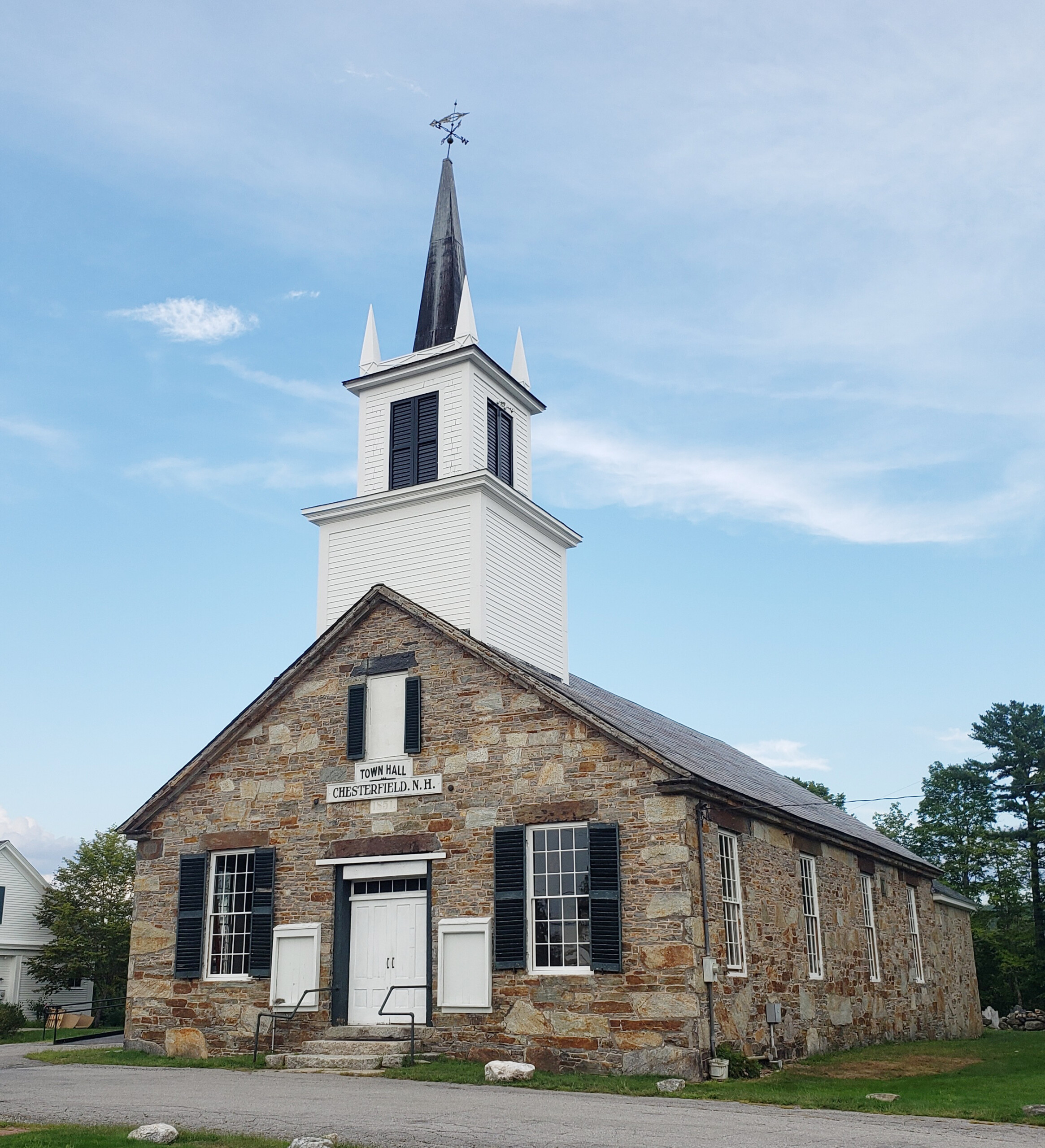
Chesterfield Town Hall, which replaced a wooden building lost to fire, cost roughly $1,700 to build in 1851.
The arsonist was never caught, and the Committee of Vigilance disbanded, but not before accusations were leveled at several people deemed to be suspicious. One individual was jailed for the crime, although never tried or convicted. Another was brought to trial but was released when the star witness failed to show and give testimony. There was also a petition circulated to oust a sheriff accused of releasing the captured arsonist. This petition was prominently signed by an individual later accused of being the arsonist himself.
Whoever started the fires slipped through the cracks and remains unknown, but their actions changed the course of 1850s Chesterfield builders and resulted in these historic and picturesque stone buildings.
With my questions answered, I continued on my way, thankful that a 1770s dispatch rider had interrupted the trip. I wonder what surprise might be waiting for me around the next bend in the road.