Spotlight on Rising Changemakers: Saniyah Bolton
Profiles of New Hampshire leaders who are lifting up diverse voices in the Granite State and beyond
603 Diversity is continuing to share stories of our neighbors in our Rising Changemakers series with another person who is making a difference in diversity spaces of New Hampshire. Our editorial board members and contributors have shared the names of many remarkable people who have not been in this publication before. If you know of someone who deserves some spotlight, please email editor Sarah Pearson at sarahekp@yankeepub.com.

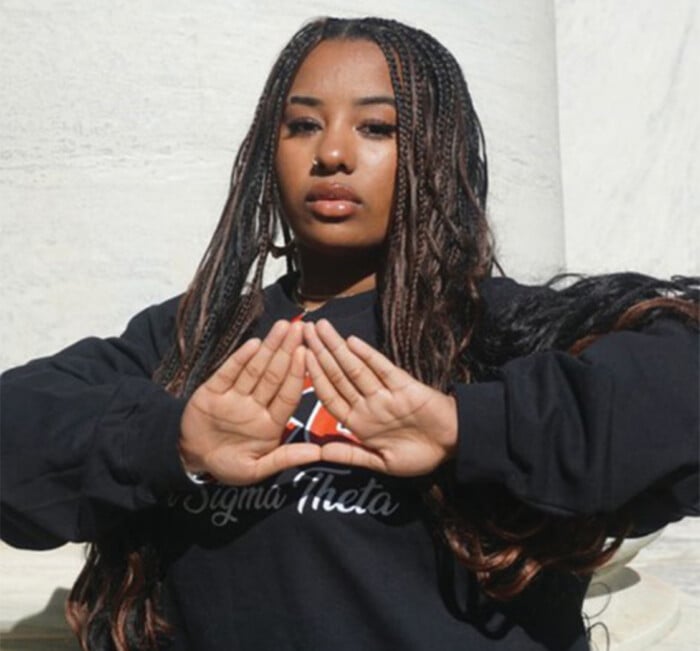
Saniyah Bolton
CITY: Exeter
Passion areas: I major in justice and law and double minor in sociology and African American diaspora studies. I currently have a few jobs, but my main position is the human and civil rights intern for the National Education Association.
Q: You became involved in advocacy at a young age. What first motivated you to speak up and get involved in the community?
Bolton: I am originally from Reading, Pennsylvania, and moved to Exeter in 2017, as I was going into middle school. After arriving in New Hampshire, it was more than apparent to me that not only myself but my family were going to have to gather lots of strength to adapt to the new environment, especially considering the lack of diversity as a family of color. Not only had my younger brother, Dominik, gone through discrimination, but I struggled greatly.
It wasn’t until COVID-19 and the pandemic began that I took lots of time thinking about the state of my com-munity and nation, especially after the death of George Floyd in 2020. I had always been passionate about Black history and diaspora-related studies but had never thought to put it into action. I could no longer sit in grievance and anger about the recurring violence and prejudice without doing something about it. Since that moment, I have dedicated my studies and career to advocacy and speaking up for myself and others.
Q: What is the youth division of Black Lives Matter New Hampshire?
Bolton: The BLMNH Youth Division is a branch of the nonprofit organization Black Lives Matter New Hampshire whose mission is to uplift and empower all youth through advocacy, education and community-focused social justice initiatives. The youth division works to ensure that young people have the skills and knowledge needed to advocate for themselves and their communities, driving change in the fight for equality and justice. They aim to create a supportive community where young people are equipped with the tools to challenge systemic inequalities, advocate for their rights, and lead the fight for a more just and equitable society.
Q: What do you think young people bring to the table, particularly for conversations about racial justice?
Bolton: Advocacy can come in many ways. Many often view advocacy as protesting, public speaking and constant publicity surrounding whatever issues one may be passionate about. But advocacy is a flexible act, and can take the shape of anything surrounding change and support.
A favorite quote of mine is, “Education is the passport to the future, for tomorrow belongs to those who pre-pare for it today,” by Malcolm X. To me, education is one of the most powerful methods of self-advocacy. Seeking out resources and informing yourself and others about the happenings of the world as well as what we can do about it plays such a significant part in efficient advocacy.
I wouldn’t stand where I do today without the knowledge I have consumed both inside and outside of school. Education is a tool of success and driver of passion, a necessity in all communities and all lives. It allows you to hold yourself accountable, guide your awareness, and provide you with the skills one would need to input themselves into larger roles within activism and support.
Q: You’re studying law at American University. What drew you to that field, and how has your advocacy work influenced what you hope to do professionally?
Bolton: Since I was young, I had always been told that I should be a lawyer because of my confidence and argumentative skills. I never truly took the recommendation seriously until I started taking college-level classes surrounding law and government while attending Exeter High School. Such classes, in addition to my own research, made it apparent to me that the criminal justice system is not an equitable system, leaving many people of color lost and vulnerable.
From violence to mass incarceration, it was clear to me that I wanted to be involved and begin to make a difference for as many as I could. My advocacy heightened this aspiration, as I had had opportunities to connect with law enforcement officials, politicians and other leaders within this field. Such conversations and partnerships opened my eyes to the importance of legal representation for marginalized groups and the lack of governmental or political representation and equity, inspiring my goal of becoming a lawyer and being a resource that many may need.
Q: How do you stay connected to your efforts in New Hampshire while balancing being a student in D.C.?
Bolton: I have taken up opportunities to stand as the senior organizing associate for the American Civil Liberties Union (ACLU) of NH as well as the executive programming assistant for Black Lives Matter NH — two intern-ships I held this past summer as I returned home for the season. I currently work closely with Black Lives Matter NH and its team, supporting media and outreach efforts as best as I can. I have also worked within the develop-ment of our newest branch, titled the Justice and Advocacy Division, which is a legal-centered arm of Black Lives Matter New Hampshire focused on ac-cess to justice, legal education, rights protection and systemic legal reform.
Q: Are you involved with other organizations? If so, what drew you to them, or why are they important to you?
Bolton: I previously worked as a tour guide for about three years and served as the summer 2025 social media coordination intern for Black Heritage Trail of New Hampshire. I was initially recognized by the organization in early high school, where I was chosen to introduce keynote speaker Ibram X. Ken-di during the 2022 Black New England Conference. Later, after standing as a featured speaker for their Tea Talk series in 2023 entitled “Youth to Power: Black Female Activists,” I became close with executive director JerriAnne Boggis, who soon after offered me the position.
Q: Was there a particular experience when you realized, “This is the work I want to keep doing”?
Bolton: As I began my journey into ad-vocacy, I was heavily involved in public speaking. Whether this be at a protest or community event, in conversation with diverse crowds across New Hampshire, many of whom responded well. Seeing the glimpse of joy and excitement on an individual’s face after truly recognizing their identities or even calling forth racial justice and bringing to light the hard truths a pri-marily white community in New Hamp-shire often has a hard time admitting, is the impact that I hope to bring to all. Allowing those in marginalized groups to be seen while opening doors and offering knowledge to others.
Q: How have mentors, teachers or other community leaders helped you develop as a leader? And how do you try to provide that same support to younger people?
Bolton: My mom is one of the most influential individuals in my life when it comes to supporting my development. More than just a parent, she is my biggest mentor and inspiration for my dedication to advocacy and education for not only myself but my community. In addition, my family at Black Lives Matter NH presented me with resources and a support system; I was able to educate myself and others while promoting the ideals of justice and equality throughout our state. As they have shown me the kindness, account-ability and leadership I needed to build my own self-efficacy and succeed, I try to follow the same qualities when working with youth and all those beginning their journey into advocacy and achievement.