Space for Sensory Regulation
Nonprofit creates inclusive environments for people with invisible disabilities

Twenty-One Senses staffed a table at the Milton PTA craft fair in 2024.
PHOTOS COURTESY OF TWENTY-ONE SENSES
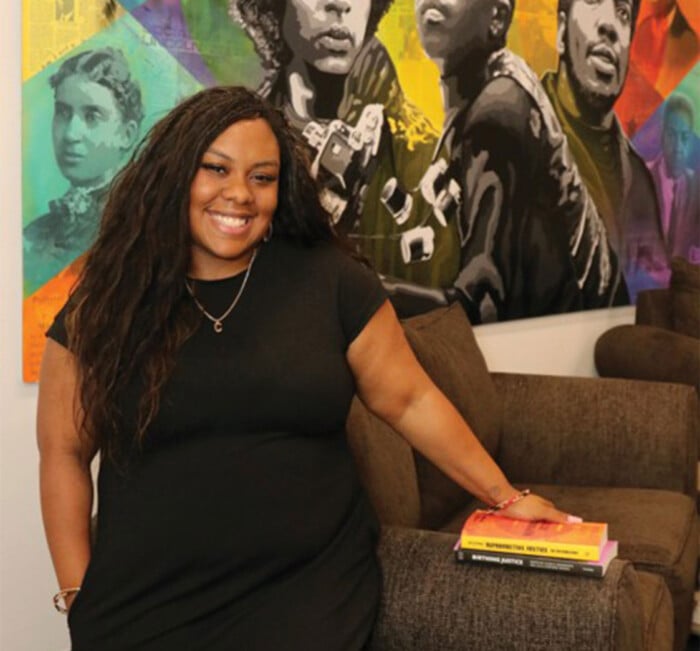
Since co-founding the nonprofit Twenty-One Senses, Danielle Heaton of Madbury has gathered up a lot of heartwarming success stories.
Over the past five years, Heaton and co-founder Jen Puccini of Chicago have heard from families who expressed difficulty “fitting in” at noisy public events. Toddlers, kids and even adults would struggle to manage the extra stimuli that come with large gatherings — bright lights, loud sounds, strange smells and throngs of people. Their stress and anxiety would eventually spill over into a meltdown, officially ending the fun.
Heaton and Puccini experienced some of those same difficulties with their families and wanted to help.
For Heaton, it’s just something that she had to figure out so that she could best care for her child.
“I often say I became the parent my child needed me to be. It has to be easier for others, and that was the source of how we started,” she says.
Twenty-One Senses offers mobile calming spaces and various fidgets, at the request of event organizers, for people of all ages struggling with sensory processing disorder or other mental health or disability challenges.
People with sensory processing disorder can be on the autism spectrum, have ADHD or other developmental disabilities or mental health issues. It’s not just sound or light that can provoke sensory overload. Movement, touch and taste sensations can also be affected.
When parades, festivals and birthday parties don’t include a safe place to reduce high amounts of sensory overload, people are less likely to show up, leading to isolation. Having areas for sensory breaks may encourage more people to connect with others, the organization says.
Studies have shown that sensory processing plays a big role in how a person organizes and processes outside information. Twenty-One Senses uses scientifically proven methods for calming the nervous system, and clinicians sit on the nonprofit’s advisory boards to review their content and training information.
 Heaton isn’t a clinician, but builds upon her own lived experience learning about nervous system regulation.
Having to eat something that you don’t like because it feels too squishy or weird can also set off a neurodivergent brain.
Heaton remembers one trip abroad where their food choices were significantly reduced.
“By the end of day two, my kid had not eaten anything. Every single day we had to find a restaurant that had cheese pizza. It was sad and frustrating for me at times,” Heaton says, adding that they went to five different grocery stores to find the right brand of peanut butter.
“My kid needed to eat, and this was a safe food for him. But you’re in a different country. They don’t carry Jif, because Jif is way too manufactured,” Heaton explains.
Heaton calls sensory processing disorder and similar challenges “invisible disabilities,” and wants the organization to raise awareness to the issue.
“We do believe it is so important to make sure invisible disabilities are being accounted for in conversations as well, and people understand what that is and what it can look like.”
Twenty-One Senses tests out new ideas at public places to pinpoint where extra support is needed.
”We are really good at understanding where the gaps are in our communities, because we live in them and we experience them. We try to find a way to make it easier,” Heaton says.
Activities in Twenty-One Senses’ calm rooms include chess, puzzles and Sudoku, various fidgets, headphones and “alternative seating” like rocking chairs and hammock swings.
The organization has even created one-person “sensory isolation tents” that Heaton calls “calm rooms in a box.” You can zip them up to reduce light and sound and other sensory inputs. The person can stay in the tent until they feel ready to rejoin their friends or continue with their usual activities.

Twenty-One Senses brings an array of fidgets and sensory tools to events at the request of organizers.
Previous events that Twenty-One Senses has attended include Hampton Beach Seafood Fest, Apple Harvest Day in Dover, and FIRST Robotics at UNH Whittemore Center in Durham, with which it has a partnership.
“It’s a sporting event for the brain. It’s a multi-day event, and it’s loud. They’ve got PA systems, they’ve got music going, they’ve got big-screen TVs showing the action. It is a very intense couple of days, but it can also be very overwhelming,” Heaton says.
She says FIRST Robotics now mandates calming rooms at their events.
“They know how critical this space is,” Heaton says.
Twenty-One Senses eventually discovered it was tapping
in to three different areas of need: disabilities, mental health and education.
“We proactively end up educating on nervous system regulation, because people don’t understand how regulation plays in with sensory. We originated around sensory processing issues, which puts us pretty squarely in the disability world. Our lived experience comes from neurodiversity, and so we fit in the DEI space as well. And it puts us into the mental health space, because our society, unfortunately, doesn’t educate about nervous system regulation until you’ve been in crisis recovery,” where the concept is taught and the tools provided.
Twenty-One Senses wants to change that model.
“You shouldn’t have to almost be pushed to the brink to learn this information,” she says.
Educating parents and children about sensory regulation and inclusion begins with a person’s own curiosity and awareness, which can happen at their fidget exploration booths at outdoor festivals, for example.
Getting the chance to touch different things, like fidget rings, cubes or spinners; therapy putty, pop-its and stretchy, metal acupressure rings allow for a new tactile experience in the real world, which provides immediate feedback.
Heaton often hears people say, “‘I’ve seen a TikTok on this, but I’ve never gotten to touch it, I’ve been really curious.’ That’s what we want. We give them that opportunity to touch and feel and explore and understand their own sensory needs a little better.”
After getting positive reviews about their space at recent Portsmouth Pride events, Heaton says other New Hampshire towns planning a Pride event have already reached out to them for services after being recommended by event organizers.
“Awareness is really the first step. And I’m incredibly proud to say over the last five years, our Seacoast community has just grown in their awareness and recognition of invisible disabilities and neurodiversity, and (understanding) that they can need different supports,” Heaton says.
The organization has seen a rise in understanding of how unique everyone is, and why inclusion, education and support — the nonprofit’s tagline — are so important today.
Heaton says as more people learn about their advocacy, they’re always open to feedback.
“We’re constantly evolving because we want to be helpful. If we’re not helpful in person or through information, then we’re not doing what we were trying to achieve,” says Heaton.
Learn more at twentyonesenses.org.