Our Town: Hollis Blends Town and Country
Hollis, New Hampshire embraces its agricultural roots to preserve its past and future
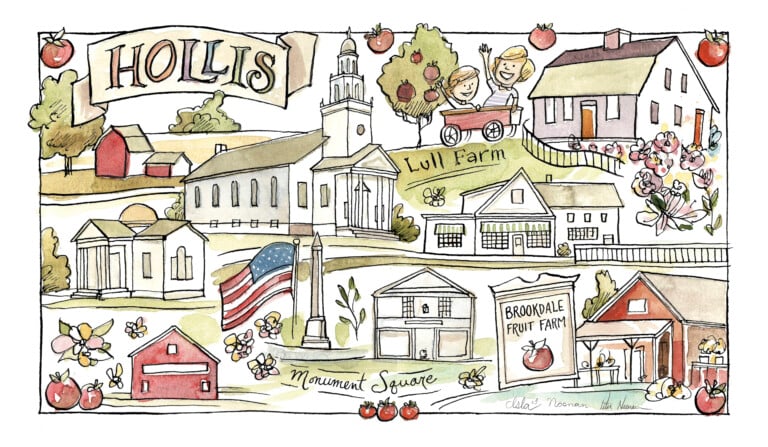
You feel it the moment you cross from Nashua into Hollis: You’ve arrived somewhere distinct.
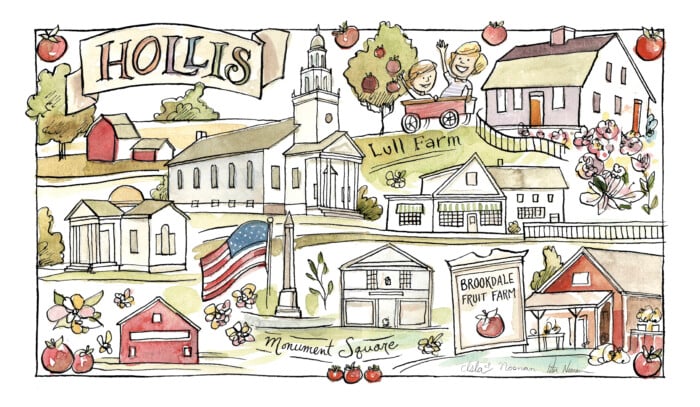
The landscape opens from tightly settled neighborhoods into planting fields. You pass unpaved historic roads, gently rolling hills and curving stretches along Broad Street before cresting into the Hollis Historic District, where working farms greet you.
The town center emerges — sidewalks, orchards, Monument Square, Town Hall — with well-preserved classic New England buildings.
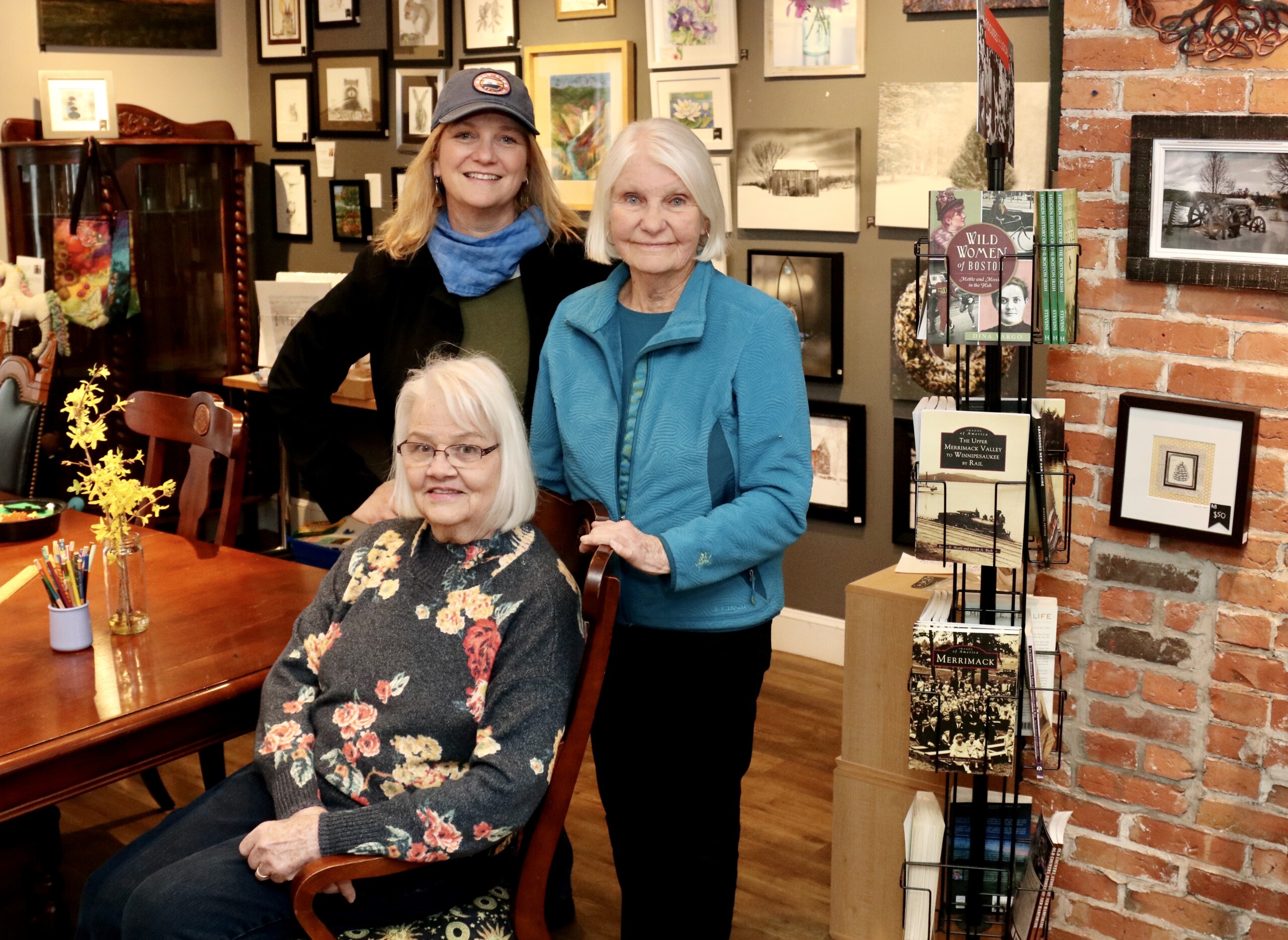
Anna Birch, left, her mother, Sue Birch, standing, and Sue’s sister, Sharon Howe, seated, stay busy with town activities. Anna Birch is co-owner of Hollis Artspace, Sue Birch is curator at the Hollis Historical Society and Howe is the historian for the Hollis Historical Society.
“It was the landscape in Hollis that drew us,” says resident Louann Swaney, whose grown children live nearby. “You feel nestled in the country and minutes from shopping and highways.”
Hollis is uniquely positioned. The agricultural and historic hub, incorporated in 1746, is minutes from Nashua and major highways leading to Boston, the mountains, the lakes and the Seacoast. The Hillsborough County community is home to about 8,800 people.
Many towns have drifted from their farming roots. Hollis has leaned in. While the town is home to some professional and technical services companies as well as construction-related businesses, several busy farms continue to innovate and diversify. Thousands of acres are protected, yielding great crops.
Outdoor life is central to the town. It maintains miles of conservation land and trails, complemented by the Beaver Brook Association’s 2,200 acres and 40-plus miles of trails. Recreational and educational programs occur year-round.
Lisa Udelsman, architect and long-time resident, can walk from her home to Monson Center without crossing a road. “I love sharing our nature and trails,” she says.
Juliana Rowland, editor of the Hollis Brookline News website, says the town’s commitment to open space, conservation and local farms is what gives it its sense of balance. “People in town work hard to create that stability — in giving value to nature while being a family and farming community as well, with all its history here,” she says.
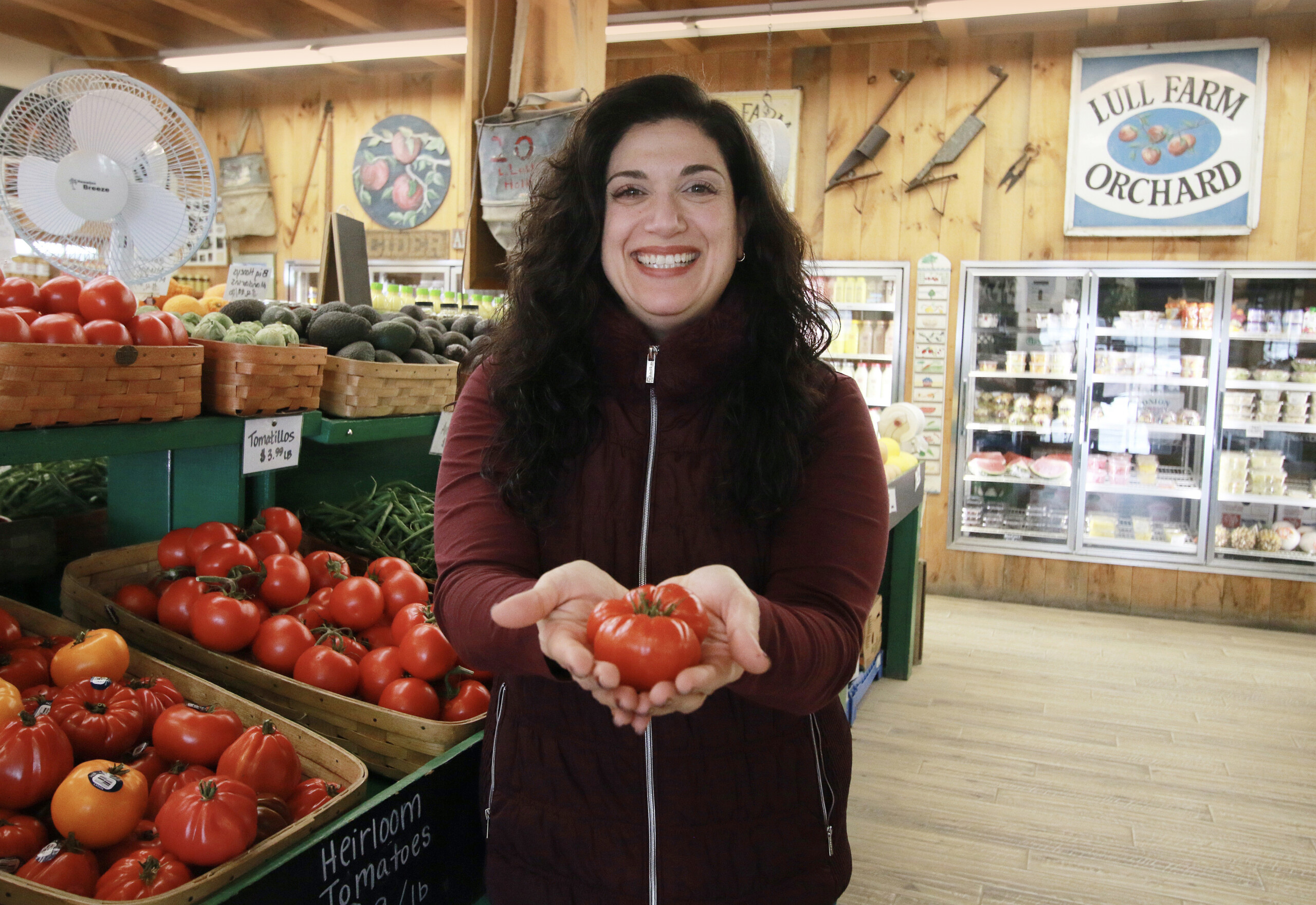
Realtor Christina Marmonti, a frequent customer of Lull Farm, serves on the Hollis town energy committee.
Tara Happy, who previously lived in Denmark and Germany and other areas of the U.S., can’t imagine living anywhere else.
“I love that Hollis totally has a small-town vibe where everyone knows everyone, even if I thought it was so weird when I moved here,” said Happy, an environmental teacher who used to work at Beaver Brook.
Multigenerational families help retain the town’s character and rural feel. Some residents leave after high school and then return to raise their own children.
Anna Birch lives in a home built by her family in 1872; her child is the seventh generation there. “It’s been great returning here and putting down (new) roots,” she says.
Others like Lindsey Sud were “hell-bent on living in Hollis” after living in neighboring towns. Her neighbors, who have lived in town for generations, let her family ride their golf cart, pick apples and peaches, feed animals and explore their land. “I don’t want to lose that sense of belonging,” she says.
Returning comes at a higher price these days. Like similar towns in New Hampshire, property values have skyrocketed. The median home price in Hollis is $930,000 — nearly $400,000 more than the median for the state of New Hampshire, according to realtor.com. More than half of the 20 homes listed for sale in early March had a sale price of $1 million or more, including one listed for $2.35 million.
Agriculture at the center
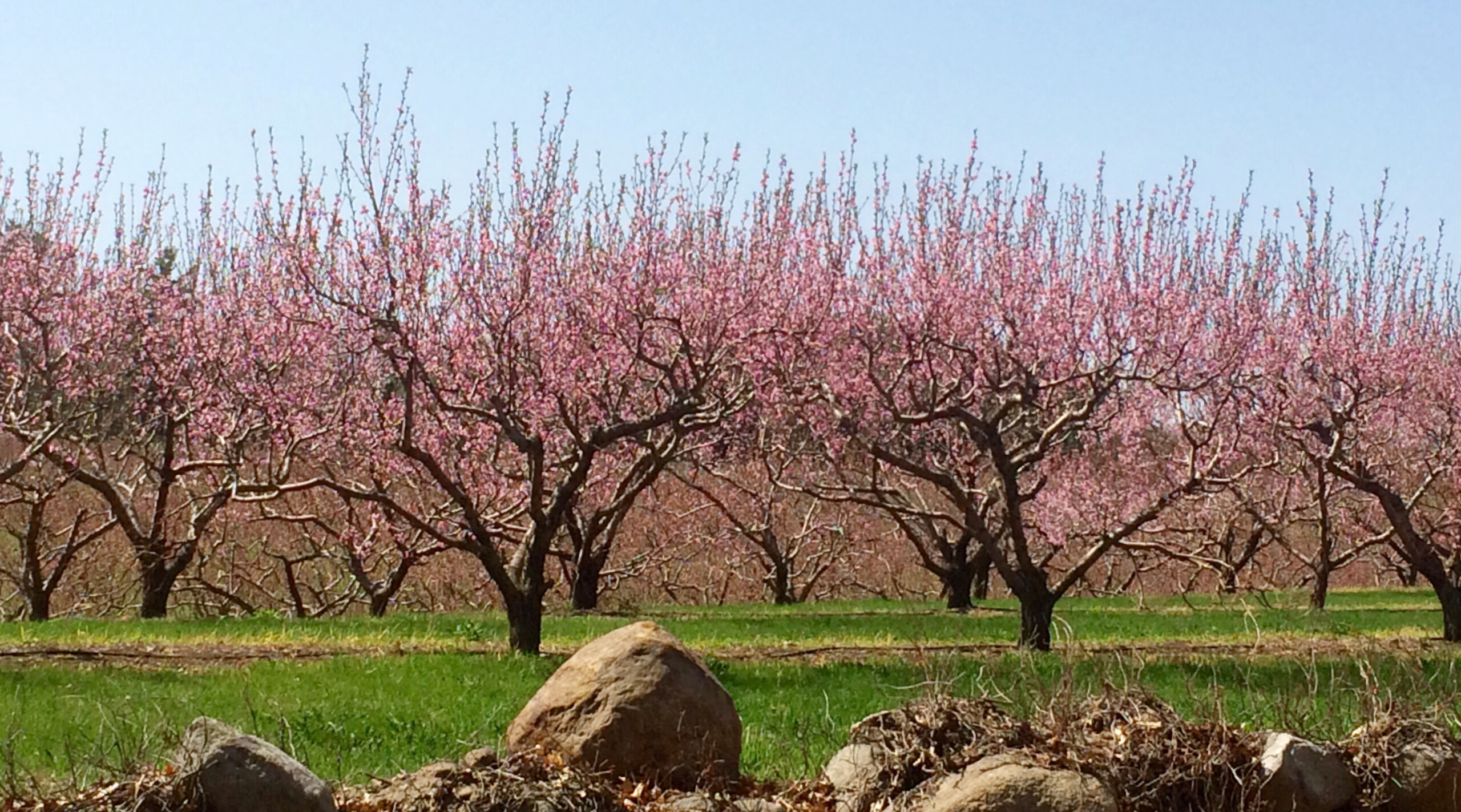
Peach trees in bloom allude to the focus on farming in the town of Hollis.
Fellowship has its deep roots for those like Bruce Hardy, co-owner of Brookdale Fruit Farm. The town was a childhood staple for him where he grew up with cousins “like siblings.” After decades away, he returned for the agrarian lifestyle like many town members.
Farm stands are part of Hollis’ fabric. Swaney and other residents say they happily pay a little more to support them. Pick-your-own programs reconnect families to their food sources and help farms diversify, say brothers Bruce and Rick Hardy.
Rick Hardy notes that historically Hollis differed from neighboring mill towns like Nashua and Milford. Hollis grew food and built barrels to store it, selling to other towns. Brookdale Fruit Farm supplies regional supermarkets with fruits and vegetables and uses new technologies to make farming efficient and safe. Their practices bring farmers from long and wide to come to
learn from them.
The soil — rich with glacial minerals — and longstanding zoning and conservation efforts are also part of the story. Jeff Begin
of Begin Family Farm describes Hollis’ soils as critical to regional food supply. As southern New Hampshire developed, farmland disappeared, but Hollis held those steady. Begin says decades of focused conservation have helped Hollis avoid the fate of towns overtaken by sprawl.
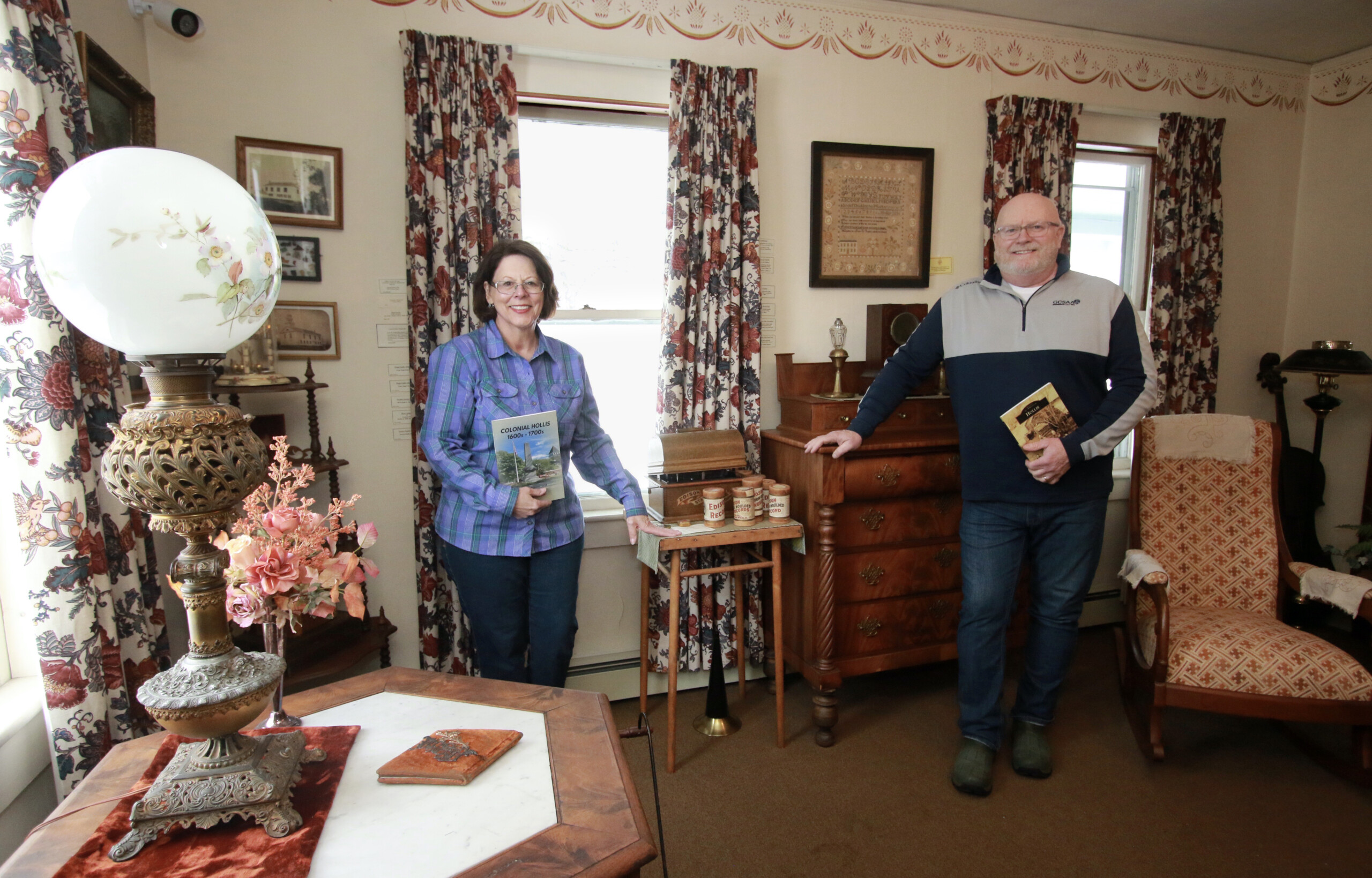
Louann Swaney, vice president of the Hollis Historical Society, and David Sullivan, director on the board of the Hollis Historical Association, visit the Ruth Hills Wheeler House on Main Street.
Small farms, vineyards, lavender fields, fresh egg stands, specialty poultry operations and horse farms further diversify the town, while domesticated animals — from donkeys to emus, alpacas and sheep — dot the landscape.
Hollis’ rural character did not survive by accident. Restrictive zoning and conservation partnerships shaped its future, and open fields along Depot and Dow roads were protected. Portions of Woodmont Orchards were purchased to prevent development while allowing farming to continue, which helped keep the town’s foundations in shape.
“Hollis approved a zoning ordinance early on with minimum 2- and 4-acre residential lot sizes in mainly residential/agricultural zones with small areas for business and industrial zones,” Howe says. “And, no public sewers or water supplies were installed. That set the stage for the majority of the land use as residential or rural.” Voters established a Conservation Commission, an Historic District Commission, and in 1999, a Heritage Commission.
David Sullivan emphasizes that maintaining rural character is central to the town’s master plan. Hollis preserves over 10 miles of unpaved roads, for example. While any 250-year-old town will change, preservation and conservation remain at the forefront, and Howe would agree.
Howe, who lives in a circa-1775 farmhouse, helped restore and move the original schoolhouse and another relative’s home onto her property. Her father and grandfather attended the schoolhouse; her grandmother taught there.
Volunteerism, charm and change

Environmental teacher Tara Happy and Hollis Brookline news website editorJuliana Rowland, seen here at Beaver Brook, have both been honored as Citizen of the Year by the Hollis VFW, Happy in 2022, and Rowland in 2021.
Volunteerism runs deep. Swaney, retired from health care, devotes time to the Historical Society and Garden Club and is impressed by residents’ generosity of time, energy, money and valuable donations. Sullivan said civic service stretches back to the Revolution, when more than 300 of the town’s roughly 900 citizens served. Now, the same hospitable and selfless spirit remains alive through a variety of programs that encourage residents to continue to take care of the other.
“It takes volunteer power to keep the nice things here,” Sud says. School events, festivals, and beautification projects all depend on residents showing up. She helps in the elementary school and organizes Old Home Days.
Town trails are maintained by a committee and by volunteers from the Nor’easters Snowmobile Club. Realtor Christina Marmonti calls them “a wonderful example of community stewardship.” “In winter, those same volunteers enjoy the trail system they so diligently help maintain,” she notes. “It’s a quiet, but meaningful reminder of how Hollis works.”
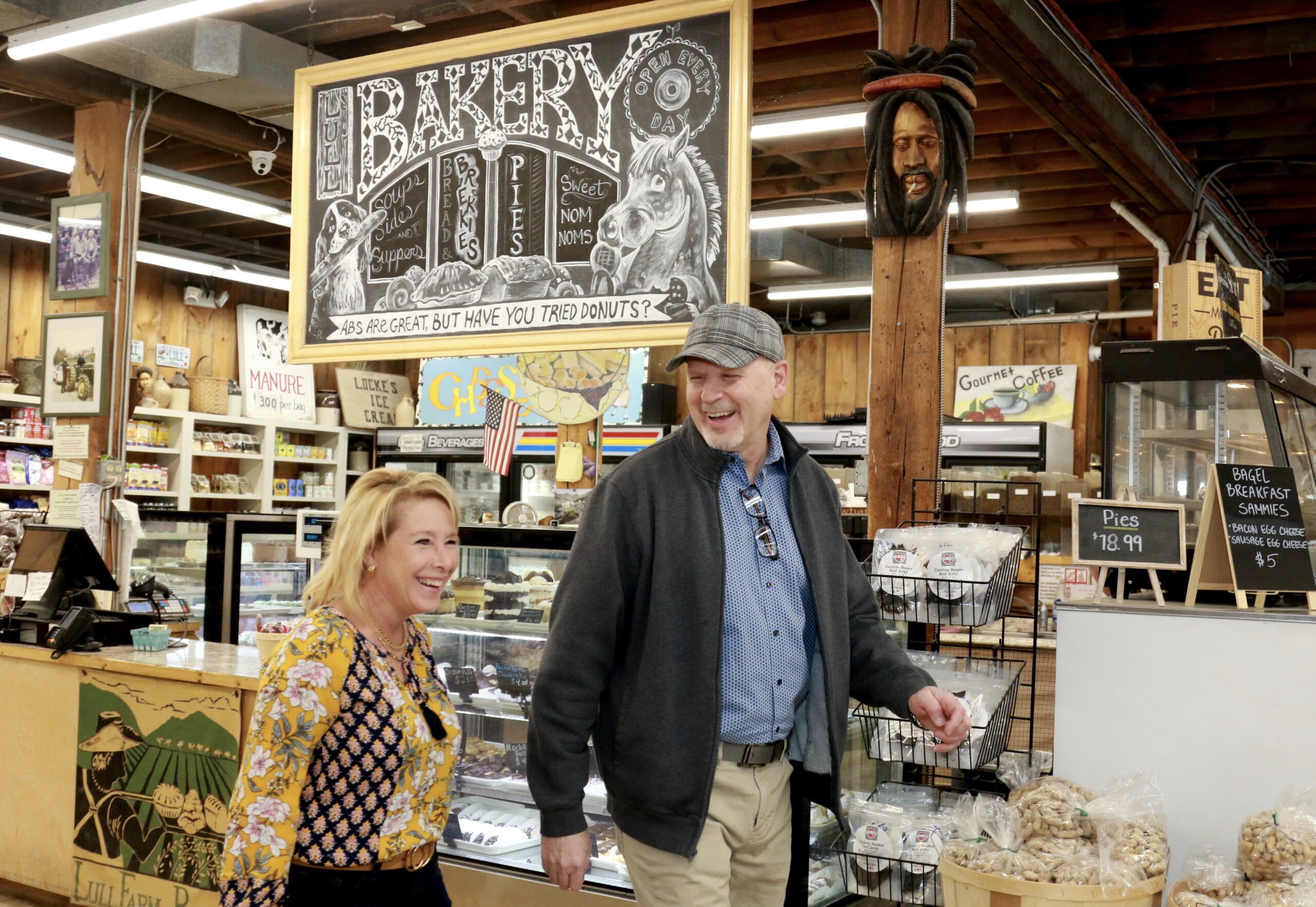
Architect Lisa Udelsman, a long-time resident of Hollis, shops at Lull Farm with her partner, John Goodwin.
Marmonti notes that new residents and rising enrollment have prompted discussions of expanding the elementary school. Demand puts pressure on remaining open space and water resources. “I still feel incredibly fortunate to live, work and raise our family here — open fields still outnumber subdivisions, neighbors show up for one another, and where community traditions still matter.”
Michael Bates grew up in England among his uncle’s orchards. “Hollis reminds me of the countryside of England, its open and working fields of mixed agriculture crops, fruit trees, hay meadows and open spaces,” he says.
Like many others in the town, Bates is concerned about how current development will impact the town’s charm. Rising school, police and fire budgets drive property taxes higher, he says. He praises the Historic District Commission for safeguarding the town’s heritage.
“I have a natural desire to preserve what we have here, and make sure that the unique character of Hollis doesn’t get eroded.”