Jon Nolan is Slow Cooking in Tune
Jon Nolan finds beauty and joy connecting community through music
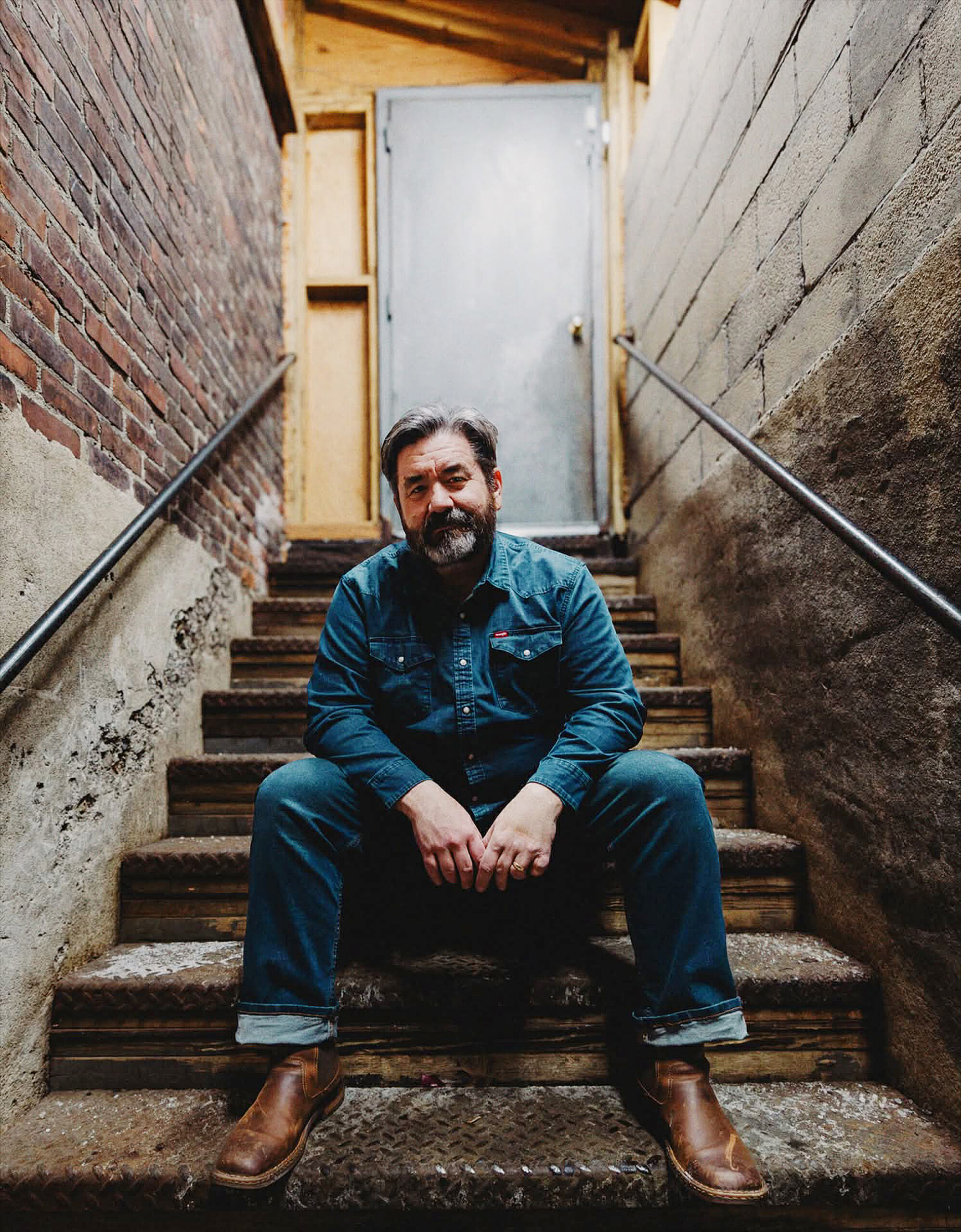
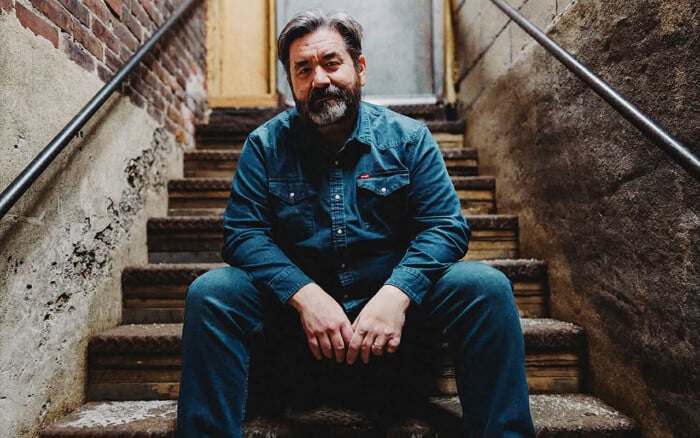
Jon Nolan, who came to prominence in the ‘90s with Seacoast-area band Say ZuZu, recently released the album “Slow Cooker” with his current band, Good Company. Photo by Stu Horne
On the first Sunday of the month from November to March, a community of musicians, as well as their friends, families and fans, congregate in the second- floor ballroom of The Stone Church Music Club in Newmarket for soup, bread and live, often improvised, jam sessions.
These shows are part of The Slow Cooker Sessions, a live performance and podcast — which just celebrated the completion of its fourth season — organized and fronted by local showman Jon Nolan, who invites a new musical guest to each show to play alongside his band, Good Co.
At The Slow Cooker Sessions, the musicians sit in a jam circle in the center of the room with the crowd surrounding them. Some of the audience sits at small tables, while others lounge on old couches arranged throughout the room. Other crowd members watch from a small stage at the far end of the historic ballroom.
With Nolan at the helm, the sessions have a communal energy, similar to old Grateful Dead shows.
Nolan, who grew up in Durham, originally made a name for himself in the mid-‘90s, playing in the New Hampshire-based Americana band Say ZuZu. The band’s roots dated back to high school for Nolan, when he and his brother, James, and their longtime friend Cliff Murphy first started playing together in the Nolans’ childhood home.
Say ZuZu rose to prominence with their album “Highway Signs and Driving Songs,” which was recorded in a week in 1994 by Willie Nelson’s producer Bradley Hartman, and drew international acclaim, particularly in Italy. Say ZuZu then spent years touring the United States and Europe, returning home between tours and working odd jobs in the interim.
Jon Nolan, who now works as a mental health counselor, spent his time between making music and touring employed as a clerk at Marelli’s Fruit and Real Estate in Newmarket; as a house painter; and even as an inflatable crayon at a Michaels’ store opening for a day.
“There is no middle class in rock ’n’ roll,” Nolan joked.
Eventually, the band amicably parted ways — in what Nolan calls “the most boring breakup in rock ’n’ roll history” — when the members started building families and pursuing other endeavors. Nolan then went on to record two solo albums, “When the Summers Last Long” (2006) and “Everything Has Changed” (2014).
Then, in 2021, Say ZuZu reunited, and the band finally signed a record contract with Strolling Bones Records. They released “Here Again: A Retrospective (1994-2002)” in 2022, followed by “No Time to Lose,” their first album of new material in two decades, in 2023.
In September, 2025, Jon Nolan & Good Co. released the album “Slow Cooker” — its title derived, in part, from The Slow Cooker Sessions at The Stone Church — which was also turned out by Strolling Bones Records, and co-produced by Nolan and his friend and bassist Geoff Taylor.
Now, the 52-year-old Nolan says he is dedicated to “creating music that stirs the heart” and bringing people together in a community of sound and goodness and joy.
New Hampshire Magazine: Many of the songs in “Slow Cooker” are about your connection with the community in Newmarket, the people and the places that you have described as creating “the quiet beauty of everyday life.” How has this “quiet beauty” inspired these songs? Talk about some of the people and places who appear in the songs on “Slow Cooker.”
Jon Nolan: I think it took getting a little older to be able to see my town, my neighbors and my life here as clearly as I see it now. My family moved to the area in 1980, and I’ve seen Newmarket through all the seasons of my life, so far. But, again, I didn’t see them as “seasons” until the last decade or so. (The last decade) has made me look longer at things, ponder moments, and the simple “hellos” from the folks in town. It made me think back on my younger days and appreciate a sense of roots in a place. All that living (in Newmarket) couldn’t help but find its way into these songs. As the great Philly-band Marah once wrote, “You get to know your hometown when you’re traveling…” I’ve travelled a good bit, and I’m always happy to come back to my little mill town.
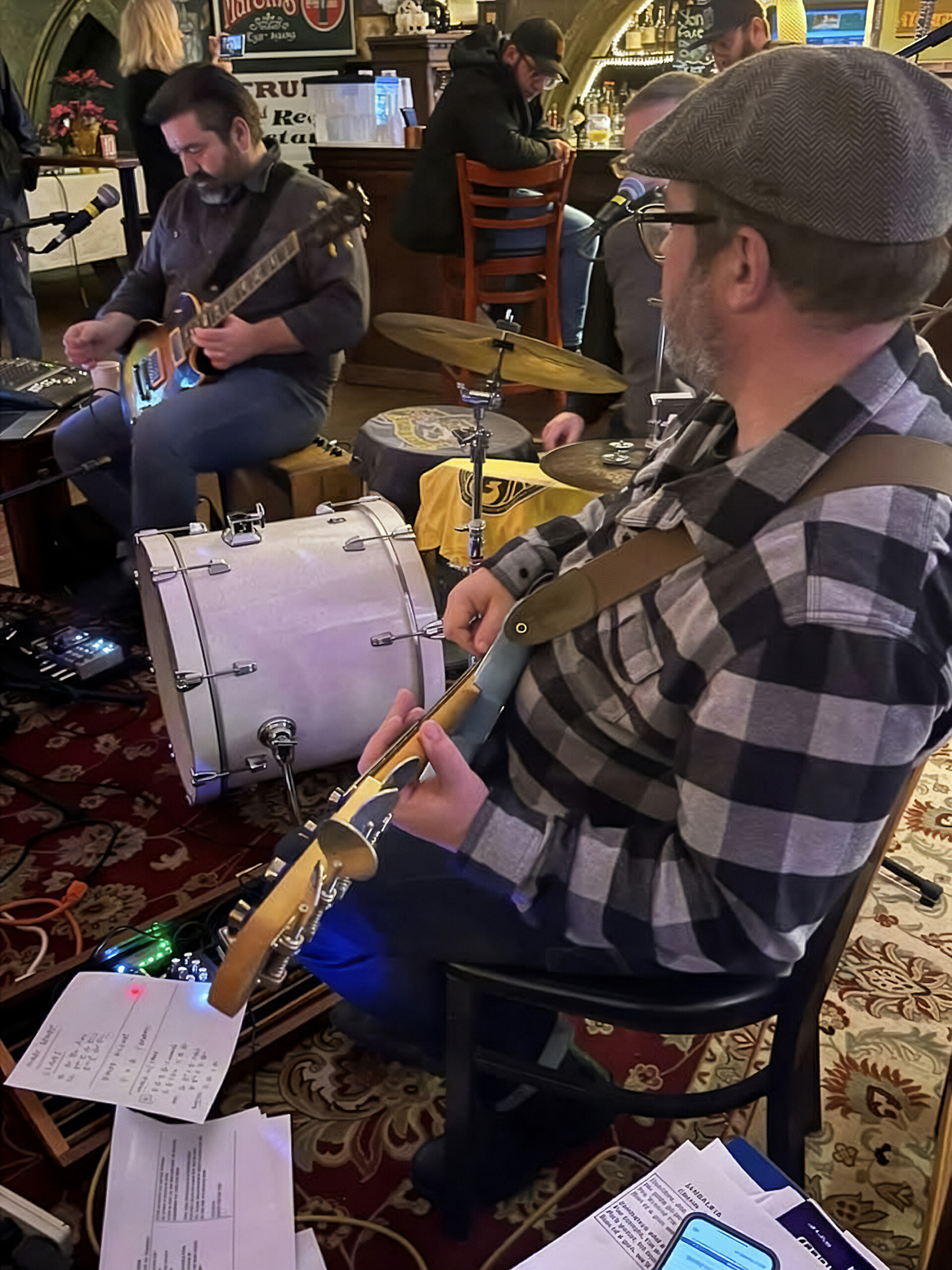
During the winter, Jon Nolan, left, hosts monthly music jams with his band Good Co. at The Stone Church in Newmarket. At right, in foreground, is bass player Geoff Taylor. Photo by Laura Nolan
NHM: You’ve called “Slow Cooker” “a new season of creative meaning for (you).” You also recently said on Tom Compton’s podcast “Pursuing the Muse” that the album “happened by accident.” What do you mean by that? How is this album different from the music you’ve created in the past, both with Say ZuZu and your other solo records?
JN: Say ZuZu got pulled out from the mothballs in 2021, when Strolling Bones Records signed us and started rereleasing a bunch of our back catalog. Up until that point I had been focused on working a job and raising a family. Getting back together with the guys (from Say ZuZu) was great. I caught the bug again, but after taking several years off from regularly playing music, I was able to reapproach it with the more even-keeled mindset. Gone were the lofty dreams of my 20s, and what took their place was a more grounded, sustainable vision that was built around joy and community and a desire to get together with my friends and have some adventures. I was trying to start a “just for fun” project built around playing stuff that was influenced by early ZZ Top (Nolan laughs). But one of the guys who was going to play on that project couldn’t make a practice, and this, accidentally, started Jon Nolan & Good Company. Then it just became really apparent to me and my friends that this was a worthy project to focus on. I’m so glad we did. Playing with Say ZuZu feels so familiar, like an old baseball glove. It’s broken in and you know what you’ve got. My other two solo records started with songs that built a band after the records were made. But this album was created while the music series (The Slow Cooker Sessions) was being created. My good friends at the Stone Church have a really magic ballroom upstairs, and they kindly allowed the guys and me to record the basic tracks over a few, late weeknight sessions. We did a lot of (“Slow Cooker”) live off the floor. I liked recording live, and it was a new thing for me.
NHM: You’ve also said that you “write songs that can bring you (and, assumingly, by extension, your listeners) joy” and that your goal is to create “music that stirs hearts.” But how important is commercial success to you? How do you, personally, measure the success of an album?
JN: I’ve always said that there’s no middle class in rock ’n’ roll, and that is true now more than ever. I don’t know if I know what “commercial success” means. I’m happy to be discovered, and I’m certainly happy to get paid, but chasing whatever (commercial success) is … it’s just so mysterious. I’ve decided to focus on making sure that I’m enjoying myself, and that the band is enjoying what we’re doing. If we’ve done that, then we’ve already won. Then we can just take what we’re doing and take it to the people. Some people golf, some people fish, I like to travel from state to state and play music with my friends. Adventures galore. It’s delightful.
NHM: You’ve said that you hope listeners will find themselves in these songs. And while this is certainly a loaded question for any artist, how do you know if a song that you’ve written is any good? What do you hope listeners will take away from your music?
JN: Sometimes songs arrive and you just know they’re good. Other songs take a minute to make themselves known — like when you try a new food, and it takes you a second and it sticks around in the palate then calls you back. Emotionally, it’s like that. As for what I hope people take from the songs … man, I hope it is joy, refuge, affirmation and a vehicle to help them feel something deeply.