Harvesting for the Holidays
Christmas tree farmers spend years growing that perfect evergreen, just waiting for you to discover it
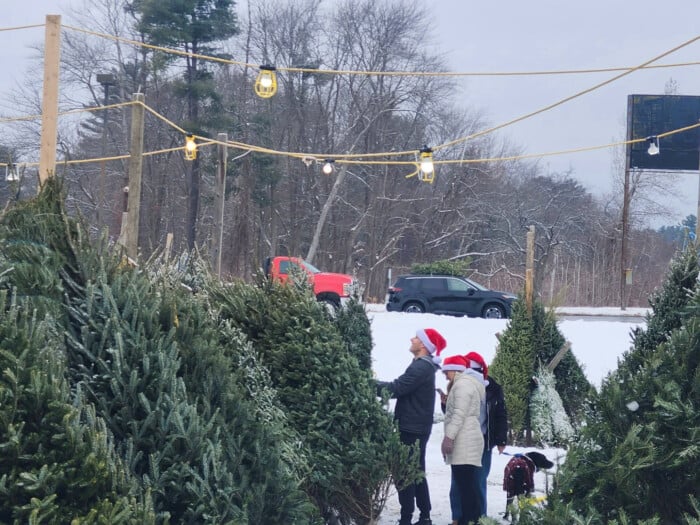
It’s an image as old as New Hampshire. A young couple and their kids head into the wintry woods in search of the perfect Christmas tree. Maybe grandmom and granddad and the family pooch come along.
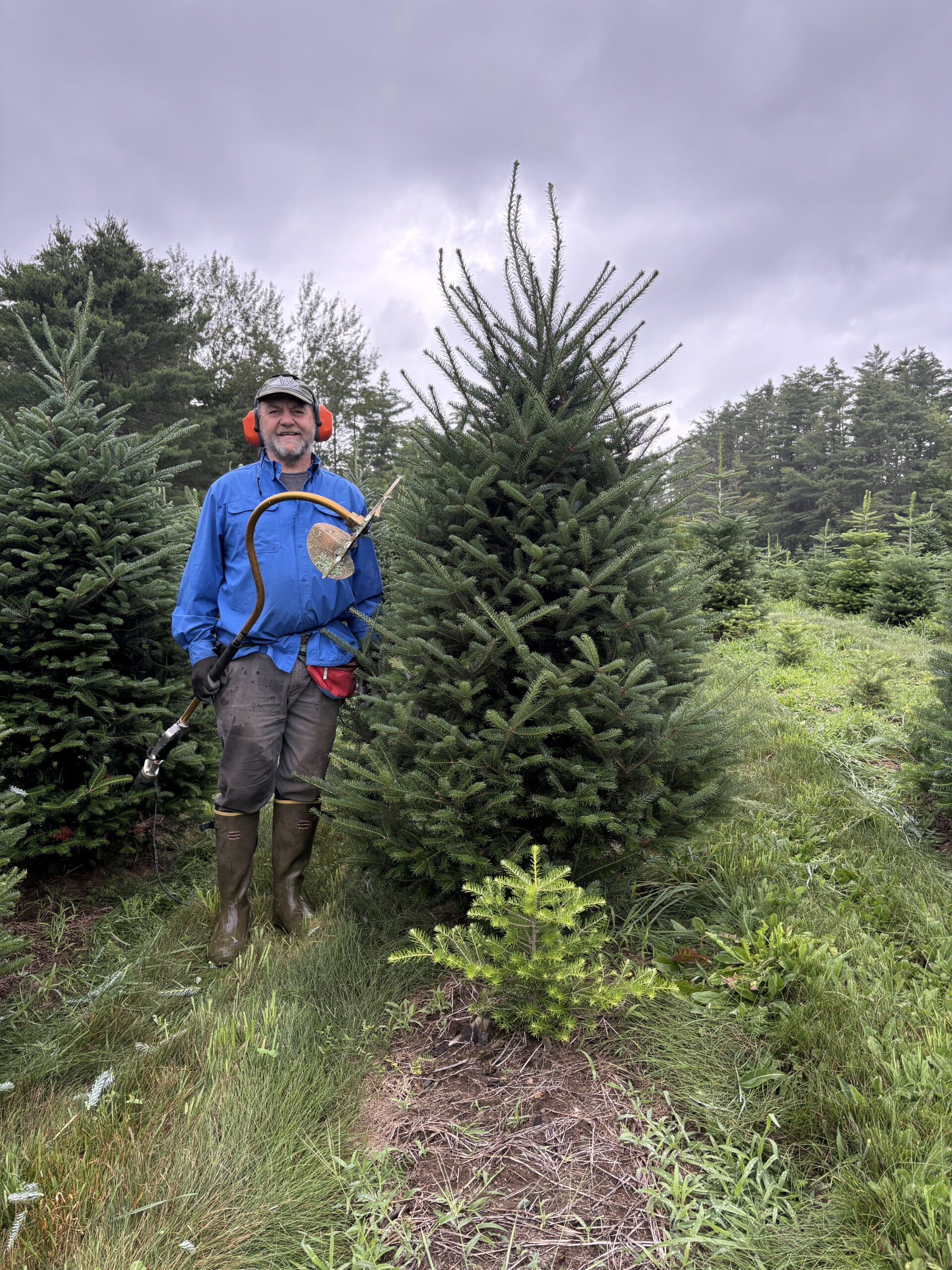
Early in the spring, Nigel Manley, owner of South Farm Christmas Trees in Bethlehem, begins pruning his trees to shape into perfect Christmas trees for winters to come. Photo Courtesy South Farm Christmas Trees
Cutting down your own evergreen for the holidays is a singular memory frozen in time. For tree farmers, it’s the culmination of months, even years, of meticulous planning and effort.
“The biggest question we get, definitely, is ‘What do you do during the other times of year?’ ” says Nigel Manley, owner of the 23-acre South Farm Christmas Trees in Bethlehem. “I think, at first, people think it is easy. Honestly, that you just put the trees in, and then eight years later you just cut them.”
A native of the United Kingdom, Manley and his wife, Judy Ratzel, know better. They’ve owned South Farm since 2013, after decades in the dairy farming business, and produce roughly 800 trees a year. They offer trees, including Fraser, Canaan, Fralsam (a Fraser-Balsam hybrid) and Korean, for wholesale or cut-your-own.
Manley says he’s particularly fond of the latter, because it gives him a chance to meet his customers and share the joys of tree farming.
“It’s really about making sure that you’ve got the right product at the right price, so that you can make money,” he says. “So far, it’s going gangbusters, to be honest. For instance, the cut-your-own sales went up 22 percent last year.”
While the four weeks of intense sales beginning in mid-November may appear to be the busiest time of the year for a tree farmer, the work is never done, Manley says.
That’s true for any tree farm, from Illan Kessler’s Noel’s Tree Farm in Litchfield and his wholesale plantation in Colebrook, to Michael Ahern’s Glove Hollow Christmas Tree Farm in Plymouth, to John “JT” Turner’s Live Tree or Die Farm in Amherst.
Today’s Christmas tree producers are part florist, part farmer, part land manager.
But their product takes eight to 10 years or more to mature, a long time to wait for a return on investment. The tree a customer cuts started out as a sapling, or transplant, cultivated in a separate location before being transferred to a tree farm.
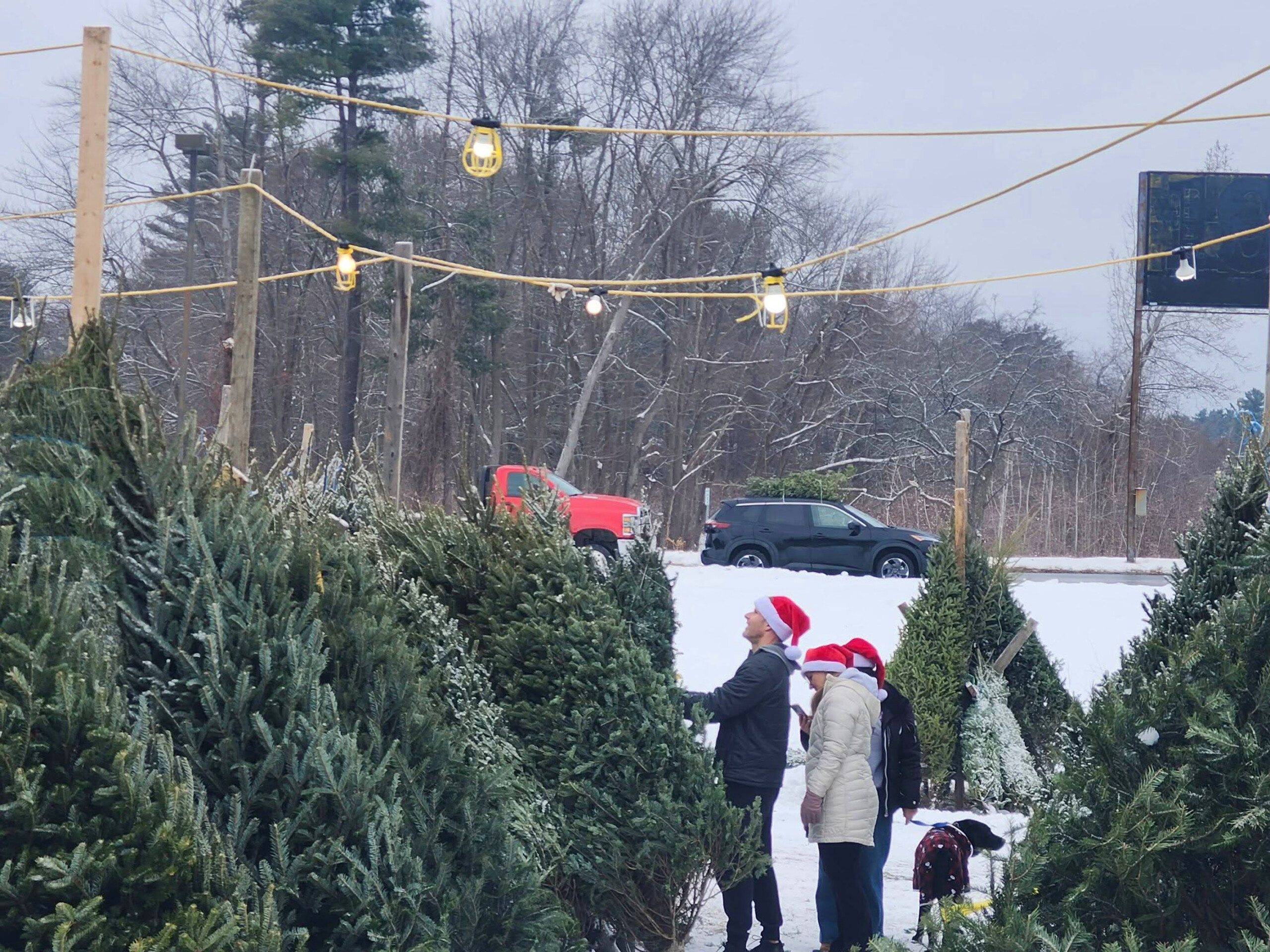
North Pole Christmas Trees, which includes Noel’s Tree Farm in Litchfield, produces wholesale, retail and cut-your-own Christmas tree options. Photo Courtesy North Pole Christmas Trees
“They’re planted when they’re about 4 or 5 years old, and then require another seven or eight years to reach the most desirable size of 7 feet,” Kessler says. “All in, a tree is about 13 years old before it’s sold.”
For tree farmers, the annual chores start in earnest shortly after the winter holidays, when plans are being laid for the new year, or the next crop, determining which types of trees to plant, and servicing and repairing equipment. There are also the normal operations of any business, including administrative tasks like payroll and logistics.
Once winter’s hard frost passes, stumps from previous trees need to be removed and the ground needs to be prepared for the next generation. Saplings — usually between 2 to 3 feet tall — are purchased and planted during the spring, typically in April.
Each tree also receives personalized attention for fertilizing and weed control, administered either by hand or machines. “It’s like managing a garden, not a forest,” Manley says.
The summer months bring the added chore of pruning, or shearing, which is critical in shaping the tree to become, ultimately, an ornamental centerpiece.
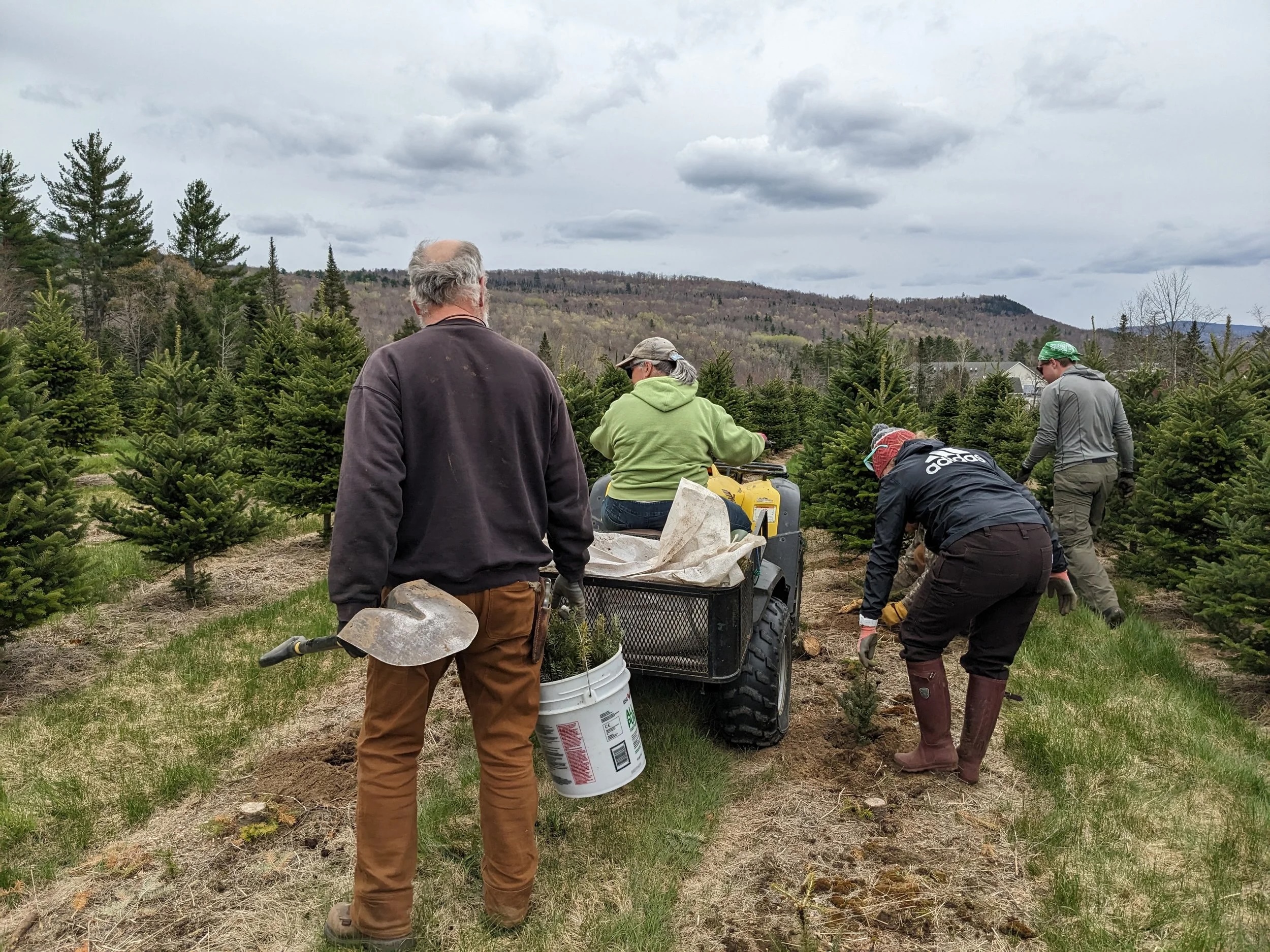
At South Farm in Bethlehem, sapling planting begins in early spring after the ground thaws. From left, Nigel Manley, Judy Ratzel (on the 4-wheeler), Amy Mitchell Gomo and Mike Maziarz plant the next generation of evergreen trees. Photos Courtesy South Farm Christmas Trees
“You’ve got to prune every tree you’ve got every year until you sell it,” says Manley. “For instance, on my farm, I’ve got 6,000 trees. And that’s what I prune every year in July and August, in order to make it so that they will grow properly.”
Many farmers also cover their rows of trees in grass, not only to offer an inviting landscape for cut-your-own customers (“It helps when you drag a tree out if there’s no mud,” says Manley), but also for practical reasons. Keeping the rows neatly mowed, and the bottom of the trees nicely trimmed, provides a natural filtration system through the farm, which translates to a natural pest deterrent.
“You have to mow it enough so that you have really good wind going through the trees, so you get less diseases,” says Manley. “I basal prune every tree, usually the third year it’s in the ground. That means taking the bottom 6 to 8 inches of branches off those trees. Again, that makes it so airflow goes through the trees.”
Mowing between the trees continues through the fall, as farmers and their crews collect the brush used for wreaths and other holiday decorations and prepare for wholesale harvesting in late October and early November. That’s followed by the mayhem of the holiday retail season, which includes distributing trees and opening the property for the cut-your-own crowd.
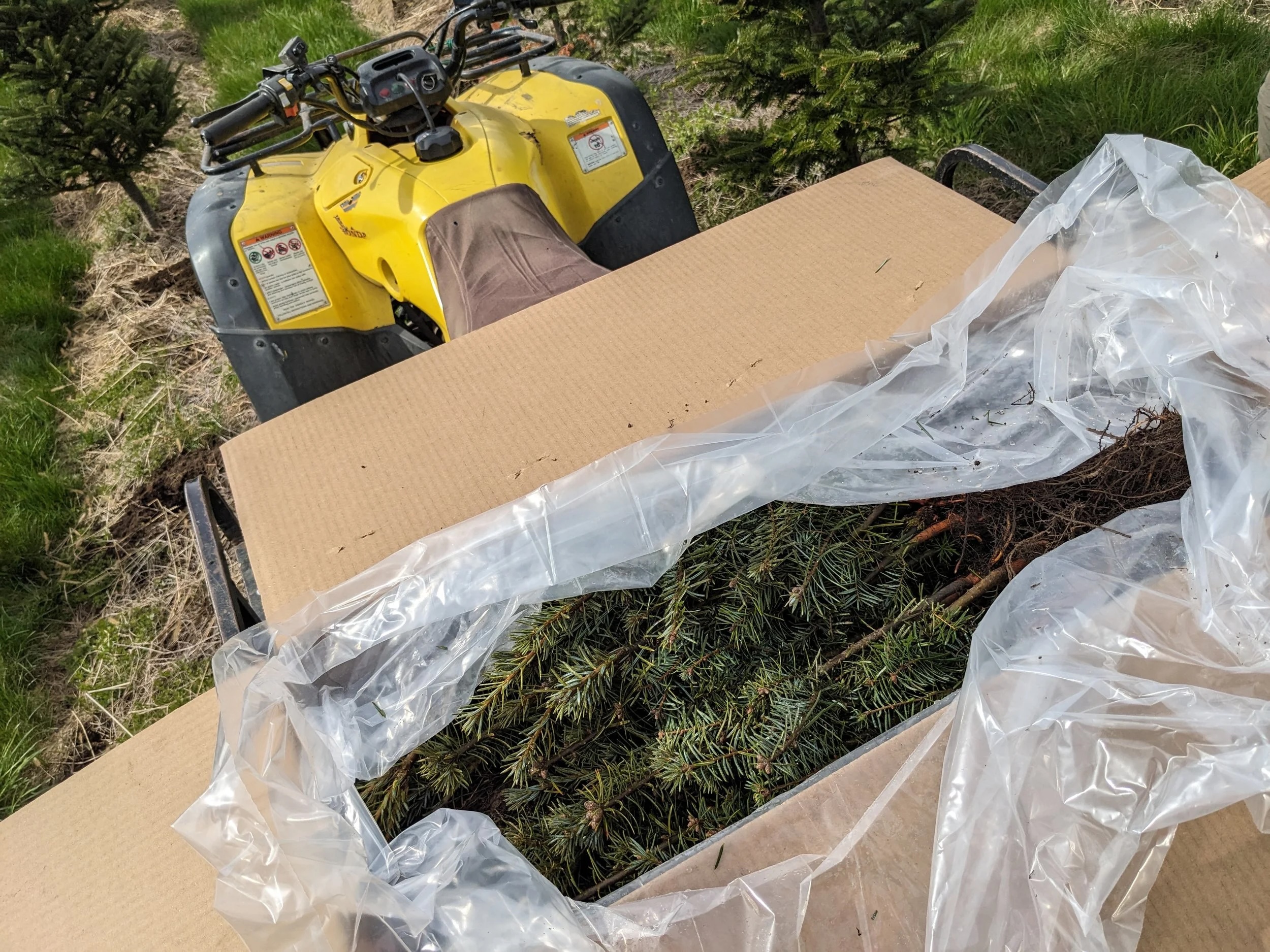
A box of transplants, or saplings, await their turn to be planted.
Kessler handles about 75,000 trees each year through his work as a distributor, while his own farms produce roughly 1,500 to 2,000 trees annually. That total breaks down to roughly 60 percent wholesale and 40 percent retail, but those figures can vary widely among the state’s tree farms. What most farms do have in common is that almost all their trees move from early November to mid-December.
“We run a skeleton crew during the year, probably about five guys,” Kessler says. “In season, there might be 50 people total who end up working for us. But a lot of these guys might work just one or two weekends, because the majority of the action happens on that Black Friday weekend and then the weekend after.”
Cutting your own
Many New Hampshire tree farms are wholesalers, meaning the trees they produce are destined for tree stands and retail outlets elsewhere in the state, or outside New Hampshire. But nothing quite compares to choosing and cutting your own tree, says Kessler.
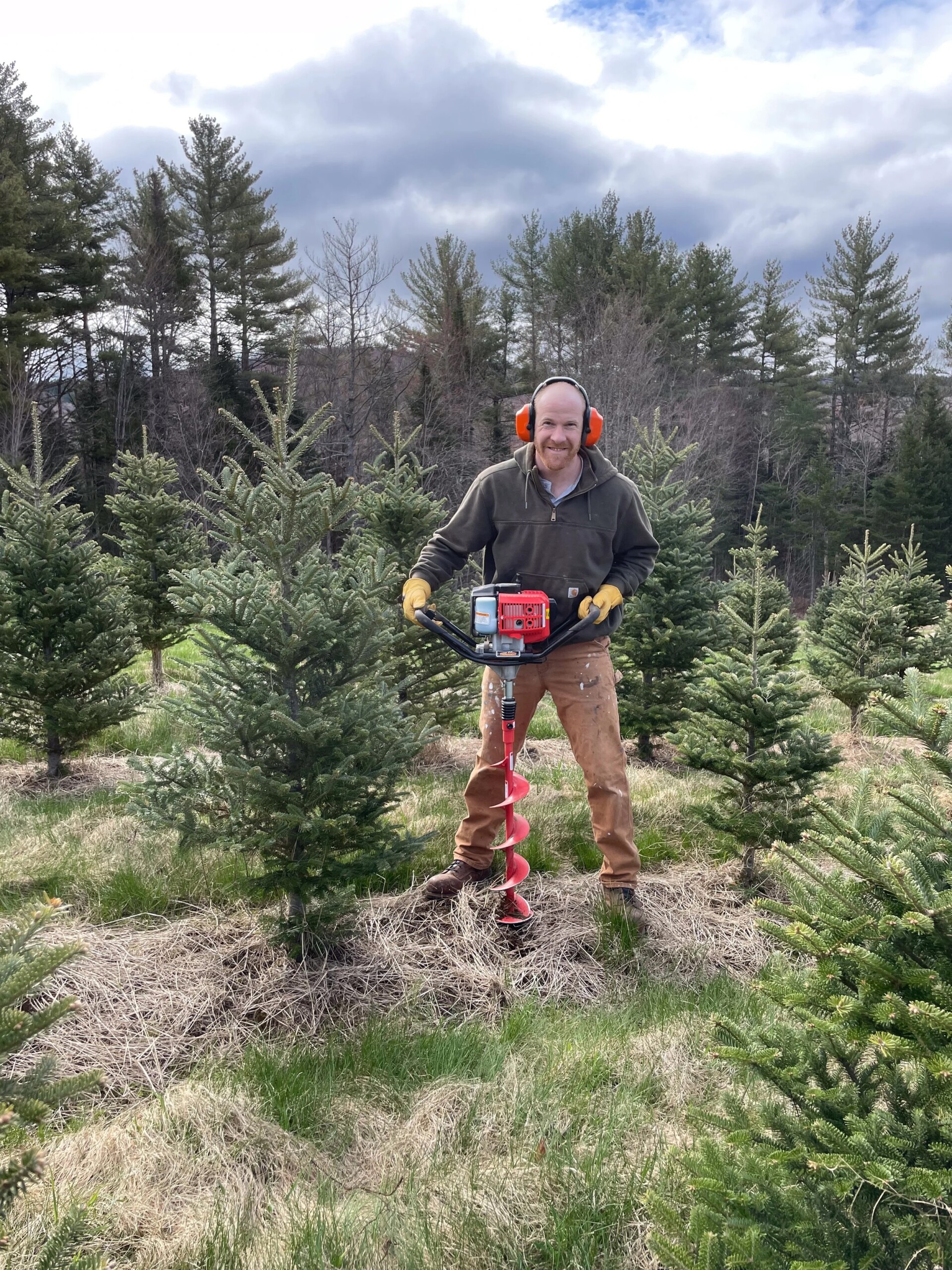
Matt Hecklinger uses an auger — sometimes required for larger transplants.
“It’s a quintessential feature of New England, and it’s just something that we, the baby boomers, all took for granted,” Kessler says. “Millennials, most of them, never really knew that experience, because these tree farms are just so few and far between, and every year they just close up, and there’s just less of us out there.”
Kessler, whose family has been involved in the Christmas tree industry since 1971 and were dairy farmers for generations in Nashua, refers to choose-and-cut farms as an “endangered species.”
“That’s really a type of farm that’s just not really going to be around anymore because no one’s going to start a choose-and-cut farm, because it has to be close to an urban area,” he says. “If it’s two hours away, it’s just a little too far for a family to load up the minivan, go get a tree and then be back for dinner.”
Kessler is primarily talking about smaller tree farms near more populated areas in the southern third of the state, like cities and the Seacoast. Those farms face near-constant
development pressures and aren’t as compatible with an operation that requires six to eight years to bring a product to market.
One farm that has bucked that trend is the Live Tree and Die Farm in Amherst. Turner and his wife, Renee, bought the 10-acre farm on Cricket Hill in 2013, and sold their first cut-your-own trees a decade later.
“We plant 500 to 800 trees per year and harvest only about 300,” John Turner says. “It’s not as easy as you might hope to grow a beautiful Christmas tree.”
Like other back-to-the-land pursuits, tree farming is far more complex than it initially appears.
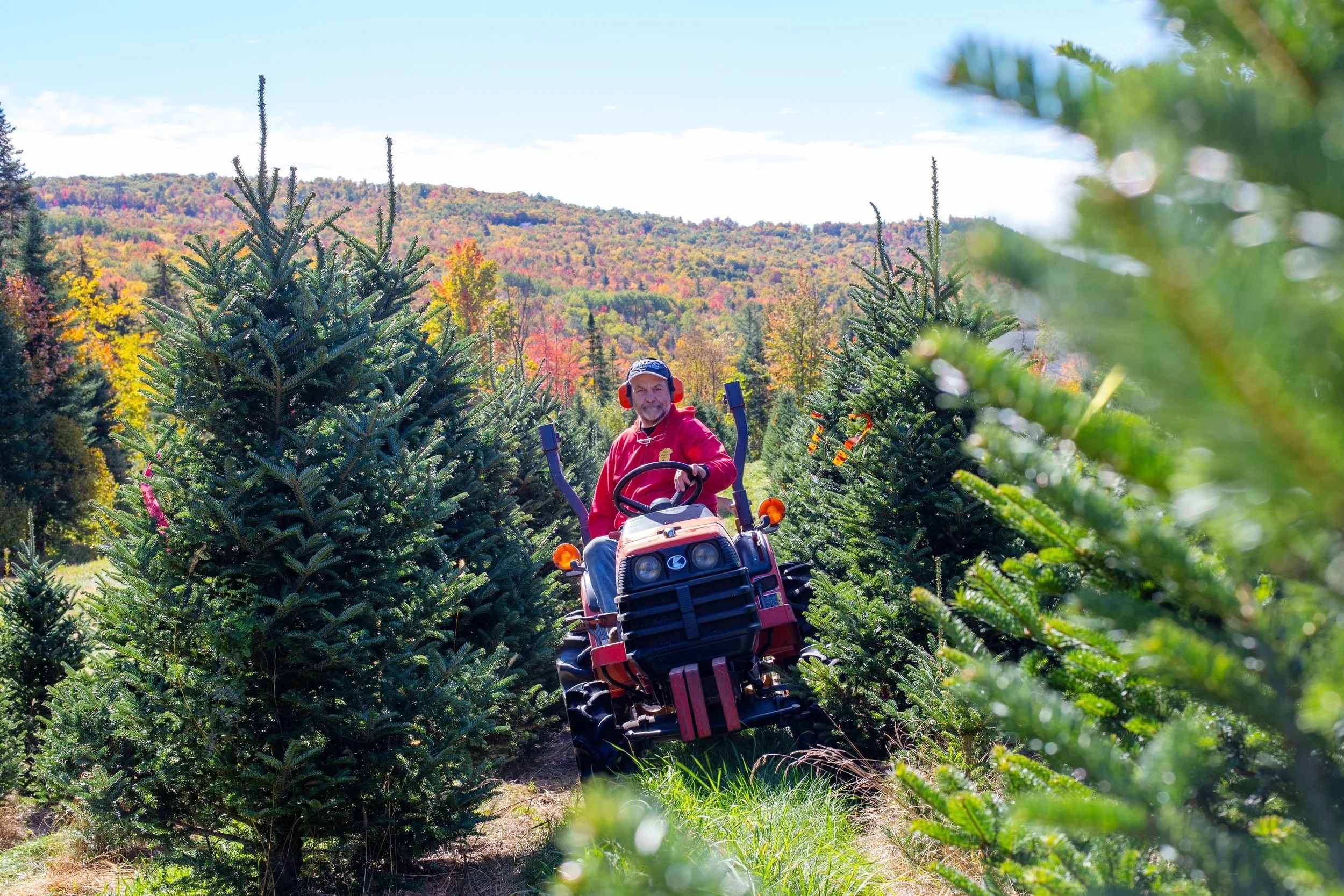
Manley mows between the trees.
“Try growing perfect corn in your back yard, or perfect sunflowers. It’s really hard,” Turner says. “Now stretch the life of your farm product over eight years. Every year, you fertilize, mulch, prune, shear, etcetera. It’s crazy hard work, but it’s also incredibly rewarding.”
The good news, he says, is that his farm has a very loyal customer base, and typically sells out in two days every year. The demand is so high, he says, that they allow customers to pre-purchase their cut-your-own experience “so they don’t have to rush here on Black Friday.” But prices, like the trees, keep growing.
“Prices for the choose-and-cut market have been steadily increasing, as there’s a shortage of local farms offering this experience,” Turner says.
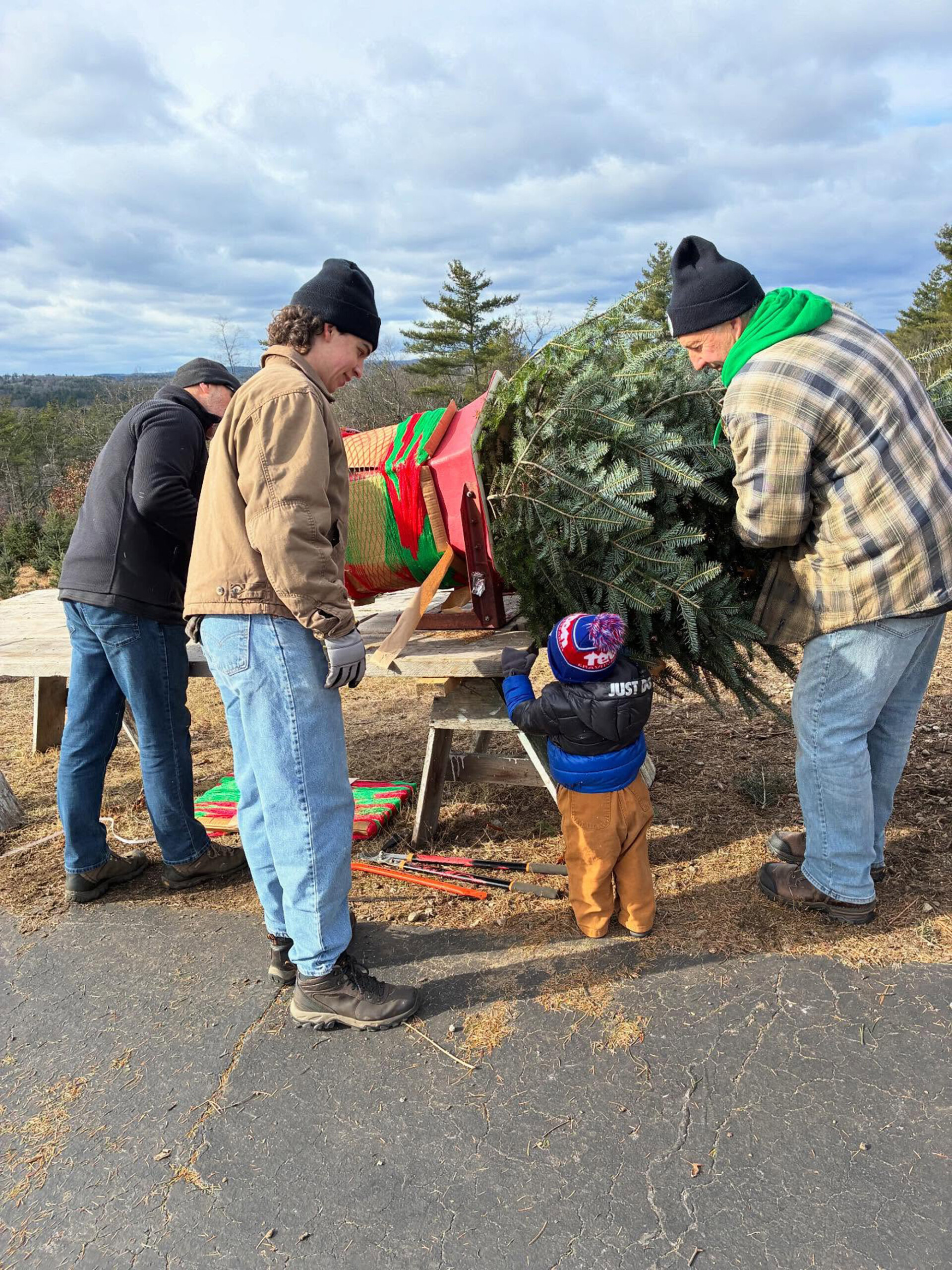
The crew at Live Tree or Die Farm in Amherst gets an assist from one of their younger customers while wrapping up a new tree for delivery. Photo Courtesy Live Tree or Die Farm
The key word in that statement is “local.” However, the outlook for tree farms in general isn’t entirely gloomy. The demand far outweighs the supply, and every farmer interviewed for this story acknowledged that they sell out every year.
The number of tree farms across the state is actually increasing. According to Veronica Francis, executive director for the New Hampshire-Vermont Christmas Tree Association, 18 new farmers joined the association this past year, most of whom are new growers.
That brings the association’s total to 168 member farms, including 78 in New Hampshire and 74 in Vermont, plus 16 in other states, including four from Quebec, Canada. And the number of farms is actually higher, since not every tree producer is a member of the group. (The Tree Association estimates the number at roughly 400 between the two states.)
A haven for wildlife
Kessler’s operation — North Pole Christmas Trees, which includes Noel’s Tree Farm — is also providing a lesson in creative land use. Recently, he incorporated a number of smaller farms, such as Goss Farm in Rye, where he leases land from conservation groups and communities. The arrangement preserves open space in populated areas while producing trees for cut-your-own customers.
“Christmas trees are great for encouraging wildlife, and they mesh well with forestry management,” he says. “So, whether you want to preserve the land for agriculture or forestry, it ticks both those boxes.”
The long-term lease translates to long-term protection, he says.
“Some of these agricultural preservation societies want to get farmers, but the farmer might come in for one year, and then they’ve got to get a new farmer the next year,” Kessler says. “I can come in and offer a long-term stewardship of the land. And that’s what they really want.”
Christmas tree economics
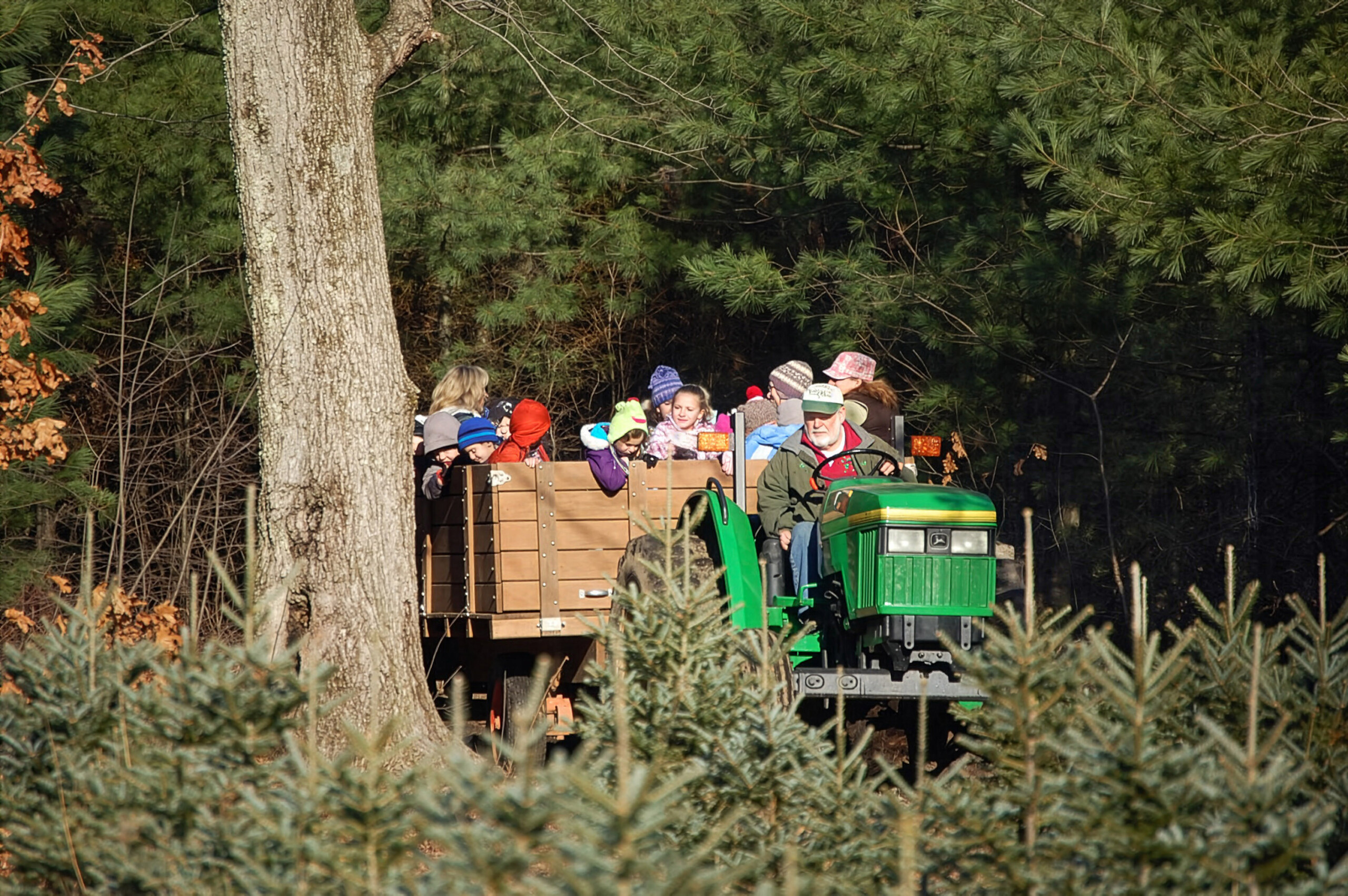
In addition to Christmas trees and other holiday evergreen decorations, Noel’s Tree Farm in Litchfield also offers tractor tours of the property.
Christmas trees don’t come cheap. But understanding the year-round effort required for tree farming can help customers better understand the price tag.
According to Manley, retail tree costs can vary considerably due to the location of the farm, as well as the height, shape, and species of each tree. Expect to pay anywhere from $65 to $250, with trees in the 6-foot to 8-foot range costing less, and taller trees — 10-feet to 14-feet — fetching a higher price.
Ahern, with Glove Hollow in Plymouth, takes a slightly different approach, setting price based on the day, with slightly higher prices early in the buying season “because our tallest and most phenomenal trees will go first,” he says.
Plus, evergreen trees, unlike most farm crops, require years before they can even be brought to market, or is ready to be cut down. Most farms are selling trees that are at least eight years old, reflecting the long-term commitment before any return on investment.
There are also hidden costs, such as workers’ compensation insurance, and liability insurance for farms that allow customers to actually step foot on the farm.
“The amounts of insurances that you have to carry all adss to the cost of owning a farm,” says Ahern. “It’s all so that you can then invite people to come to the farm and experience the way people would get their Christmas tree back in yesteryear.”
The perils of plastic
Ask any New Hampshire tree farmer what their single biggest challenge is, and they’ll invariably say “artificial trees.”
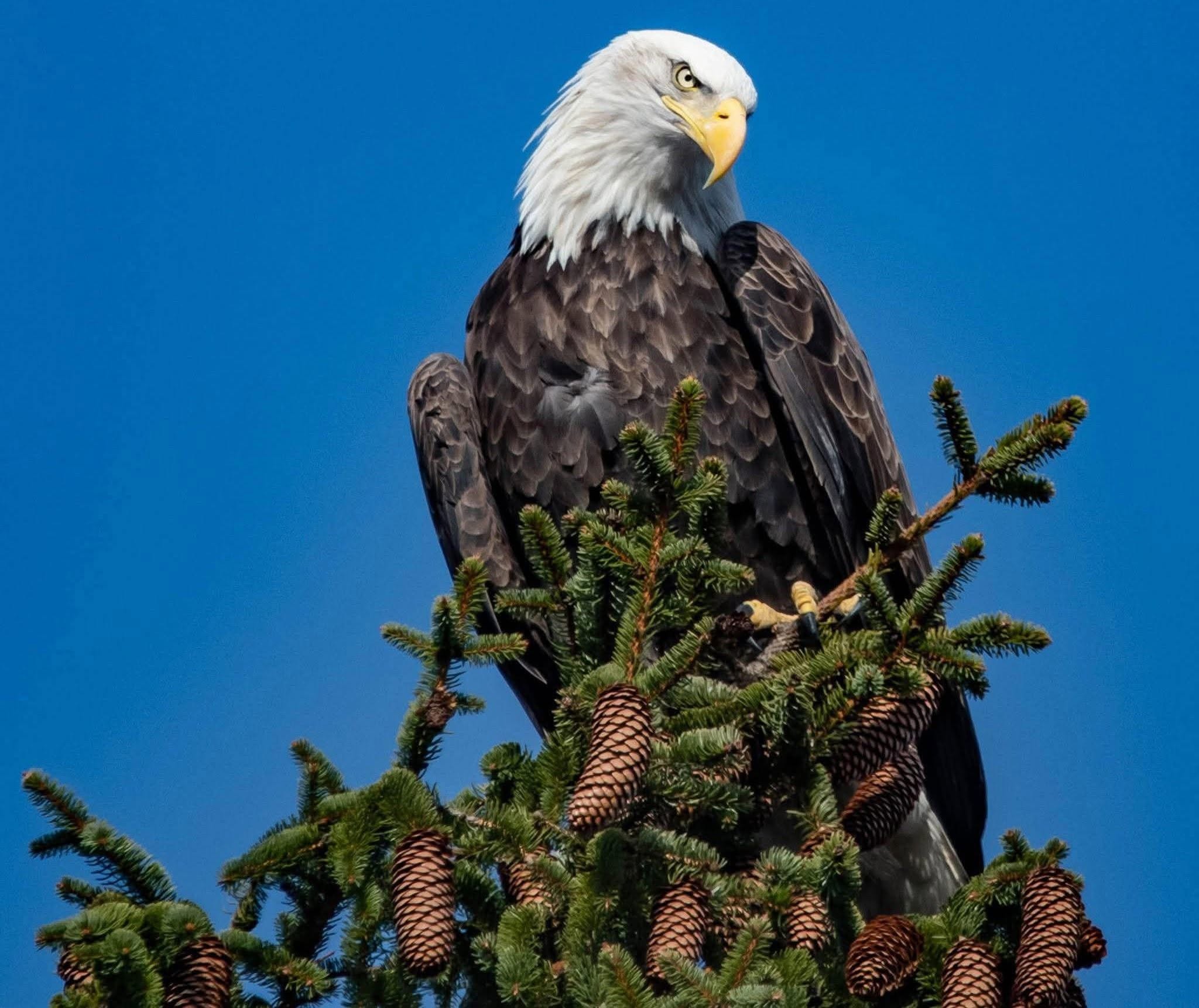
Christmas trees provide habitat for wildlife, such as for this bald eagle, seen here at North Pole Christmas Trees. Photo Courtesy North Pole Christmas Trees
But the challenges of simply growing trees are myriad, Turner says, from shortages in trained labor, to turkeys and other birds, deer, bears, mice and other rodents, various pests (such as the Balsam wooly adelgid) and root rot.
Christmas tree producers must also face the realities of climate change in addition to the notoriously unpredictable New England weather. Annual recorded temperatures are demonstrably higher, and pests and diseases that thrive in the warmer temperatures are moving northward.
As a result, many farmers are diversifying their crop, introducing hardier species that are resistant to those incursions.
“If you’ve got a monoculture, and you get a disease in there, you could get completely wiped out,” says Manley, noting that the wet summer of 2025 was particularly challenging. “It was really wet in May, June, and July. And you’ve got all one species that gets root rot, you could lose everything. But in this way (with multiple species), you haven’t got your eggs all in one basket.”
Kessler adds that the land will often determine not only what a farmer plants, but how quickly that tree will develop. “We’re going to try to plan what the customer wants first, but it’s ultimately going to be what will grow,” he says.
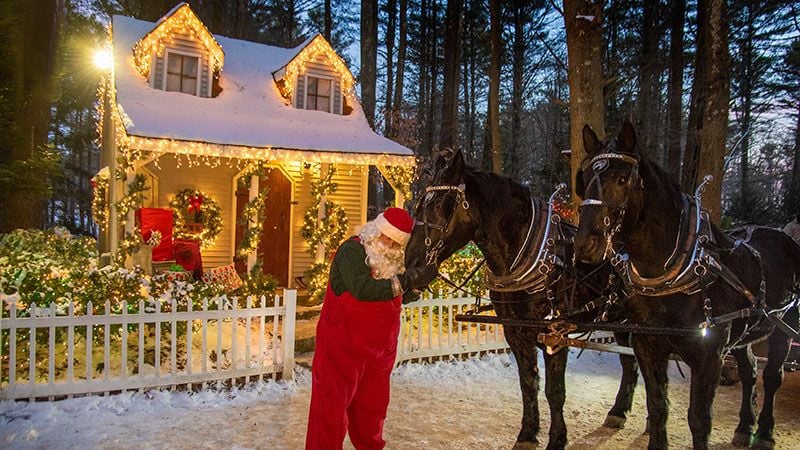
Many tree farmers are also diversifying their activities on the farm, adding a number of events and attractions to bolster their revenue streams, including educational tours, horse-drawn carriage rides, weddings, photography, petting zoos and retail shops. Manley’s South Farm is offering spirit tastings, while Kessler’s Noel’s Farm has introduced a pop-up barbecue pit.
Still, the biggest attraction remains cutting your own Christmas tree.
“The greatest reward in this business is making people happy, and the physical reward as well,” Kessler says. “It’s a great honor to be part of an experience that brings joy. Handling trees all day is amazing exercise.
Likewise, Ahern, whose 430-acre farm dates to 1897 and has been producing Christmas trees since 1957, says the simple act of cutting down a Christmas tree is powerful enough to create family traditions that span generations.
“It’s coming out here and being with their family, and doing something like cutting a tree, that they may not get a chance to do anything like that at any other time of their kids’ lives,” he says.
 The 411 on Christmas Tree Care
Having a natural tree is one of the great joys of the holiday season. Having that tree fail before its time, with needles littering the floor before Saint Nicholas arrives, can be one of the season’s great disappointments. To ensure your tree stays healthy through the holidays and beyond, consider this “tree management” advice from Nigel Manley, owner of South Farm Christmas Trees in Bethlehem.
Know where your tree is coming from
Many trees that arrive at local retailers may have traveled a great distance, many from out of state. The longer the time between the tree being cut and when you finally get it home, the more likely it will be stressed, curtailing its practical life span.
Work with reputable retailers
Remember the tree-shopping scene from “A Christmas Story”? Don’t be Ralphie’s penny-pinching dad. Find a retailer that works with trees year-round, preferably a Christmas tree farm, garden center or agricultural co-op. A good retailer will look after their trees. It’s worth the extra cost. Manley keeps the trunks of his pre-cut trees in water, so they stay hydrated.
Know how a tree’s circulation works
When an evergreen tree is cut, it forms a film along the base that essentially prevents the tree from losing fluids, but also prevents absorption. Whether you buy a pre-cut tree, or cut your own, cut another ½- to 1-inch disc off the bottom of the trunk once you get home. Then put the tree in a proper tree stand, filled with fresh water, as soon as possible. Avoid shaving the sides of the trunk to fit, and keep the tree away from heating elements.
Give it plenty of water
The biggest foe of your Christmas tree is lack of water. Check every day to ensure the water level is well above the base of the trunk, especially if you’ll be out of the house for long periods. Cut trees are thirsty trees.
If the base dries out, the tree will again form a protective film, preventing intake. Water often to keep the tree robust and its needles strong.