Spotlight on Rising Changemakers: Quinci Worthey
Profiles of New Hampshire leaders who are lifting up diverse voices in the Granite State and beyond
603 Diversity is continuing to share stories of our neighbors in our Rising Changemakers series with another person who is making a difference in diversity spaces of New Hampshire. Our editorial board members and contributors have shared the names of many remarkable people who have not been in this publication before. If you know of someone who deserves some spotlight, please email editor Sarah Pearson at sarahekp@yankeepub.com.

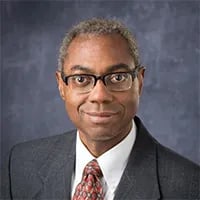
Quinci Worthey
CITY: Manchester
Q: You’ve worked in youth development, homelessness services, workforce development, public education and now with the Black Heritage Trail of New Hampshire. What common thread connects those different chapters of your career?
Worthey: I think the common thread that connects these chapters in my career is equity. Access to education, housing, employment, learning, business growth and support have all been focused on through an equitable lens. I’ve tried to meet people where they are at, with the hope to help however I can to get them to where they want to go.
The mission of the Black Heritage Trail of New Hampshire is to work to bring New Hampshire’s African American history to light, through fostering understanding and appreciation that will inspire stronger, more inclusive communities today. I don’t believe inclusion is possible without equity tied into it.
Q: What brought you to New Hampshire, and what convinced you to stay?
Worthey: I moved to New Hampshire to participate in an AmeriCorps program after college. My original plan was to relocate for a year and then apply for the Peace Corps. I ended up enjoying my time and work in NH, which led to me building a strong community and support network. After 16 years, I still reside in New Hampshire and do not have plans to leave anytime soon.
Q: You’ve worked with young people in several very different settings, including schools and services for youth experiencing homelessness. What have those experiences taught you about what young people need in order to succeed in school and eventually in the workforce?
Worthey: I am very grateful for how my career has unfolded over the years. It has been a privilege to have these experiences throughout the state. I believe that, in order for young people to succeed in general, there needs to be a focus on ensuring the social determinants of health are met throughout their lives. Those determinants are: education access and quality, neighborhood and built environment, social and community context, economic stability, and healthcare and quality. If those are met in society, people can not only survive, but can also have the potential to thrive.
Q: Before joining the Black Heritage Trail, you worked in both workforce development and K-12 education. Where do you see the strongest connections between a student’s educational experience and their ability to envision a future career?
Worthey: I see two immediate connections between a student’s educational experience and their ability to envision a future career. First, I would say exposure, and it shows up in a few ways. One would be Extended Learning Opportunities (ELOs) for exploration, curiosity and connecting the classroom to the world. The second connection that comes to mind is diversity. The connections between diversity within academic spaces and positive outcomes in the workforce are proven. People are able to work collaboratively, respectfully and contribute a variety of perspectives towards shared goals.
Q: What drew you to the Black Heritage Trail of New Hampshire, and how does its work fit into your broader interests?
Worthey: Ever since I was a kid, I have been fascinated with how things got to where they are. This has led me to seek out as much knowledge as I could get my hands on. I even remember reading encyclopedias quite regularly when I was younger. That thirst for information makes the Black Heritage Trail of New Hampshire feel like a familiar and safe space. I love that every day I can show up to work and learn a story I’ve never heard. I can dig deeper into already existing stories. The icing on the cake is that I then get to share what I gather with others. I was a sociology major in college, so the humanities are near and dear to me. At the Trail, the stories and people I’m learning about look like me, and that is powerful.
Q: What role can learning local Black history play in the education of New Hampshire students, particularly students who may not often see themselves or their communities reflected in what they study more regularly?
Worthey: Learning Black history is beneficial for all students. It directly impacts students feeling as if they are included and belong. It also provides a more rounded historical perspective. In many ways, it can lead to a more accurate telling of historical events. We can’t learn from the past if we don’t learn about all of it. Empathy and connectedness are also gained through Black history for those who may not be Black.
There is a diverse student population throughout the state, and everyone wins from learning about each other’s history. At BHTNH, we believe our purpose is to educate, engage and inspire through storytelling, programs and memorials that preserve and share New Hampshire’s African American heritage. Black history is filled with joys, successes, love, pride, resilience, genius and so much more that is often overlooked. There are names that everyone should know that aren’t taught. There are events that everyone should know that aren’t taught. I love that my job gives me an opportunity to share these names and stories with anyone who will listen.
Q: What other organizations are you involved with, and why are they important to you?
Worthey: I am involved with the Advisory Council for Endowment for Health and Health Strategies of NH, Of Color Collective, New Hampshire Education Coalition, and New Hampshire Educators of Color. I’m an alum of Leadership New Hampshire, Equity Leaders Fellowship and New Leaders Council.
I’m also a board member for Black Lives Matter (BLM) New Hampshire and the American Civil Liberties Union (ACLU) of New Hampshire. These are all very important to me! Advocacy and service are longstanding traditions and values in my family. As a child, I had many examples throughout my life of what they look like in practice. I think that has led me to naturally gravitate towards organizations with like-minded alignment.
Q: Looking ahead, what would you most like to see change in New Hampshire so that more young people can see a future for themselves here?
Worthey: Affordability is a serious barrier for young people in New Hampshire. We unfortunately have one of the highest averages of student loan debt in the country. It can be hard to see a future in New Hampshire when you also take into account the rise in housing, healthcare and childcare costs.