A Routine Screening Flipped the Script
Dr. Taylor-Black knew the importance of mammograms; her cancer diagnosis made it personal

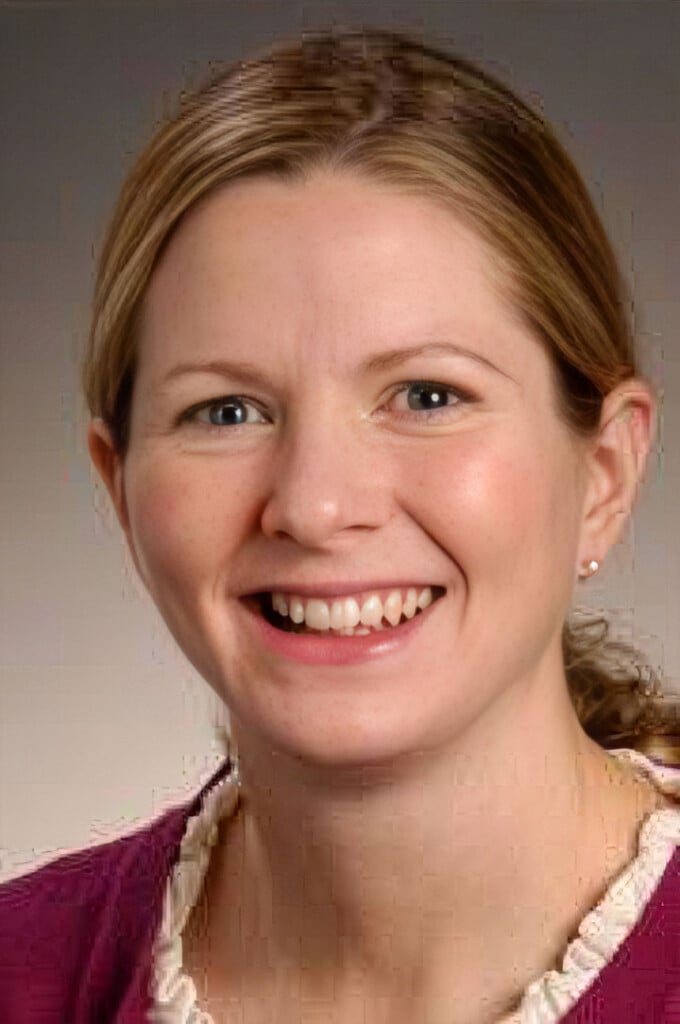
Dr. Taylor-Black
In July 2025, Sarah Taylor-Black went for her regular screening mammogram. Even when she was called back for more imaging,
an ultrasound and ultimately a biopsy, she wasn’t overly concerned.
“I wasn’t really too worried at first because sometimes they see things that turn out to be nothing,” Taylor-Black says. “I was like, ‘Oh, I’m sure they’re just being thorough.’ ”
In the United States, about 10% of mammograms lead to additional testing, according to the National Cancer Institute. Of those, only 7% lead to a diagnosis of cancer.
“Then, I saw the biopsy results,” Taylor-Black says, “and I was like, ‘Okay, well, that’s not good.’ ”
As a physician and allergist, her medical training provided context other patients may not have had.
“I knew that I had a pretty good chance. … I wasn’t terrified,” she says. “I was like, ‘It’s going to be a pain, but I’ll probably be fine.’ ”
On Sept. 16, she was diagnosed with stage 1 triple-negative breast cancer, an invasive breast cancer that does not have estrogen or progesterone receptors or produce too much of the HER2 protein. This type of breast cancer tends to grow and spread faster than most other types of invasive breast cancer, but when caught at a localized stage 1, it has a 91% five-year relative survival rate.
“It always feels like, ‘Oh, that would never happen to me,’ until it does,” she says.
Taylor-Black was 47 when she went for the mammogram that led to her diagnosis. Although there was cancer on her father’s side of the family, she had no family history of breast cancer and no identified genetic risk.
While breast cancer remains less common among younger women, diagnoses in women under 50 have been increasing. Between 2012 and 2022, the breast cancer incidence rate among women younger than 50 rose about 1.4% annually, compared with about 1% among women 50 and older.
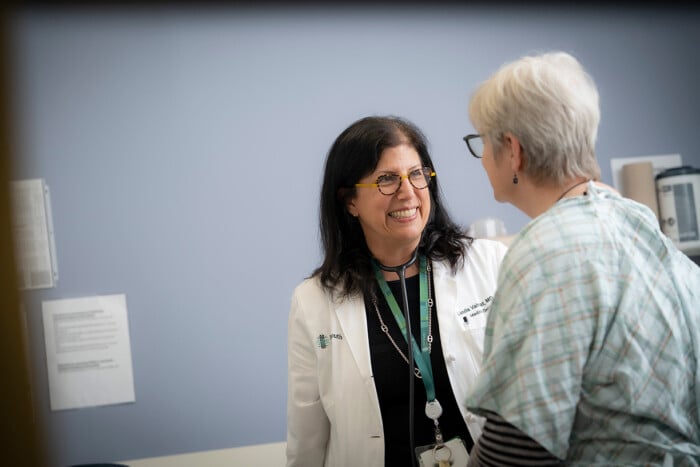
Dr. Linda Vahdat, a specialist in triple-negative breast cancer, and Lindsay Nelson, an oncology nurse practitioner, helped oversee her care. Taylor-Black was offered the option of beginning with either chemotherapy or surgery for her 1.5-centimeter tumor. She chose chemotherapy first because it would allow her care team to see how the tumor responded before surgery. After surgery in March, radiation treatments followed.
Taylor-Black was accustomed to Dartmouth Health as a physician, treating patients at its Concord clinic. Cancer put her on the other side of that relationship. Her own care took her throughout the Dartmouth Health system, with appointments in Lebanon, Manchester and Nashua.
She didn’t have to navigate those appointments alone, even though she had the expertise to understand what was happening.
Through her treatment, she found she had a strong support system.
“I was really lucky,” she says. “People brought me a lot of food. I got a lot of presents. I joked that it was like Cancer Christmas. People brought me things like blankets, snacks, ginger chews, lotions and lip balms, which was really nice.”
Her husband attended her chemotherapy treatments. Her mother, mother-in-law and friends accompanied her to visits and assisted her with cold capping.
“Friends would help get the dry ice for that,” Taylor-Black says. “You have these little weird cold hats that go on your head, and you have to keep them frozen and cycle them out every 20 minutes.”
She retained most of her hair through 14 of 16 treatments before it began to fall out in clumps.
Even with her own medical background, Taylor-Black sees value in having someone else in the room. A second set of ears, she says, can help patients retain and process the volume of information they’re receiving.
Medications helped control the side effects of chemotherapy well enough that Taylor-Black continued working throughout treatment. She also kept running, although less than usual. Outside work, she enjoys gardening and spending time with her two teenagers and their dog.
Now, Taylor-Black says she feels “pretty much back to normal.” Her hair is growing back, and her next mammogram is scheduled for October, followed by a visit with her surgeon.
Her experience has given the routine screening a different significance.
“Don’t ever skip a mammogram when it’s your time,” she advises. “Don’t ever skip one. They’re annoying, but they’re a lot better than metastatic cancer, that’s for sure. I always think about that a lot: What if I had just put it off even longer?”