‘Yellowstone’ of the Great North Woods
RiverVail Ranch features 1,000 acres of outdoor recreation and a working bison farm
Nick Vailas casts his fly rod in the stream that runs through RiverVail Ranch, a 1,000-acre preserve in Errol. Topped with a camouflage cap, a cigar propped in his mouth, he looks like he’s gunning for the cover of Field & Stream.
Photographer John Hession chose this location after two other stops to produce the image he had in mind.
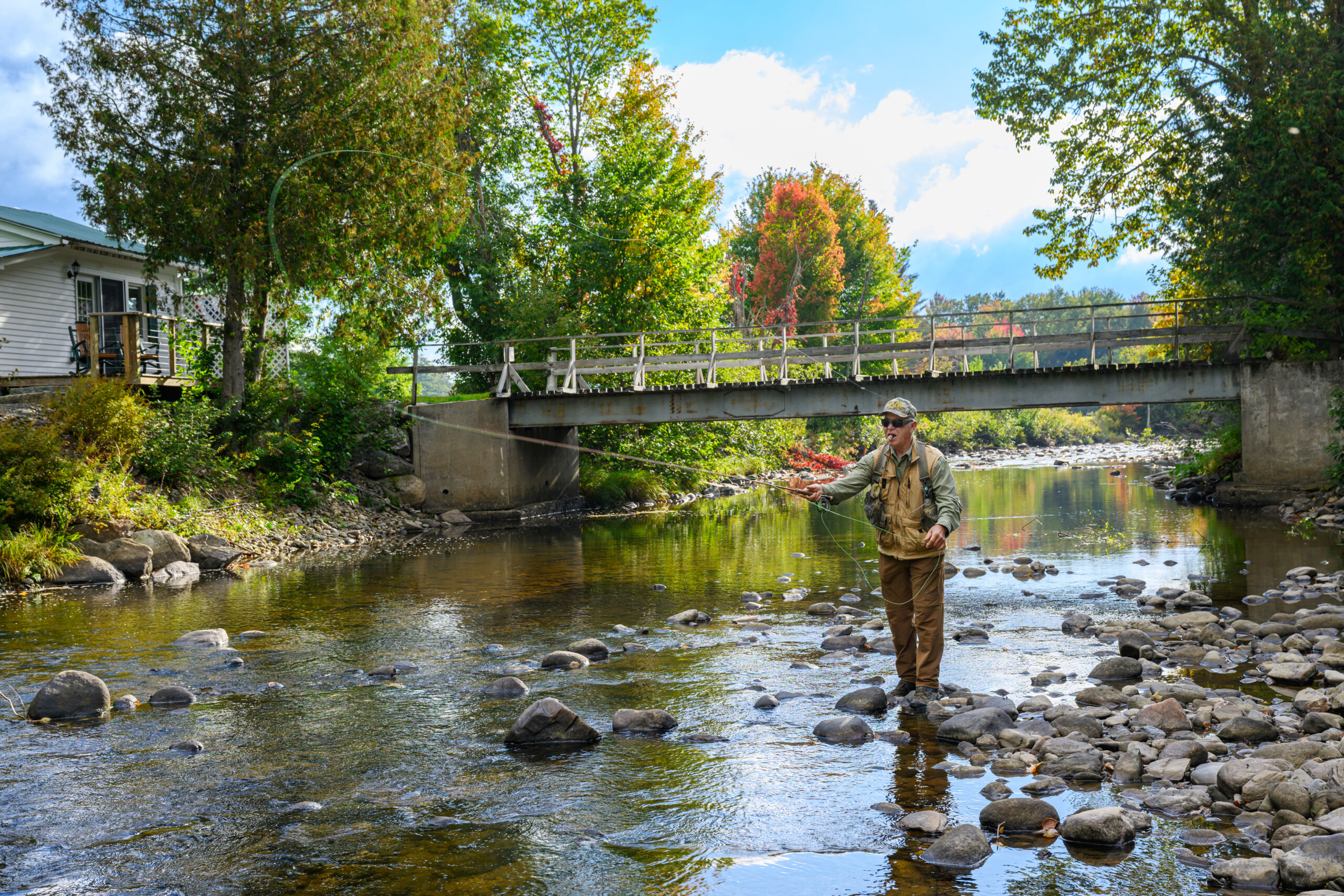
Nick Vailas, who bought RiverVail Ranch 32 years ago, demonstrates his fly fishing prowess at Clear Stream, which runs through the 1,000-acre property in Errol.
Vailas has owned RiverVail Ranch for 32 years. The nature preserve has grown by a few hundred acres since Hession first visited 25 years ago to shoot photos for an article about Vailas in Plymouth State University’s alumni magazine.
That we’re visiting this massive spread in the Great North Woods has as much to do with Hession as it does with Vailas. At a recent birthday party for a mutual friend, Hession recalled his first visit to RiverVail, including an encounter with a herd of bison he was photographing that spooked him and his wife when the animals wandered a bit too close. I had been considering a trip to the ranch, having heard about it from Vailas years before, and now I had a photographer who could accompany me.
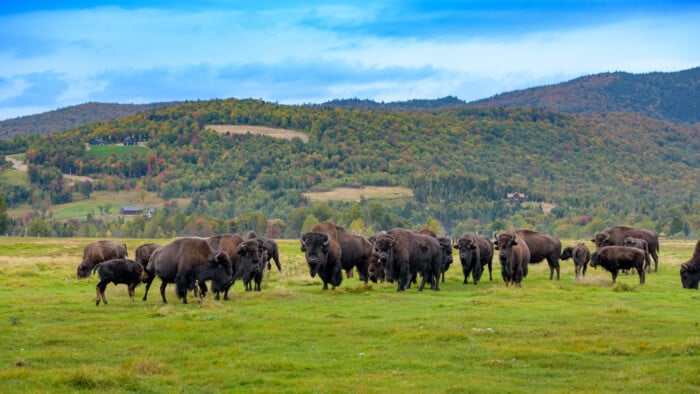
The herd of bison is about a hundred strong these days, part of the working ranch that also includes 100 red deer and 50 elk. Meat from the animals harvested each year is sold at the ranch and to local businesses, like Errol Restaurant & Pub, which uses it
to create a specialty burger.
RiverVail’s primary focus is outdoor recreation: pheasant hunting, fly fishing, cross-country skiing, hiking and snowmobiling. The Androscoggin River and Lake Umbagog are both within a five-minute drive.
Lodging includes the Damn House Inn, the Hayloft bungalow, rustic cabins and “Roost” clubhouse, where Vailas would host us overnight. There we would dine with his older brother, Arthur, a retired university president who was visiting that week, and the company’s two regular employees, JP Berry, who manages the ranch, and Denise Normandin, who handles marketing and events. The menu: bison chili and bison burgers.
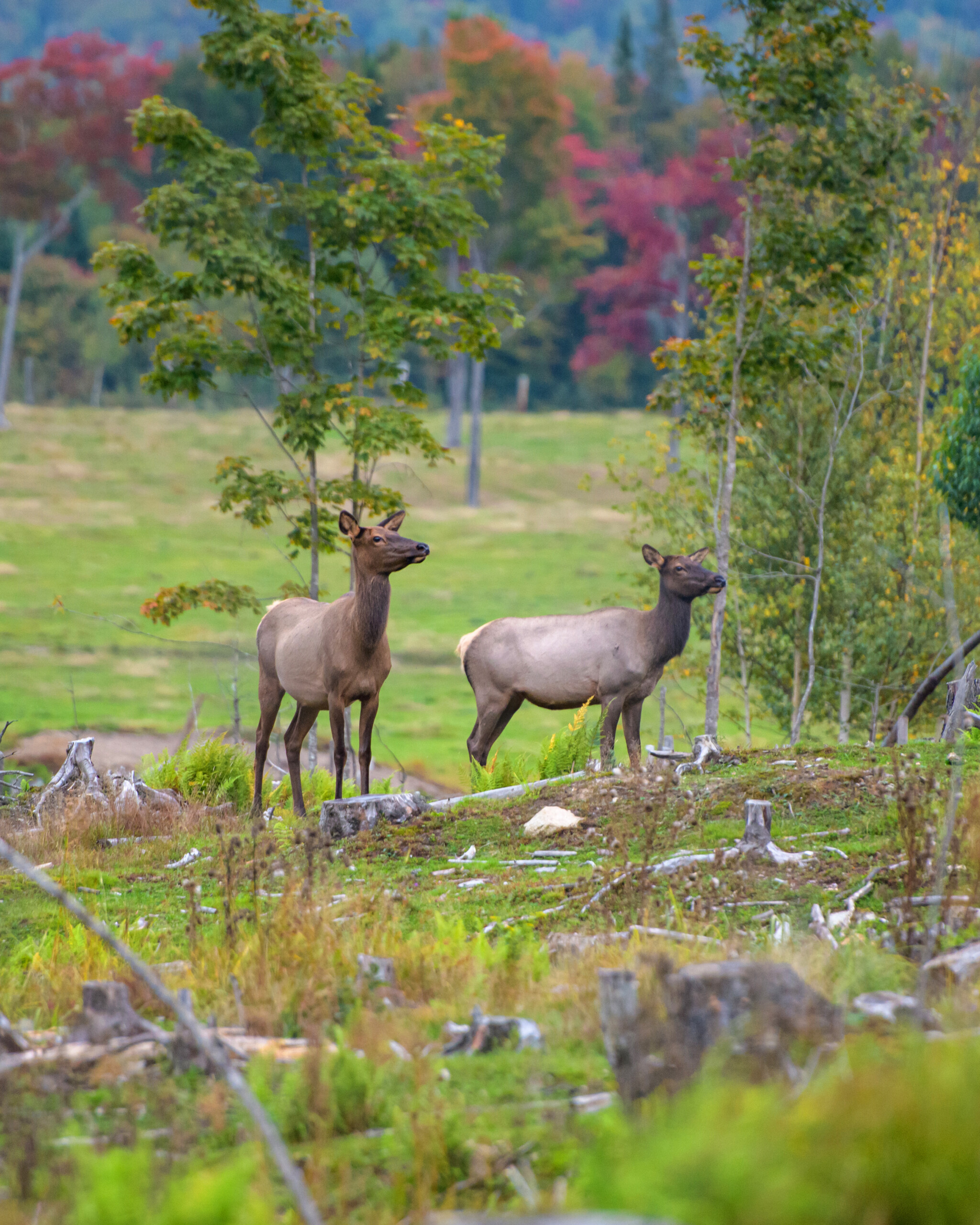
The ranch includes a herd of 50 elk.
“It’s a small operation, but as I tell people, it’s like New Hampshire’s Yellowstone,” Vailas says. “You’re not going to find elk and bison roaming anywhere east of Mississippi.”
While RiverVail Ranch operates as a business it’s also the outdoor wonderland where Vailas spends most of his weekends, driving three hours north from the state’s largest city to a rural community that has fewer than 300 full-time residents.
“This is not my whole life story, but this is a big part of who I am,” says Vailas, whose parents were Greek immigrants. He and his four brothers were raised by their mother on Manchester’s East Side.
With other investors, Vailas operates several medical businesses in the Queen City area, including Bedford Ambulatory Surgical Center, Delphi Primary Care and Apple Therapy. He and his brother, Jim, a retired orthopedic surgeon, built a log cabin in Errol and used to fish for trout at the RiverVail property when it was a dairy farm.
“The old codger who farmed it was 92 or 93 years old when he passed,” Vailas recalls. “The family didn’t want to take it over, and it went under agreement.”
A Florida developer wanted to build a golf course on the property but was unable to secure financing, a familiar scenario in the late ’80s and early ’90s economy.
“Thank God that fell through, and I bought it,” Vailas says. “Around that time, it was about 206 acres. Over time, I acquired abutting properties so now it’s just around a thousand acres.”
Vailas has developed different revenue streams, including a gravel operation, to cover the expenses of maintaining
the property.
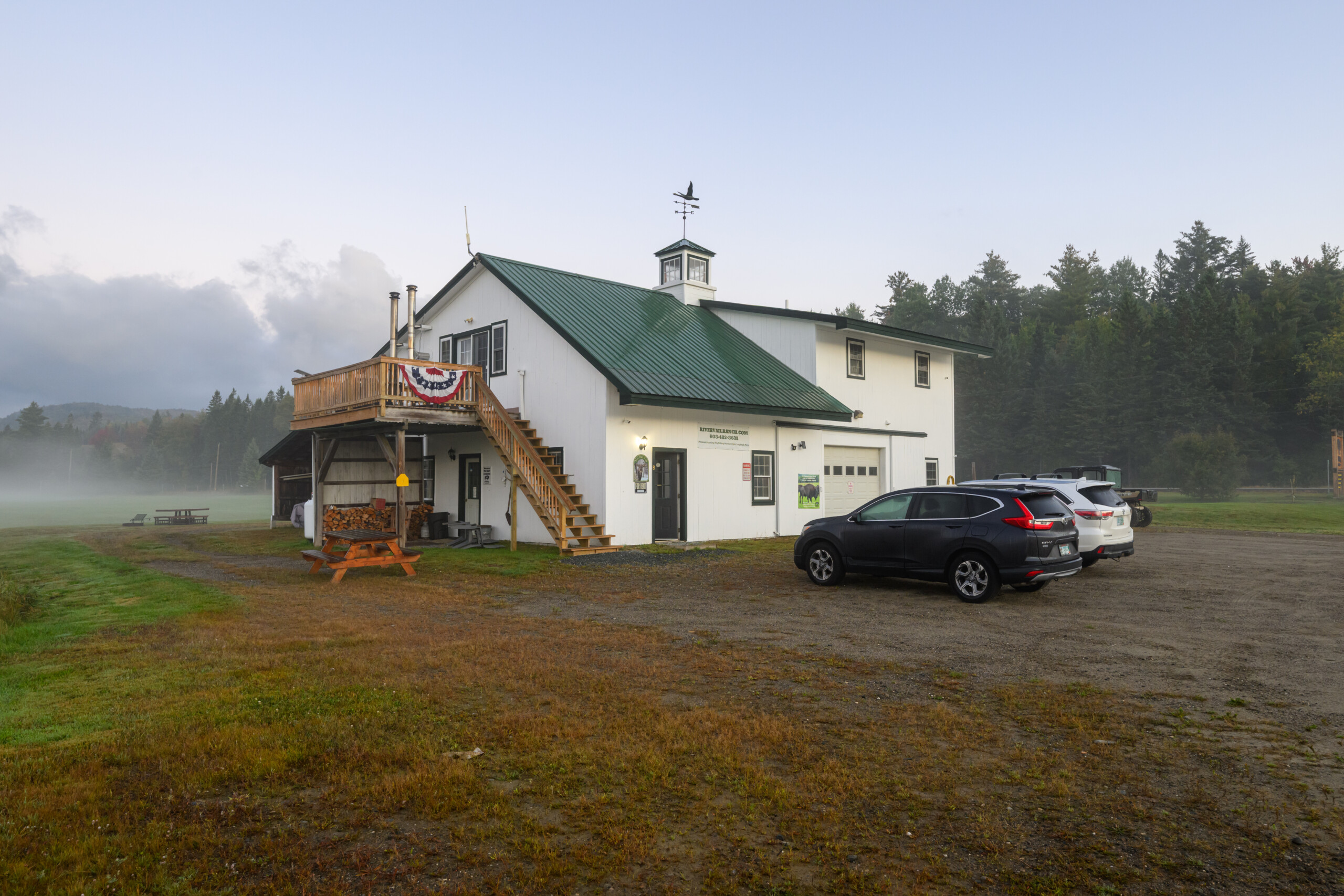
The “Roost” Clubhouse at RiverVail Ranch features lodging upstairs for guests and an outside deck.
“It’s an ongoing business. You’re constantly investing because of creating agriculture. And you improve your land by creating access trails and maintaining them,” he says. “We’re trying to increase pasture sizes because of our desire to grow the herd and
raise our own hay.”
Fencing was Vailas’ initial biggest expense.
“I would say the biggest pasture or enclosure is little over 4 miles, but with all the fencing and partitioning you’re closer to 10 miles of fencing,” he says. “You need to do it, though. It’s not only just keeping the animals in. It’s keeping the moose out. Moose are a big pain in the ass.”
That’s because moose carry ticks, and RiverVail has a total of 250 bison, elk and deer to protect.
“That’s the No. 1 reason we don’t want them here,” says JP Berry, who manages the ranch operations. “All the animals I’ve ever harvested here, I’ve never found a tick on them.”

JP Berry handles most of the heavy equipment work at RiverVail, rarely outsourcing the ranch’s needs.
Berry, who started working for Vailas six years ago, lives in nearby Stewartstown and grew up in the area working on a farm. He tends both the land and the herds, and is responsible for culling the animals at harvest time.
“JP, he’s one of those guys that can do a lot of things and is master a lot of things, like the jack of all trades,” Vailas says.
JP doesn’t shy away from the complement: “Denise calls me a Swiss Army knife.”
Berry serves as our guide on a tour of the bison pasture in a 4-by-4. While Hession sits in back with his camera and gear, I ride shotgun with Piper, a 7-month-old red fox lab. Piper, who Berry is training to hunt pheasant, has been running hard all day so he stays sacked out at my feet as we rattle along the pasture toward the herd.
Berry spends much of his time out here, so he recognizes individual animals, including a bull named Lucas. He’s careful not to startle them. When he spots them, he directs our attention to cows nursing calves, including one that was born that week.
“One of our biggest key things here is no stress. None,” he says. “You don’t agitate them. You don’t bother them. I come in. I feed them. I interact with them a lot so they’re used to me.”
Keeping the stress level low includes how the animals are treated when it’s time to harvest about 30 of them each year.
Due to state legislation Vailas championed, RiverVail Ranch can slaughter animals on site and then take them to a state-inspected facility for processing, avoiding having to transport them in a trailer.
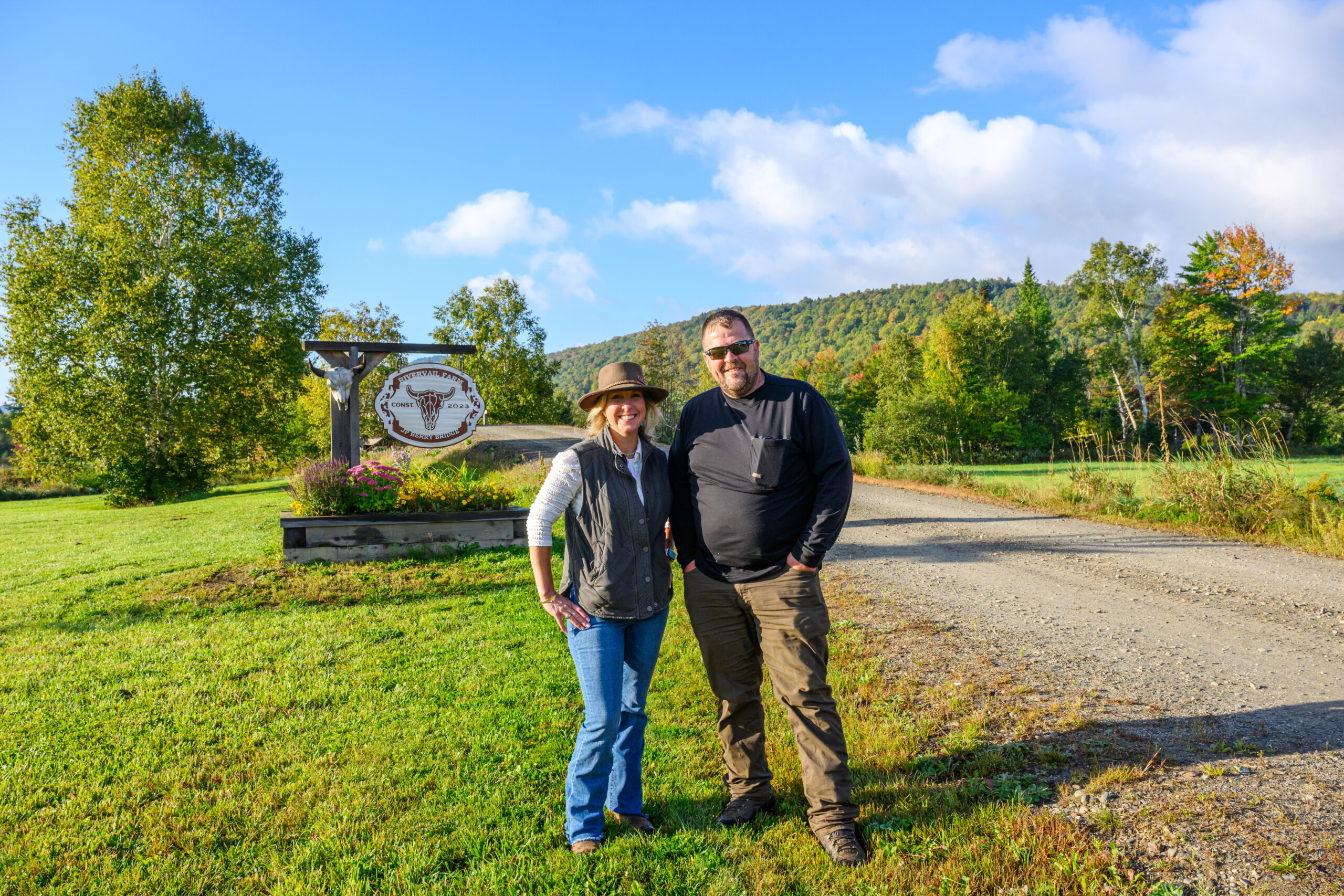
Denise Normandin handles marketing and events, while JP Berry handles everything else as ranch manager.
“They’re stressed out,” Vailas says of transporting the animals on a trailer. “You are putting your life on the line to boot, which is ridiculous.”
Raising bison, deer and elk fits Vailas’ goal to produce food locally as opposed to the corporate processing plants that dominate the food supply. He acknowledges some pushback.
“Hunters donate tons of deer meat every year to food kitchens and food pantries. And there’s not been one reported death
of food contamination,” Vailas says.
The bison also help RiverVail promote its Yellowstone image — a mini-version of the ranches out West, where herds number in the thousands. The late Ted Turner owned 13 ranches that were grazed by more than 45,000 bison, according to Turner Enterprises.
Vailas would rather see bison, deer and elk as well as trails for outdoor recreation than a golf course and a bunch of big homes. “I don’t want to develop it. I want to leave it a better place than when I found it.”
Such dreams don’t come cheap.
“I’m pouring capital into something I’ll never sell so financially it’s kind of stupid,” he says with a laugh. “Passions aren’t practical, but they feed your heart.”