STOKE Shoes Offers the Right Fit
With STOKE Shoes, Rick Blackshaw aims to fill a niche in the footwear industry
As the founder of STOKE Shoes, a new casual-lifestyle shoe brand headquartered in Georges Mills, Concord resident Rick Blackshaw is filling big shoes in the footwear industry, both literally and figuratively.
Blackshaw’s history in the footwear industry runs deep, rooted in his early beginnings as a business unit manager at Timberland, a global outdoor footwear and apparel company headquartered in Stratham.
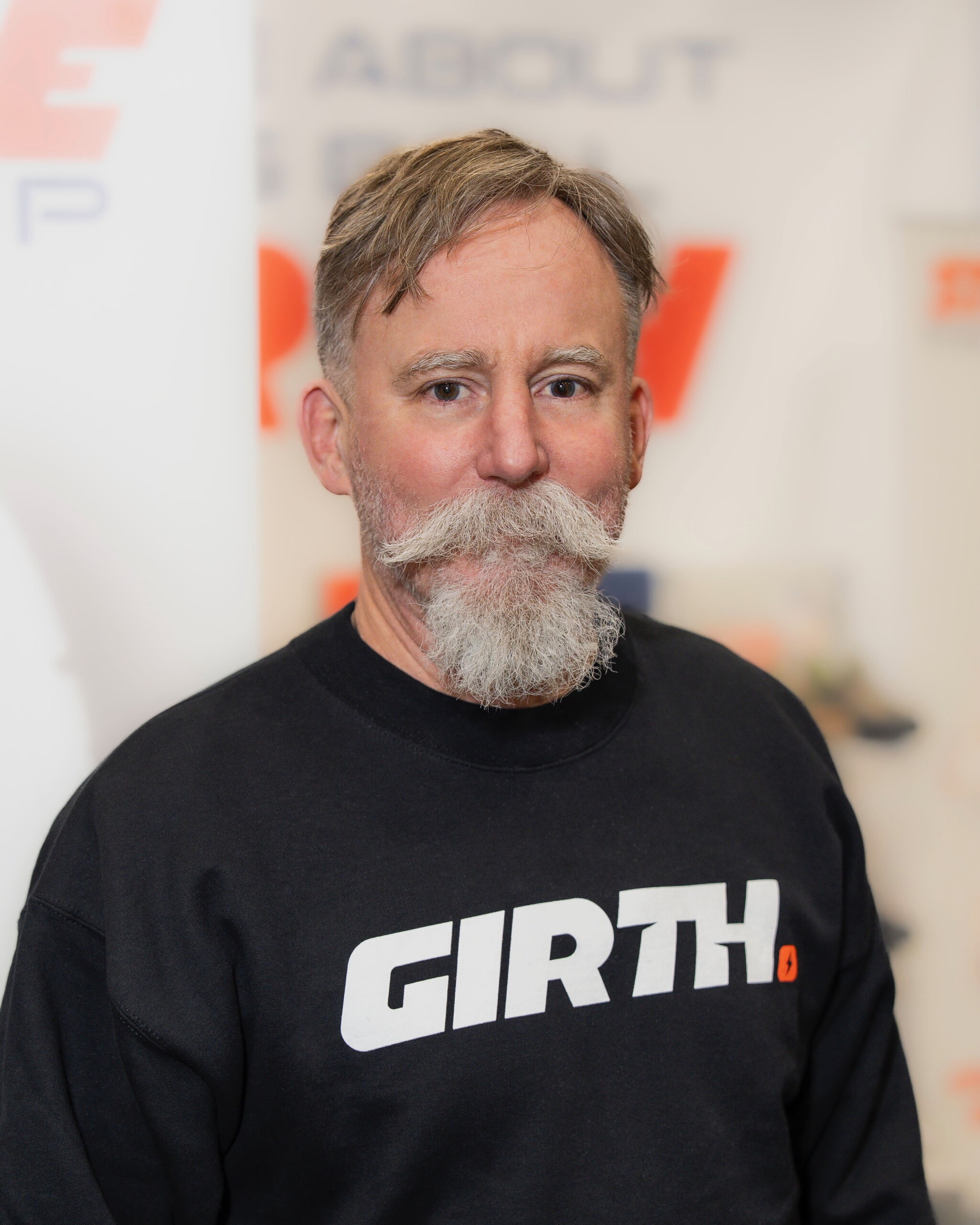
d resident Rick Blackshaw launched STOKE Shoes after a footwear industry career that included roles at Timberland, Converse, Keds, Sperry and other national brands.
For the better half of three decades, he helped lead and grow some of the most recognizable footwear brands in the world, holding senior executive roles at Converse, where he ran its Chuck Taylor business group; he also later served as the former president of other major shoe brands, including Keds, Sperry and HEYDUDE, a division of Crocs. He is also a former chief executive officer of CCM Hockey, a Canadian hockey equipment company.
Through these leadership roles, Blackshaw said he observed a common theme among many of these footwear brands, “especially sneaker companies.” He found that they generally focus the design and marketing of their shoes only to two major consumer groups — professional athletes and teenagers — “because they drive footwear purchases and footwear culture.”
Meanwhile, the footwear needs of the average American male largely have gone unaddressed. “Nobody is talking to guys that are 25 to 54 years old who just want a pair of casual, comfortable sneakers that don’t cost $160, that don’t have that big athlete tax,” Blackshaw said.
According to Blackshaw, three out of four average American men have wide feet, but only a small percentage buy wide shoes, due to lack of product options in the footwear market. That means roughly 65 million American men historically have been underserved by the athletic footwear industry, both in fit and comfort. “I saw a really great opportunity that nobody was exploiting,” Blackshaw added.
Blackshaw also noted that many men who buy athletic footwear often don’t use them for athletic purposes, “perhaps because he has a job that sees him on his feet 10 to 12 hours a day.”
Blackshaw said it was the confluence of these thoughts that really sparked his interest in launching STOKE Shoes, combined with his deep professional knowledge of the footwear industry. “I knew I could assemble a great team and great factory partners and access great retailers to make it happen,” he noted.
Getting a footwear company off the ground was not an easy feat, however. It required finding investors, establishing banking partnerships, securing trademarks, working with factories and finding distributors. “I really came to appreciate all the work that happens on the back end to get a footwear business up and running,” Blackshaw recalled.
It also involved a lot of research, learning all about the rich history that has made New England a national hub for the footwear industry, including brands like Timberland and New Balance that still have manufacturing footprints in New Hampshire today.
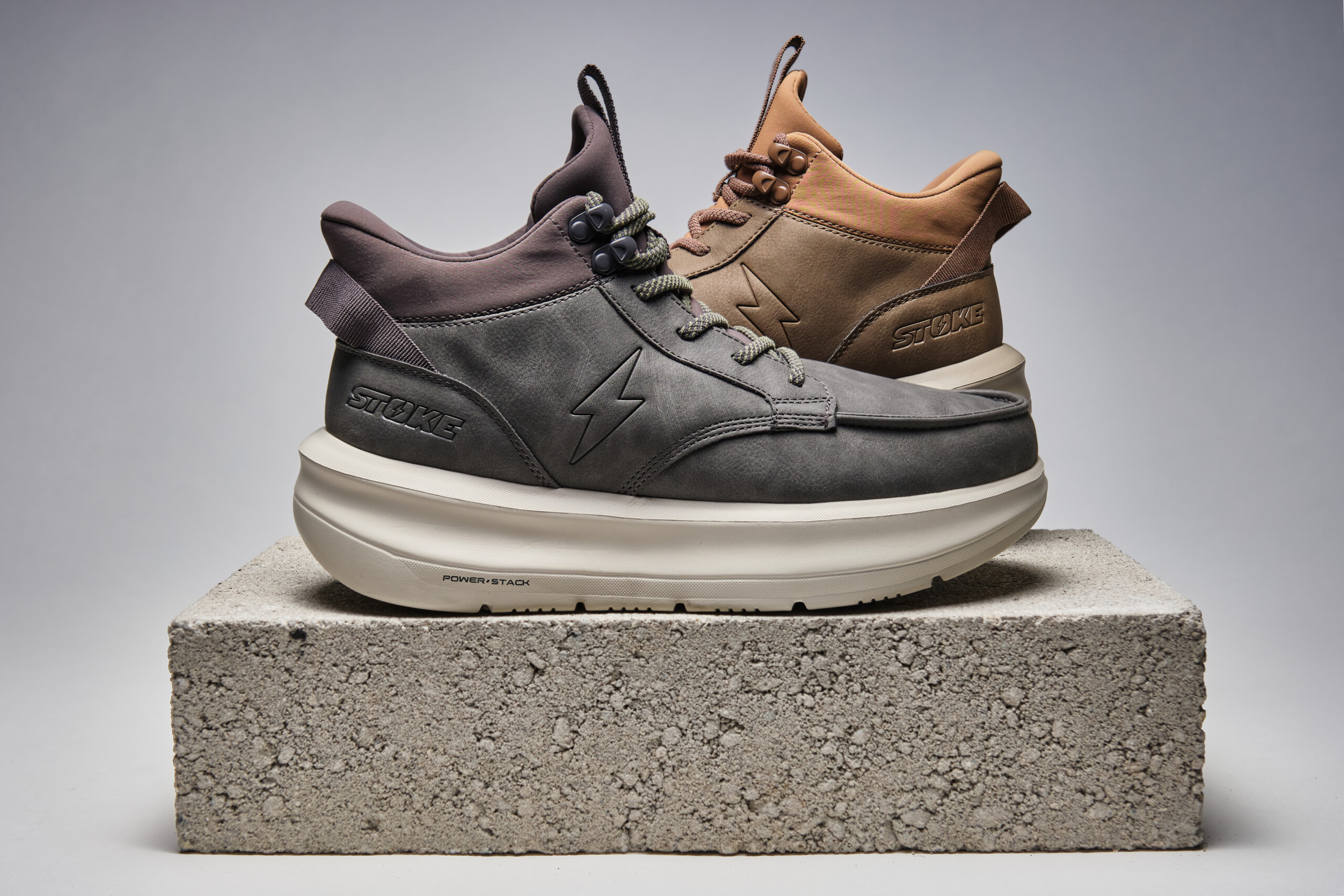
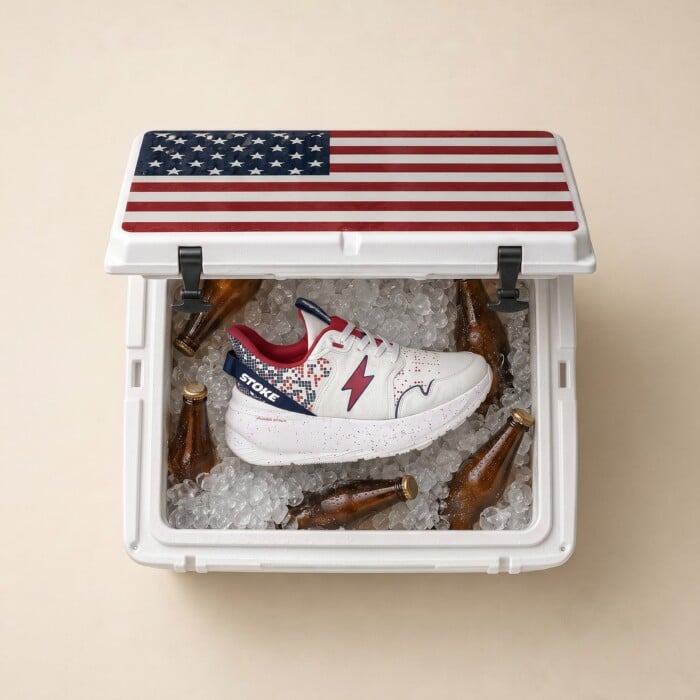
The STOKE Versa in tan and grey is available online from the company and through retailers.
Americans spent $121 billion on shoes in 2025, according to the Footwear Distributors & Retailers of America. The trade group says the U.S. imported six pairs of shoes for every man, woman and child in the country. STOKE Shoes are manufactured in Vietnam.
Even after product launch, the final crucial test was getting consumer buy-in. “Great ideas do not necessarily beget great execution nor consumer acceptance,” Blackshaw said. However, the reviews have been “incredibly rewarding,” adding that many consumers have described STOKE as the most comfortable shoes they’ve ever worn.
Moreover, a STOKES consumer study showed that its net promoter score, which is a market research metric that measures how likely a customer is to recommend a company’s product, was more than twice the average sneaker company.
“So, not only are consumers saying, ‘I love these shoes,’ they’re also actively promoting them to friends and family,” Blackshaw said. “At the end of the day, that is definitely the most effective marketing you can get.”
Blackshaw noted that it’s also “super meaningful” that STOKE has a great repeat purchase rate of around 30%, “which is the same level as brands that are decades old and a billion dollars in scale.”
STOKE also partners with a few celebrity sponsors and social media influencers who have helped boost the company’s marketing efforts, including actor Josh Duhamel, comedian Chad Daniels, and Caleb Pressley, an American blogger, podcaster and interviewer for Barstool Sports.
Because STOKE appeals exclusively to a male consumer group, its marketing focuses on what Blackshaw calls “male-centric
humor.” STOKE’s suite of proprietary innovations in its shoes include the “Big Ball Girth Fit System,” for example, which is a term that describes the circumference of the ball of a man’s foot.
Another proprietary innovation of STOKE is its “Mansplay Midsole,” built on a wide platform with no forefoot cup. Designing STOKE shoes this way “allows a man’s foot to splay out, because the average guy’s foot increases half a size and half a width from morning to evening,” Blackshaw said, adding that the average cost of STOKE shoes is around $80.
When asked about why he named the company STOKE, Blackshaw said he liked the play on words. In New England, “stoked” is a commonly used slang term meaning excited or enthusiastic. “As a term, it has very wide usage,” he said.
“It conveys the notion of the brand — that STOKE shoes are so comfortable that you should be stoked when you’re wearing them,” Blackshaw added. “It’s the only footwear brand that you can use as a verb: ‘Get STOKED.’ ”
Since officially launching direct-to-consumer in January 2026, STOKE has expanded into more than 450 retail locations nationwide. While consumers can find STOKE’s entire collection online, its shoes also can be found at many New Hampshire retail locations, including Runnings, Red Shoe Barn, Bootleggers, and Off Broadway, a footwear retailer in Manchester.