Preserving the Season’s Abundance with Canning
From local farms to James Beard-winning chefs, sustainability is in the heart of the kitchen
On a 5-acre farm nestled in the rural fields of Deerfield, Angie Hoxie is in the kitchen pulling a glass jar of her favorite vegetable soup out of the pantry for a quick and easy dinner. While some might have shelves full of Campbell’s soup and store-brand vegetables, Hoxie’s pantry is full of pickled vegetables, sauces and jams, all made from scratch.
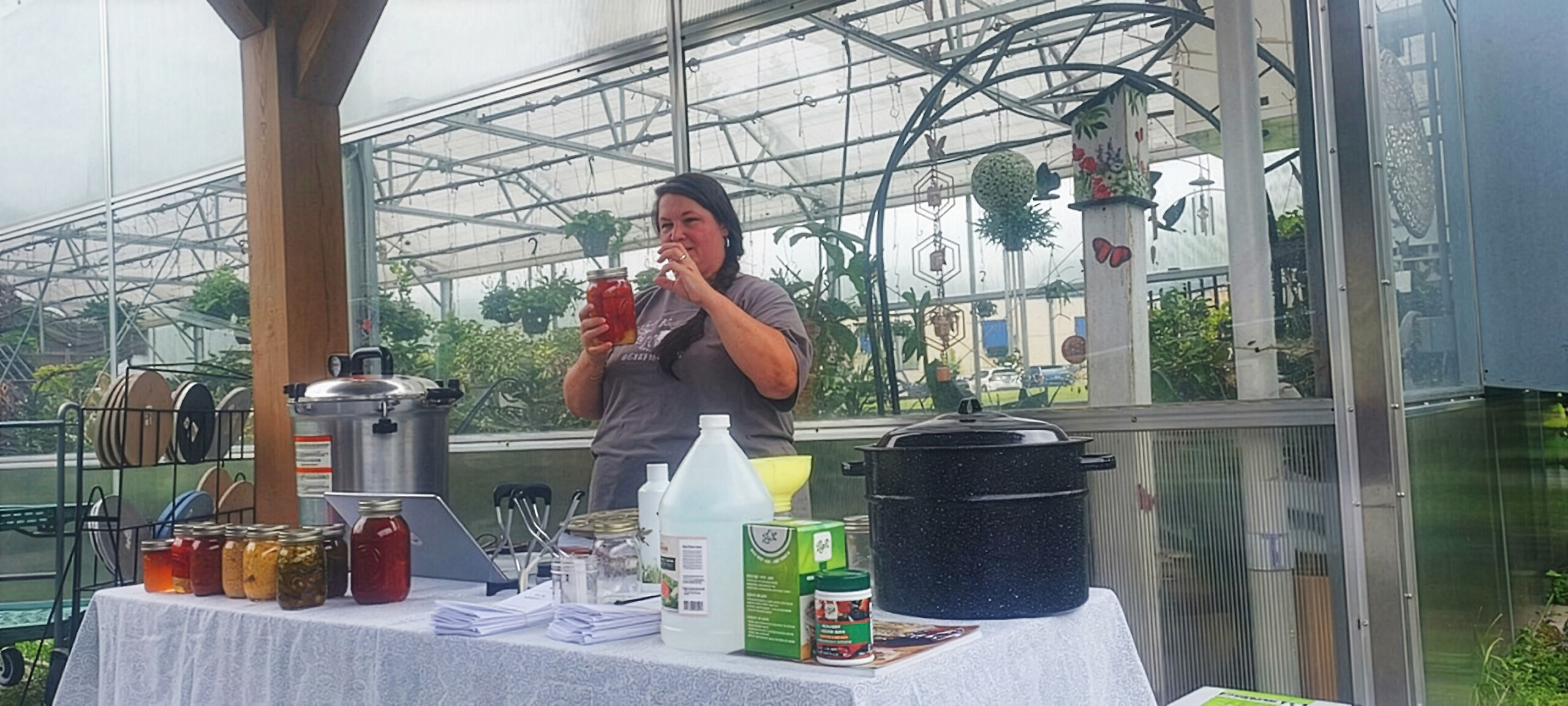
Angie Hoxie teaches guests how to pressure can on her farm in Deerfield. Photo Courtesy Angie Hoxie
“I haven’t bought a condiment in years,” says Hoxie with a laugh as she explains that she cans pizza sauce, ketchup and salsas from tomatoes grown in her garden.
As a little girl, Hoxie grew up watching her grandparents can food, as food security was important. “It was fascinating to me that my grandparents always had food in their cabinets,” Hoxie says. “When we got a small piece of land, I got my first garden, and right away, I was determined to preserve my own food.”
Living a simple life, she bought the farm she has always dreamed of, started gardening and expanded it from there, using every inch of land to plant crops and raise dairy cows, chickens, pigs and other animals for her family. In this homestead lifestyle, everything raised in her yard is grown and butchered for the family’s use.
As vegetables, fruits and meat are produced year-round, Hoxie turns to canning — both water-bath canning and pressure canning — to preserve the fresh produce for years on end. According to the National Center for Home Food Preservation, canning places food in jars and heats it to a specific temperature to destroy microorganisms that cause spoilage. During heating and cooling, air is pushed from the jar, forming a vacuum seal that keeps microorganisms from getting inside.
Water-bath canning is good for high acid foods including fruits, jams, salsas and pickles, whereas pressure canning uses steam to reach a higher temperature. It’s only compatible with low-acid foods including vegetables and meats.
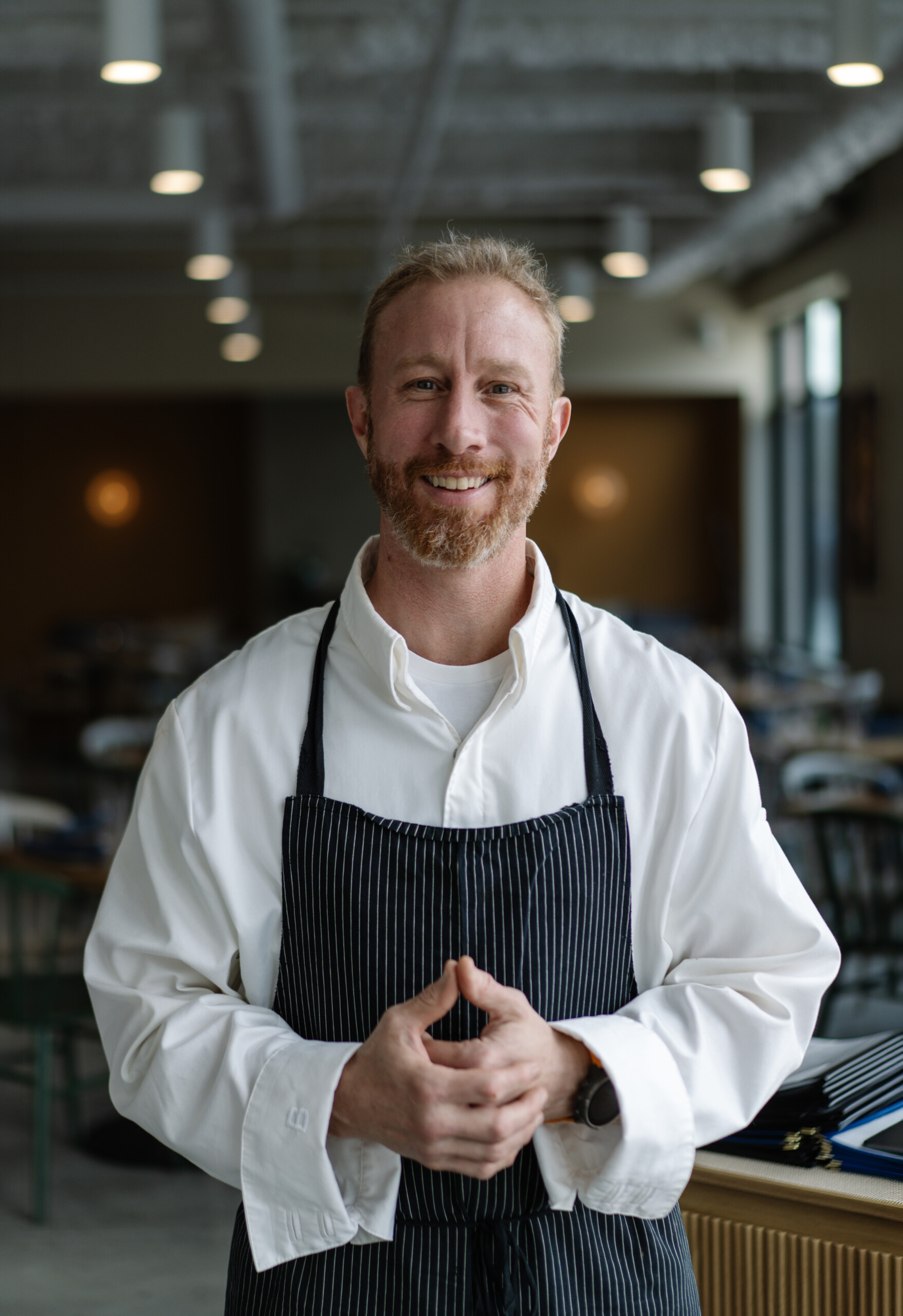
Chef Evan Hennessey doesn’t preserve his ingredients in cans. He turns to alternate techniques, including fermenting and oil packing. Photo by Katherine Keenan Photography
“One of the things I’ve learned is to can what you eat,” Hoxie says. “It’s easy to see awesome recipes that look great and then sit on your shelves for years, so it’s important to base them on your family’s needs and wants.”
Hoxie cans a lot of beets, carrots and beans, and makes chilis and chicken and vegetable soup by pressure canning. She also cans summertime vegetables like corn, tomatoes and cucumbers for the winter months.
Hoxie recommends first deciding which recipe to make, and then following it exactly; it’s similar to baking, as improvisations will cause a faulty product. Water bath canning is a good option for beginners and doesn’t require specialized equipment. As long as there’s a pot that allows a few inches of water above the jars, anyone can can.
Starting with a simpler recipe like jam, the jam should first be brought to a boil alongside a pot of jars simmering in a pan. Following the temperature rules provided is essential, as thermal shock can happen if ingredients are added to a cold jar. Using a plastic fork, Hoxie removes the bubbles before placing the lid on, creating the tight seal.
With many years of canning under her belt, this process comes naturally for Hoxie.
“I started talking to people who wanted to be able to, as I do, but were scared, so I started teaching people,” Hoxie says. “There’s such a need for it, especially with homesteading becoming more popular after the pandemic — so many people want to learn how to do it, with videos and Pinterest recipes floating around.”
2026 James Beard Best Chef Northeast winner Evan Hennessey also strives to emphasize preservation in his kitchen.
“People view it as a new idea, but this is one of the oldest food methods in the world, and now more people are just discovering it,” Hennessey says. “The way we’re able to serve a variety of ingredients and food year-round, even when we get into the dark months of winter, is amazing.”
Although Hennessey doesn’t preserve his ingredients in cans, he turns to alternate techniques, including fermenting and oil packing, suitable for his restaurants, Stages at One Washington, The Living Room and Topolino in Dover. The processes are similar, but instead of heat, they rely on pressure.
When an ingredient is in abundance for the season, such as green tomatoes that might not be marketable to the farm, they can be used in restaurants and preserved. Hennessey pulls the early green tomatoes to blanch and oil-pack with olive oil and sweet fern, a cross of bay leaf and cinnamon, before vacuum sealing them until needed. When the tomatoes are pulled out later in the season, the tomato leaves help preserve the flavor of a fresh tomato.
In addition to oil packing, Hennessey pickles ingredients such as turnips, radishes and snap peas, and he even reuses pickling liquids to combine flavor combinations. With carrots, Hennessey peels the carrots for a sauce while keeping the peels. He then pickles the peels, dehydrates them after they’re out of the brine and grinds them into a powder for a new seasoning agent, while wasting zero parts of the carrot.
“The roots and origins of the canning and pickling methods are based on seasonal survival and lack of refrigeration,” Hennessey says. “We now have the tools and techniques to not only safeguard these processes but use them to our advantage.”
Visit sweetriverfarm.net to view Angie Hoxie’s upcoming water-bath canning and pressure-canning workshops, and learn more about Evan Hennessey’s work at stages-dining.com.
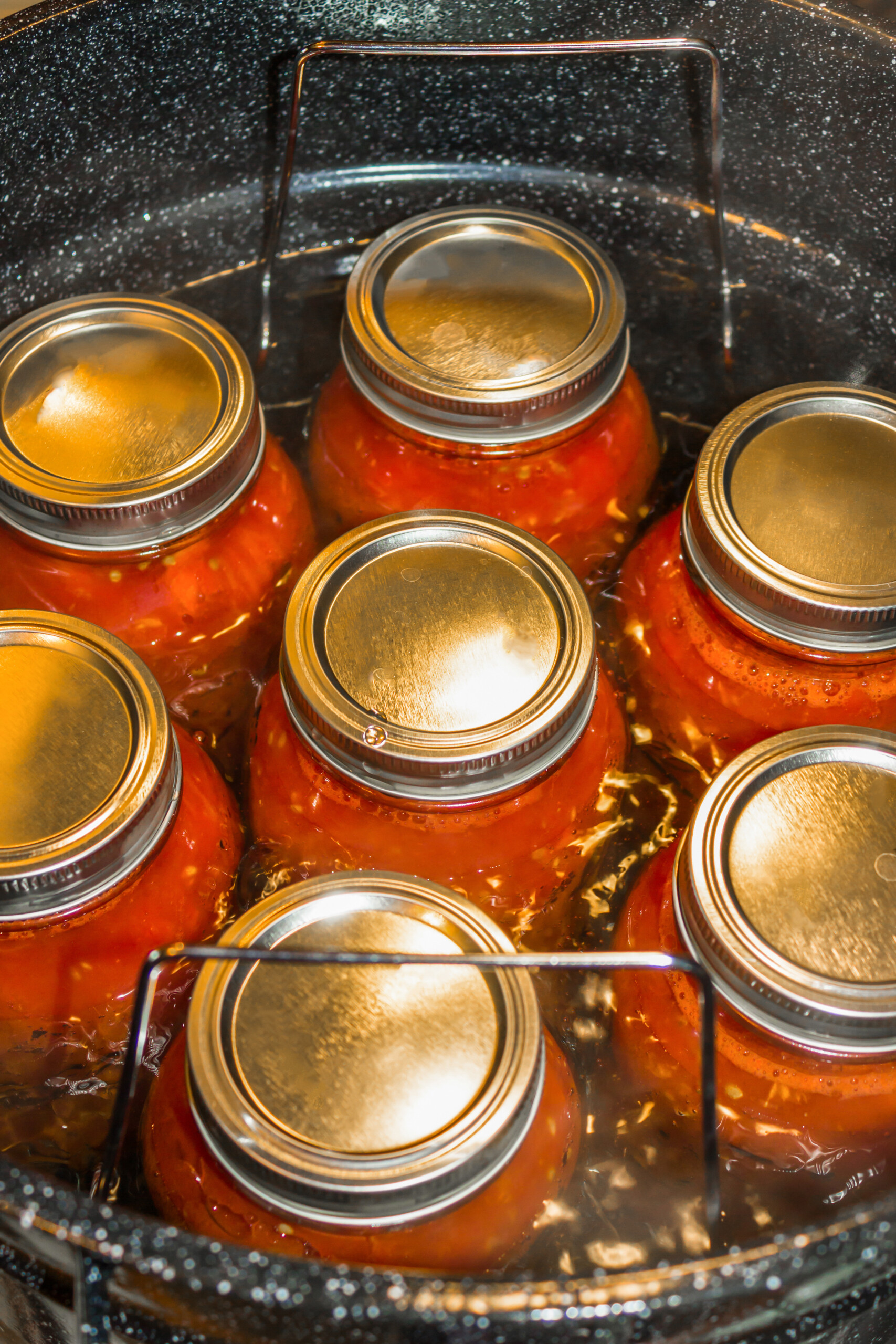 An Introduction to Canning
• Make sure to carefully select and wash fresh fruit.
• Some fruits and vegetables may need acid added (lemon juice or vinegar).
• Jars should be processed in a boiling-water or pressure for the correct timing.
• Follow the USDA Complete Guide to Home Canning for safe practices.
Ingredients for Canning Tomatoes
Use your ripened tomatoes from this summer’s garden for use during the cold winters.
2½ to 3½ pounds ripe tomatoes (about 8 to 11 medium) per quart
Water
¼ to ½ teaspoon citric acid or bottled lemon juice
Salt, optional
View the full step-by-step instructions at ballmasonjars.com.