Live Free: The Lure of the Lake Home
Brion O'Connor reflects on the life at the lake through his daughter's eyes
Sleep sometimes eludes my daughter Maddi, so my wife bought her one of those clever sound machines. I first heard it late at night. I went to kiss Maddi, already asleep, good night. But as I tip-toed into her room, the gentle sounds of water lapping against a rocky shoreline stopped me in my tracks.
I was instantly transported to another time, another place. I found myself at a special lake house that has become a summer home-away-from-home for my girls and me, tucked away amid the stately pines and rugged hardwoods on Newfound Lake in central New Hampshire. Juxtaposed with the sight of my sleeping daughter, the moment brought tears to my eyes. That’s what lakes can do.
We all need to escape today’s overly commercial, overly regimented, overly demanding world, full of electronic gadgets. These are unpredictable, uncertain times. When I need a diversion, I pack up the family wagon and head toward one of a handful of special lakes that dot my adopted home state.
“Being near a lake, or any open body of water, has a calming sense in general,” said my bride, Lauri, a Midwest gal from eastern Kansas. “Water provides such a wide variety of experiences that almost any-one can find something they find appealing and special.”
My parents shared an affection for the ocean, much like Lauri, who says the broad expanse is reminiscent of her native plains. Me? I like the ocean, but I’m a lake guy at heart. I love the pristine feel of freshwater, smooth and cool across my skin, no need for a post-dip shower.
The allure, though, runs deeper. Lakes are places where time, if only briefly, or in special moments a little longer, stands still. Children may not recognize that all-too-elusive quality. But grown-ups can, because we know just how precious, how fleeting, those moments are. These are places where memories are created, nurtured and eventually etched in granite.
Then there’s the lake house. An old, crusty structure built on a sturdy stone foundation, unvarnished except for knickknacks adorning the walls and the mantel above a large stone fireplace, with wide plank floors, threadbare furniture, and a sprawling porch with spider webs crowding the eaves. The best lake houses are living museums, preserving artifacts from dog-eared guest books to faded sepia-toned photographs.
I love sitting in the low light, imagining the generations that filled these rooms, the raucous celebrations and peaceful gatherings. Those thoughts conjure a sense of serenity and, yes, nostalgia. Shared history is a strong component of the lake experience, an emotional undercurrent as real as the shifting currents beneath the water’s surface.
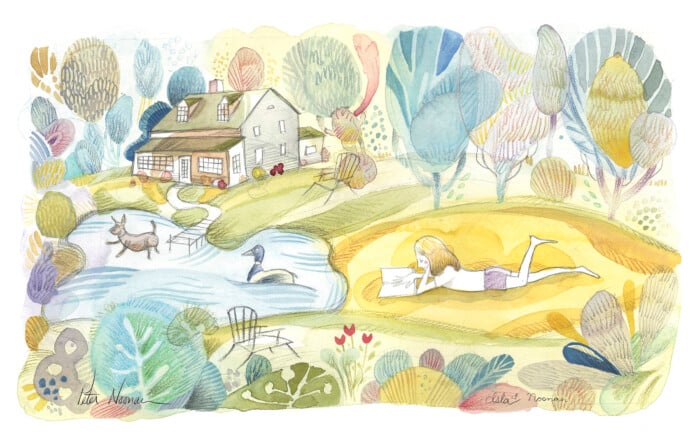
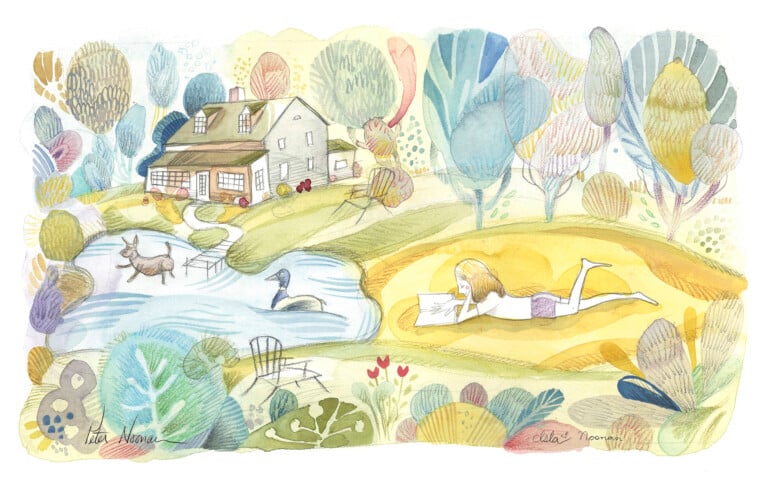
There’s also the unmistakable draw of heightened senses — our exuberant Labrador retriever, True, joyfully leaping from the dock, and the girls giggling at our hound’s antics. I’m captivated by the smell of the pines, the loamy earth, and bacon sizzling in a cast-iron skillet atop a gas-fired stove.
Ultimately, I crave the tranquility that a quiet alcove provides in the early morning and often long after sundown. The soft ripples at daybreak, with a gray mist rising like a spectral blanket, or the intimate reflection of a campfire and the wide-ranging glow of the moonlight.
During dinner recently, our girls wondered when we were returning to our lake retreat. I asked, “Why is that important?”
“There were no sounds of civilization anywhere. No cars, nothing,” Maddi replied after considerable thought. “I would lay in my bed at night, feeling like I was listening to silence.
“But if I closed my eyes, and breathed as softly as I could, everything would come alive,” she continued. “The frogs croaking, the loons calling to each other, and the very light ripples of the lake coming up onto the shore. These sounds would put me to sleep. Then I’d wake up to the beautiful chirping of the bids, and I’d say to myself, ‘I think I’m home.’ ”
Home, indeed. No clever sound machines required.