Eels on the Move
Thousands of eels appear in NH waterways every year for their trek upstream
The American eel — that long, slender fish that inhabits freshwater and estuarine environments from Greenland to Venezuela and west to the Mississippi Valley — is as extraordinary as it is mysterious, providing us with one of nature’s greatest migration stories.
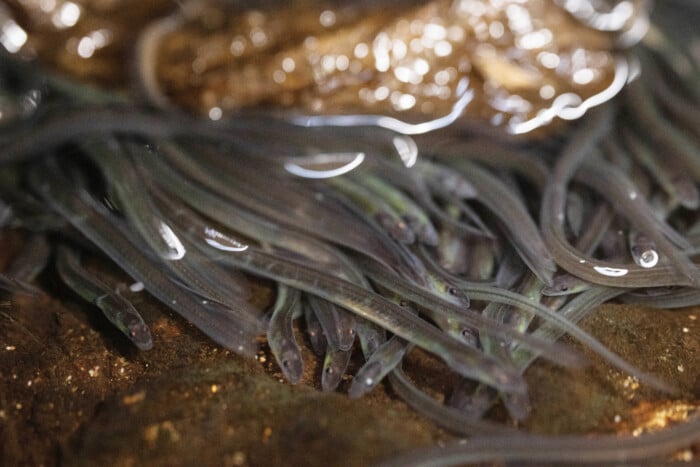
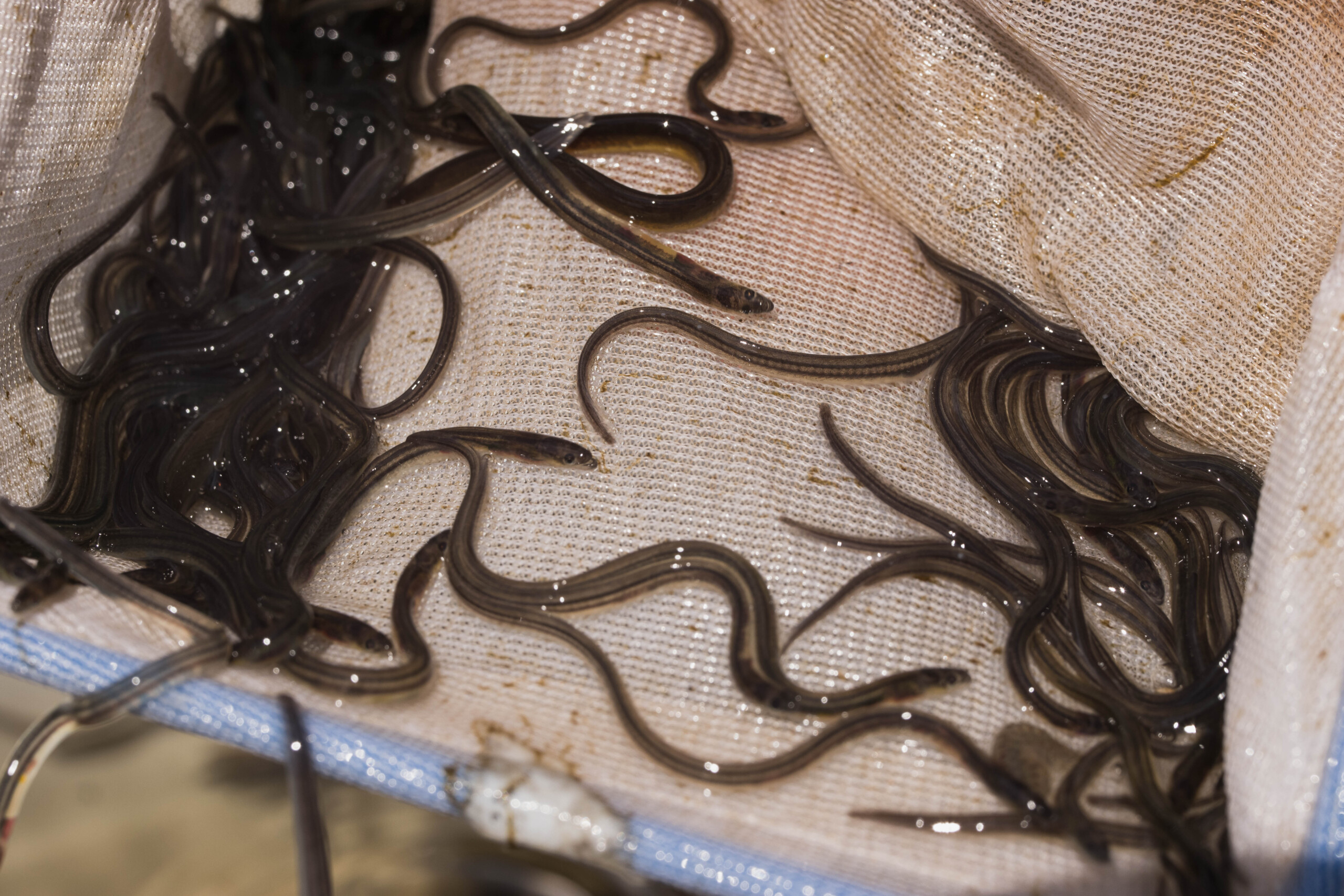
Juvenile eels like these travel thousands of miles from the Sargasso Sea through New Hampshire’s freshwater systems — one of nature’s greatest migration stories.
In late spring, when temperatures briefly tease the hot summer days to come, thousands of small, translucent eels begin to appear in New Hampshire’s freshwater ecosystems as they continue their migration upstream.
Their story goes like this: American eel eggs hatch into larvae in the Sargasso Sea, a 2-million-square-mile area in the North Atlantic defined by four major ocean currents midway between the Bahamas and the Azores. They’ll float along the Gulf Stream and other currents to the Eastern seaboard of the Americas.
Once they reach coastal waters and estuaries, the larvae transform into 2-inch to 3-inch transparent “glass eels.” As they migrate upstream, the juvenile eels develop into “elvers,” ascending obstacles, advancing through cracks in dams and climbing vertical surfaces with only a mere trickle of water.
Eventually they develop into “yellow eels,” taking on that familiar dusky olive and yellow coloration. Yellow eels can live for about 20 years or more in lakes, ponds and rivers before reaching sexual maturity. In the final stage of their life cycle, the eels undergo a process called “silvering” where they grow pectoral fins and larger eyes and store fat in preparation for their months-long journey back to their place of birth, the Sargasso Sea, where they spawn and, climactically, die.
Scientists are still uncertain about what triggers this final migration (although there are many theories) and have yet to witness American eels spawn in the wild, raising questions about what, exactly, is happening out there in the open ocean.
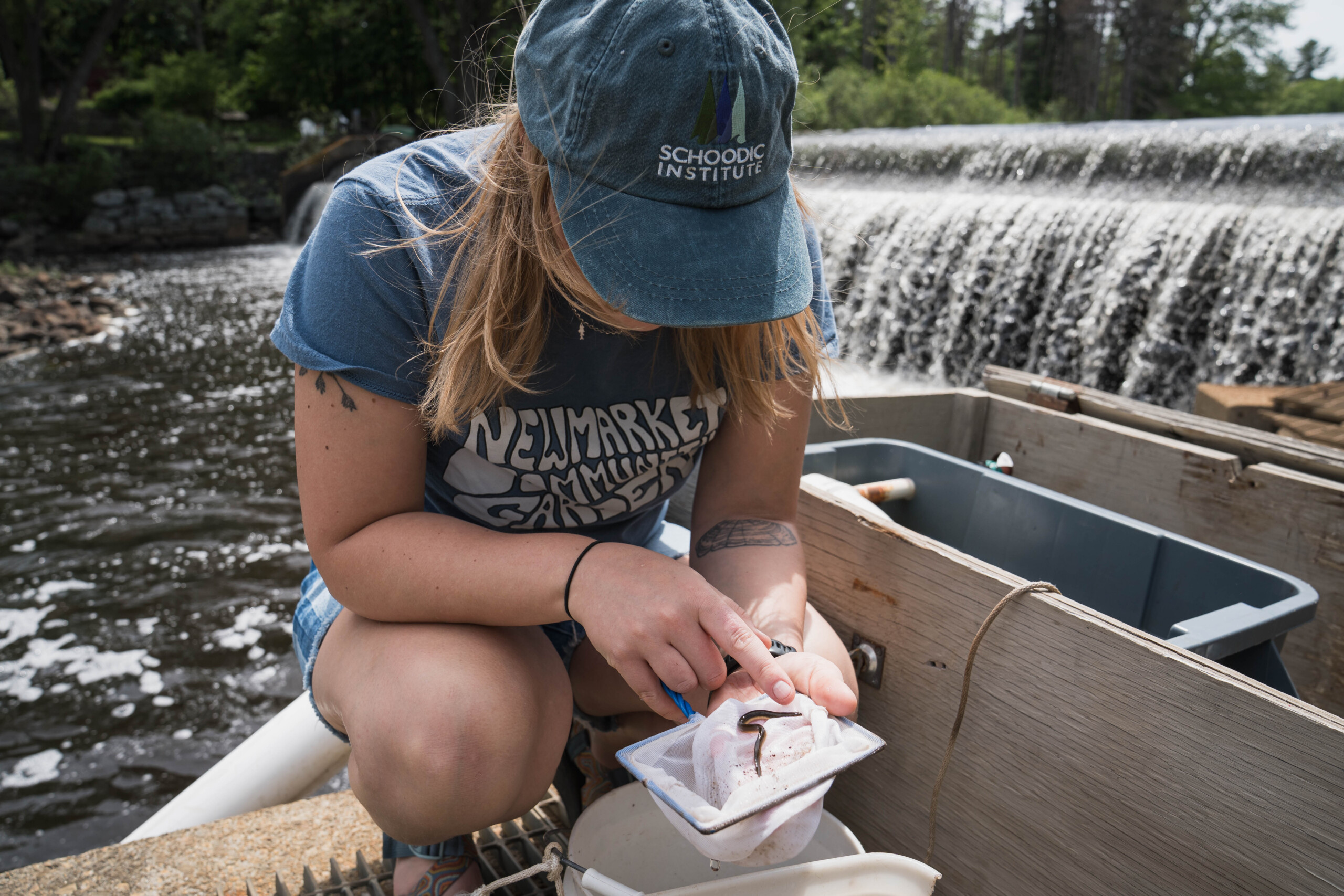
Suzannah Buzzell, a graduate research fellow at New Hampshire Sea Grant, inspects a juvenile American eel at the Mill Pond Dam monitoring site on the Oyster River in Durham
“It’s quite a life history,” said fisheries biologist Matt Lee of the New Hampshire Fish and Game Marine Division in an interview earlier this year. “They have this innate ability to identify where they’re supposed to be going. They’ll kind of make their way up to whatever latitude on the Eastern seaboard that the parents that spawned them originally came from, and then head back into those systems.”
For example, if parents of juvenile eels emigrated from Florida, their spawn would ride ocean currents back to that specific latitude before entering those same freshwater systems. This would also be true for eels traveling from the Sargasso Sea to New Hampshire’s waters.
While American eels are commonly found in New Hampshire, a noted decline in population along the Atlantic coast a few decades ago prompted the Atlantic States Marine Fisheries Commission (ASMFC) to act. In 2000, the ASMFC prepared standard protocol for surveying eels during this migration period, mandating that every Eastern coastal state monitor two rivers.
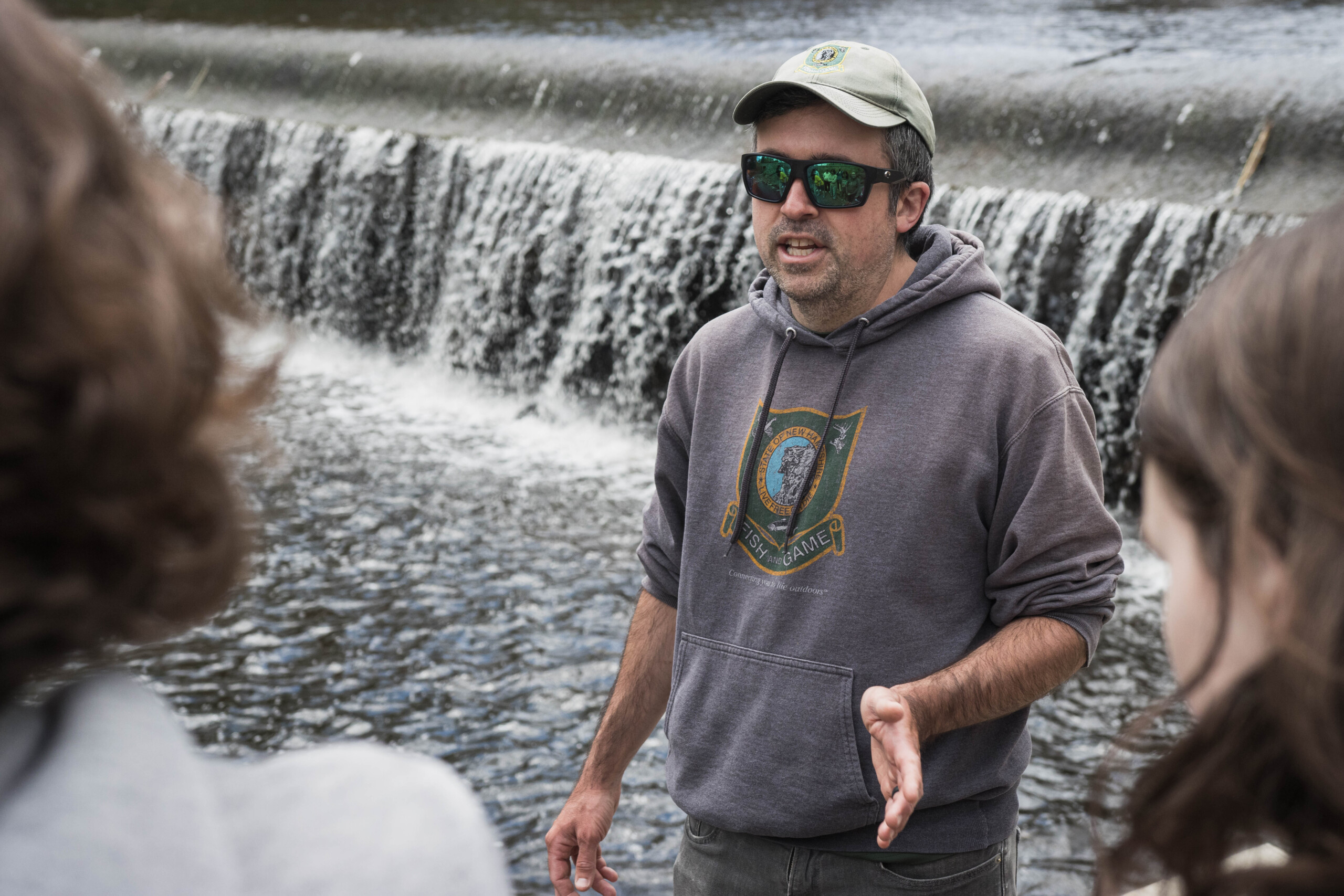
New Hampshire Fish and Game Department fisheries biologist Matt Lee instructs volunteers monitoring eels at the Oyster River site last spring.
With a lack of long-term data on the American eel, the purpose of the survey was to determine natural variation in annual recruitment — the process by which young, surviving fish transition into older life stages — and facilitate an understanding of possible long-term trends in eel numbers along the Eastern seaboard.
The next year, New Hampshire Fish and Game began monitoring eel migration on the Lamprey River in Newmarket, and in 2013, with the assistance and efforts of the New Hampshire Sea Grant, they began surveying a second location on the Oyster River in Durham.
“We’re obtaining results that can be comparable to previous years and other locations to identify general trends that go into coastwide quotas for adult eels and in states that allow harvest for glass eels,” Lee said. (As a side note, and a topic worthy of its own feature, the harvesting of glass eels is banned in every state save for South Carolina and Maine where the industry is highly regulated but also highly lucrative due to a high demand for glass eels in foreign markets.)
Lee, who’s been with New Hampshire Fish and Game for seven years and in this role specifically for 3½, spends most of the spring monitoring migratory fish, including rainbow smelt, river herring, and, of course, American eels.
Eels start appearing when the water temperature reaches 50°F. Although there’s never really a set date to begin monitoring at the two sites — the Macallen Dam in Newmarket and the Mill Pond Dam in Durham, both manmade obstructions that make it difficult for eels to continue onward — a brief spike in summer-like temps signals prime conditions, triggering an influx of eels.
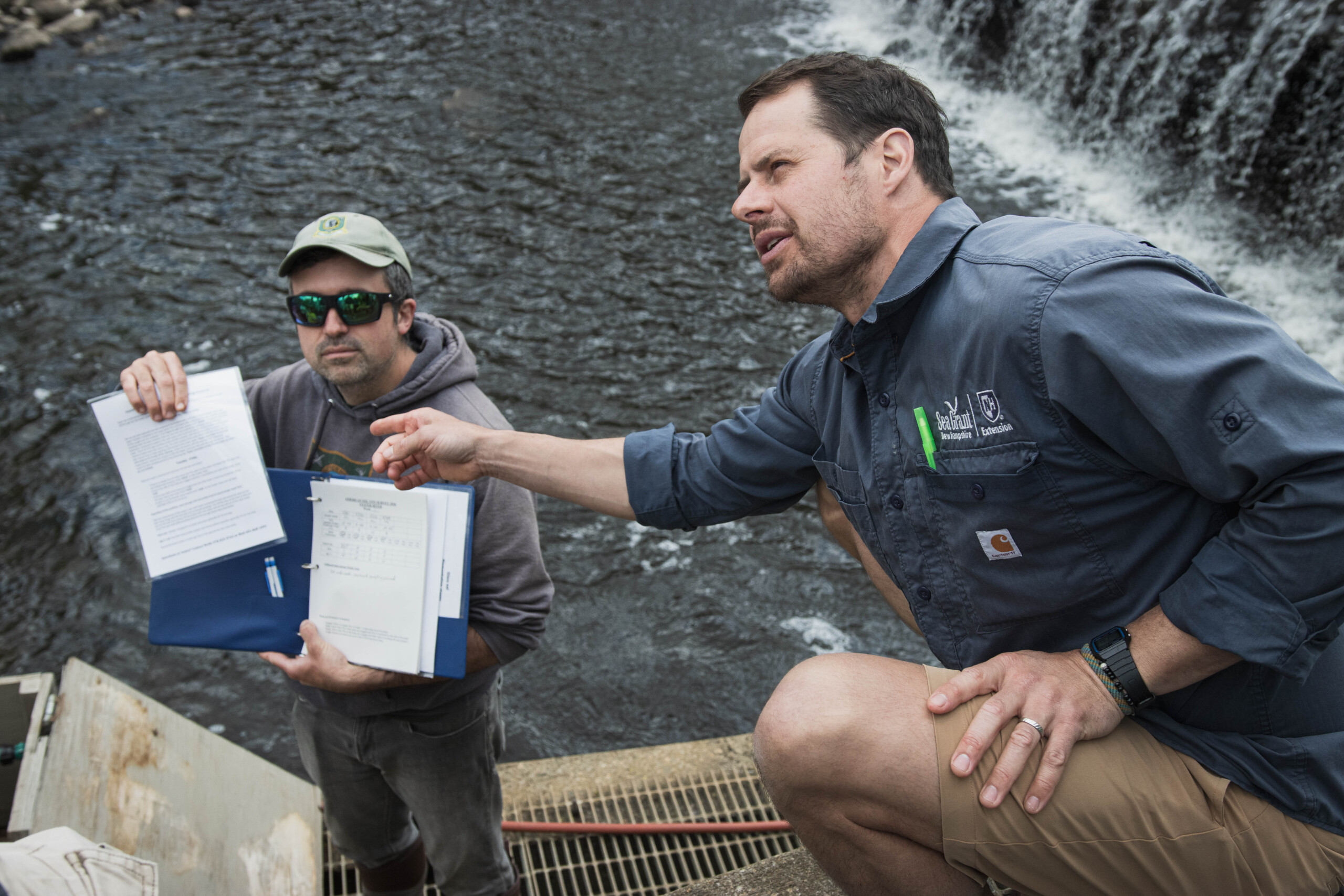
Fish and Game’s Mat Lee and Wells Costello, the Citizen Science program manager for the New Hampshire Sea Grant Coastal Research Volunteers program, review eel-monitoring protocols with the day’s volunteers.
At this point in the year, Lee’s team will install a box trap system on the dam, essentially a long PVC pipe with a material similar to a brillo pad on the inside that assists the eels as they ascend — an EEL-avator, as some refer to it. Excellent climbers, the eels make their way up the trap and drop into a bucket on the other side, where they’re counted Tuesday through Friday (Monday following the weekend is a dump day) by biologists and volunteers alike.
For many years, the protocol included anesthetizing the eels with clove oil, measuring them, and recording variations in pigmentation. But as of this year, the ASMFC decided it no longer needed to collect that information, noting that the data had been so consistent in the past.
This season, biologists and volunteers simply counted the eels, separating them between sleek, translucent glass eels and the longer, opaquer elvers. “They’re identifying different age classes and separating them according to whether they’re true young-of-the-year,” Lee said. (“Young-of-the-year” refers to eels that hatched during the current calendar year.) “Or what we would call age 1+ eels that have remained in the tidal portion of the river for an additional year or more, and then ascend.”
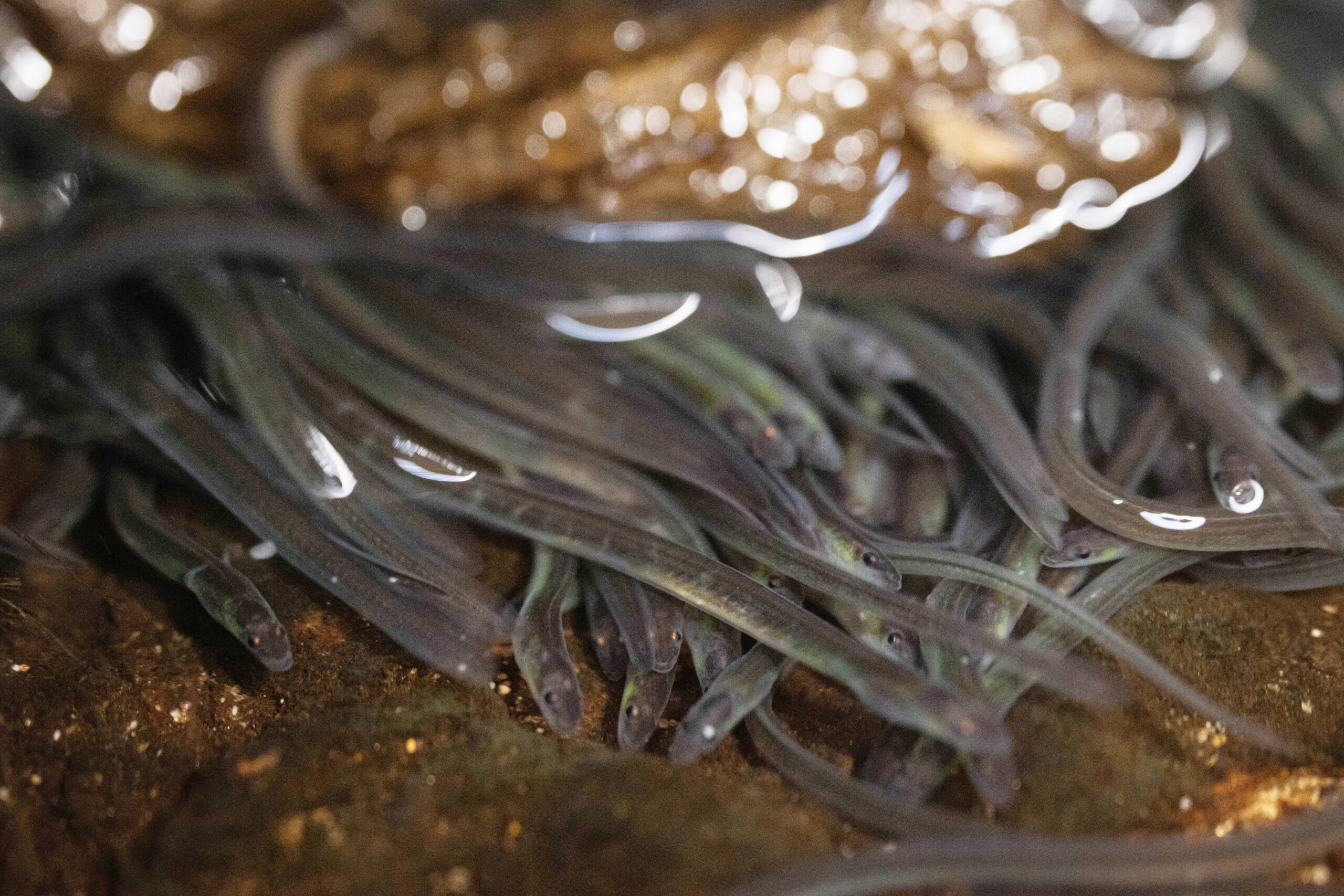
Between the two sites, more than 200,000 juvenile eels were counted during last spring’s monitoring period.
The data sheet includes the time of the sample, the water temperature and the number of eels accumulated since the last counting. The survey also includes information about the strength of the river’s flow and the lunar phase on any given day.
“There is an associated component of the number of eels observed during a full or new moon. That generally has to do with stronger tides, carrying them in and out toward the head of tide, where they’re ultimately ending up either at a dam or at an impassable obstruction,” Lee said.
Once their numbers are counted and recorded, they’re released further upstream to continue on with their migration. The eels continue to migrate throughout the summer, but Lee and his team typically end monitoring efforts in early July.
At the time of writing, nearly 3,500 eels had been counted at the Oyster River dam, a site where monitoring efforts will discontinue after this year due to the deconstruction of the dam, ultimately altering the conditions of the survey. While those numbers might seem high, more than 205,000 eels were observed on the Lamprey River by mid-June with plenty of the migration period still left to document.
Lee typically monitors the Lamprey in conjunction with operating the fish ladder for other species of migrating fish, and community volunteers with New Hampsire Sea Grant’s Coastal Research Volunteer program monitor the Oyster River site.
Leading the charge is Wells Costello, the citizen science program manager for the CRV program, which hosts a variety of participatory science projects where volunteers and researchers work together.
“When you have these partnerships that are grounded in research or community, everyone can share knowledge to support these decisions about the health of New Hampshire,” Costello said.
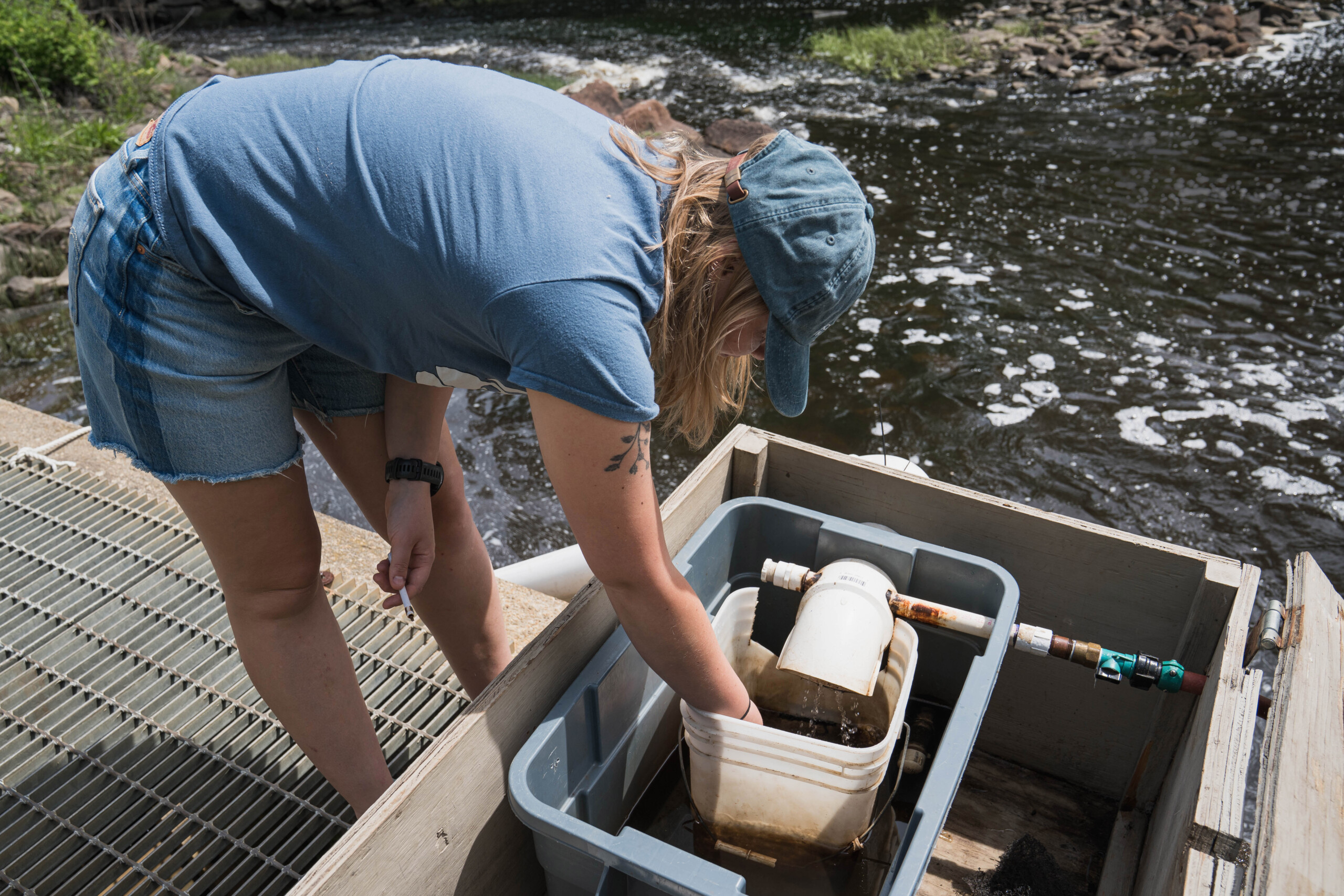
NH Sea Grant Graduate Research Fellow Suzannah Buzzell inspects eel numbers in the box trap at the Mill Pond Dam. Once counted, volunteers release the eels farther upstream past the obstruction.
Once volunteers are trained on the data collection protocol, they’re free to sign up for shifts lasting from one to 2½ hours. While veteran volunteers often return, Costello reported that 20 new recruits assisted with monitoring efforts this past season.
“I can’t stress enough that volunteers are the backbone of the projects that I coordinate,” Costello said, “and without them, some of this research wouldn’t even exist or the amount of data that is collected would be far less.”
One young volunteer, a UNH student, became interested in eels a few years ago while scuba diving near his home on Lake Champlain in Vermont, Costello said. Conditions were clear, and as he approached the base of a grassy riverbed, he spotted a huge American eel, just sitting, staring, breathing.
“It didn’t spook him. It didn’t do anything,” Costello added. “He was mesmerized. And that’s why he came to the training, to learn more about these eels.”
Volunteers don’t need former experience with eels to participate, and all gear — box traps, buckets, nets — is provided when they arrive.
Costello recommends wearing a sturdy pair of shoes and bringing a buddy along to help count the slippery, sinuous fish before carrying them upstream and sending them on their way.
“I think involving the community just brings a little bit more awareness to our coastal ecosystems and the issues that surround them,” Costello said. “They can advocate for the issues, which can lead to action.”