A better birth experience
Doula training program hopes to close racial gaps on maternal care

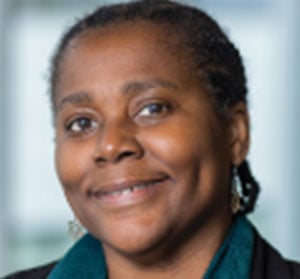
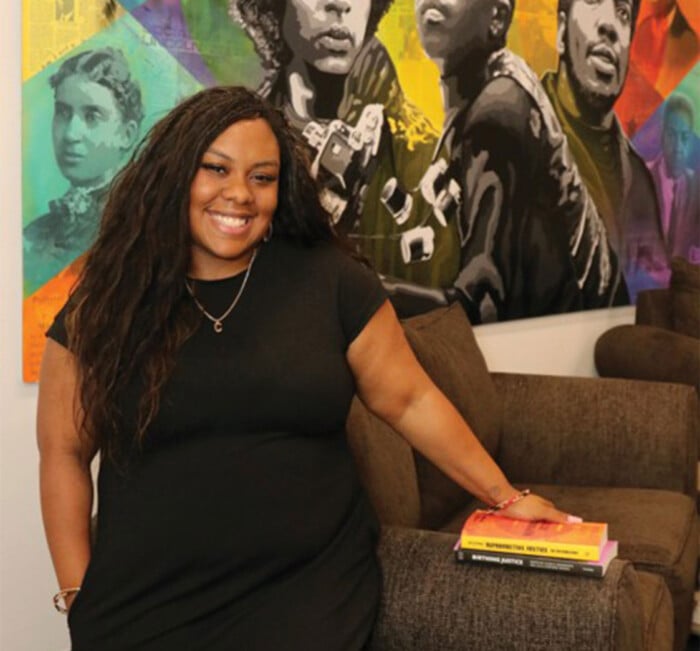
Camilla Thompson, maternal health director for Black Lives Matter NH
Welcoming a new child may be considered a joyous occasion, but it can also be traumatizing for many Black parents.
Camilla Thompson, the Black maternal health director for Black Lives Matter NH (BLM NH), is leading the organization’s effort to bring visibility to the alarming disparities Black women and women of color face in reproductive and maternal care. These disparities cost lives, cause trauma and leave too many unseen and unheard within health care systems.
I saw her in action in April while she was facilitating “From Womb to Well-Child: Protecting Black Families — A Minority Health Equity Panel.” She led a robust conversation regarding the safeguarding of individuals and families who journey through the birthing process, and the pre- and aftercare involved.
The analysis of data accumulated regarding racial disparities in childbirth is overwhelming.
Black women are disproportionately impacted by adverse experiences during pregnancy.
They experience a maternal mortality rate of 50.3 deaths per 100,000 live births, significantly higher than White women (14.5), Hispanic women (12.4), and Asian women (10.7), according to data shared by Black Lives Matter NH. Black women are over three times more likely to die from pregnancy-related causes than white women. This disparity persists regardless of income or education level.
Data points correlating infant and parent mortality rates, the drastic differences between accessing educational resources, securing post and prenatal care, and mental health and well-being are overwhelming.
To start to address these disparities and close the gap, programming like BLM NH’s Black Maternal Health Division is integral to the health and safety of Black and Brown people in the state. Thompson discussed with 603 Diversity what inspired her to get into this type of work and what efforts are still needed.
Q: What is your driving force for engaging in this work? What was your genesis?
Thompson: I have always been fascinated with pregnancy and obsessed with childbirth. I think it’s because I was adopted, so the whole conversation around my birth was always missing. Now that I have my own children, I fully comprehend the process and complexity around birthing. But growing up, with both myself and my brother, I never saw my mom’s belly getting bigger or experienced the physical aspects of pregnancy and birth. My mom is the woman who raised me, and while my birth mother has always been a part of my story, I never saw sonograms or witnessed a pregnancy firsthand.
I always found that fascinating. Understanding that someone else carried me into the world is still some-thing I find incredibly meaningful.
Q: Were there other environ-mental factors which piqued your interests as well?
Thompson: When I was 3 or 4 years old, we had a nanny, and she used to watch “A Baby Story” on TLC. And when the women gave birth, my mom told me I would always clap with both hands — this is important, because typically I would be sucking my thumb. Now as a mom, I don’t think I would ever have let my children watch women giving birth, but when I asked my parents why they allowed me to watch it, they said, “Well it wasn’t hurting you.”
Q: Did you think about what you wanted to do for work in your youth?
Thompson: I wanted to be an ob-gyn, then a labor and delivery nurse. Now it’s a midwife. It’s taken longer to get to my goal because I had children. But, the shift towards Black maternal health happened when I had my last C-section. I was certain there wasn’t enough pain medication when it was happening, because I could feel a lot of what was going on.

Participants listen to a presentation during BLM NH’s doula training program.
Q: Can you explain more about the circumstances around your C-section? What made you think, “This isn’t right.”
Thompson: All of my C-sections have not been great. They gave me fentanyl for the first. The second, they put me out. My last one was rushed, and my son was four weeks premature. When I first got on the operating table, initially, I fell off. They didn’t listen to me when I said, “I feel like I am falling off the table.” And I did!
I just knew, in my body, that that operation was not going to go well. I remember my husband had to step in and say, “She can feel that you need to do something. She can feel that.”
I remember when I got out of the operating room, I called my mother and I couldn’t say anything besides, “Mom that was so bad. Mom that was bad.” The first group of people I could talk to about this was BLM. I sort of started to open up about it, but it took a few weeks to be able to speak on what had happened as a result from the trauma.
My friends and family told me I needed to speak up, as this is a systemic issue. I was able to finally do something about the experience, and after encouragement from a nurse, April St. Hilaire, I requested a meeting with the hospital. They explained that the pain I experienced was due to significant scar tissue. Before my son’s birth, I had asked them to do whatever they had done during my daughter Ava’s birth, because that experience had gone well. But I believe every birth is different, and no pregnancy or birth should be approached as if it will be the same as the last. The birth trauma I experienced is not an isolated incident; it is part of a much larger national problem.
Q: There seems to be a lack of understanding about the depth and legitimacy of doulas in the general discourse. What has been your experience?
Thompson: I worked in health care for 12 years and became a doula last fall. I became a certified medication assistant when I was pregnant with my last child. Then, I heard about this doula program in Maryland near where I buried my birth mother the year prior. I felt like it was a godsend, and I asked for support to attend. BLM NH paid for the training and then asked if we could pioneer a New Hampshire-based program. And we did it!
Q: What does the program entail?
Thompson: The program consists of approximately 10 weeks of comprehensive didactic training followed by a two-week clinical shadowing experience with our partner hospitals across New Hampshire. As part of the program, doulas in training shadow medical professionals and community birth workers, with the goal of observing one to three births whenever possible. Eleven doulas completed our first cohort. While New Hampshire does not require doulas to be certified, some hospitals and organizations require formal training or certification through recognized programs. BLM NH is currently pursuing recognition for our doula training program, and we are incredibly proud of what we have built.

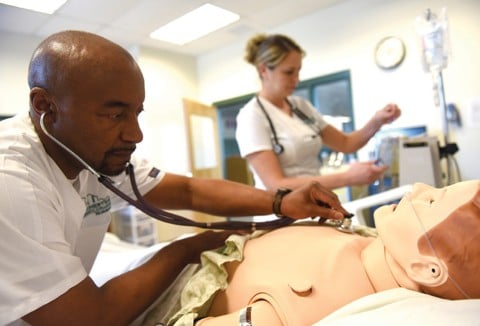
Members of the doula certification class tour the labor and delivery lab at St. Anselm College’s simulation classrooms. (Courtesy)
Q: Why do doulas make a difference?
Thompson: Doulas play a critical role in improving maternal health outcomes. Research consistently shows that doula support can reduce birth complications, improve communication with health care providers, strengthen emotional and physical support throughout pregnancy and birth, and help birthing people feel safer, more informed and more empowered in their care.
For Black and Brown families, who continue to experience disproportionate rates of maternal morbidity and mortality, culturally responsive doula care can be transformative and, in some cases, lifesaving. Yet New Hampshire has historically had very few BIPOC doulas, leaving many families without access to someone who shares or understands their lived experiences.
That reality is exactly why we created the BLM NH Doula Cohort. Our goal is not simply to train doulas; it is to build a workforce of compassionate, culturally responsive birth workers who reflect the communities they serve.
Q: There is some history with women-experienced birthing and midwifery being pushed out in favor of institutionalized medicine. Can you provide some historical context?
Thompson: Historically, Black women have always been central to childbirth in America. Before birth became largely medicalized, Black “granny midwives” were highly respected members of their communities, providing prenatal care, attending births and caring for families across generations. During enslavement, many Black women were also forced to care for white families, serving as birth attendants and wet nurses while being denied autonomy over their own bodies and families. As birth increasingly shifted into hospitals, many of these traditional practices and trusted community birth workers were pushed aside in favor of institutionalized medicine.
Today, we’re seeing a renewed recognition of the value of doulas and community birth workers. While access has historically been limited because of cost, more organizations are working to make doula care available to everyone. Many people are surprised to learn that doulas provide support not only during vaginal births but also during cesarean births, offering emotional, physical and informational support throughout the birthing experience.
Q: What are some of the program developments you are excited about working with BLM NH as their maternal health director?
Thompson: The fact that we offer free services to a broader range of women who historically have not been able to get doulas. Working-class families experience higher mortality rates, and so I think this work is really important.
Q: Are there integral historical figures that you think about often? People whose contributions were vital?
Thompson: The mothers of gynecology were enslaved Black women whose bodies received mutilations and traumas in the name of research. Lucy, Anarcha and Betsey were the women whom J. Marion Sims enacted horrors upon, where he later became known as the father of gynecology. This man conducted up to 30 surgeries on a dozen women. The three — Lucy, Anarcha and Betsey— were the only documented names. I mean, even the speculum we use in everyday procedures is made from the shape of one of these Black women! The fact that gynecology was built on our backs, but we are not acknowledged or considered … I’ll just tell you, there isn’t a single Black woman here in New Hampshire, who has given birth here, who doesn’t have a story about being dismissed or not listened to.
Q: How does the work of BLM NH try to balance the mental and physical parts of health?
Thompson: People do not think about the psychology of birthers, their family or their fears in approaching the birthing process. People like to think Black people have higher tolerances to pain than white people. It is so engrained in the health care system, these racist ideas about Black people We don’t want to break down the health care systems, but we want to turn the needle. There are too many Black women who experience massive amounts of trauma in comparison to white counterparts, and their experiences and stories need to be addressed.
Q: What has been a pivotal moment for you in creating this doula program?
Thompson: I think it was when Tanisha Johnson (BLM NH executive director) and I were speaking on the versatility and expertise engaged in the program. When we executed our Doula Cohort, for example, we had so many instructors from around the nation in the same teaching cohort. These incredible individuals who were instructing on the whole-health aspect of childbirth; social workers, midwives, grief doulas, ob-gyns, a diverse array of people and experts! We were really intentional about creating this structure. And to see it all come to reality was so affirming.
Q: What is your long-term goal or vision for this work?
Thompson: For myself, in the next 10 years, I dream that I am practicing — for New Hampshire — as a Black midwife. We do not have a single Black ob-gyn in the state. We maybe have one Black midwife. When I had my daughter, I was thinking maybe we can have a Black doctor for her, but there was no one. I did not want to drive to Boston for every appointment, and I think with that in mind, representation is so important. I want to contribute to securing that representation for New Hampshire. And my vision for the doula cohort: I hope that we continue the growth the program is experiencing, and I want us to have national certification!