Fox Cottage Farm Offer the Blooms of the Season
Every August, thousands of dahlias burst into color at Fox Cottage Farm in Greenland offering visitors a chance to pick and explore
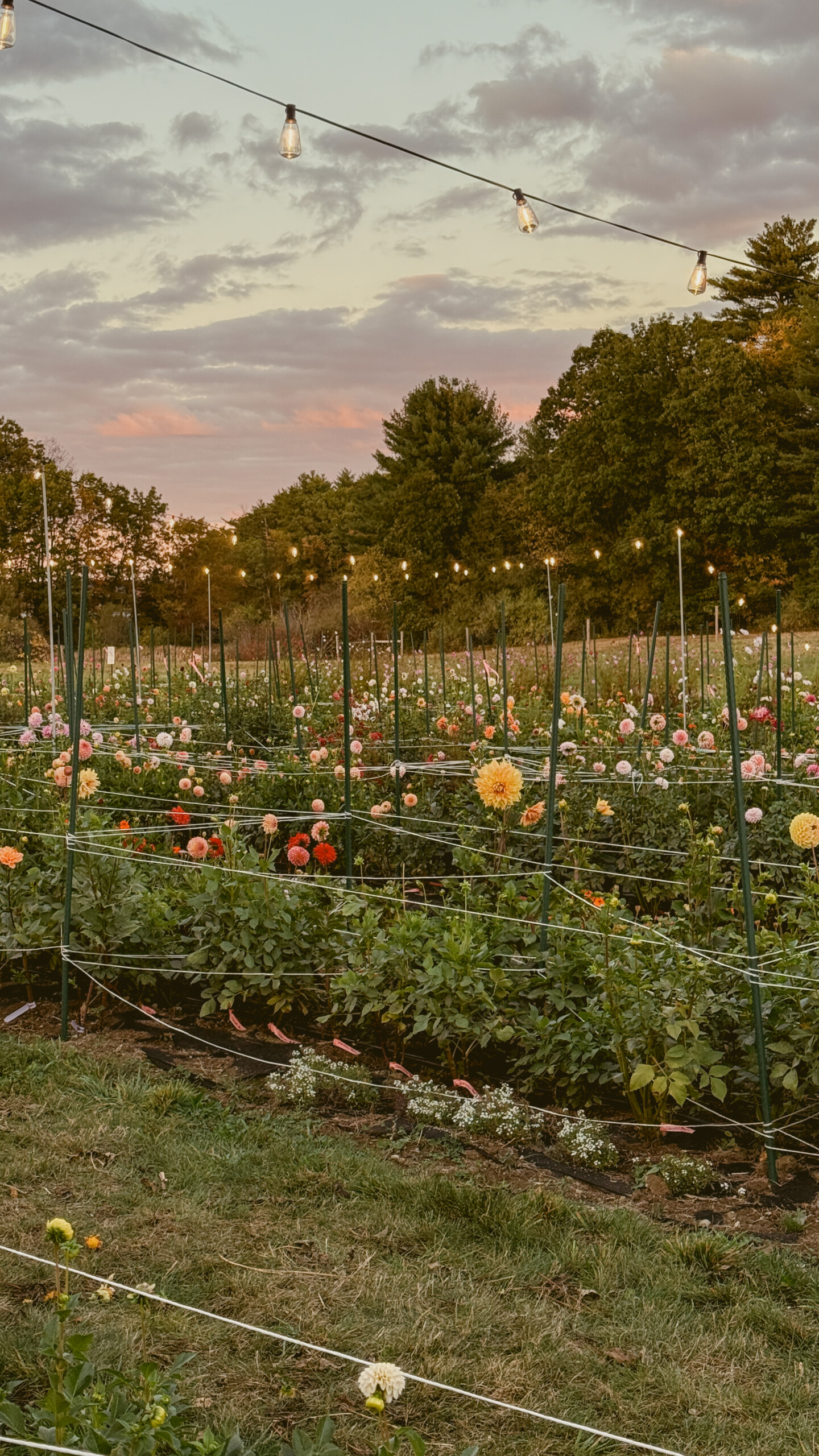
Fox Cottage Farm is inspired by generational garden memories — the kind passed down through grandparents, parents and quiet afternoons spent outdoors. It’s shaped by the belief that tending something well can be both grounding and hopeful, especially in a fast-moving world. Photos Courtesy of Matt Sisson and Shannon Shipman
The striking beauty of a single dahlia is hard to ignore. These magnificent, geometric blooms — from soft peachy pompoms to bright fuchsia spheres, their petals layered and unfurling — range in color, shape and size. And to see thousands of these flowers, in all their variations, bloom in a single field in midsummer is truly a spectacle to behold.
This is the scene at Fox Cottage Farm, a working dahlia field at Bird Dog Farm + Cider in Greenland, where dahlias and apples share the same ground and season. The best of both worlds, the property offers visitors the chance to pick fresh dahlias and other annual varieties, try a sampling of small-batch cider in the tasting room, or play games with family and friends on the patio, soaking in the views of the 60-acre property.
“Pete (Endres) and I think it’s really important to provide spaces like this for people to come and enjoy,” said Fox Cottage Farm owner Shannon Shipman about the farm and her partnership with Endres, the owner of Bird Dog. “We really believe that the community needs to be out there and experience these benefits, not only of the flowers, but being part of the community and knowing what grows in their community seasonally.”
The cidery opens for visitors in May, but the dahlia season kicks off in August, when 5,000 dahlias and other flowers begin to blossom. Of the 18 rows in the field, nine are open to the public for pick-your-own. Guests can choose to fill a cup for $25 or a bucket for $60, or can even choose to wander through the fields, admiring the colorful scene, at their own leisure.
The Seacoast provides an ideal climate for dahlias to thrive: hot days, a bay breeze and temps that cool overnight. Although these flowers make their appearance in August, caring for and growing dahlias is a yearlong job, which for some enthusiasts, like Shipman, is their appeal.
“There’s something so special about not only how they bloom, but there are seasons — from the tuber, to the planting, to the flowers, what happens at the first frost and in winter — that are so magnificently linked to the seasons of our lives. It really draws you in,” Shipman said.
At the end of the growing season, once the stalks are cut down, dahlia tubers — or the root of the plant where energy is stored — are dug up, divided and then “put to bed” for the next season. Shipman stores her tubers in plastic bins in her basement, layering and stacking the tubers in vermiculate like a lasagna.
In the spring, when the soil reaches 50 degrees, the tubers are planted. Within two to four weeks, sprouts begin pushing their way up and out of the ground, and as the seasons change and warm, the plants grow significantly in size, ranging from 3 feet in height to a whopping 7 feet or taller.
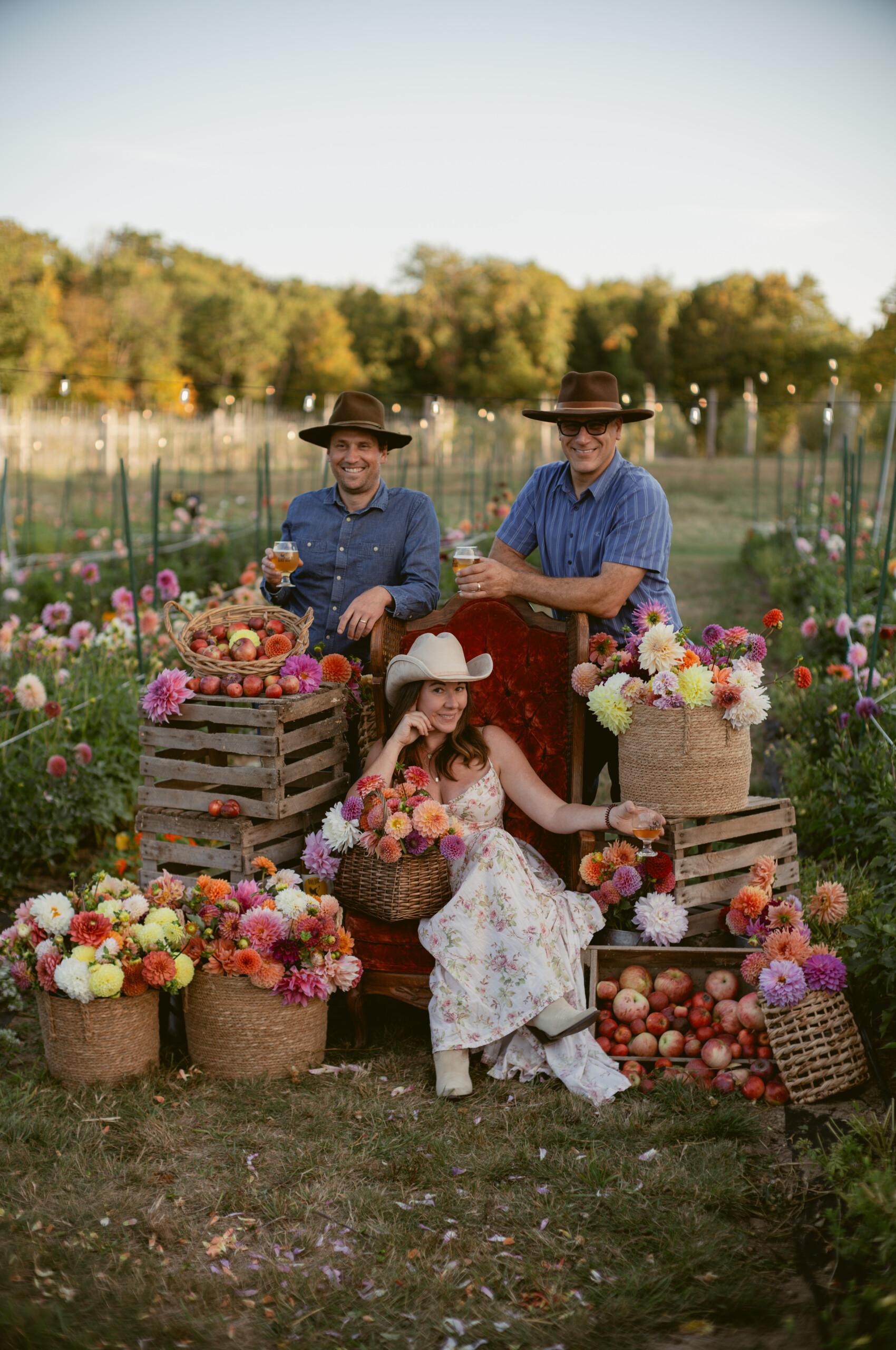
Shannon Shipman, Bird Dog Cider owner Pete Endres, left, and tasting room general manager and orchardist, right, Andrew Menard,
all work together to bring the taste and blooms of the Seacoast to life.
While there are 42 recognized species of dahlias in the world, there are more than 57,000 cultivated varieties registered with the Royal Horticultural Society. Listed on the Fox Cottage Farm website, the names of these varieties alone are enough to comfort and delight: Cafe au Lait, Belle of Barmera, Sweet Nathalie. Some of the most common varieties include the lacinated dahlia, distinguished by its fluffy, textured blooms; and the waterlily dahlia, its saucer-shape and broad, slightly curved petals resembling the plants of the same name, floating effortlessly on the surface of a still pond.
“Waterlilies will close up at night and then open again when the sun comes up in the morning, and they’re
just so stunning. It’s almost like God took a paintbrush and painted them just slightly,” Shipman said. “It’s hard to articulate unless you walk through and see it in person.”
The dinnerplate dahlia — which isn’t exactly a single dahlia variety, but rather a
descriptive classification for blooms measuring at least 8 inches in diameter, or the size of a dinner plate, as the name suggests — can grow bigger than a human head.
“There’s nothing like finding joy in watching children run through the field with their eyes so big and so wide with wonder over a flower,” she said.
For Shipman, tending dahlias is a labor of love, of connection, of healing. “Tending for something that is alive, especially things that are outside — there are so many long-term benefits. To be able to have a flower as dynamic as a dahlia, and to tend to that all year round, there’s so much gratification in that.”
Visitor Information
Fox Cottage Farm’s dahlia field is open seasonally at Bird Dog Farm & Cidery, 150 Bayside Road, Greenland. Check their website for dates and times: foxcottagefarm.com
How to Make Dahlias Bloom More: Seven Mistakes That Reduce Flower Production
By Shannon Shipman

Shannon Shipman focuses on quality over quantity and care over convenience when it comes to dahlias.
1. Not Cutting Enough
This surprises almost everyone. Dahlias respond to cutting. The more you harvest, the more they branch and produce new buds. If you leave blooms sitting on the plant for too long, the plant slows down. Cut deeply, down to a strong set of leaves. Don’t just snip the flower head. Varieties like Cornel Bronze, Eveline, Ivanetti, and Lark’s Ebbe, absolutely thrive on consistent cutting. They reward you for harvesting. Think of cutting not as removing blooms — but encouraging abundance.
2. Overfeeding Nitrogen
Lush leaves are not the goal. Too much nitrogen creates beautiful foliage and very few flowers. Early in the season, plants need balanced nutrition. For the first four weeks after planting I will do a soil drench/spray with a very high nitrogen, but after I switch to a very low nitrogen seaweed fertilizer. Excessive nitrogen can stall bloom production and leafy plants -—we don’t want that. If your plants look huge and green but sparse in flowers, feeding may be the issue. Some varieties like Lark’s Ebbe and Clearview Peachy will grow vigorously — but they still need balance to shift energy toward blooming.
3. Choosing the Wrong Varieties for Cutting
Not all dahlias produce equally. ,Some are statement blooms. Some are workhorses.
If your goal is maximum stems, you want varieties known for repeat blooming and strong stems.
Reliable producers in my field include: Cornel Bronze, Tahoma Kelli, Eveline, Isabel, Clearview Peachy, Lark’s Ebbe, Jowey Linda, Valley Tawny, Crichton Honey
Dinner-plate varieties like Labyrinth or Otto’s Thrill are stunning — but they won’t produce at the same pace as smaller ball or decorative forms. A balanced planting plan changes everything.
4. Not Pinching Early
Pinching feels counterintuitive. You remove the top growth when the plant is about 12-16 inches tall — and it feels like you’re slowing it down. But you’re not. You’re encouraging branching. More branches = more stems = more flowers. If you skip pinching, you’ll often get one strong central stem and fewer side shoots. It’s one of the simplest ways to increase production.
5. Planting Too Far Apart
This one surprises growers. While spacing is important for airflow, planting too far apart can reduce overall yield per square foot. As long as you are harvesting the dahlias you can plant them 9” apart, but the trick is cutting them. Moderate spacing encourages upright growth and efficient field use without sacrificing bloom quality. A well-designed row filled with productive varieties like Cornel, Genova, or Eveline creates rhythm — and rhythm creates abundance.
6. Not Enough Sunlight
Dahlias are sun-lovers. Six hours is the minimum. Eight is better — way better. Without adequate sun, plants stretch. Stems weaken. Bud production slows. If blooms are sparse, evaluate light before anything else. Even strong varieties like Ivanetti or Clearview Peachy can’t perform without sufficient sun.
7. Waiting Too Long to Harvest
Many beginners wait for the “perfect” bloom. But dahlias should be cut when fully open — not tight like roses. And once they’re open and ready, cutting promptly encourages the plant to continue producing. If flowers sit aging on the plant, energy shifts away from new bud development. Regular harvesting keeps the cycle moving. Trust me, they want to be cut.
Choosing Dahlia Varieties Without Feeling Overwhelmed
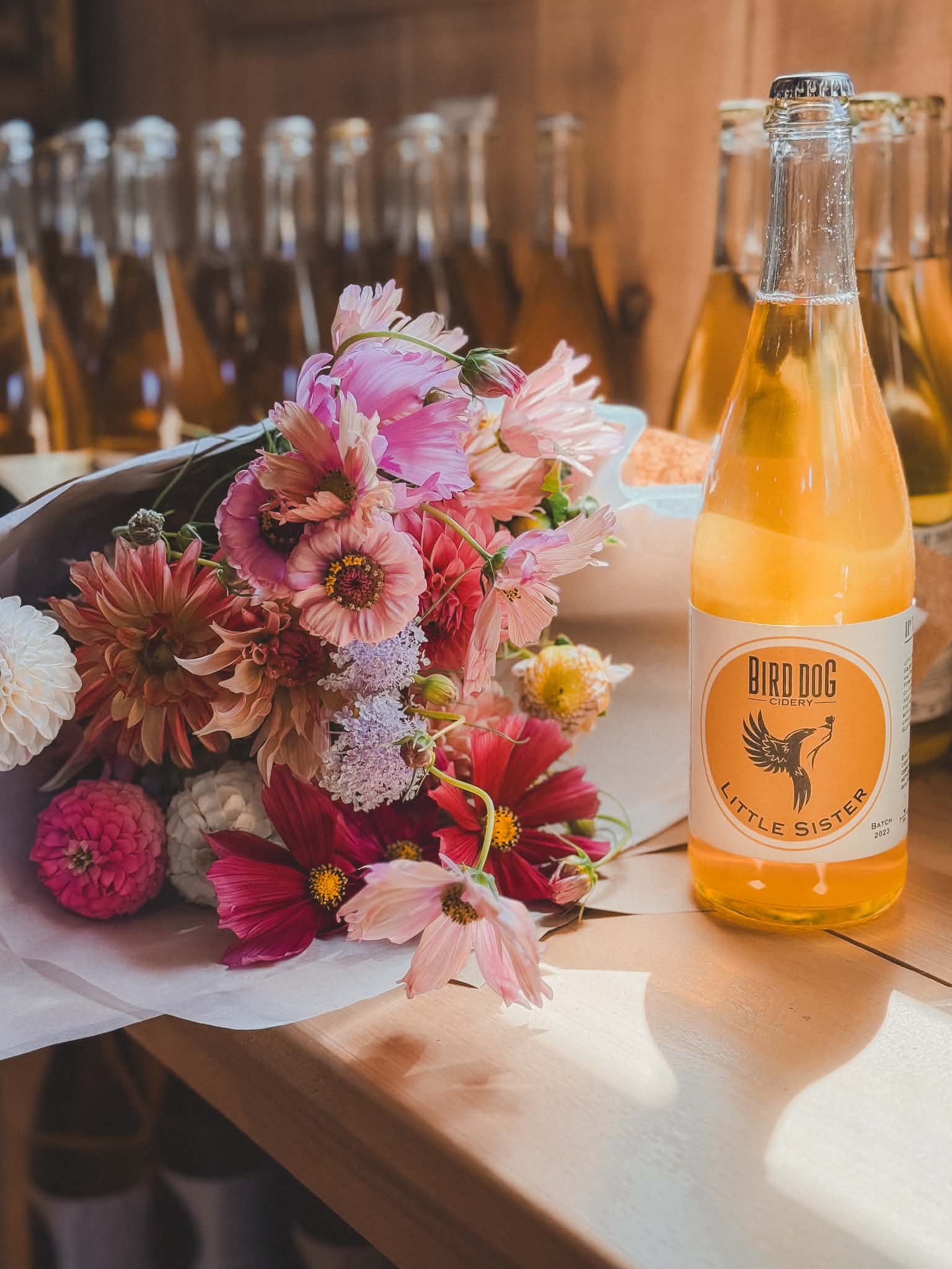 One of the most common mistakes new growers make is selecting varieties based only on photos. Not every dahlia performs the same in a garden, especially in New England conditions. Some varieties produce endlessly, while others are grown more for their dramatic presence than their productivity. Let’s be honest, every grower has their favorites that do them no favors in the field.
If this is your first season, focus on varieties that are:
• Known for consistent blooming • Strong-stemmed and reliable • Easy to work with in bouquets
Dinnerplate dahlias often capture attention first, but many growers find that smaller decorative
and ball varieties build confidence faster because they bloom more frequently. They also have a longer vase life.
At Fox Cottage Farm, variety selection is always about balance — romantic statement flowers paired with dependable workhorses.
How to Plant Dahlias:
Dahlias need warm temperatures, lots of sunlight, well-draining and healthy soil, deep watering once
the plants are established, and support for their hefty stalks.
1. Plant after the frost has passed, when the soil is about 50 degrees.
2. Space the tubers 16-24 inches apart and dig a hole 4 inches deep. Lay the tuber in the ground
horizontally with the “eyes,” or sprouts, facing up.
3. Water lightly once you sprouts emerge (tubers need time to root down and can rot with excess water).
4. When the plants are about 12 inches, pinch them by snipping off the top of the central stem. This will signal more growth, which means more blooms to enjoy.
5. Stake the flowers to keep blooms from drooping. Consider stakes from the garden store, garden netting, or the corral method depending on the size of the garden.
6. Once the plants are established, water deeply (about 1 inch) once or twice a week. For reference, stand over each flower for approximately 3 minutes.
7. Use a high nitrogen fertilizer in the beginning to get the plants started. After about four to six weeks, switch to a lower nitrogen fertilizer for fewer leafy greens and bigger blooms.
Watering and Feeding: Building a Steady Rhythm
After planting in the spring, Shipman doesn’t water.
Tubers don’t require watering until you see active growth above the soil. Once plants begin to stretch toward the sun, consistent watering paired with balanced feeding helps them develop strong stems and healthy blooms. They need 1 inch a week, because once they sprout, they are hungry.
After they are in the ground, abide by the “Jesus take the wheel” theory and let Mother Nature take
its course.
At Fox Cottage Farm, the goal is always steadiness — creating an environment where dahlias can grow naturally rather than forcing rapid growth.
“The garden is the place you want to make your mistakes. It’s where you learn,” Shipman advised. “Don’t put pressure on yourself. Flowers are fun. They’re beautiful. If something fails, that’s OK.”