Spotlight on Rising Changemakers: Kenny Frasch
Profiles of New Hampshire leaders who are lifting up diverse voices in the Granite State and beyond
Since this magazine’s launch in the fall of 2021, it’s been 603 Diversity’s mission to share stories so that the people of New Hampshire could get to know their neighbors better, especially those who may be newer to the state or whose lives are underrepresented in other media. That goal continues to guide our work today.
Recently, we reached out to past sources, frequent contributors and editorial board members to seek out people who are making a difference in diversity spaces of New Hampshire and who’ve not been in this publication before. What we received were the names of dozens of people who are entrepreneurs, advocates, artists and community builders who are creating spaces where people feel seen, supported and valued.
In this issue, we will highlight six of these “Rising Changemakers,” but you can expect even more in issues to come. If you know of someone who deserves some spotlight, please email us at editors@603diversity.com.

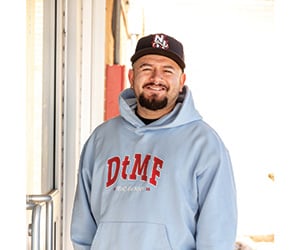
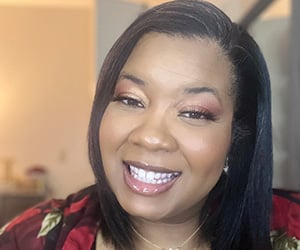
Kenny Frasch
City: Manchester
Passion areas: Kenny is a drag mother, an advocate and the owner of Hop Knot, an establishment that creates safe spaces and performance opportunities for the intersections of queer and people of color. Hop Knot became the site of convening for Queen City Pride, Juneteenth and countless drag shows aimed at adults and youth. It became known as the spot in Manchester for our community.
Q: This year was challenging when considering the socio-economic climate and the impacts tariffs have had on small businesses. How is Hop Knot doing?
Kenny Frasch: It has been a really, really rough year. People are being super frugal. Some people are afraid to go outside; queer people and people of color are afraid to socialize in public. The younger generation doesn’t drink as much anymore. This year, a Nazi swastika was spray-painted on the door of the bar. People spit on the front of the
restaurant, and each week I have to go outside and clean it. Every time I do, it builds up — the understanding that some community members commit hate crimes every week and we’re on the receiving end. We got robbed as well, and our front door was shattered. There are surprisingly not a lot of people seeking employment. And all this while a close family member slowly loses her battle with cancer.
Q: How did you keep going to work every day? How do you keep showing up?
Kenny Frasch: I called who I needed to call. I really leaned into my support network, and honestly, I spent many nights cooling off at other bars after work.
Q: Did your drag family give you strength?
Kenny Frasch: Knowing that I have these people in my life, nurturers and family to protect me and help me heal, knowing that I need to use these systems instead of trying to bear it all by myself, helped to lift me up.
Q: I am fascinated by the drag houses that you have been a part of. This past year, you started your own drag family. What’s that been like?
Kenny Frasch: Yeah, I have made three beautiful babies this past year. They are all wildly different: Siasi, Scarlett and Bobby. They are all radical.
Q: How does one shift from hanging and communing to becoming a formal drag house? What do y’all call yourselves again?
Kenny Frasch: The Soup Kitchen because we got a whole bunch of ingredients. It started with Siasi. She wanted to do drag, and so we took her and just put her in drag. We threw her on stage. She’s a performer, and it was a natural fit. She took to it as glue takes to a hairline. She is also a classically trained violinist and bringing that intersectionality into her performance is key.
Bobby is a freak and gorgeous. They do weird art stuff. They would show up to our drag shows dressed and styled better than a lot of the drag queens, so I just put her in drag one day and that was baby No. 2.
Scarlett wanted to know how she could get into drag. Again with providing the right opportunities, she hit the ground running and has, now, a huge network in Boston and is slaying the game.
I love my drag family — the house I came from, House Marvel. I had to learn how to compartmentalize and understand how to be a mother, a co-worker, a friend. How to provide my children with what they needed while still honoring the House, which created my persona, Glamme Chowdah.
Q: I can imagine that it is tough to work with your friends.
Kenny Frasch: You know, it has been a hard year to have conversations and to respect people enough to actually speak truth with them, which has served me and my relationships far better than keeping my mouth shut and not engaging with that deep work. I think it’s a good sign of trust to be able to speak openly to someone. I think it’s awesome to know when one needs their own space and when we’re in work mode, we gotta work. This makes the relationships stronger.
Q: I am interested in how you work through all the emotional labor involved in nurturing performers, being a performer and leading with integrity while operating a restaurant bar.
Kenny Frasch: It’s hard to work somewhere where, socially, the company looks like it’s doing well, but financially, we are having just as hard a time as any other small shop. Look at Elm Street: This is like the olden days when half the spaces are lying empty. Still, I know I have to put a smile on and be everything the patrons need me to be. We have to do our best for our customers.
Q: Why is it so important for our communities to have spaces like the one you have created?
Kenny Frasch: Be it cliché or not, Hop Knot is one of the places where everyone can go in and be unapologetically themselves. We want to see you on your best days and your worst. We’re there to celebrate with you on great days and hold your hand on hard days. Real conversations are what spark real change, and what better place to do that than at a gay bar?
Q: Your drag events are immensely popular and often sold out. Are there other events that you believe deserve some extra attention?
Kenny Frasch: Definitely King of Drag. There’s an insane throughline of misogyny in the queer community, especially from cis gay men. The Drag Kings who perform here are far more conceptual, they are funnier and they’re more talented. It’s wild that there’s not as much love for them as for Drag Queens.
Q: If you could ask one thing of our community, what would it be?
Kenny Frasch: I guess I would say, please stop the infighting. We are already combating so much to protect ourselves and our people that creating more dissonance and silos almost seems like helping to further disenfranchise our communities. It would be better for us to work together, move together than work against each other.
Q: You have worked so hard to keep Hop Knot open for everyone. I, myself, have decided to come to Hop Knot once a month to play board games with the homies. But what do you want for your own future?
Kenny Frasch: I want to be able to travel again. I want the ability to be able to take sick days. I want to have weekends off. I want to go dancing. I miss dancing so much.