Our Town: Old Durham Town
The home of the state’s flagship university ebbs and flows with the student population
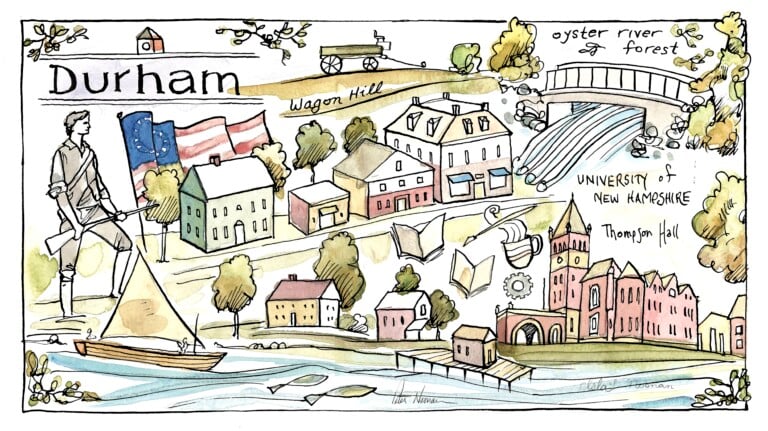
To many people on the outside looking in, Durham is simply a “college town.”
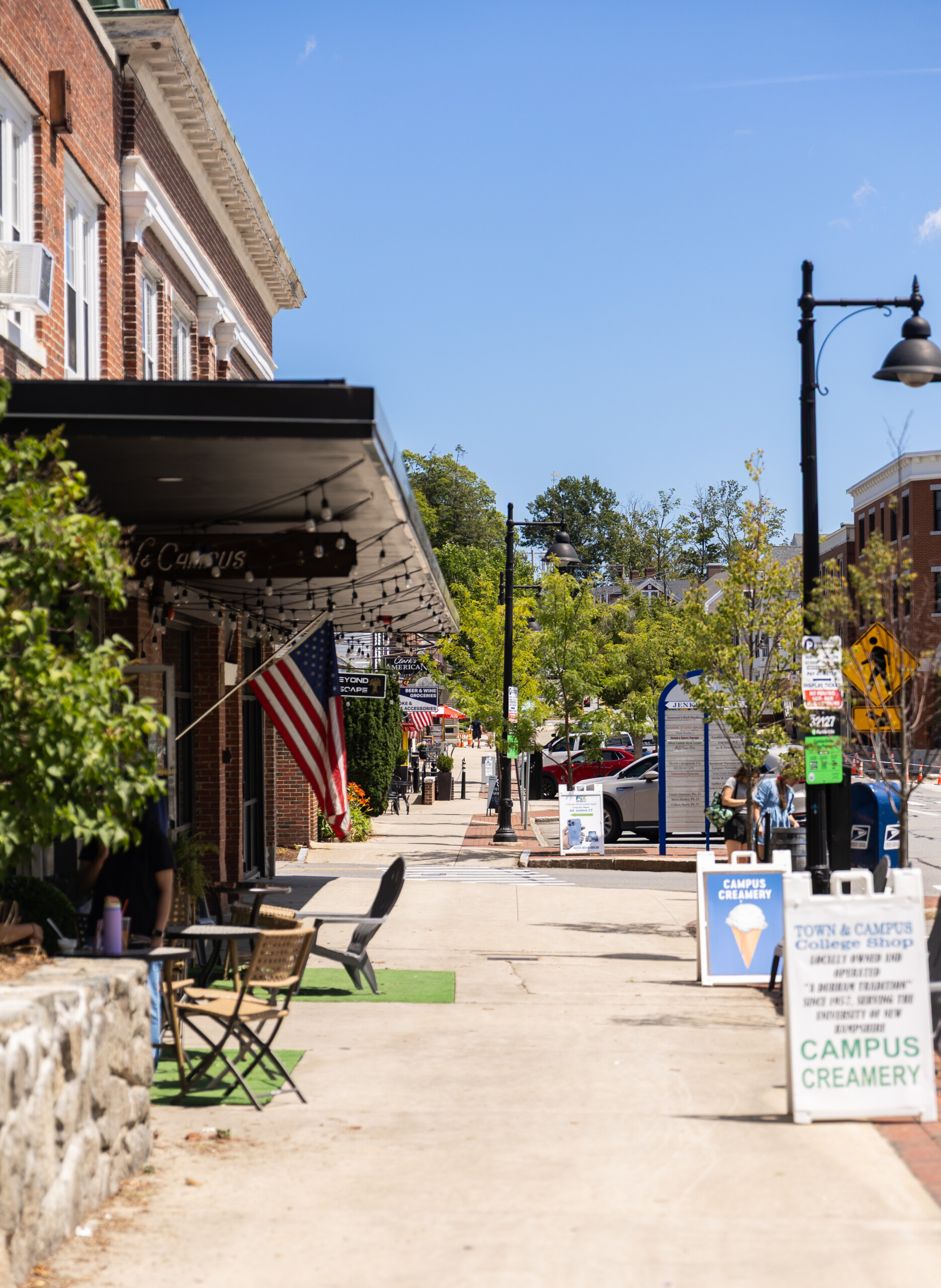
Durham’s scenic downtown slows down when students are away, such as during the extended winter break between semesters when UNH closes for the Christmas and New Year’s holidays.
Indeed, it is home to the University of New Hampshire, the state’s flagship four-year public institution.
But it is so much more, says Todd Selig, Durham’s town administrator since 2001.
“We have what I would call the quintessential New England charm downtown,” Selig says. “It’s a beautiful downtown that’s on a very human scale, and it’s a pleasure to be there to walk around.”
Selig describes the town’s “tremendous ethos for land conservation” as its foundation for wooded and coastal areas that remain accessible to the public.
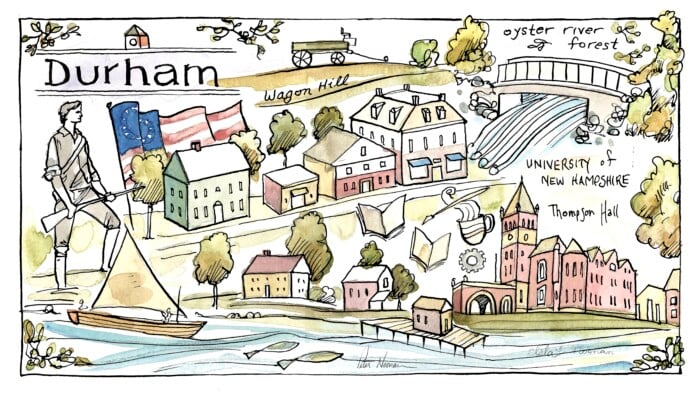
Durham is located at the mouth of the Oyster River, which snakes its way through town on its way to Great Bay. Its cooperative school system with the towns of Lee and Madbury is named for that river.
“We have huge tracts of the town that have been conserved over decades to create sort of natural, undisturbed areas where people can hike and walk and reflect,” Selig says. “People might be most familiar with a property like Wagon Hill Farm right on Route 4. But then you’ve got the Oyster River Forest, the Doe Farm, the College Woods — acres and acres of long horse trails of natural space.”
Wagon Hill Farm is exactly what the name implies — a farm wagon situated on top of a scenic hill on land that was privately owned starting in 1653 until it was acquired by the town in 1989.
Listed among the New Hampshire State Register of Historic Places, the property, which abuts the Oyster River, encompasses some 139 acres for hiking, walking dogs and winter sledding.

Todd Selig, Durham’s town administrator since 2001, says the town features plenty of “natural, undisturbed areas where people can hike, walk and reflect.”
Durham’s history traces back to the earliest days of the American colonies. Originally known as Oyster River Plantation when settled in 1635, it was then part of Dover, the seventh-oldest settlement in the nascent American colonies.
It became Durham — named after Durham, England — with its incorporation in 1732.
Gunpowder, stolen by colonists from a Royal British fortification in New Castle and later used at the 1775 Battle of Bunker Hill, was said to have been stored in various Durham locations.
UNH’s origins date back to 1893, when the New Hampshire College of Agriculture and Mechanical Arts moved from Hanover to Durham on land willed expressly for that purpose by Benjamin Thompson, a wealthy (and said to be eccentric) farmer.
It is now a university with undergraduate and graduate programs and about 11,400 undergraduates and 2,200 graduate students, many of whom live in Durham.
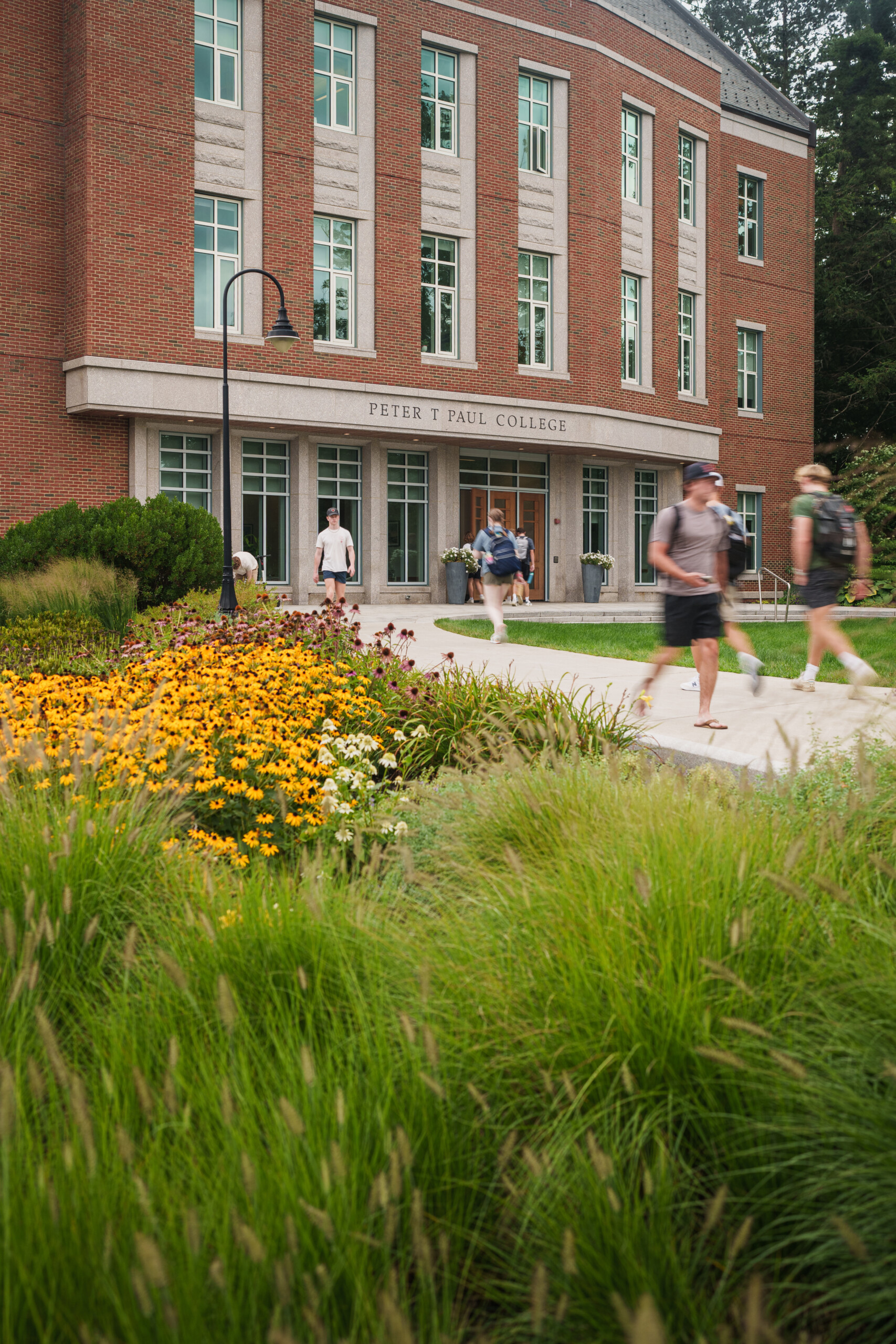
UNH has 11,400 undergraduates and 2,200 graduate students, many of whom live in Durham. Photo Courtesy Jeremy Gasowski
Unlike other college towns, where the school is an island unto itself, the UNH campus, residences, sorority and fraternity houses and facilities “meld into one another and create great opportunities for cross connection between residents and students and faculty and staff,” Selig says.
The overall population of the town ebbs and flows with the student population. The resident population numbers about 10,500. The bulk of that population, according to census information, is employed in education services-related jobs, while the balance is spread among health care, accommodation/food services, retail, scientific/technical
and others.
Joe Friedman was a Durham outsider looking in, and is now an insider looking out.
Originally from Connecticut, he transferred from Union College in New York and was a UNH politics science major who graduated in 1977. He left for a while and returned to live in 2012.
He remembers the town, even in the ’70s, as being what he described as “environmentally sensitive.” Indeed, it was the town of Durham and its grassroots efforts that in 1974 effectively blocked Greek shipping magnate Aristotle Onassis from constructing a then $600 million oil refinery, targeting 3,000 acres along Great Bay in Durham for the plant and tank farm.
As home to the state’s largest liberal arts college, Friedman also remembers the political activism, given New Hampshire’s place as home to the first presidential primary.
“It was a treat,” recalls Friedman, now chair of Durham’s Town Council. “All the candidates who come to New Hampshire, and invariably they come to Durham, so you got to see the national candidates.”

Durham Town Council Chair Joe Friedman graduated from UNH in 1977 with a political science degree. He left for a while and returned to stay in 2012.
Dave Gerard arrived from Long Island, New York, as a UNH student and remained as a full-time resident after his 1985 graduation.
“I’m grateful, because I ended up here pretty organically,” says Gerard, who has worked full-time as a musician, solo singer/songwriter and frontman for the band Truffle.
His friends, bandmates and the people in town helped Gerard create a connection to the community that has stayed with him through the years. “I just fell in love with it. I loved being by the water for certain. I mean, everybody’s just so friendly around here,” he says.
He does his banking in town; he gets his haircut in town. The servers at his favorite cafe downtown know him. Wagon Hill is where he occasionally walks his dog, where his daughter slid down its snowy hill.
“It felt comfortable,” Gerard says. “It certainly has a much more laid-back feel than where I grew up, and I think I was really attracted to that.”
Durham is a residential community, with small pockets of commercial/retail/industrial opportunities downtown and in a large manufacturing facility that once produced newspaper production-related equipment. And therein lies the challenge.
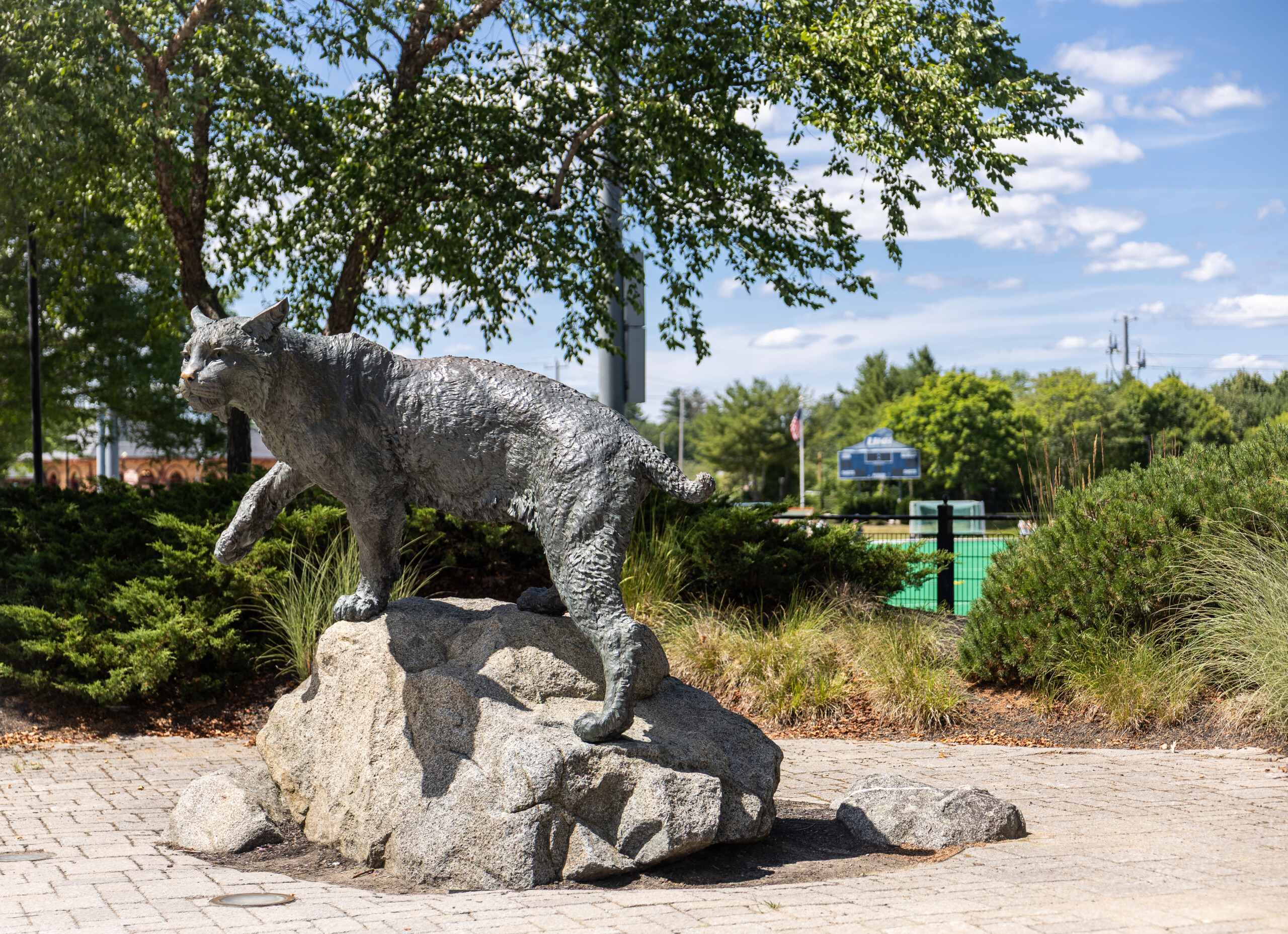
The wildcat became UNH’s official mascot in 1926. This statue, designed by Washington artist Matthew Gray Palmer, was installed in front of the Whittemore Center in 2006.
For the last few years, Selig has raised concerns that without more commercial/retail/industrial development, more and more of the tax burden will fall on homeowners. In late 2025, homeowners received increased property tax levies because of higher residential property values and higher costs associated with the town and its cooperative school system.
One key area of expanded commercial development is the downtown, now a mix of small shops, restaurants, pizza parlors and bars. Business owners are often challenged, according to Selig, by a fluctuating population — busy when the students are in town, not so busy when they aren’t.
“If one looks around at the most thriving downtowns, they almost always have a few stories of residential above, commercial and retail uses on the first floor,” he says. Durham is looking at a rezoning of the downtown
that would allow multi-floored mixed commercial/residential development.
“It creates the opportunity for new construction that might be higher than we have now, inhabited by a broader range of the population living above who could support the businesses,” he says.
Other areas of potential significant commercial development include the Mill Plaza (currently owned by Torrington Properties, which has been on a commercial development blitzkrieg throughout the Granite State) and the former Goss Manufacturing newspaper equipment building on Technology Drive, now owned by the R.J. Kelly Co..
Then there’s The Edge in the so-called West End part of town, an academic, research, business and residential project proposed by UNH in cooperation with the town.
“The Edge at West End is, from my perspective, a huge opportunity for the University of New Hampshire to bring in industry partners, and that can offer cutting-edge, real-life experience for students and job pipeline for students, and lease or ongoing additional revenue for UNH,” Selig says.
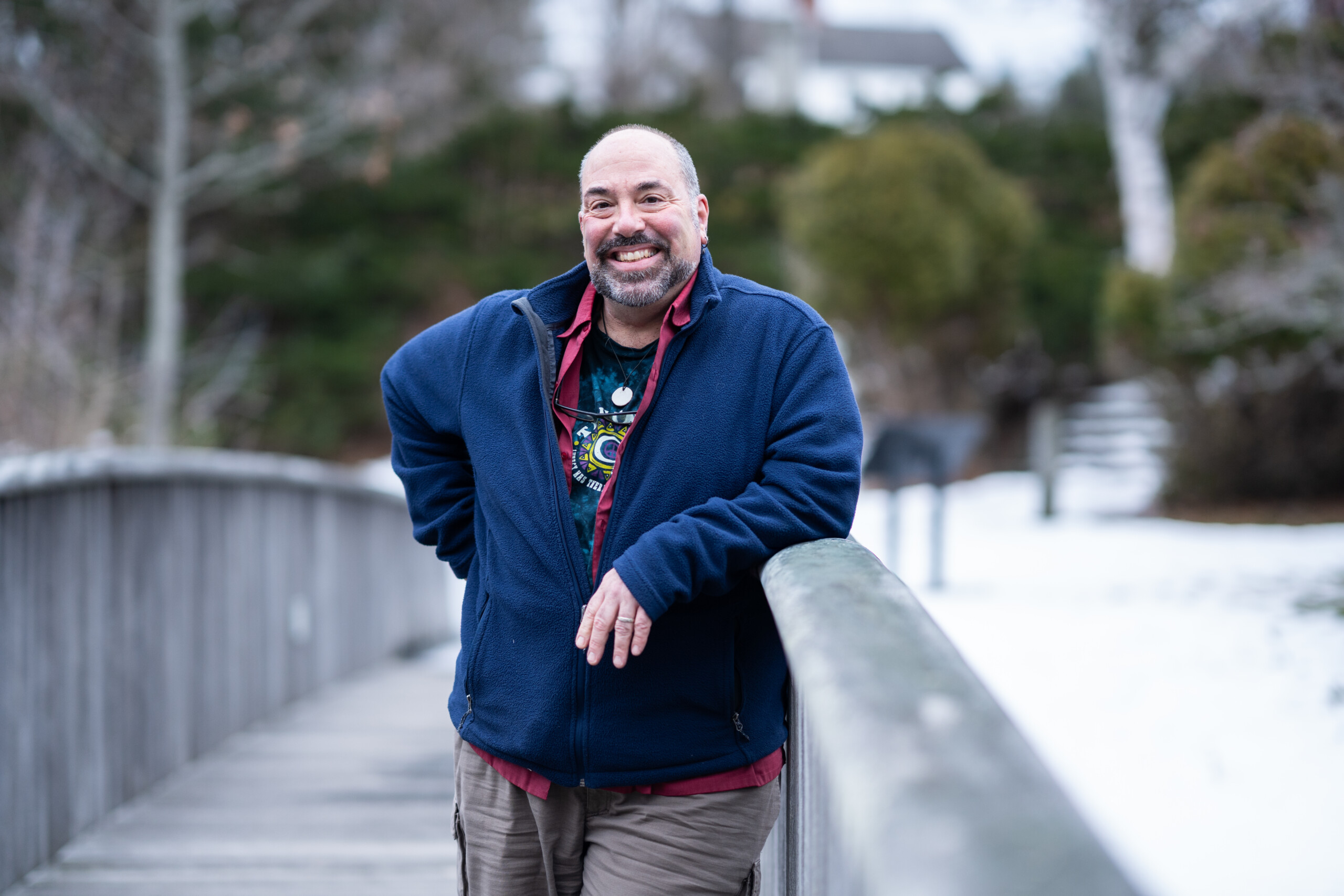
Dave Gerard arrived from Long Island, New York, in 1985 to attend UNH, and has lived there ever since.
“Because much of what is being envisioned out there would be privately owned and be taxable, that would be a tremendous prospect for the broadening of the tax base,” he says.
Friedman is also excited about the potential for how The Edge could benefit the town as a whole.
“It’s certainly a foundation for continued growth on that side,” he says. “And I think that retail, with all the infrastructure that’s in place, could grow again, also in downtown. If we had more year-round residents, they could walk there within 5 or 10 minutes.”