In Their Own Words… with Author, and Former Voice of Charlie Brown, Duncan Watson
The Walpole environmentalist caps a career in waste management with a new book while embracing his childhood vocation as Charlie Brown
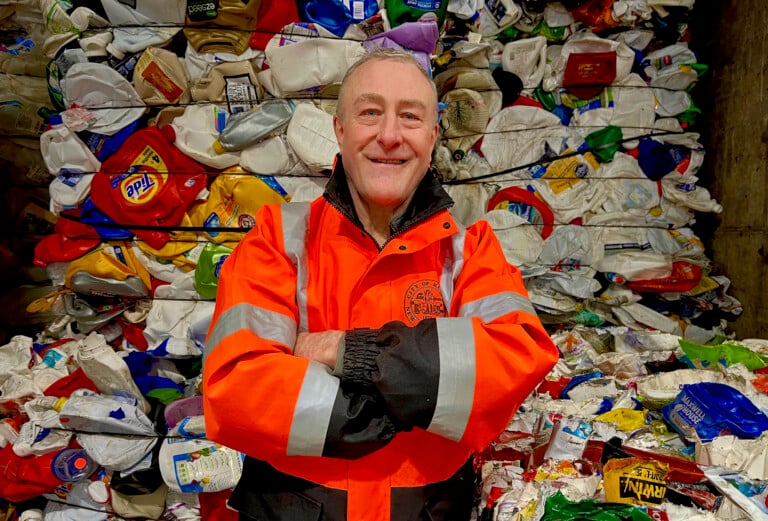
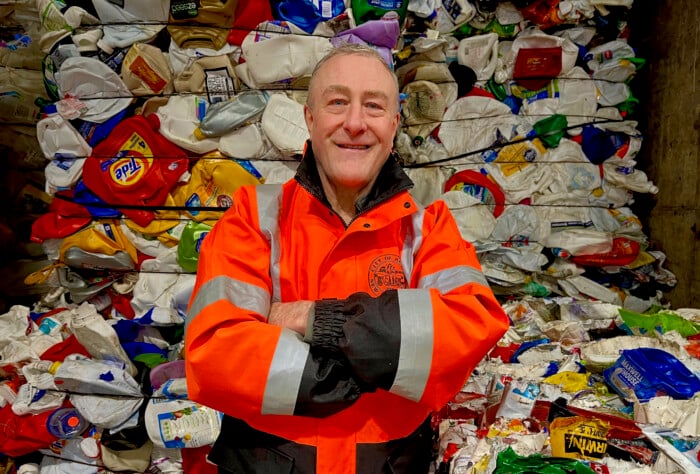
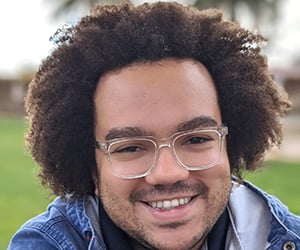
Duncan Watson of Walpole has spent more than 30 years being passionate about sustainable solid waste management.
Though it’s a highly technical topic, Watson believes saving the planet by reusing more and discarding less can be simplified with a change in thinking.
In Watson’s 2025 book, “Everybody’s Trash: One Man Against 1.6 Billion Pounds,” the recently retired Keene assistant public works director uses eye-opening anecdotes from his own life to illustrate the importance of caring for the environment.
Watson has yet another notable accomplishment: voicing the indomitable “Peanuts” character Charlie Brown from 1975 to 1977 in TV specials like “Be My Valentine, Charlie Brown” and “You’re a Good Sport, Charlie Brown,” and the feature-length film, “Race for Your Life, Charlie Brown.”
Besides greeting faithful Peanuts fans at comic-cons, Watson educates others around the state about new methods of recycling and waste disposal. And like Charlie Brown, Watson remains optimistic that things can change for the better.
New Hampshire Magazine: How did your interest in conservation begin?
Duncan Watson: In California in the early- to mid-’70s, there was a pretty significant drought. Conserving water was something that we needed to do, and we took that all very seriously. To this day, I have trouble taking a shower that’s more than, like, a minute long, just because I’m thinking about water conservation.
NHM: How do you explain sustainability to others?
DW: I talk a lot about infrastructure. In July of 1969, I was at the ticker-tape parade in New York City to welcome home the astronauts from Apollo 11. It was literally a pipe dream just a few years earlier. Yet, we were still dragging suitcases to the airports, because wheels on suitcases did not appear in the patents until 1970. We’re basically at a point in our solid waste management program where we’re dragging our suitcase to the airport, and we need wheels.
NHM: What do you mean?
DW: The “wheels” is basically investment in infrastructure. The ability exists today to repurpose, have a higher and better use solution, from an energy standpoint, about 90 percent of our waste stream. Only 10 percent of that incoming waste stream would need to be landfilled.
This technology exists. In (Granada, Spain, and Oslo, Norway), they’re achieving very, very high diversion rates. One of these facilities that I’m talking about costs between $500 million and $700 million to build.
NHM: Will something better be implemented in the U.S.?
DW: (People will) basically say, ‘If we just build a new cell on the landfill, it’ll take care of this problem.’ That’s part of the challenge. People don’t understand that there is an alternative, and it’s far superior to what we’re doing right now. Unless we start talking about investments in infrastructure, this is just magical thinking, and nothing’s going to change.
NHM: Can this be accomplished in your lifetime?
DW: I sure hope so. Gosh. I’m 62 years old, and I see how things move at a glacial pace. But there’s no good reason not to do it. I hope that as more people become aware there is a better mouse trap out there, the public sentiment can get the attention of lawmakers. And if we don’t get our collective act together with using this existing technology, then we’ve been sold out by the corporate interests.
NHM: You mentioned dumpster-diving in your book. Do you do that yourself, too?
DW: Oh, heck, yeah. It’s a professional curiosity. I’m always fascinated at what people will throw away. It’s a way of getting a snapshot of waste disposal behaviors when you get a chance to climb up on the side of the dumpster and peer over the side — even if there isn’t something that you might be able to snag out of it.
NHM: Given all that discussion, can one person still make a difference?
DW: Absolutely. I have always maintained that every individual action does, in fact, make a difference. I have a character on the front of my book named Recycling Sam, and his motto is, “Everyone makes a difference.”
NHM: Was it difficult to include your voice work in your book, because it might draw more attention to that when you want
to focus on the environment?
DW: I’m getting a little more used to that part of my life coming to the forefront. The secret (is) sort of out now. It doesn’t define me, but it’s also a cool part of my resume. I’m very grateful and humbled that I got to participate in something like that. It’s also a little strange, being the voice of Charlie Brown. It’s a long, long time ago.
I’m clearly more interested in my legacy being what I did on the environmental front, but I’m also grateful. And I’m intrigued that there’s a huge fan base out there, and I get to meet some people that I never would have met under other circumstances. And I like doing that.
NHM: Are you ultimately glad for that opportunity?
DW: Yes. I didn’t know anything about this world. My association with Charlie Brown was extraordinary; but again, it was also 50 years ago. That people would still be interested in that work that I did all those years ago is sometimes a little head-scratching.
Somehow, by some stroke of good fortune, I got to be associated with probably one of the top five iconic cartoon characters in the world. I’m just really humbled and grateful that I got to be a part of that. It’s definitely a part of history. I just got really lucky being in the right place at the right time.
NHM: “Peanuts” TV specials are a big part of some families’ holiday entertainment; you must hear so many stories like that.
DW: That’s exactly what I’m talking about. I put it into a phrase of: ‘Is it really a holiday until you watch the “Peanuts” special?’
NHM: When did you realize being the voice of Charlie Brown was so important to people?
DW: Well, when you go to these comic-cons and you set up your table with various Charlie Brown or “Peanuts” scenes, and (fans) start telling you about how your voice was something that they would use as a lighthouse, for a safe harbor for themselves. When they needed some comfort or some safety and security, they would put on their “Peanuts” specials because they knew what was going to happen. They associated my voice with something that represented something comfortable to them.
And I love holding space for that and hearing what that meant to them. And I understand — It’s obviously not me. It’s something much, much bigger than me that I just happened to be associated with.
NHM: What is your favorite Charlie Brown episode that you worked on?
DW: “Be My Valentine” was my favorite one, because it was my first one. It’s very sad that Charlie Brown brings two briefcases to school for Valentine’s Day, thinking of all the Valentine’s he’s going to get. And then he ends up getting no Valentines whatsoever. His friends feel bad and bring him a used Valentine, and he’s so desperate to get the Valentine that he’ll accept the used one. These are pretty great gags.
I always think of Charlie Brown as the ultimate optimist. It never really does go the way that he thinks it’s going to. And he doesn’t give up. He picks himself up, dusts himself off and tries again. I’ve had many, many Charlie Brown type of incidents in my life. And I think we can all relate to these things, but we don’t give up. We realign and try again.
 Each day, every single person in the United States discards about 5 pounds of waste. Be it a bottle that gets placed in a recycling bin or a piece of paper crumpled and tossed into the waste bin, every bit of the daily 1.6 billion pounds cast off has a story. This book is full of those stories. It will wake you up and give you hope. As the author, Duncan Watson says, “More people in America recycle than vote. Recycling is more popular than democracy!”
Watson began his personal trash journey in his pre-teens as an attendant at a small municipal recycling center in Northern California. He has been helping run the city of Keene’s solid waste program for 33 years and has brought national attention to the program for solid waste disposal that Keene has built. Duncan spins a good yarn, and the rich characters who populate the “dump” in Keene provide endless entertainment and a lot of laughs. Always a storyteller, he continues to explore the possibility of transforming the dump culture to provide a vision of something bigger, something worthy.
“Everybody’s Trash: One Man Against 1.6 Billion Pounds” can be purchased at Amazon, Barnes & Noble, NH Audubon and local book sellers.