Finding a New Voice with Laura Knoy
Podcast and public radio veteran Laura Knoy merges fact with fiction in debut novel
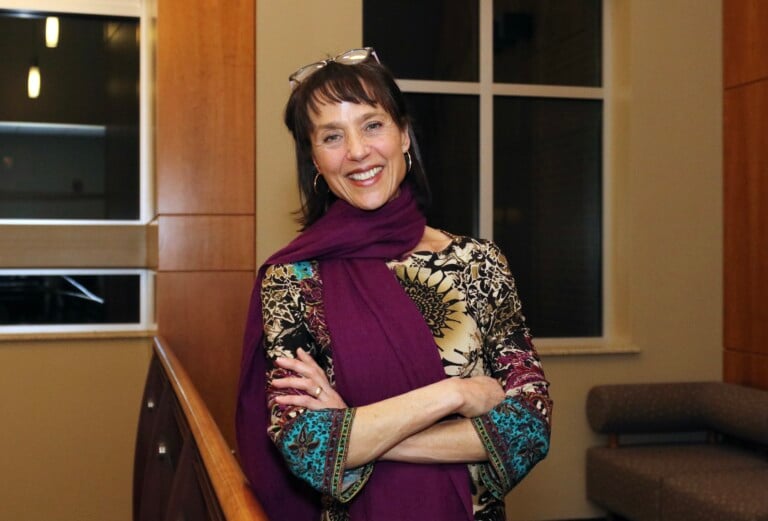
Years before NHPR radio personality Laura Knoy gave her final signoff on “The Exchange” in 2021, the popular daily news radio show she hosted for 25 years, there was still one story that she couldn’t let go.
The idea followed her throughout her career as a journalist, and eventually became her debut novel, “The Shopkeeper of Alsace.” Knoy’s book is a work of historical fiction interwoven with the true story of one Jewish family’s fight for safety amid the horrors of WWII. Knoy based the book upon the true accounts of her friend, Annette, whom she met as an exchange student in Strasbourg, France, in the mid-1980s.
Knoy is the host and founder of “ReadLocalNH,” a podcast about New Hampshire authors and local bookstores; is director of community engagement at the Rudman Center at UNH Franklin Pierce School of Law; and is a sought-after narrator and interviewer.
Knoy briefly paused her whirlwind book tour to talk about her first book and leaving “The Exchange,” and shared sage advice for other would-be writers.
New Hampshire Magazine: Do you miss working on The Exchange?
Laura Knoy: No. It was great for 25 years, but it was also really, really hard. NHPR was great to me, and everybody was fantastic. But 25 years of being on deadline every single day and just cranking out a live radio program … it was time to move on to something slightly more chill.
NHM: Were those long days for you?
LK: During the pandemic, it was. Most of the time it wasn’t 12-hour work days. It was definitely manageable. And I had two kids. The 2020 elections and the pandemic — that was nuts. You’re always on deadline, yes, and a serious deadline, like, you have to be there in that studio, ready to go at 9 o’clock. Doing “The Exchange” was great, but I just wanted to do something else.
NHM: What were some of your proudest moments on “The Exchange”?
LK: Covering those elections of 2020 because, first of all, they were very contentious. By the time the general election rolled around, we were in full pandemic mode. So not only do we have unbelievably challenging content, we had an unbelievably challenging technical setup. And after (the debates) were over, I took myself off to the White Mountains for three days. I just rented a cabin and stayed by myself. It was wonderful.
Often public radio stations could choose whether they would take NPR’s presidential primary coverage (on) primary night or ours, and we always made the case, ‘Hey, you know, take ours, we’ve been covering this thing forever … we didn’t just fly in two weeks ago.’ Many stations took our coverage, which I was really proud of. That was fantastic.”
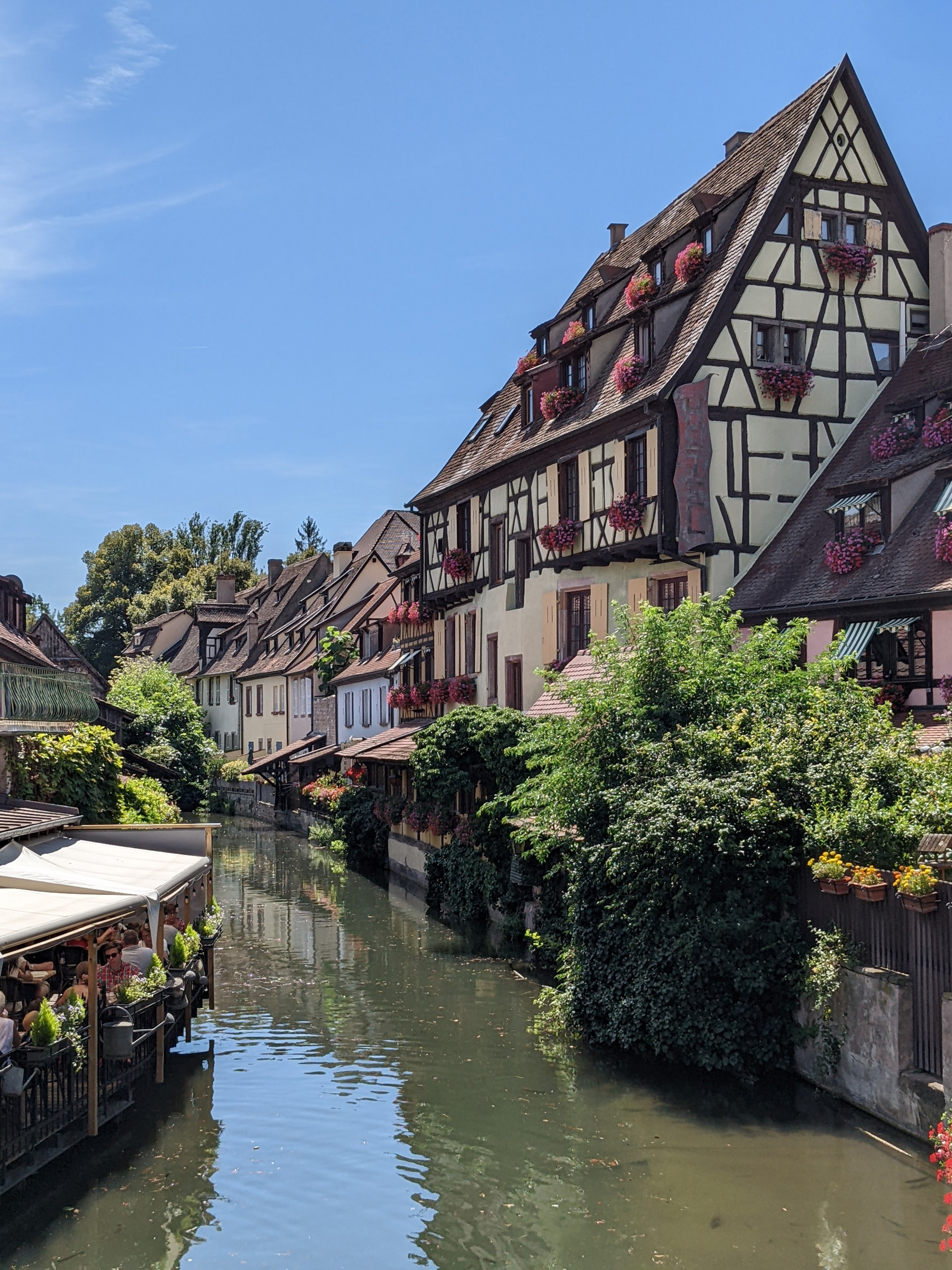
The city of Colmar, Alsace, in the northeast region of France, serves as part of the setting for Laura Knoy’s work of historical fiction, “The Shopkeeper of Alsace,” about one family’s fight for safety during WWII. Photo by Steve Winnett
NHM: Why was this the right time to write “The Shopkeeper of Alsace,” given you met this person decades ago, and only decided in 2016, “I have to follow this story.”
LK: Why did I wait that whole time? When I met her, I just started getting little scraps of the story. Over the years of our friendship, she (would) just like, drop another (revelation). And then we’d move on. It didn’t occur to me to even write a novel about this until 2015. It was just kind of organic. Annette had shared her story for 35 years before she died in 2015, and then I began thinkingg, “Oh, all these stories, like, where are they going to go? Well, maybe I could do it.”
NHM: While you were still working on “The Exchange”?
LK: Yeah, the first three years that I was researching and writing, I was still working on “The Exchange.” That included the most intense period ever on the show, which was during the pandemic, and the elections of 2020, so I just kind of wrote whenever I could.
NHM: Is this book fiction or nonfiction?
LK: It’s historical fiction, so, heavily based on a true story.
NHM: How did you balance that?
LK: I had the basic facts, but I had to really fill in the heart, the soul, the characters, the relationships, the frustrations, the dialog. All that stuff had to be made up. For example, there’s some pretty dramatic stuff that happens in the book. At one point, someone gets lost. I have that fact. What I don’t have is, how did everybody else react when this person got lost? How did they feel? There was a lot of fill in.
A lot of people have said, “Well, gosh, you had this true family saga, why don’t you just write nonfiction?” Memory is a very tricky partner. We’re starting to find this out in criminal justice, right? Three different witnesses will remember the crime three different ways. As a novelist, you get to pick what really happened.
NHM: How did you research this book?
LK: The research started with the family’s saga. The children of the family recorded their memories in 2005. That was kind of my guiding star for the research. That formed the basis of all the other research I did.
I can’t even tell you how many dozens of books in English and French, hundreds of articles. I visited, I don’t know, a dozen museums. I probably interviewed at least a dozen researchers. There are first-person narratives, videos of people who lived through these times. But I was lucky, because I did have the family saga — as that was the core of the research, their personal narrative — and then I did everything else to fill in the blanks.
NHM: What advice do you have for people who are thinking of writing their first book? 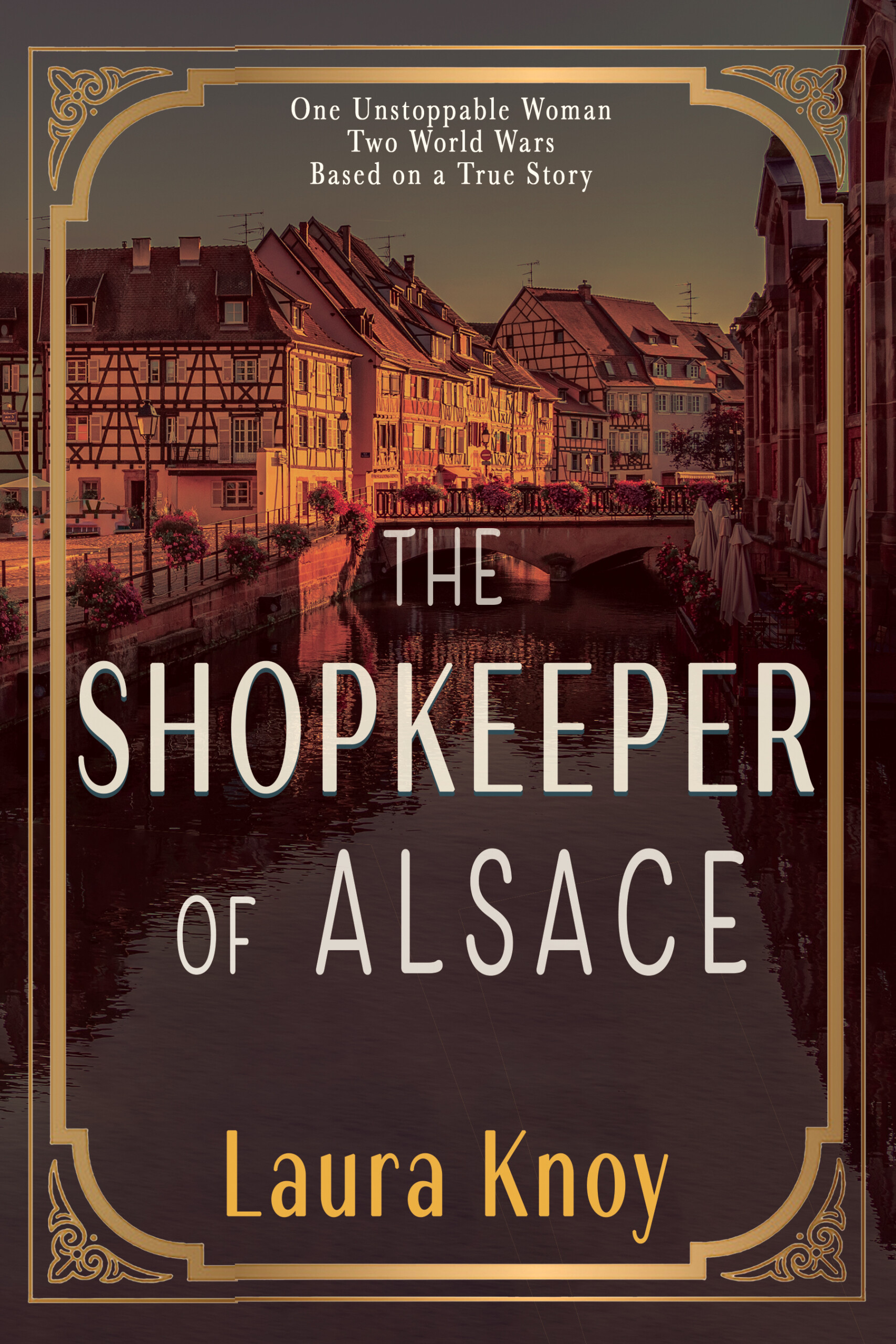
LK: I would say, do it. Don’t put it off. Get tons and tons and tons of feedback and edits. When you think you’re done, you’re not done, and when you think the second time, you’re not done, and maybe the third time and the fourth time and the fifth time, you’re not done, because you’re too close to it. Submit your stuff for awards. Submit your stuff at conferences.
Get edited, get feedback, get critiqued, get rejections. Don’t seek feedback from people you’re comfortable with. Go to, like, the tough editors and the mean editors and the ones you’re afraid of.
NHM: What did you learn about yourself when writing this book?
LK: I’ve been a journalist for 30 years, so this was the first time I actually got to make stuff up. (In) journalism, you’re dealing with the facts — how people reacted, how they felt, what they said. The story is heavily fact-based, but the relationships, the romances, the conversations, I had to make that stuff up. That was challenging. The other smaller thing I discovered is that my punctuation is terrible. Luckily, I now use online tools to help me with my punctuation.
NHM: What else would you like readers to know about your book?
LK: A lot of the historical fiction that takes place during the world wars in France is focused on the area of Paris. People are so excited to learn about another part of France that experienced the war completely differently. I really kind of feel like I’ve tapped into something, that people are jazzed, people really dig this.
Buy Laura Knoy’s debut book at Amazon, bedazzledink.com, books2read.com and Barnes & Noble. “The Shopkeeper of Alsace,” published by Bedazzled Ink, is a novel of historical fiction set in Colmar, in the Alsace region of France.