Connected by Craft
A new generation of Granite State makers embraces fiber arts
The coolest person you know is spending their Saturdays knitting … or crocheting or cross-stitching or sewing or needle felting, or participating in one of the many varieties of fiber arts that have recently gained popularity among millennials and Gen Z.
While this phenomenon is undoubtedly global, New Hampshire has a storied relationship with craft and fiber arts. Before any Europeans arrived, the Abenaki and Penacook tribes were creating baskets, clothing, art and other household items out of textiles made from local plant materials.
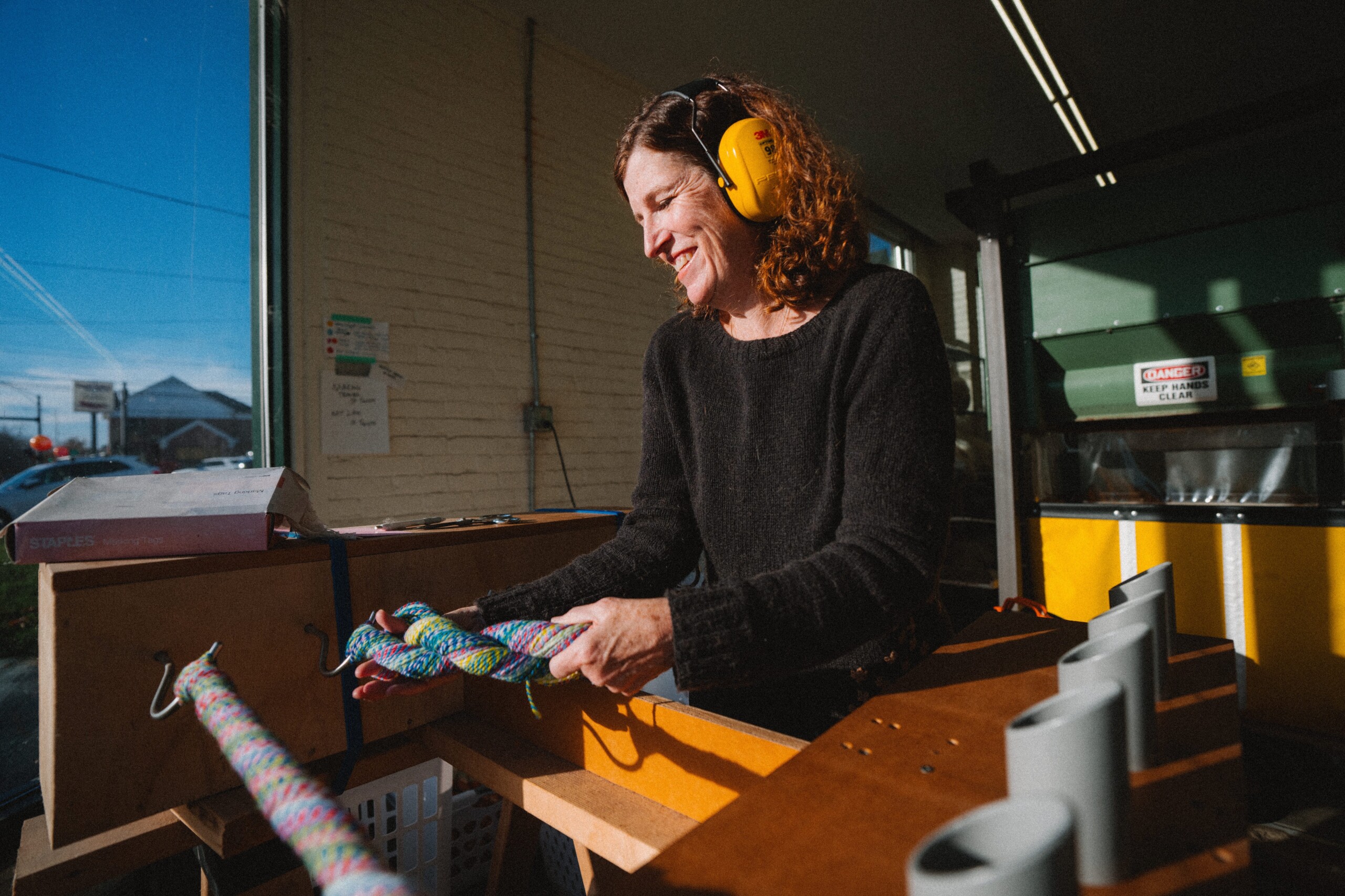
Liz Blanchfield, a dyer and customer service manager, holds up one of Junction Fiber Mill’s variegated yarns. Photo/ Robert Gill
Londonderry became famous for its linen (rumored to have been worn by at least two founding fathers) in the mid-1700s. “The Great Sheep Boom” of the 1800s brought merino wool to the area. According to the 1840 census, New Hampshire was home to more than 600,000 sheep (more than twice as many humans were recorded for the same year), a phenomenon largely credited to William Jarvis, the U.S. consul to Portugal, who was able to import merino sheep to his farm near Claremont. Around the same time, Shakers in New Hampshire invented a new way to make socks that combined machine- and hand-knitting.
Today in 2025, a younger group of crafters is rediscovering practices that have been passed down through the generations. David Broughton, the program manager at MAXT Makerspace in Peterborough, says he’s seeing an increase in younger members and class attendees.
“(They’re wanting to) step back a little bit from technology, step back a little bit from consumerism, and really focus on things that are handmade,” he says, noting the Sewing 101 class that MAXT offers fills up so quickly, he often has to create a waiting list.
“We’re seeing a lot of younger people in that class who want to create handmade garments, learn some sewing skills, and maybe get a little away from fast fashion.”
Kelly Bridges, the owner of Elegant Ewe yarn shop in Concord, has seen a similar trend.
“Lately, I’ve been noticing a want for classes for kids who are in their early teens,” Bridges says, noting crochet is particularly popular among that demographic.
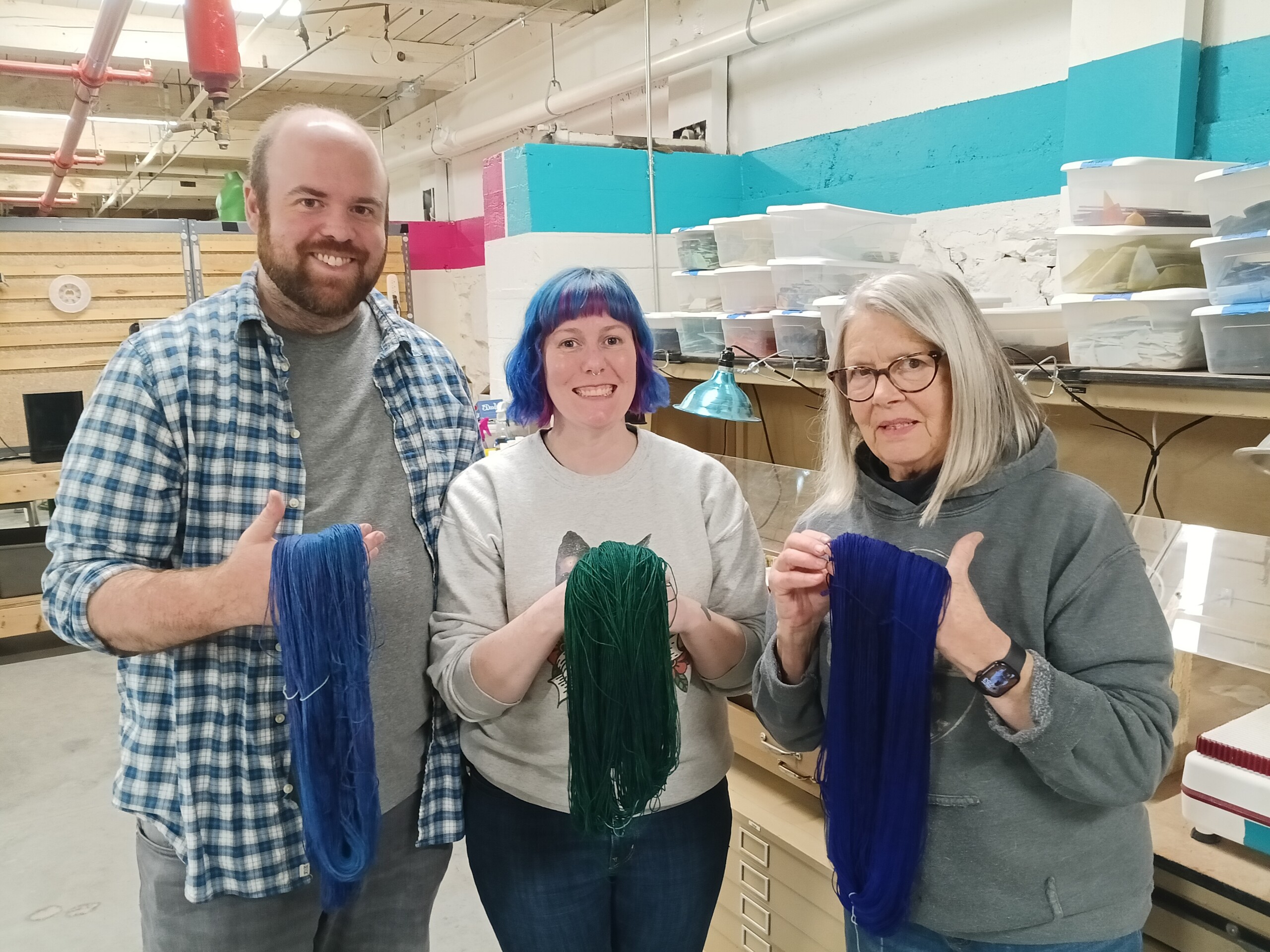
Students Dana Wood, Norm MacLennan and Kerry MacLennan show off their final results from a yarn dyeing crash course class at MAXT. Photo Courtesy/ MAXT Makerspace
For many younger folks, finding an analog hobby has felt imperative in an age when every other aspect of our days involves at least one digital screen.
“The idea of connecting more authentically with real stuff of the earth, especially coming from the New York City tech world, felt exciting to me,” says Amanda Kievet, a 34-year-old former web developer and current co-owner of Junction Fiber Mill in White River Junction, Vermont.
“Knitting is a pretty accessible way for people to do that.”
Making your own clothes and home decor is certainly a big draw (there’s no better feeling than responding, “Oh, I made it!” when someone asks where your top is from), but a lot of people who have picked up these hobbies are seeking community more than a new sweater.
When Meg Locker, 29, would Google, “How do you make friends as an adult?”, the first result was always the same: Find a group of people doing the things you like to do, then show up consistently.
“I was like, ‘OK, but there is no group doing what I want to do,’ ” Locker says, recalling the many hiking and running and board game groups she found that seemed nice but weren’t what she was looking for. So she started NH Craft Club for crafty Granite Staters.
Locker hosts several events a month at locations all over New Hampshire. “There’s someone at every event who echoes the same sentiment: ‘I’m so glad we now have a space where we can meet and do stuff like this,’ ” Locker says. The events span a wide range of crafts: Grapevine wreaths, stamped tea towels, vision boards, ornaments and doormats are just a few offerings.
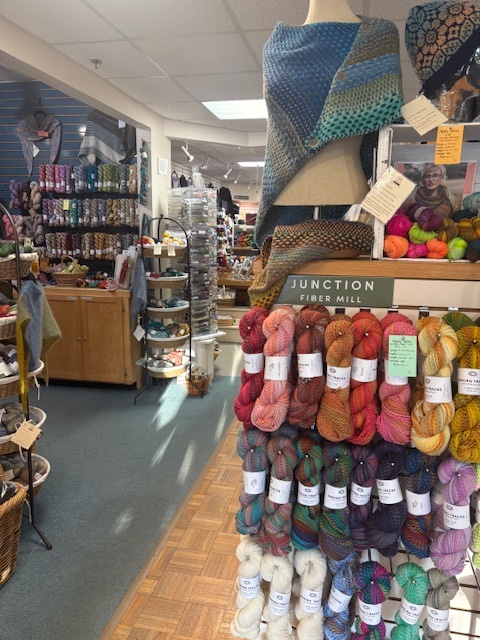
Elegant Ewe, a Concord yarn shop, hosts classes and craft circles every week. Photo Courtesy/ Elegant Ewe
Louise Snodgrass, a well-followed knitter known as @lou.dangit online, is part of several knitting and fiber arts groups in their real-life community.
“Fiber arts build connectivity. It is all about collectivism and community building,” Snodgrass says. “We’re building on and sharing and reveling in knowledge and technique and patterns that have been passed down to us from other folks. It’s more about sharing and collectivism and passing along knowledge as opposed to the competitive nature of our current society.”
These days, those techniques are often being shared through the glow of a phone screen rather than around the fire. Everyone interviewed for this story agreed that younger generations are seeking out fiber arts to disconnect from the digital sphere, and that they are picking up the hobby quickly, in part because of resources available online.
“I don’t do a lot of social media, but I do do KnitTok,” says Liz Piantedosi, a millennial fiber artist and founder of the Knitter’s Guild of NH, referring to the massive community of TikTok knitters.
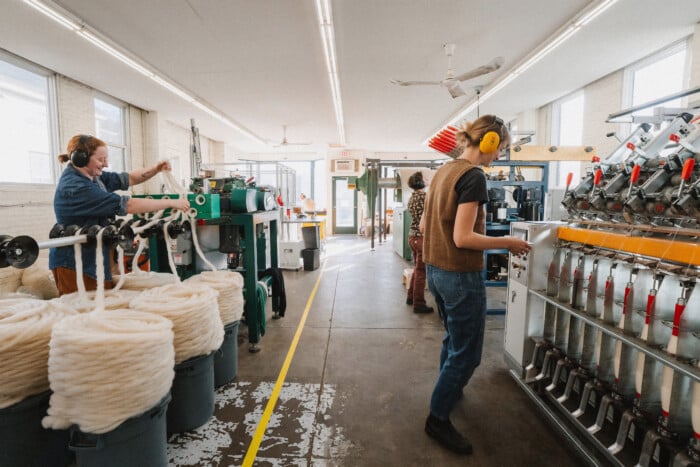
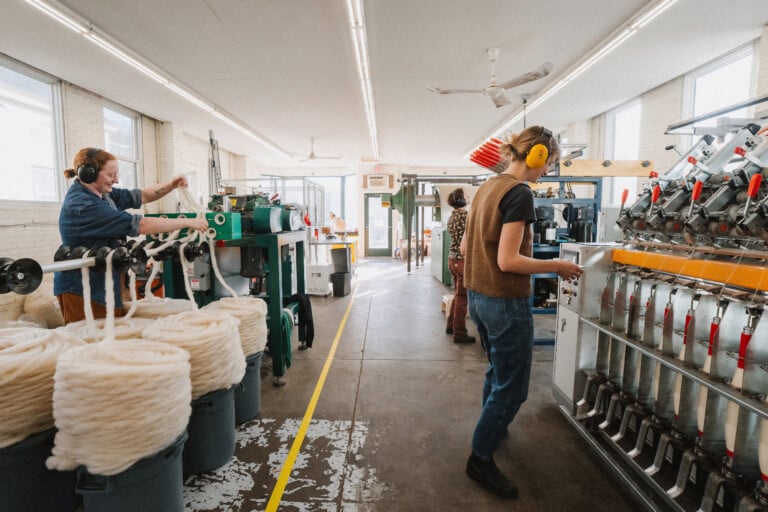
That community includes Snodgrass, Kievet and her business partner, Peggy Allen (who, at 67, provides positive online representation for the baby boomer/Generation Jones set). Junction Fiber Mill is perhaps the most famous New England-based yarn producer among Internet-savvy fiber artists.
“I think we’re one of the very, very, very few small mills that have completely locked in on the social media front,” Allen says.
The pair gained traction via their podcast, then pivoted to vertical short form video about a year ago. They jumped from 11,000 Instagram followers in August 2024 to more than 76,000 in November 2025. “It’s a lot easier to break into knitting than ever before,” Allen says, noting you can find YouTube tutorials for many techniques.
This online virality is often leading to more in-person encounters. Junction Fiber Mill regularly has some of the longest lines at their booths at fiber arts festivals around the country. Locker’s craft club is an analog meetup, but it found its members thanks to viral TikTok videos. The first video she posted — an informal, “Hey, would anyone else want to join a craft club?” clip — gained about 100,000 views over two days. Once she launched the website, she had 400 people sign up in 12 hours.
“Knitting can give you a connection to other people, as well as yourself,” Bridges says. “I hope people … are falling in love with it because of the connection it gives you to something other than technology.”
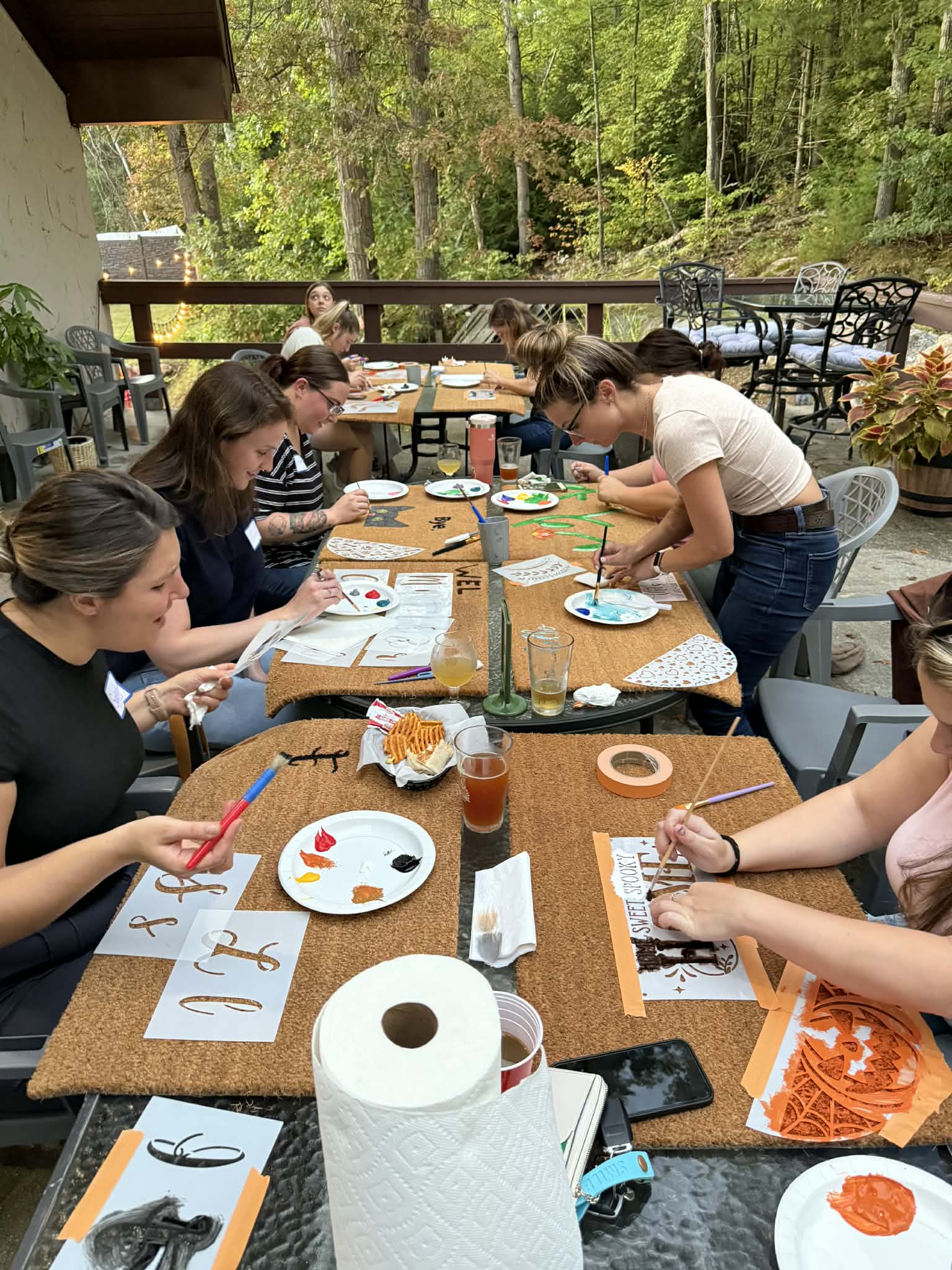
Attendees paint their own custom doormats at a NH Craft Club workshop. Photo Courtesy/ NH Craft Club
While this art might be increasing in popularity among younger folks, it’s for all ages. Meeting attendees always span a wide range of ages, crafters say.
“It brings groups of people together that probably wouldn’t rub shoulders otherwise on a typical day,” Piantedosi says of Knitter’s Guild meetings. “It’s very cool to see … that the level of engagement and enthusiasm is the same, whether you are 22 or 92.”
All this is good for your brain, too. Finding community is proven to have crucial mental health benefits, that might be boosted when you throw crafting — which has been credited with reducing stress and anxiety, improving self-esteem and even slowing cognitive decline — into the mix.
“(Crafting) keeps your mind flowing,” Locker says. “It’s similar to doing Sudoku or crossword puzzles — it’s good for your brain health.”
When asked for beginner tips for those ready to start their crafting or fiber arts journey, the general consensus was simple: Just start … and then don’t be afraid to ask questions.
“Everyone can make something, even if you don’t think you can,” Broughton says. “It’s not magical. You’re not born with the skills to create art pieces. It’s all practice and learning from other people … it’s about community.”
So You Want to Be a Fiber Artist: Tips for the Total Beginner
• Sign Up for Ravelry: The must-have website for fiber artists, this is “the” place to keep track of your projects, discover new patterns, and get inspired by other creators.
• Browse YouTube, TikTok and Instagram: The virtual fiber arts community has blessed the web with countless “patterns for beginners” video roundups, along with short tutorials on every technique you could possibly encounter.
• Find a Fiber Arts Circle: These are everywhere are typically attended by people with a wide range of skill sets who are eager to share knowledge. Local yarn stores and libraries are good first places to look.
• Pick a Project You’re Interested In: Yes, scarves and blankets might be simple, but they can also be repetitive and boring. A beginner-friendly sweater or hat will keep you engaged enough to keep going.
• Bring Your Projects in Public: Snodgrass says that, without fail, people approach them when they’re knitting in public — it’s how they got invited to one of their current fiber arts groups. “If you knit or crochet or weave in public, people will want to share and be in (the) community with you,” they say.
• Don’t Be Afraid to Ask for Help: There’s nothing fiber artists like more than teaching other people their craft. “Don’t be shy,” Piantedosi says. “This community is so supportive and loving and kind and patient and just wants to share their love of this with others.”