Celebrating NH’s 250th- John Stark
The story of John Stark, an American hero
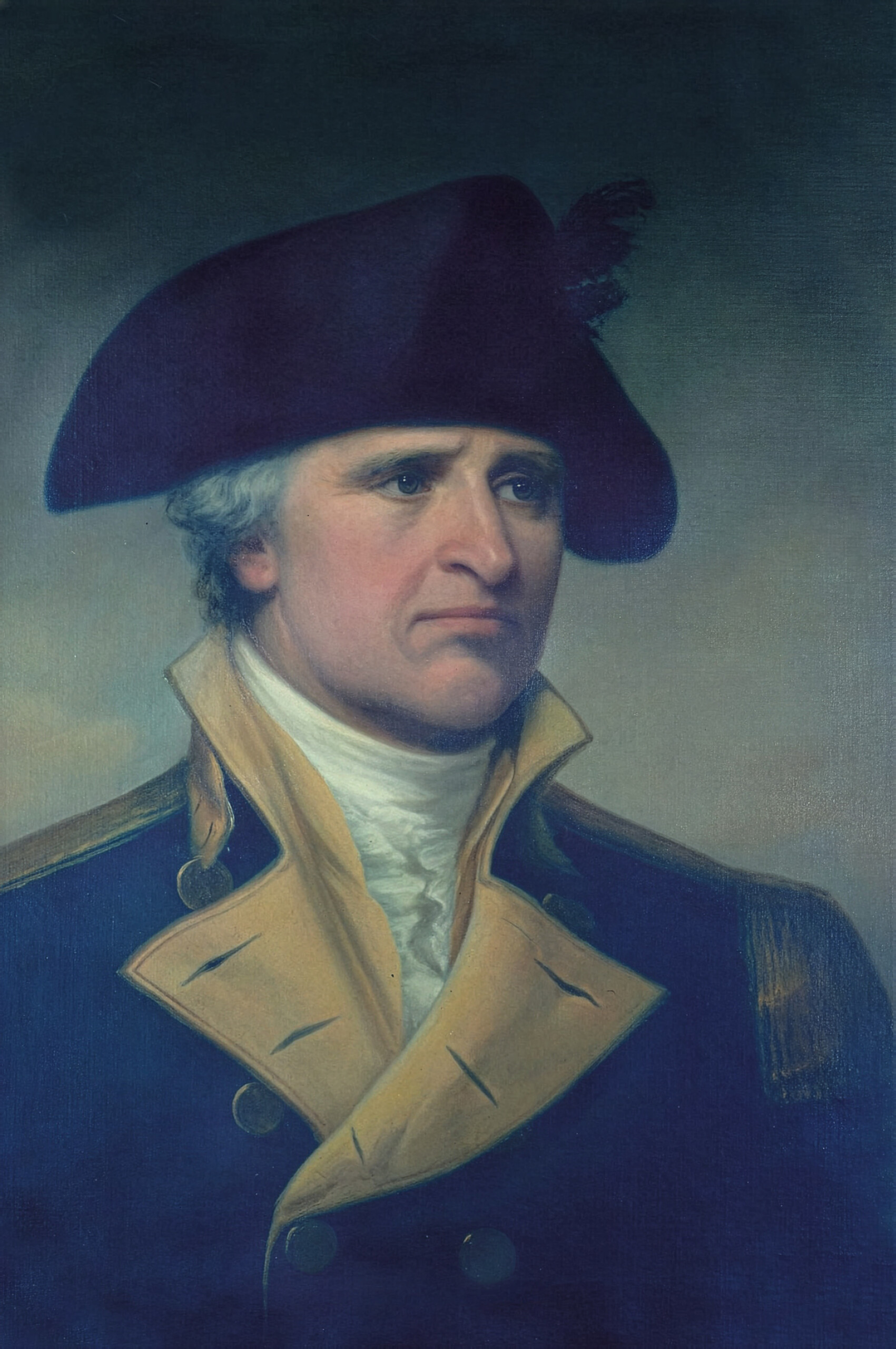 You may know him from his famous quote, “Live Free or Die,” but John Stark’s renown goes deeper than our state’s motto.
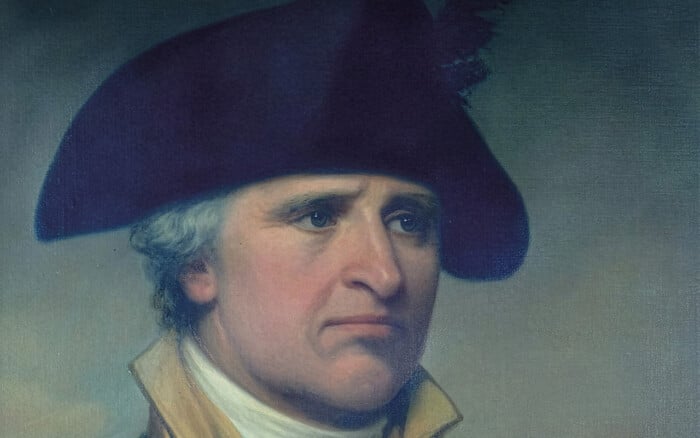
Stark was a farmer, timber business owner, New Hampshire militia leader and major general in the Continental Army during the Revolutionary War. Deeply respected by his men, he played critical roles in the Battles of Bunker Hill, Trenton and Princeton, with his victory at the Battle of Bennington being one of the turning points of the War.
Before he grew to being one of New Hampshire’s most notable figures, he lived a quiet life born and raised in the Granite State.
Stark was born in Londonderry in 1728 and grew up in Derryfield, now Manchester, and lived there for his whole life with his wife, Elizabeth “Molly” Page and 11 children. His eldest son Maj. Caleb Stark and son Lt. Archibald Stark both served in the military.
As a testament to Stark’s courage and strength, on April 28, 1752, at the age of 24, while on a hunting and trapping trip along the Baker River, he was captured by Abenaki warriors and brought back to Canada but not before warning his brother William to paddle away in his canoe, though neighbor David Stinson was killed. While a prisoner of the Abenaki, he and his fellow prisoner Amos Eastman were made to run a gauntlet of warriors armed with sticks. Stark grabbed the stick from the first warrior’s hands and proceeded to attack him, taking the rest of the warriors by surprise. The chief was so impressed by this heroic act that Stark was adopted into the tribe, where he spent the winter.
The following spring a government agent sent from the Province of Massachusetts Bay to work on the exchange of prisoners paid his ransom of 103 Spanish dollars and 60 Spanish dollars for Amos Eastman. Stark and Eastman then returned to New Hampshire safely.
Like George Washington, he had a limited formal education, but he led by deeds, not words. His early military experience serving in Rodgers’ Rangers, an elite British unit, in the French and Indian war gave him the experience he would need in later battles, and he quickly rose to the rank of captain before returning to New Hampshire to start his timber business.
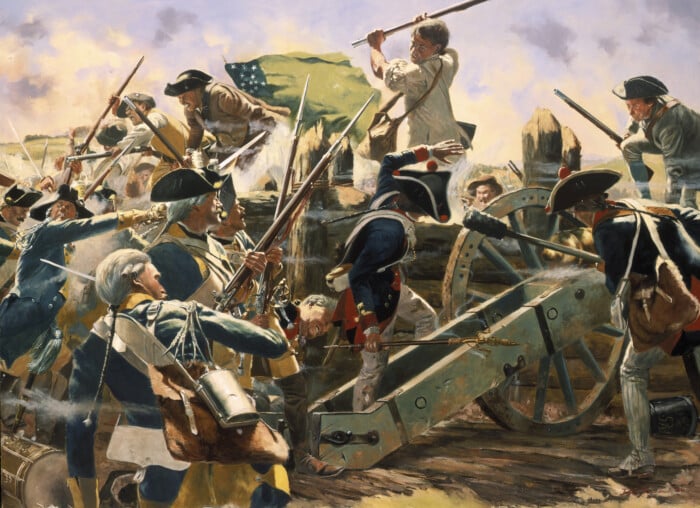
While he was home, the Revolution broke out and Stark returned to military service in command of the state’s militia. He bravely led 800 men who repelled two rounds of British attack at the Battle of Bunker Hill and provided cover for the retreating colonial forces. Even though the British took the hill, they suffered twice the casualties as the Americans.
Stark marched his regiment over 200 miles to Valley Forge, Pennsylvania, in December 1776 where they joined the Continental Army for the Battles of Trenton and Princeton. He and his men ambushed sleeping Hessian mercenaries at the Battle of Trenton, helping secure a major win and setting up a subsequent victory in Princeton.
Not long after, Stark teamed up with Col. Seth Warner at the Battle of Bennington to execute an attack on British forces seeking to supply themselves through confiscating the town’s provisions. Stark and Warner’s success ended the British ambition of separating New England from the rest of the colonies, and the victory was the first in a chain of successes leading to the British surrender at Saratoga and French entry into the War to aid America.
“Live Free or Die” is the shortened version we all live by, yes, but let us not forget as Stark advised Bennington veterans,”Live free or die: Death is not the worst of evils.”