Adventure Awaits This Winter
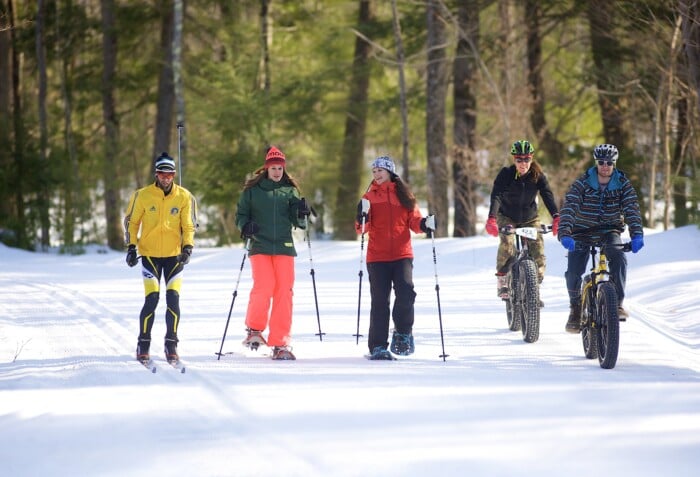
Grab some cross- country skis, a fat tire bike or a pair of snowshoes to enjoy winter at your own pace. Take a hike, climb an ice wall- get outside!
I love to snowboard. There’s nothing better than those first few turns in untouched snow on a steep trail or cruising alongside friends on freshly groomed corduroy tracks, the rosy glow of morning rising behind shadowed peaks, warming our bodies and illuminating everything.
I also love opportunities to explore winter landscapes at a slower pace, whether it’s pedaling a fat tire bike on crunchy, snow-packed terrain, snowshoeing on trails framed by drooping pine boughs, or scaling a frozen wall of ice with a pair of ice axes and crampons.
Winter in New Hampshire is a special time, and what I’ve learned over the years is that there isn’t one way to appreciate the season. While I understand the allure of a crackling fire and a good book when the skies are gray and the air cold, there’s too much to see and do outside. My recommendation? Bundle up, grab a pal and embrace a new adventure in the outdoors.
Winter Hiking

Winter hiking on Mount Cardigan in New Hampshire. Clark Trail. Canaan, NH. Winter hiking on Mount Cardigan on Clark Trail in Canaan. Photo by Jerry & Marcy Monkman
Winter hiking provides a serious challenge — between the extreme weather conditions and the physical demands — but also yields equally as serious a reward: The cold air rejuvenates, sparkling, snow-covered surfaces energize, and the views of white-capped, towering peaks inspire. Not as many people inhabit the trails in winter, making this season one of solitude and tranquility. Perhaps best of all? There are no bugs to contend with this time of year.
“I think getting out into the woods is everything,” said Jennifer Karnan, director of marketing and sales for Cannon Mountain and Franconia Notch State Park. “The more often folks get out into the woods, the better they’re going to feel. Humans weren’t built for hibernation. We were built to move around and be outside, and so it’s important to commit to that and get out as often
as we can.”
One of Karnan’s winter hiking recommendations is the Lonesome Lake Trail, which begins at the Lafayette Campground in Franconia Notch. This short but steep (and sweet!) ascent provides a great introduction to the beauty — and demands — of winter hiking. The well-marked trail emerges onto a lake, with a boardwalk circling the perimeter. On the far side, recreationists will spot the Appalachian Mountain Club’s hut and a viewing platform, perfect for taking in the entirety of Franconia Ridge across the notch on clear days.
The 1.5-mile West Ridge Trail rises 1,200 vertical feet to the summit of Mount Cardigan in Cardigan Mountain State Park. At just over 3,100 feet, the treeless granite summit affords views of the White Mountains to peaks in surrounding Vermont and Maine. Note: State parks aren’t staffed in the off-season, and the gate to the parking lot is closed, adding an extra ¼-mile walk into the park.
For a more challenging hike, and the chance to tackle a 4,000-footer in winter, try Mount Waumbek via the Starr King Trail, 7.2 miles out and back. A gradual, steady climb through hardwood and pine forests provides protection from full exposure, although the location, in Coos County, is quite remote.
When it comes to winter hiking, it’s important to start small, be prepared and, most importantly, always know when to turn back.
Cross-Country Skiing
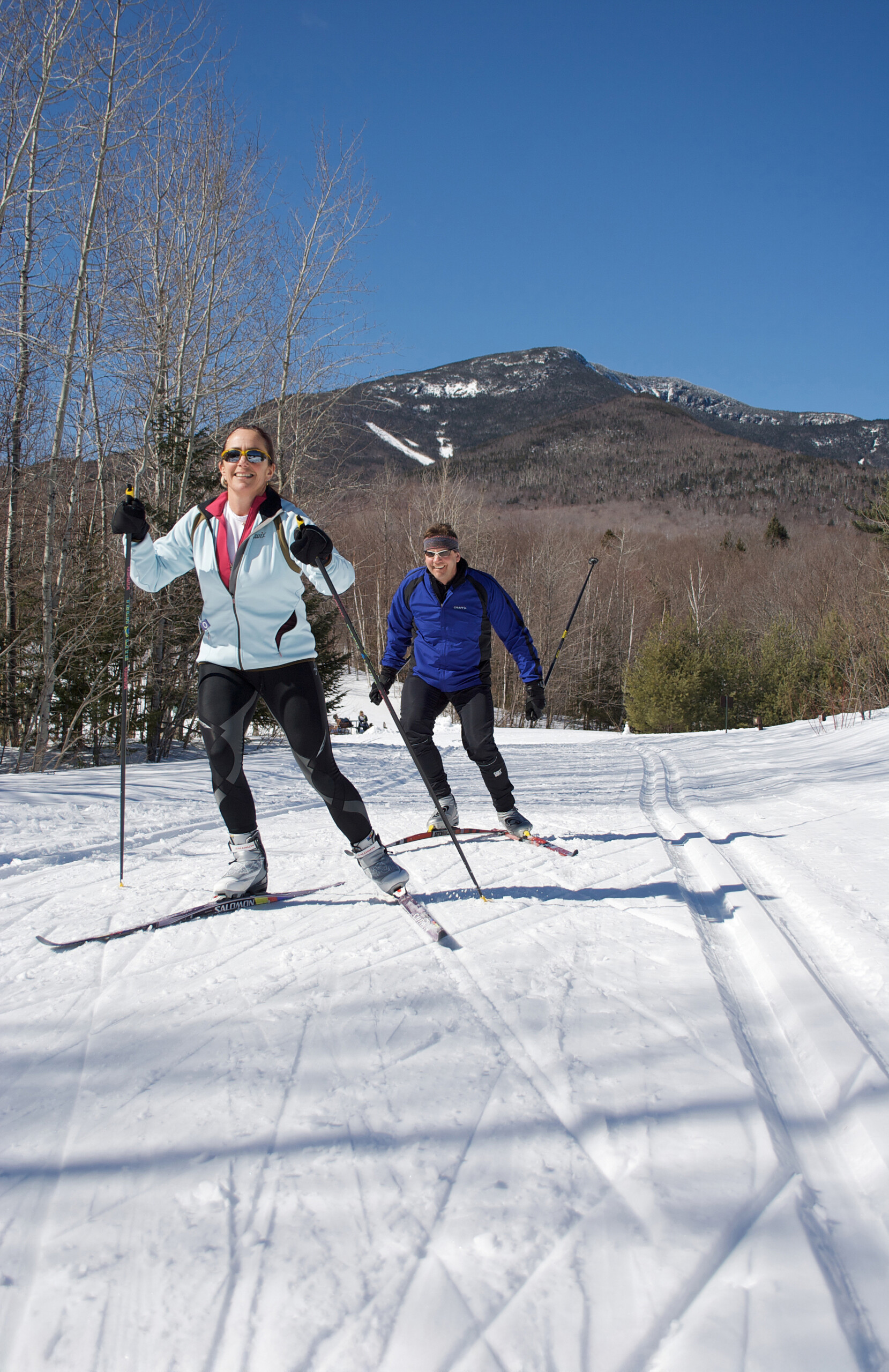
Cross-country skiing on one of the Nordic trails at Waterville Valley Resort. Photo Courtesy/ Waterville Valley Resort
Traveling along the banks of frigid streams, around the open expanse of white fields and through hardwood forests, cross-country skiing — also known as Nordic — is the ideal activity for experiencing winter’s beauty, all while testing your balance and building cardiovascular strength. If you can master the technique of gliding, a day out on two skinny planks becomes a master class in meditation.
Beginners should take a lesson at one of the state’s many touring centers, but trail networks exist in the state parks and White Mountains for practiced skiers looking for adventure off the beaten path.
Eastman Cross Country in Grantham offers 24 miles of groomed trails, including the scenic Lake Trail, an aptly named, dog-friendly trail that travels the perimeter of Eastman Pond.
For those who aren’t willing to part with the rush of downhill speed entirely, consider planning a weekend away that pairs the vertical with the horizontal. Located in the Town Square, the Waterville Valley Nordic Center accesses more than 44 miles of Nordic ski trails in the White Mountains. Rental gear and lessons are available as well as a variety of packages for first-timers and advanced clinics for experienced skiers wanting to up their game.
The Jackson Ski Touring Foundation — a community- based nonprofit organization in the village of Jackson — has been home to some of the finest ski trails in the Northeast for more than 50 years. With more than 62 miles of trails, a ski school, lessons, rental shop and a family-friendly base lodge, Jackson XC is a top-notch destination for all abilities. Visitors will meander through forests, farmlands and the quintessential New England town.
Fat Tire Biking
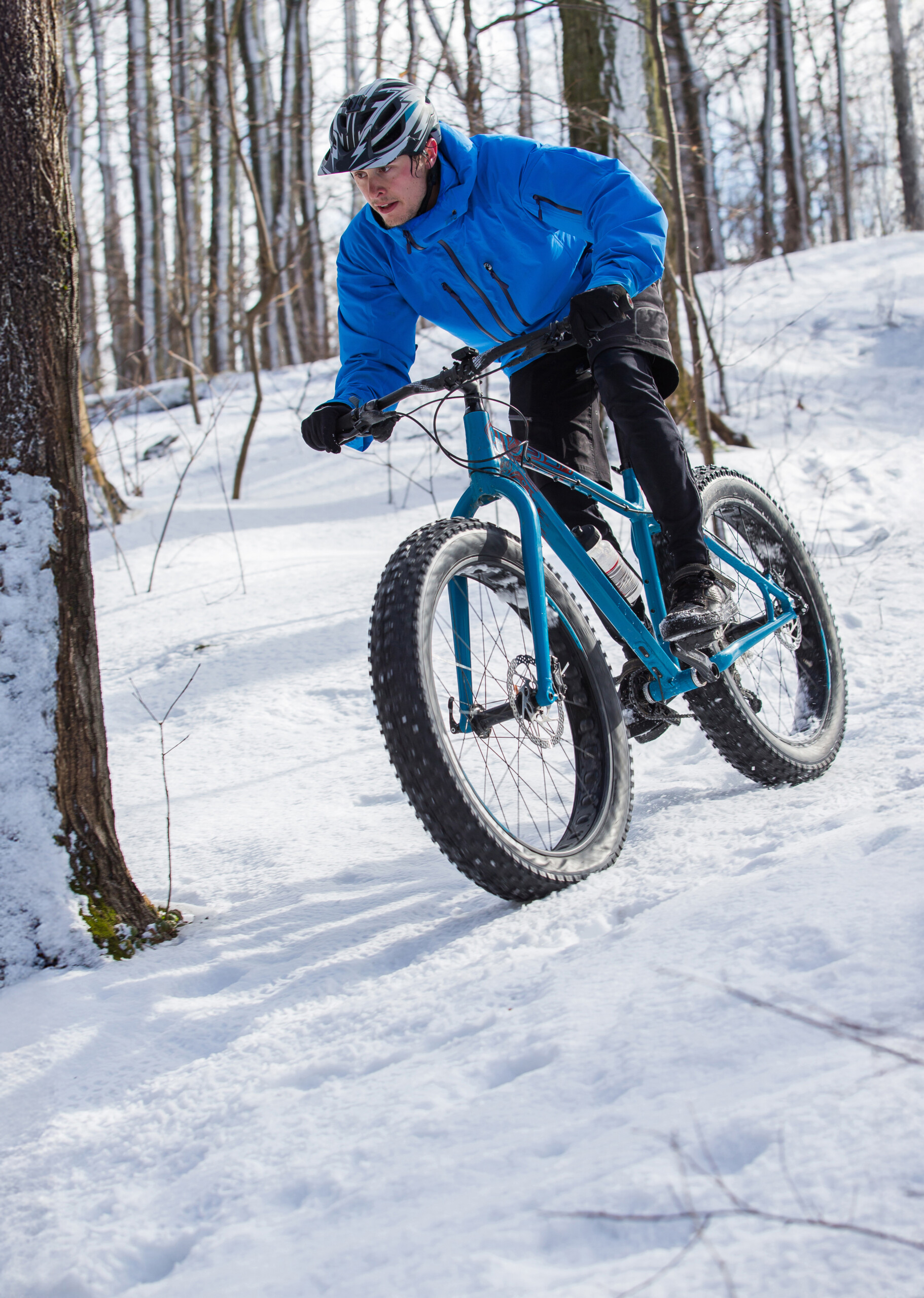
Careening through the woods on a fat tire bike at Bretton Woods. Photo by David Grogle
While hopping on two wheels and navigating slick terrain may feel counterintuitive, fat tire biking is becoming an increasingly popular way to recreate in the winter. Fat tire bikes feature oversized tires, typically around 4 inches wide, that run at low pressure. They aren’t particularly fast, but they’re designed to handle a variety of terrain types, like sand and snow, and can maneuver over just about any obstacle in the trail. What’s best about fat tire bikes? They make pedaling a year-round sport.
Many New Hampshire ski areas and bike shops offer fat bike rentals, and there are several locations across the state with groomed trail networks. Those trying fat tire biking for the first time can rent equipment and cruise the carriage roads at the Great Glen Trails Outdoor Center at the base of the Mount Washington Auto Road in Gorham.
Although rentals aren’t offered here, riders with their own gear can explore the Valley Trail System at Bretton Woods Nordic Center, which meanders around the historic grounds of the Omni Mount Washington Resort and offers views of the Presidential Range, the staggering beauty of snow-capped peaks providing a postcard-worthy backdrop.
The Franconia Inn and their adjacent outdoor center is a one-stop shop where riders can find rentals, trail suggestions and even bike tours. Access more than 10 miles of trails that start from the inn, or travel to PRKR Mountain in Littleton, a 25-mile network of year-round, community-built trails. Insider tip: Visit the White Mountain Bike Shop to chat with Bobby Big Ring — a local legend who’s been riding bikes for more than 50 years — about gear and riding in the White Mountains.
Snowshoeing
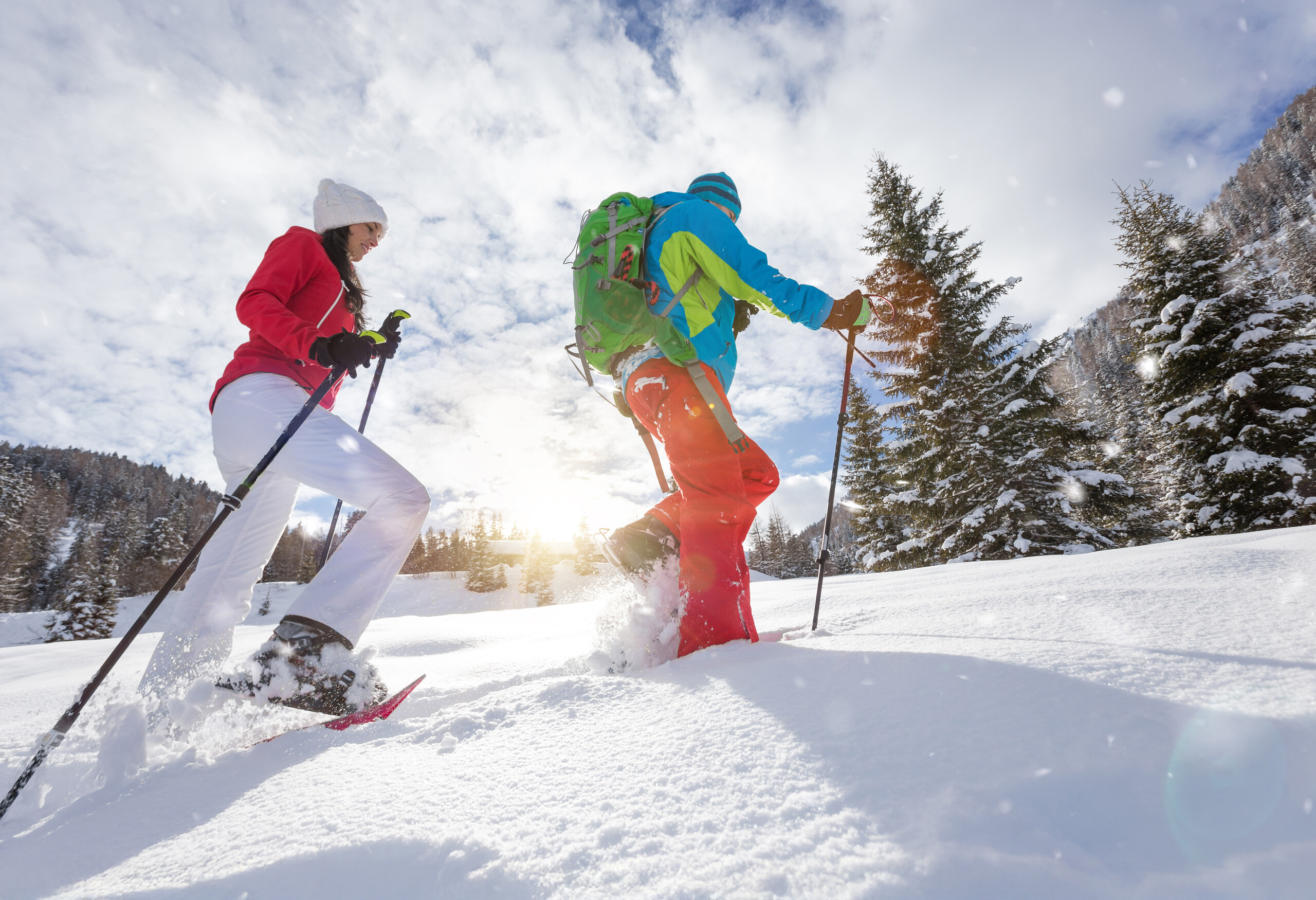
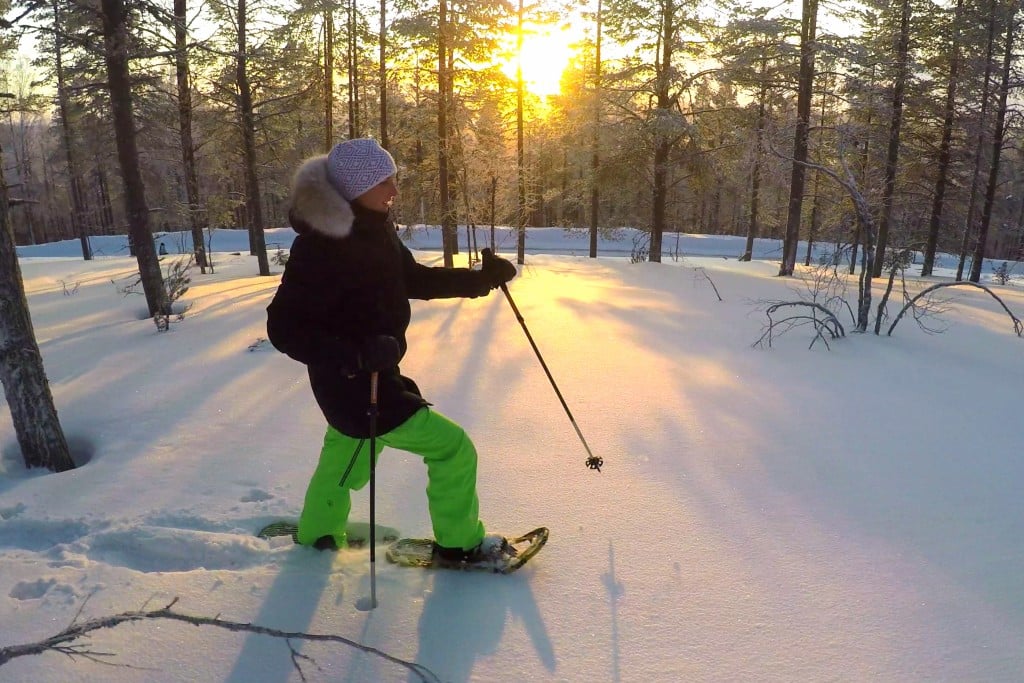
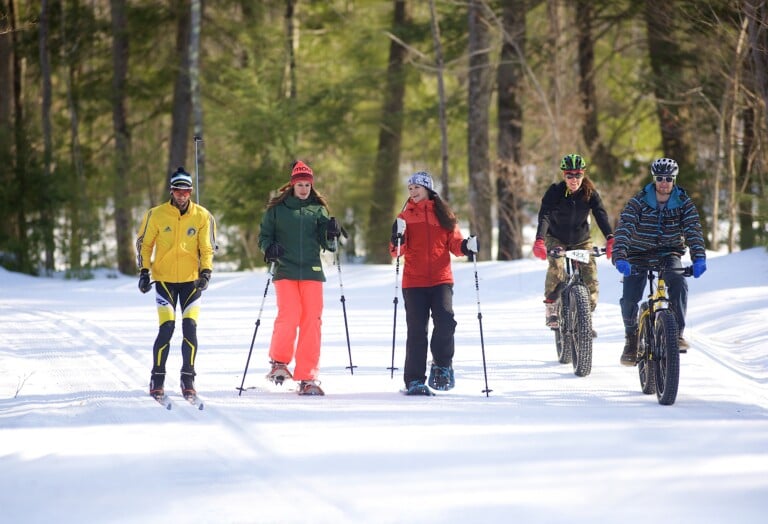
Trekking through Purity Spring XC & Snowshoe Reserve in the freshly fallen snow on a crisp, clear day.
Photo by Lukas Gojda
It’s commonly said that if you can walk, you can snowshoe, and that’s what makes it a simple and accessible winter activity for all ages. Snow-covered trails or even backyards reveal animal tracks, and the exposure to sunshine on clear days provides an extra boost of vitamin D, something hard to come by when the days are short. Snowshoeing also provides time for observation — a chance to slow down and really appreciate nature in its current state.
The Seacoast transforms in the winter: The rocky shoreline covered in white a stark contrast to the dark blue, brewing Atlantic beyond. While many might not think of the beach as a cold-weather destination, the trails at Odiorne State Park, traversing from Odiorne Point on the Gulf of Maine to Little Harbor, are an easy network for testing out snowshoes or for those craving that salty sea air.
Purity Spring XC & Snowshoe Reserve, which features 12.4 miles of scenic trails that wind around Purity Lake and meander through the forested Audubon Hoyt Wildlife Sanctuary in Madison, is an ideal spot for beginners looking to rent gear. Similarly, the Mount Washington Valley Ski Touring & Snowshoe Foundation offers afternoon guided snowshoe walks along the East Branch and Saco Rivers, where participants learn about trees and wildlife while mastering basic techniques.
Gunstock Mountain Resort runs evening snowshoe ridge tours where guests, equipped with headlamps and snowshoes, ascend the mountain via chairlift, then traverse the ridge at sunset before descending by foot.
“There’s a camaraderie created through any outdoor adventure,” says Bonnie MacPherson, Gunstock’s director of marketing, “but making a winter trek as a group builds bonds between people and creates memories that last a lifetime.”
Ice Climbing
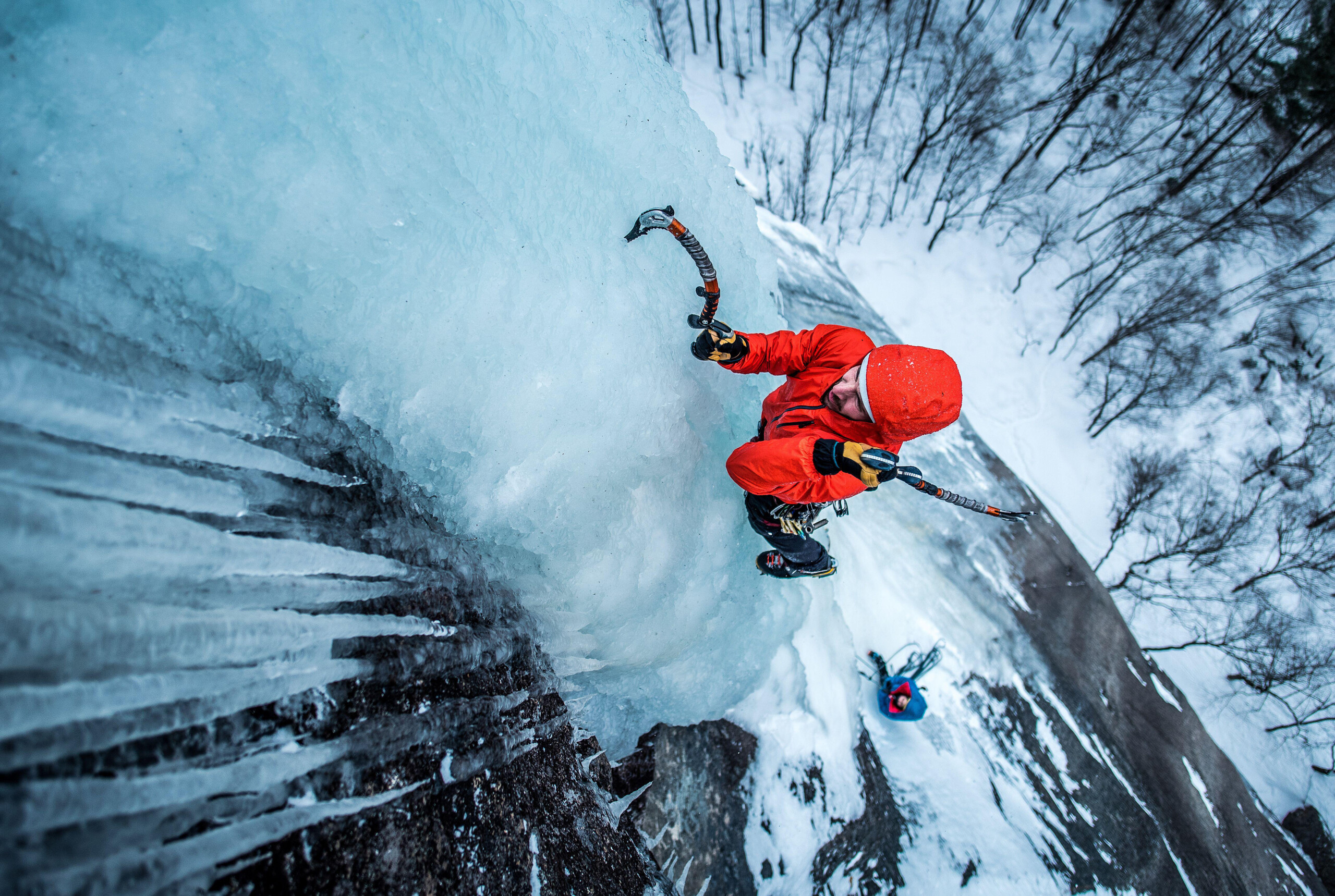
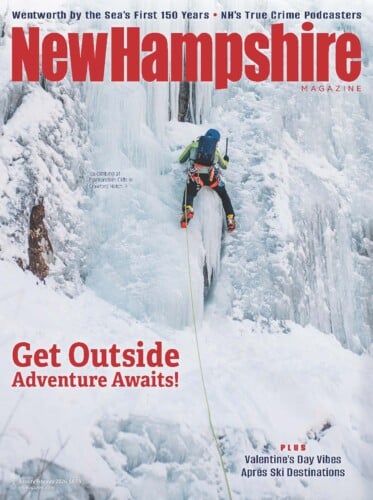
Making the climb on the ice-covered rocks of Cathedral Ledge in North Conway is not for the weak of heart. Photo by Brent Doscher
Even with my slight fear of heights, I’m drawn to the physical demands of ice climbing: ascending towers of frozen water, propelling oneself upward with metal spikes on feet and in hand. But I also appreciate the mental fortitude required: remaining calm, focusing on pick placement and moving meaningfully.
“For me, there’s something contemplative about ice climbing,” said Matt Yosca of the International Mountain Climbing School in North Conway. “What’s more, the ice changes throughout the season as it melts and refreezes, so what you climbed one day could be wildly different on another.”
Ice climbing requires a ton of gear — rigid mountaineering boots, ice axes, crampons, harness, helmet, rope, screws — and even more expertise. While ice climbing can offer an entirely new way to engage with the elements, it’s incredibly important for your safety (and the safety of others) to hire a guide. They’ll be updated on local conditions, are familiar with the best climbing spots, are trained to teach participants how to climb, and will outfit climbers with everything
needed to stay warm and dry.
Along with ICMS, notable ice climbing companies include Cathedral Mountain Guides, Synnott Mountain Guides and Northeast Mountaineering. For unique climbing opportunities, consider registering for a clinic during the Mount Washington Valley Ice Fest, held Feb. 5-8.
Outside Experts
Winter provides us with a whole new landscape and a new outdoor playground, and with the right gear and mindset, you can turn cold days into active, gratifying adventures.
But it can also be hard to embrace the unknown, and so one of my recommendations is to reach out to organizations like the Appalachian Mountain Club, which hosts a variety of family-friendly educational programs and outdoor winter adventures throughout the season. Not only will you receive proper gear and instruction, but it’s also a great way to meet like-minded individuals trying to enjoy the outdoors, too.
“You don’t have to ski to embrace winter,” said Sarah DeLucia, AMC’s director of programming. “Snowshoeing, winter hiking, birdwatching, even stargazing, all offer movement, fresh air and a chance to fall in love with the season’s magic.”