Live Free: O Captain! My Captain?
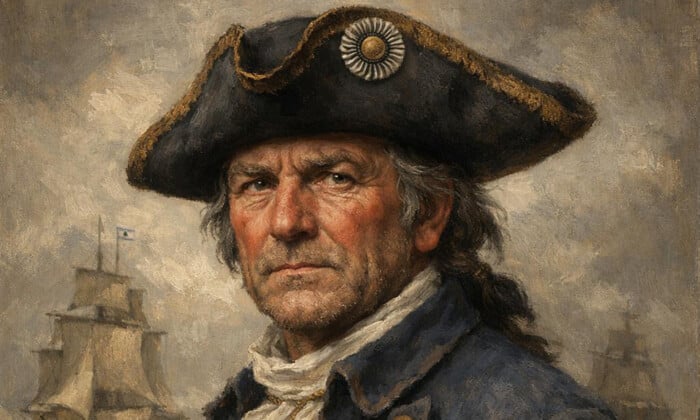
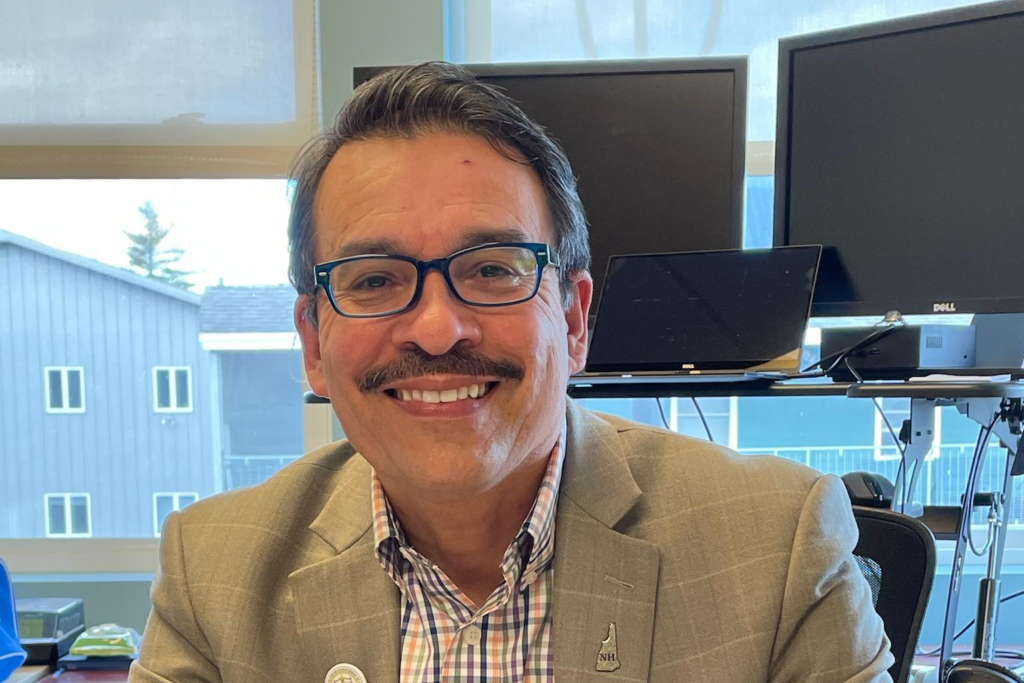
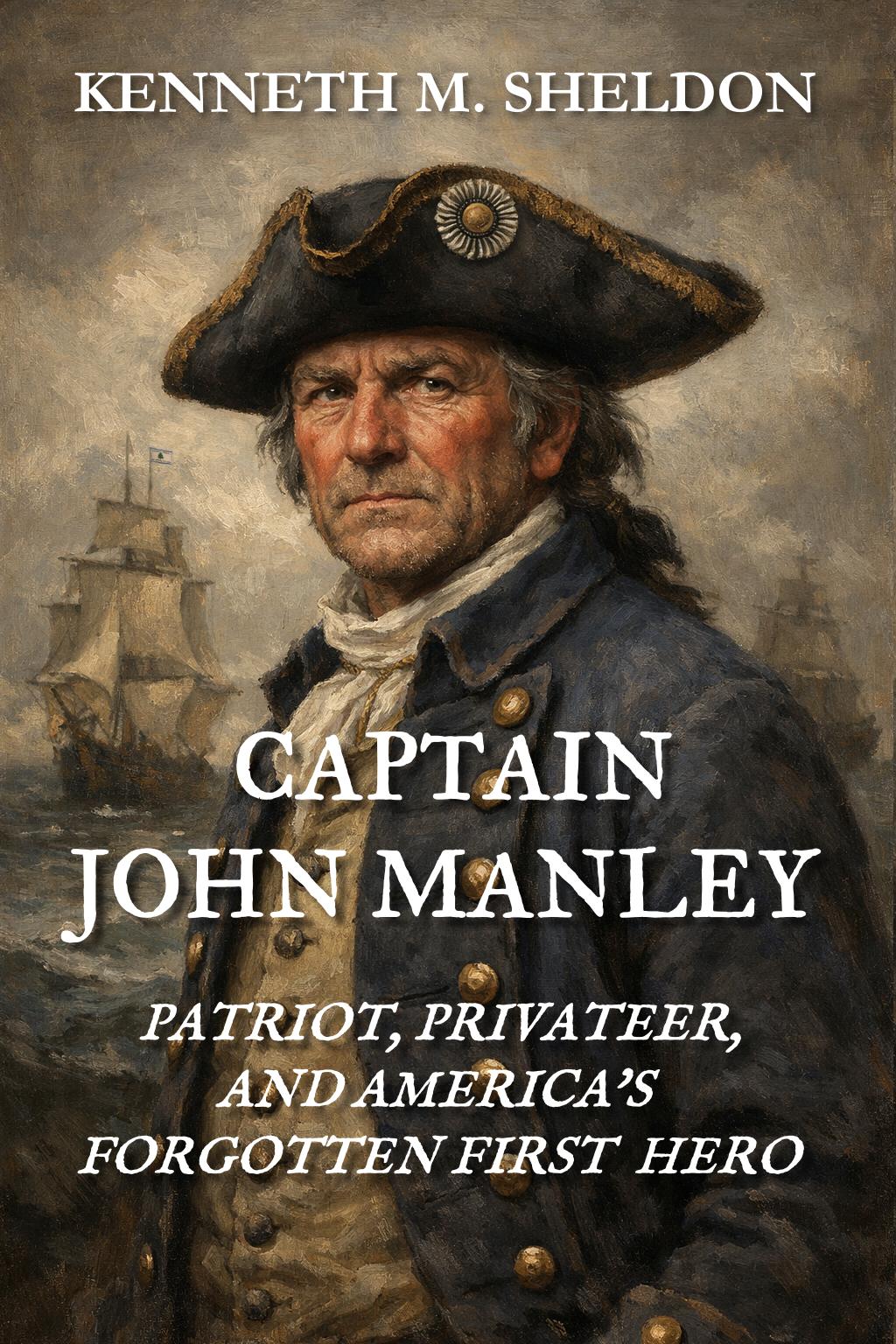
Ken Sheldon’s book “Captain John Manley: Patriot, Privateer, and America’s Forgotten First Hero,” will be released on Oct. 13, the U.S. Navy’s birthday.
 Every family has its legends — stories that may or may not be entirely accurate. In my family, the story goes that we are descended from Capt. John Manley, a Revolutionary War hero. My mother was so convinced of this that she chose Manley as my middle name. This was a problem for a kid whose basic approach to confrontation was to avoid eye contact and protect my major organs.
I was anything but manly.
Later, as an adult, I began digging into Manley’s history to see if I really was descended from him. Along the way, I ran into other mysteries: where was he born, did he serve with the British Navy, and why — if he was such a hero during the Revolution — is he largely forgotten today? Now, bleary-eyed from reading thousands of pages of historic documents, I’ve answered most of those questions, and learned some intriguing things about Capt. John Manley.
Manley exemplified the “live free” attitude. He was brave, bold … and also a bigamist. In 1764, he married my fifth great-grandmother under the name John Russell, which has caused historians to scratch their heads ever since. Some think he used an alias because he had jumped ship from a British vessel and didn’t want to be found, but the answer is much simpler: He had already married another woman in Boston the year before. (Like him, I sometimes have trouble remembering things.)
Before the Revolutionary War, Manley served as the master of merchant ships. The owner of one of these ships, Fortescue Vernon — whose name is on the famous Sons of Liberty bowl made by Paul Revere — sued Manley for money he thought Manley owed him. Manley hired a Boston lawyer to represent him, and the jury decided in Manley’s favor. The winning lawyer’s name was John Adams. Yes, that John Adams.

Family resemblance? Perhaps.
In 1775, George Washington picked Manley to captain a ship and harass British vessels. Word came that a British munitions ship — the Nancy, chock-a-block full of gunpowder, weapons and other supplies that Washington’s army desperately needed — was headed to Boston. When the Nancy arrived at Boston Harbor, Manley dashed out in his schooner, pretending to be a pilot ship sent to guide the British ship into the harbor. His men boarded the ship with concealed weapons and captured the Nancy and its stunned crew without firing a shot. The munitions on the captured ship helped drive the British out of Boston. It was an audacious move on Manley’s part, one Washington called “an instance of divine favor.”
Washington was so pleased with Manley that he made him commodore of his fleet — this was before America had an official Navy. Manley and John Langdon, signer of the Constitution and later governor of New Hampshire, were among the captains outfitting frigates to fight the British, Langdon in Portsmouth, and Manley in Marblehead. They were both having trouble getting cannons for their ships, but Langdon finally located some in Connecticut.
The guns were shipped by way of Boston, where Manley intercepted them and made a deal with the agent, effectively cutting Langdon out. Needless to say, Langdon was not pleased, and Massachusetts and New Hampshire have been bickering ever since — but let the record show that they started it.
In 1779, Manley took command of the Jason, a privateer commissioned to attack British shipping. He received orders to head to Penobscot Bay in Maine as part of an armada to attack a British outpost there. Displaying the true Yankee spirit of cooperation, Manley promptly headed south, in the opposite direction, which was a good thing — the Penobscot expedition was a debacle, with 500 Americans killed and all vessels lost.
Maybe John Manley and I aren’t that different after all.
Ken Sheldon’s book “Captain John Manley: Patriot, Privateer, and America’s Forgotten First Hero,” will be released on Oct. 13, the U.S. Navy’s birthday.