Celebrating New Hampshire’s 250th
In the Granite State, a revolution was born in the deep woods
While other colonies raged against taxes on tea and paper, what drove New Hampshire towards rebellion was the crown’s levy on trees. White pines, in particular. Straight and thick, no tree in the British empire made a better mast, and any trunk measuring more than a foot in width was considered property of the king and reserved for the Royal Navy.
By the time of the Revolution, New Hampshire had spread far from the coast. The small towns in the interior were rugged, close-knit and increasingly skeptical of their role as subjects of an absent king. Jeremy Belknap, a historian from this period, lauded rural New Hampshire as “a nursery for stern heroism; producing men of firmness and valor.”
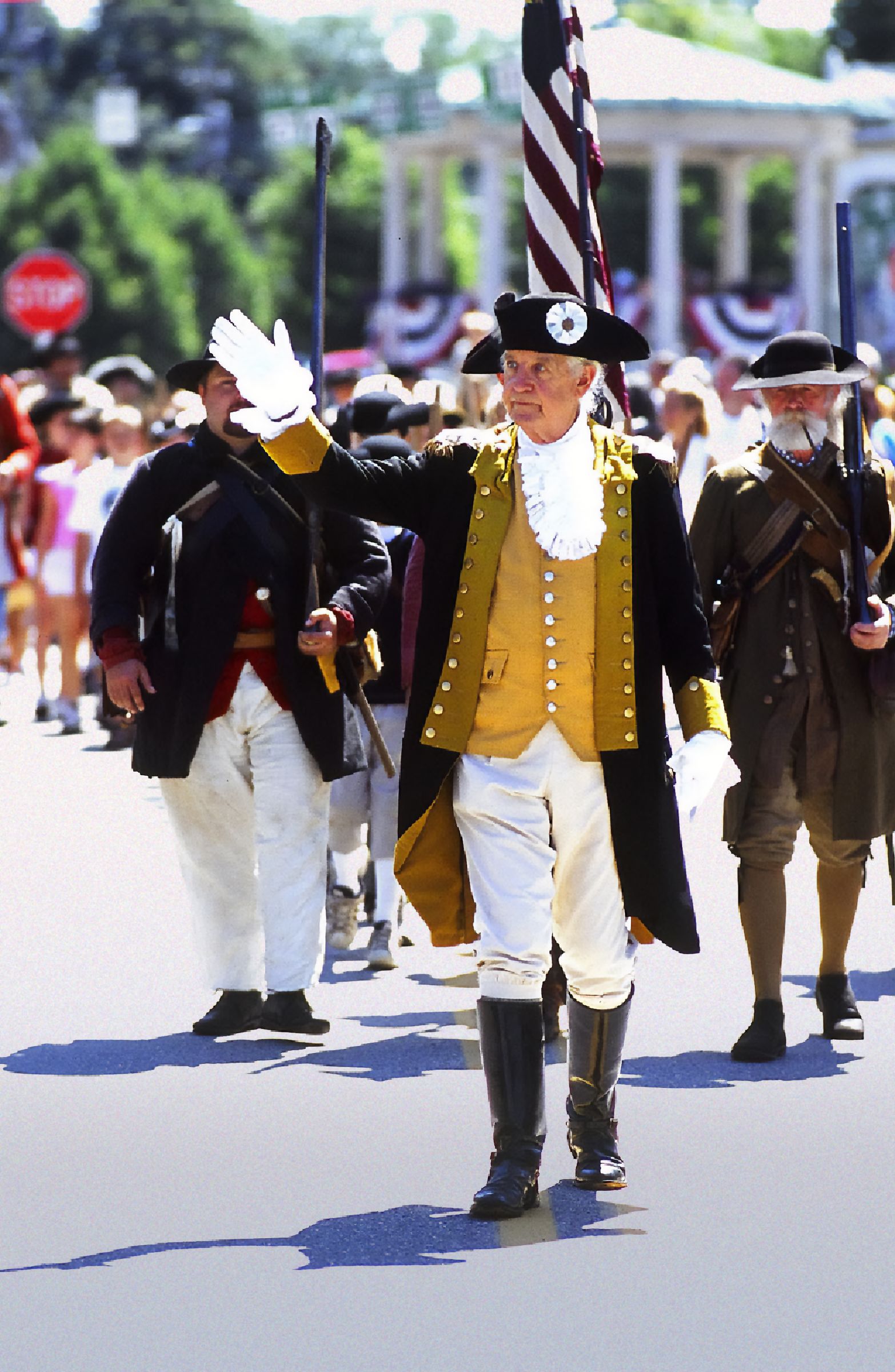
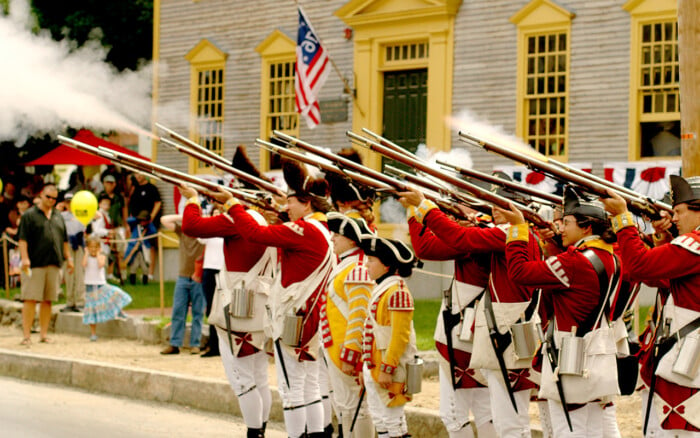
Each July, the American Independence Festival in Exeter celebrates the arrival of the Declaration of Independence in New Hampshire, two weeks after its signing. Interpreters and reenactors include colonial militia, artisans and historic figures. Photos courtesy visitnh.com
British colonial authorities of the time labeled the same men as “obstinate and notorious,” or at least that was the term they applied to a group of loggers from Weare who had been caught illegally harvesting white pines in 1773.
On April 13, Sheriff John Whiting rode into Weare seeking to send a message by arresting Ebenezer Mudgett, the ringleader of the loggers. But Mudgett and 19 of his friends had their own message to send. They burst into the sheriff’s room at Quimby’s Inn bearing switches, whipped Whiting and his deputy bloody, and then chased the pair out of town.
A sympathetic local judge lightly fined the perpetrators for what came to be known as the Pine Tree Riot, and the matter was dropped. The king never reclaimed his trees.
At the same time, rebellion was brewing along the coast as well. Portsmouth was the seat of British power in New Hampshire, and many merchants reliant on trade with England stayed loyal to the crown. Still, by the 1770s, the balance of power was shifting toward the Patriots.
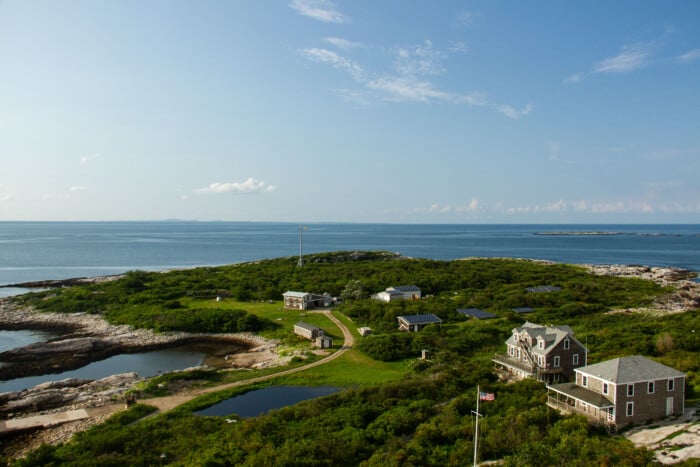
This became clear on Dec. 13, 1774 when Paul Revere rode into town bearing news that the British intended to reinforce Fort William and Mary, a small fortification on New Castle island that commanded the mouth of the Piscataqua River. John Sullivan and John Langdon sent out the call for Patriots willing to put a stop to the scheme.
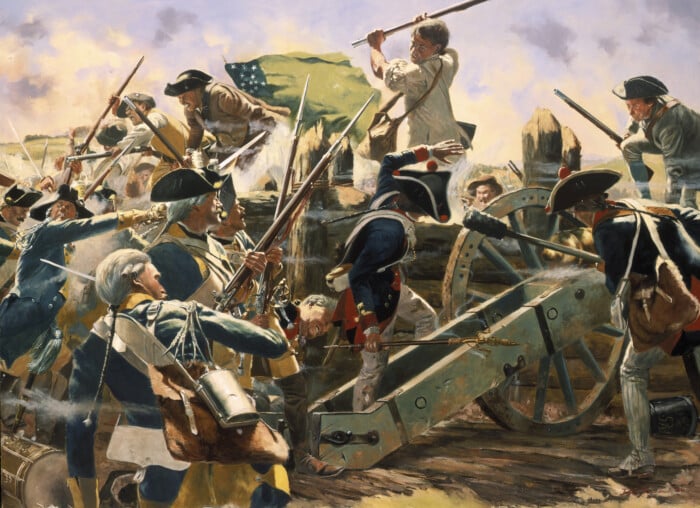
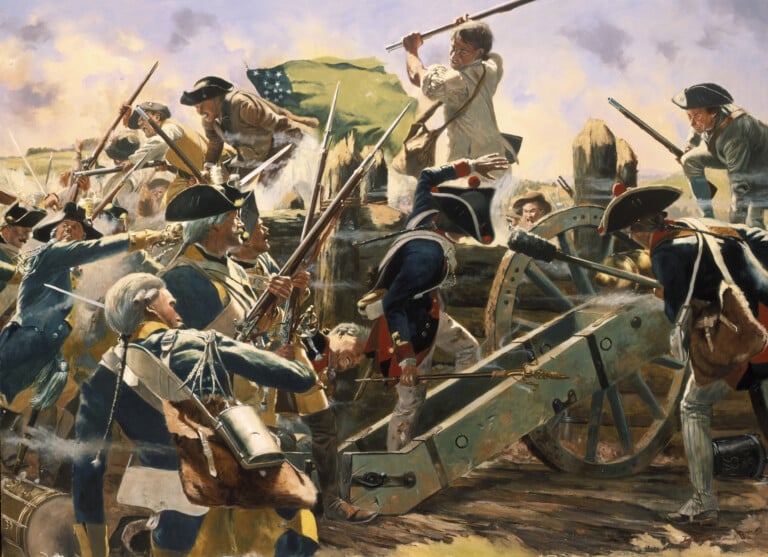
By the morning, they’d rallied around 500 volunteers and the mob descended upon the fort. Opposing them was Capt. John Cochran and five British soldiers. “Great numbers assembled every side of the fort and in an instant the signal was given for storming. Whereupon I ordered the men to fire,” Cochran later wrote.
The first British volley struck no one. They had no time for a second. The Patriots swarmed the ramparts and disarmed the soldiers. They then ransacked the fort, tearing down the British flag and making off with barrels of gunpowder.
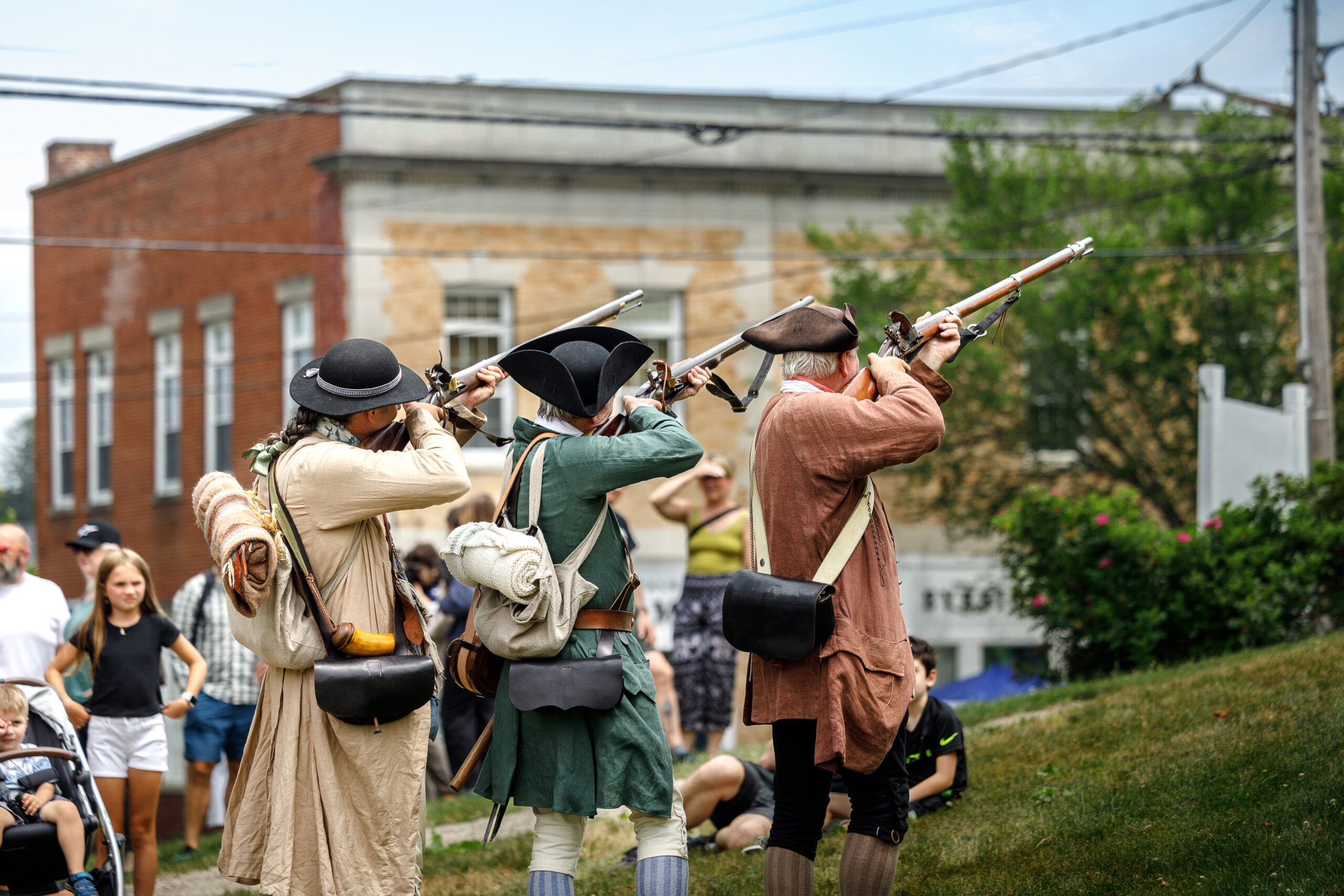
Photos courtesy visitnh.com
Though Langdon’s report identified many of his attackers, none faced any consequences. “No jail would hold them long and no jury would find them guilty,” wrote Royal Gov. John Wentworth, acknowledging how tenuous his hold on New Hampshire had become.
In August of 1775, Wentworth and the remaining British troops cut their losses and evacuated Portsmouth for the relative safety of Boston. Almost a year before the Declaration of Independence and just months into the Revolution, New Hampshire found itself effectively free without ever having fired a shot on its own soil. Through scrapping, brawling, disobedience and protest, the Granite State made itself too unruly for the British to hold onto.
Redcoats never again stepped foot in New Hampshire, but the war was far from over. Bearing the stolen powder from Fort William and Mary, New Hampshire soldiers marched south to fight at Bunker Hill and the Siege of Boston. Many joined Washington’s Continental Army and continued fighting across the colonies and into Canada. Others returned home and formed militias to defend New England.
In 1777, these men were called on to protect Vermont from the army of Gen. John Burgoyne. In just six days, Brig. Gen. John Stark raised nearly 1,500 men from across the state, a figure representing roughly one-tenth of New Hampshire’s adult male population. The hastily assembled army met the British at the Battle of Bennington and dealt them a stinging strategic defeat.
In Portsmouth, New Hampshire’s now liberated trees were crafted into one of the first ships of the U.S. Navy. The construction of the USS Raleigh, a 32-gun frigate, is still depicted on New Hampshire’s flag. The standard born by the Raleigh when it first took sail was far simpler, though. The words “An Appeal To Heaven,” a reference to the right to revolution, were printed across the top.
Below them was a single, defiant pine tree.
As the country celebrates its 250th anniversary, those wanting to connect with Revolutionary history have many sites they could visit. A simple memorial in Weare marks the site of the Pine Tree Riot. The John Paul Jones House in Portsmouth tells the story of the USS Raleigh, and, in New Castle, you can tour the site of Fort William and Mary (now known as Fort Constitution).
But it might be best to travel to Exeter. While no battle was fought here, it was home to perhaps the most revolutionary act of the war. On Jan. 5, 1776, a delegation of representatives ratified a new state constitution here. New Hampshire was the first former colony to take the step of scrapping their royal charter and crafting a new government by, for, and of the people.
This is one of the stories celebrated at the American Independence Center in Exeter. “Independence is a bigger story than just how it started,” says Joe Pace, executive director of the center. The exhibits examine how freedoms in the country have evolved over time and encourage visitors to imagine what role they could play in carrying the democratic experiment forward.
With town meetings and the largest legislative body of any state, there are countless ways to take your place in our never-ending revolution. “The story isn’t over,” Pace says, “and you’re a part of it.”