60 Years of Appledore Adventure
The Shoals Marine Lab turns 60 this summer
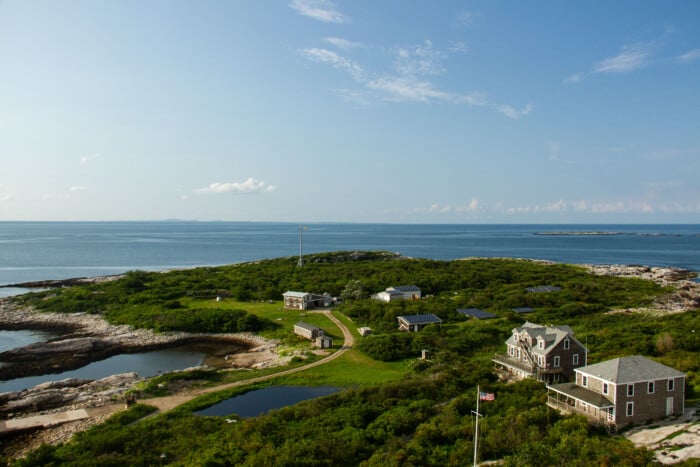
A small chain of islands dots the horizon as you stand on the Rye coast looking out onto the vast sea. From the shore, you wouldn’t be able to tell that there’s much going on out there. But get a little closer and you’ll see that the Isles of Shoals come alive every summer.
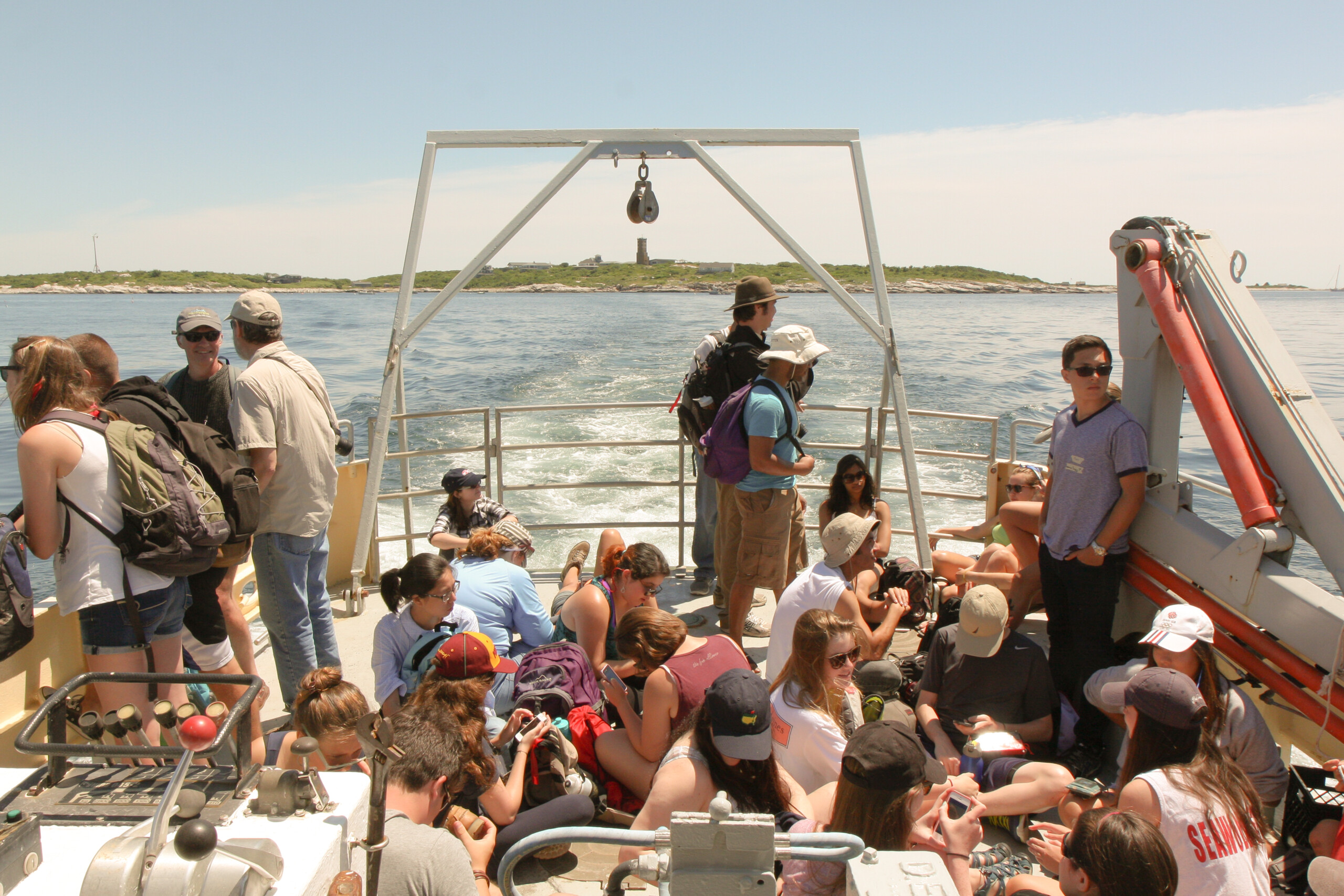
A group of students aboard the R/V John M Kingsbury, one of the Shoals Marine Laboratory’s boats,
in 2014.
One island, Appledore, is home to two iconic landmarks — the Celia Thaxter Garden and the Shoals Marine Laboratory, which is celebrating its 60th anniversary this year. The Marine Lab is jointly run by the University of New Hampshire and Cornell University.
Every year, undergraduate students from both schools and community members have the opportunity to live and learn on the island while participating in summer programs. Between students, artists and garden enthusiasts, the island is a hub of activity and acts as an annual homing beacon for creatives and scientists alike. There’s just something about the island that keeps people coming back year after year.
“It’s the community,” said Shoals Marine Lab Executive Director Sara Morris, a Cornell alum who has come to Appledore every summer since 1990. “There’s a specialness to the island, and a wildness.”
Typically, the island is home to about 80 people at any given time, between pro-gram participants, staff and volunteers. Meals are a community event, where everyone on the island gathers to enjoy delicious fresh food and each other’s company in the dining hall.
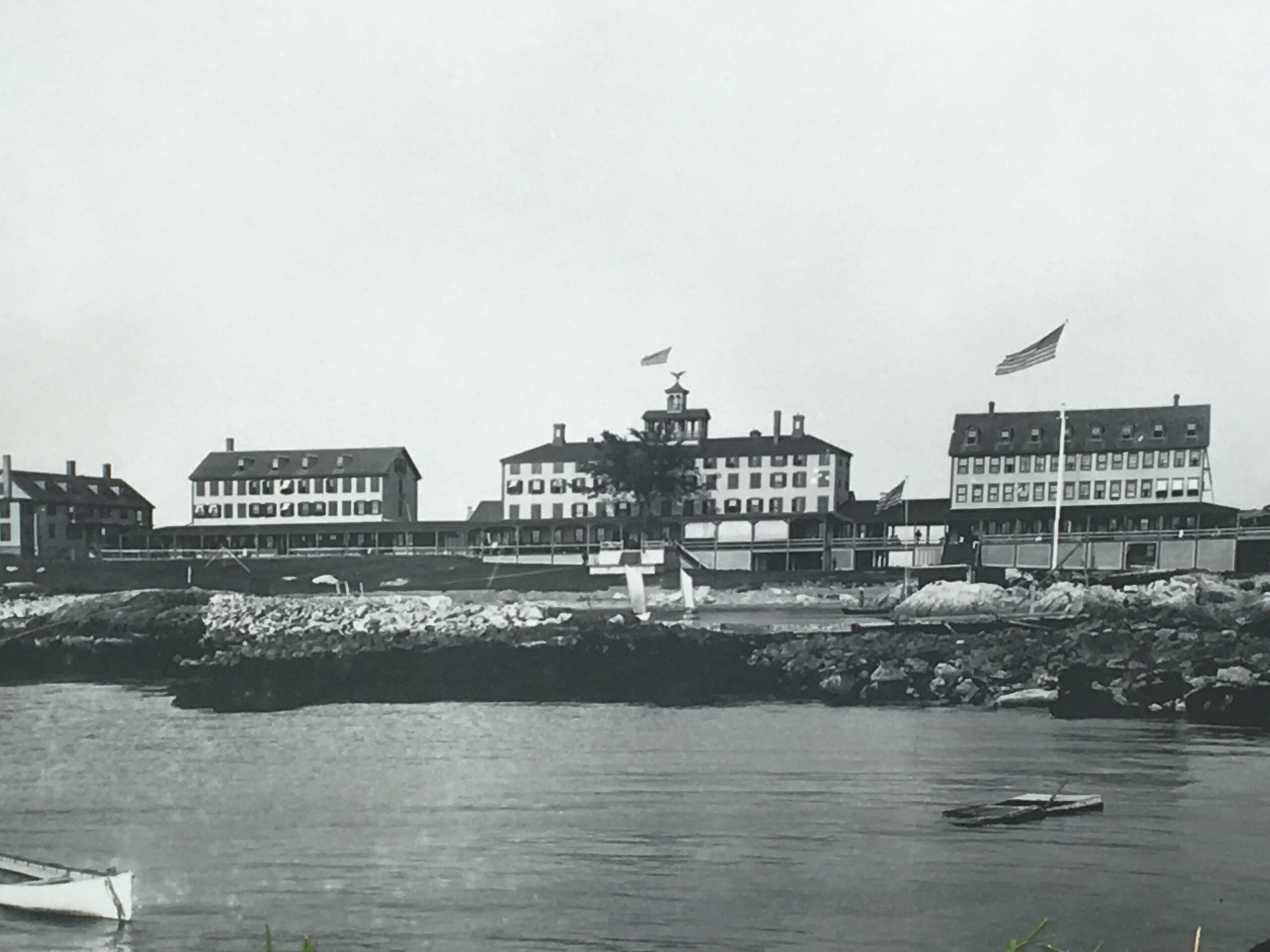
In the 1800s, Appledore Island was a major tourist destination.
On Mondays, when new people arrive to Appledore, everyone already on the island forms a fire line to unload their luggage from the boat. The process is repeated on Wednesday, when another boat arrives with food. The isolation of being on Appledore, even if it’s only for a week, creates a close-knit community among islanders.
“We really understand that we are there and part of this community that relies on one another,” Morris said. “Even in this digital age, people will sit and watch the sunset. That sense of community rebuilds every summer and essentially every week throughout the summer. Even now, 60 years later, that is part of the specialness of the island.”
That “specialness” is felt by anyone who’s spent time on Appledore.
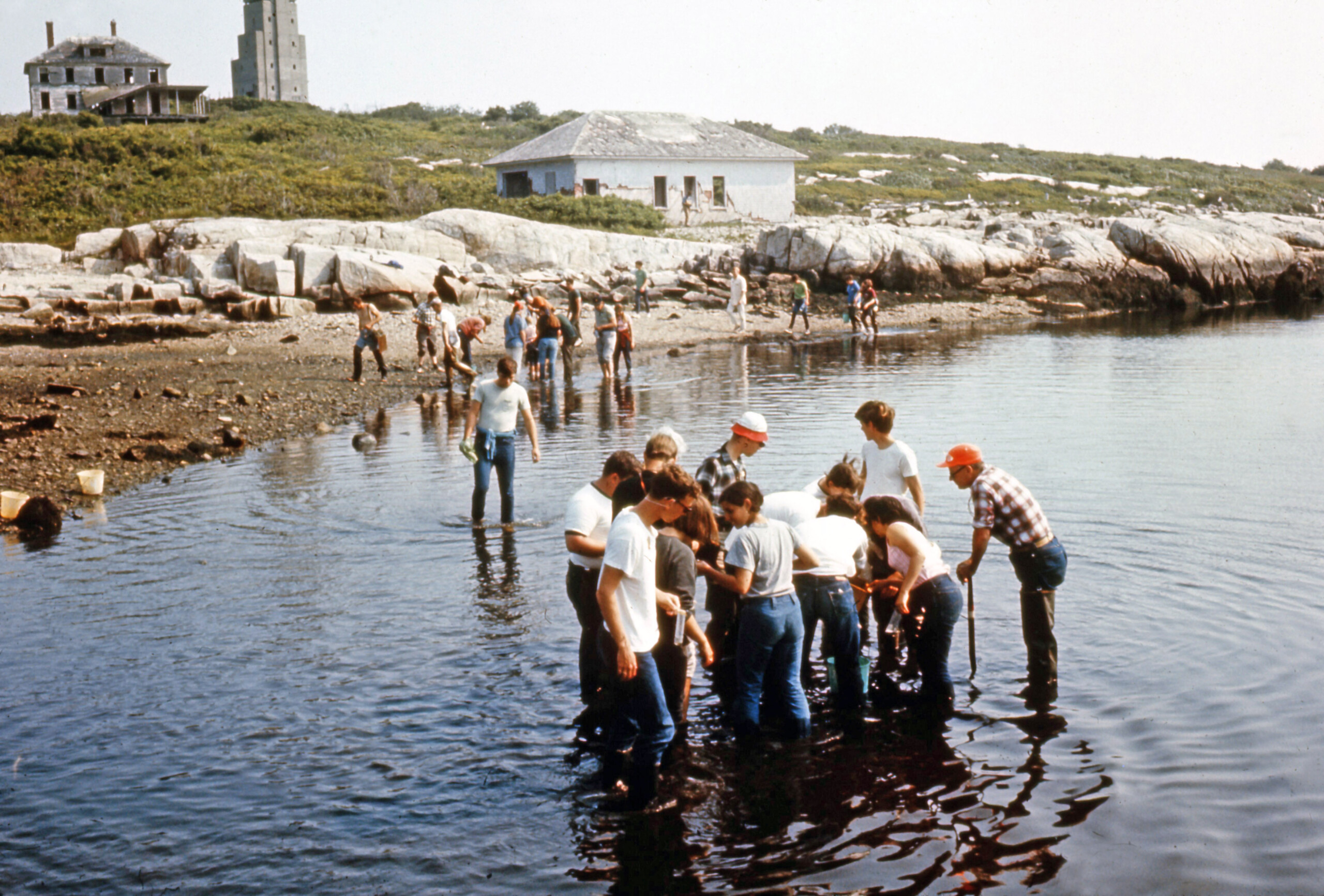
An early group of students from 1969 exploring the tide pool and its ecosystems.
“You can do the best teaching (here),” said Professor Jessica Bolker, who has taught at the lab every summer for the last 18 years. “It’s individual and interactive, and the students get hands-on, real experience learning how to do their own science, which sets them up for success.”
Most of the Marine Lab’s programs are geared toward UNH and Cornell undergrads and incoming freshmen, like Bolker’s Marine Immersion class. As the summer winds down, public programming begins with art programs like the popular Seascapes and Landscapes class, photography classes, Celia Thaxter Garden tours, high school overnight trips and more.
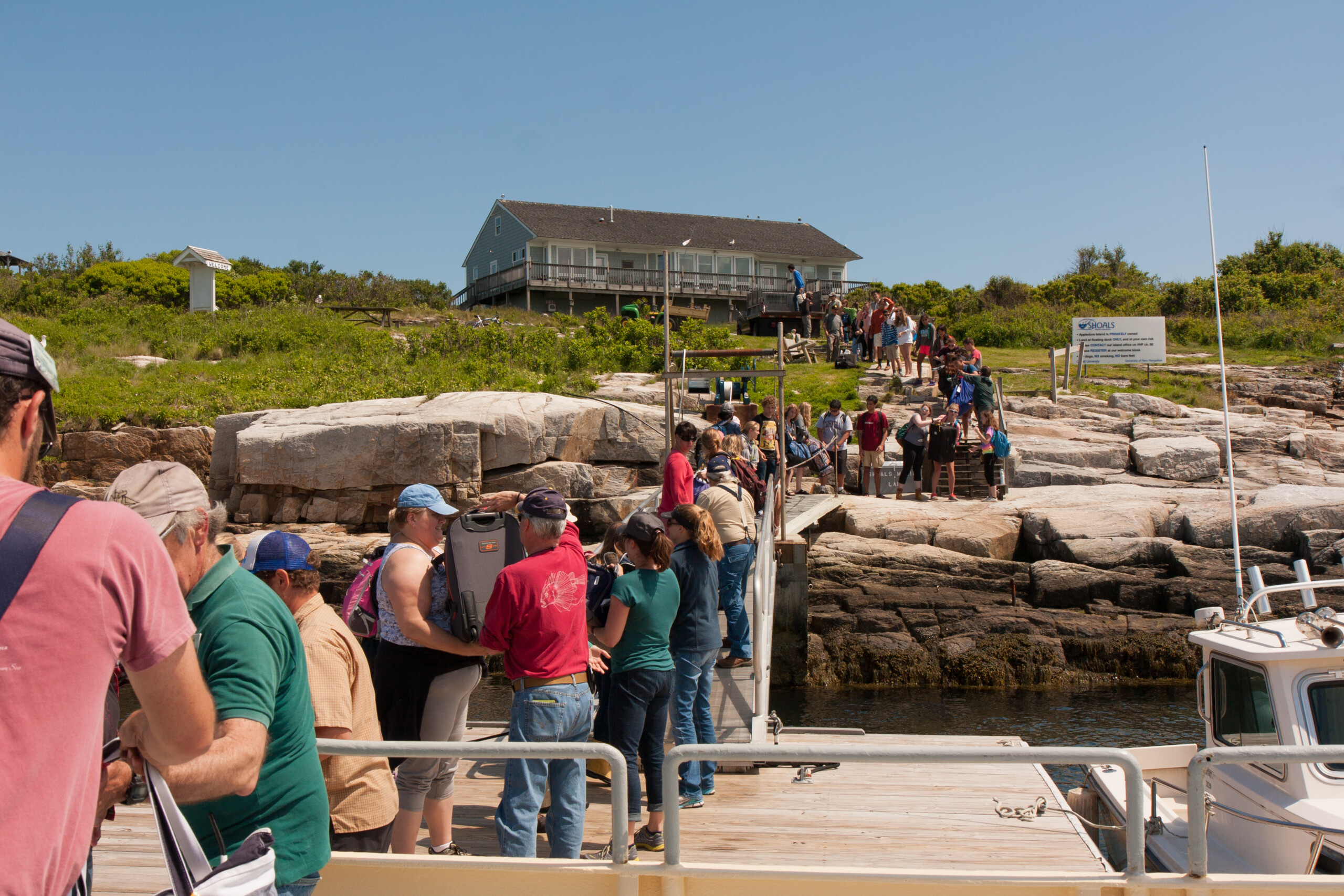
Human chains are a way of life to help carry everything on and off Appledore Island including food and supplies.
“The SML is a marvelous environment,” said Bill Paarlberg, one of last summer’s Artists in Residence who taught the Seascapes and Landscapes class.
He agreed that there was something special about the island, and for him it’s the diversity of the community and the minds the island brings together.
“At lunch, you’re surrounded by people,” Paarlberg said. “There are random Ph.D.s, and you get to talk about the oatmeal or the news of the day. (There are) brilliant minds, and it’s incredibly stimulating.”
While there is no specific anniversary event planned for this summer (there was a Marine Lab “alumni” reunion held in the fall where everyone who has participated in any program was invited to Appledore to celebrate), the lab will be rolling out two new programs that celebrate all they have to offer.
The first is the Sustainability Tour, a walking tour of the island’s remarkable sustainable practices.
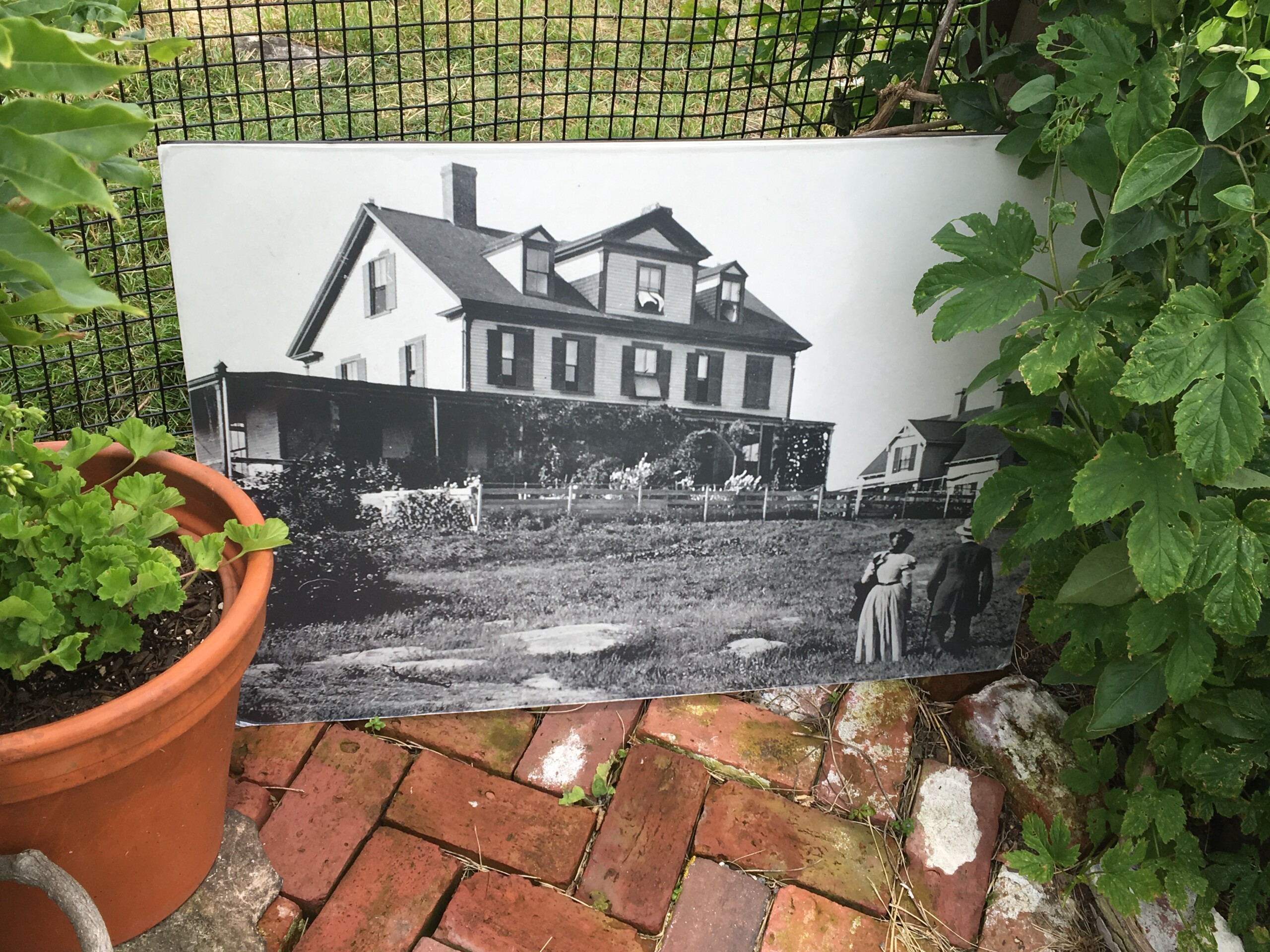
This cottage on Appledore Island is where writer Celia Thaxter would hold salons, which attracted and inspired many well-known artists,
musicians and writers like Ralph Waldo Emerson, Henry Wadsworth Longfellow, Nathaniel Hawthorne and impressionist painter Childe Hassam.
“We work entirely on solar,” Morris said. “And we’re able to balance production of water with usage of electricity.”
Last year, the lab’s generators, which are run using solar power with diesel as a backup, only used 170 gallons of diesel for the entire four-month season, compared to the pre-solar days in 2007, where the generators ran the island on 9,361 gallons of diesel.
They’ve even been able to reduce the amount of water the bathrooms need, from about 1½ gallons to 6 ounces.
“Our hope (with the walking tour) is that people take some of what we talk about back to the mainland,” Morris said. “We’ve seen that our very explicit discussion of conservation of water … is something that many of our students take back to their own personal lives, and see how individual actions can have collective results.”
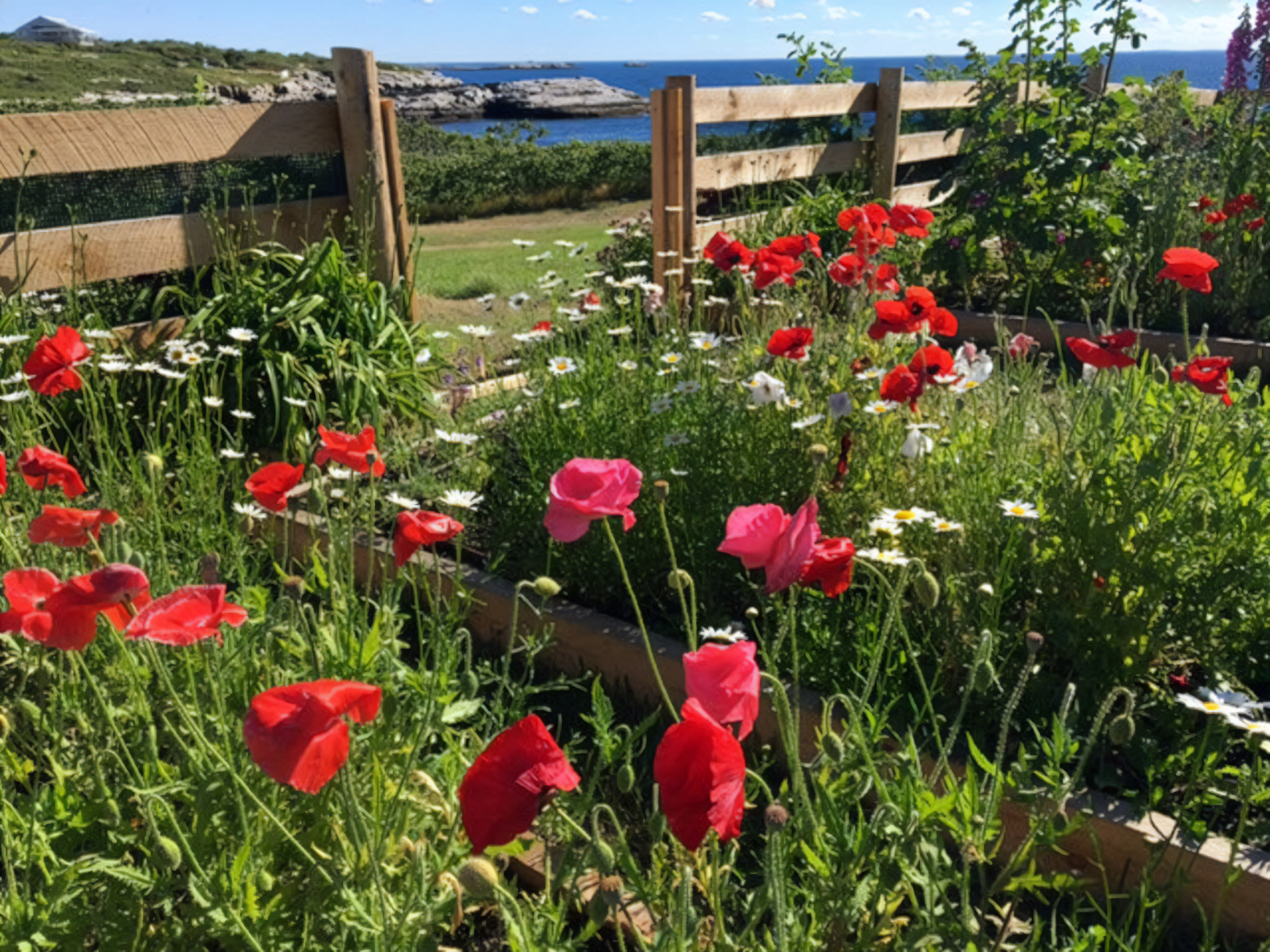
The garden of writer and poet Celia Thaxter is bursting with color from bright blooming poppies, Thaxter’s favorite. Photo Courtesy / Robbin Ray / UNH
Morris is particularly excited about the second new program, the Taste of Appledore. In this two-day program, participants will learn about the island’s sustainability efforts, tour the Celia Thaxter Garden, learn about the migration research at the lab, go fishing with Cornell faculty (and fillet what they catch), stargaze with John Gianforte, the director of the UNH Observatory, enjoy meals prepared by chefs Sam Hayward (who got his start by cooking on Appledore) and Black Trumpet owner Evan Mallett, and much more. The program is essentially a charcuterie board of the marine lab.
Going into this milestone year, Morris really wants to give the community the opportunity to experience the magic of the island.
“The best part of the year is being able to share the island with people who have never seen it before,” Morris said. “There’s so much excitement. I literally started a countdown timer when we moved out last September for when we move back this year. It’s absolutely infectious and wonderful.”
For more information on the Shoals Marine Lab, visit shoalsmarinelaboratory.org