Spotlight on Rising Changemakers: Jason Bonilla
Profiles of New Hampshire leaders who are lifting up diverse voices in the Granite State and beyond
Since this magazine’s launch in the fall of 2021, it’s been 603 Diversity’s mission to share stories so that the people of New Hampshire could get to know their neighbors better, especially those who may be newer to the state or whose lives are underrepresented in other media. That goal continues to guide our work today.
Recently, we reached out to past sources, frequent contributors and editorial board members to seek out people who are making a difference in diversity spaces of New Hampshire and who’ve not been in this publication before. What we received were the names of dozens of people who are entrepreneurs, advocates, artists and community builders who are creating spaces where people feel seen, supported and valued.
In this issue, we will highlight six of these “Rising Changemakers,” but you can expect even more in issues to come. If you know of someone who deserves some spotlight, please email us at editors@603diversity.com.

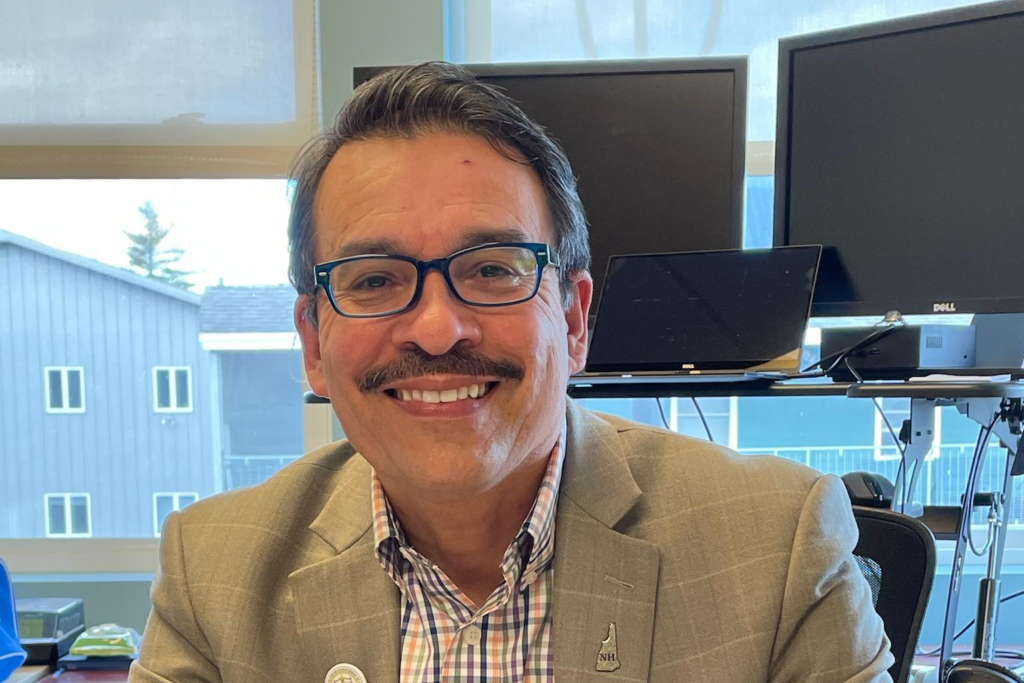
Jason Bonilla
City: Manchester
Passion areas: Jason Bonilla is an advocate, a tireless community builder, the director of Equity Leaders Fellowship Program and, as of Jan. 6, the Alderman for Ward 5 in Manchester.
Q: When did you start to adjust your own growth and professional drivers towards one of engagement and service?
Jason Bonilla: I knew there were disparities in my Massachusetts school system when I was in my teens and those impacts on students, even though I was in my own bubble. At 21, I realized I needed to get my life together. I was born in this country speaking two languages, and I started to get involved in my community. I knew being bilingual could be used as a tool for translation and interpretation services. Then, at 24, I started with City Year/AmeriCorps; that changed everything.
City Year was founded in 1988 as a national service program uniting young adults for full-time community service. Then, it evolved from neighborhood beautification to its current focus on supporting students as mentors, and supporting them in attendance, behavior and coursework. I made the choice to go into a more formal service model. You receive a modest stipend and an honorarium when you complete the program. I lacked discipline at this time, and I felt like I had a greater purpose.
Q: Most people would go into the military when they have this mindset — why
didn’t you?
Jason Bonilla: My mom didn’t want me to go to the military. She was too scared that I wouldn’t come back, but I really did try to get into the military at the time. She coordinated an intervention and cried, so in the end, I went to serve with AmeriCorps because of the needs of people like my younger brother. I wanted to work towards uplifting the youth. I wore the Red Jacket they give you, and I realized my experience as a bilingual person is very similar to the youth I was integrating with. I started thinking, ‘wow, nothing has really changed since my time in school. How can I work to change these cycles of inequity, to make sure they don’t continue?’
Q: What are these systemic issues that you experienced and saw that the younger generations were dealing with?
Jason Bonilla: Lack of resources or support for students who were just getting into the country and integrating those students into the general classroom settings, as opposed to separating them. For me, when you keep people separated, you are isolating them. You also didn’t see a lot of educators who spoke the language of these young people, which is a detriment to their education. There was even a lack of male role models for these children.
As a City Year AmeriCorps member, I was still one of two male role models in the school where we were in service. The students migrated towards me because I had a similar background and spoke their language. Understanding that a student who was constantly late to school — was late because they were the oldest and had to take care of their younger siblings, for example — was integral in understanding how to best address their needs. So I became an advocate and could act as a liaison between the guardians/parents and the institutions and educators.
Then I applied for another year of service with City Year in D.C. during Obama’s last year as president.
Q: And at that time, what was your financial situation?
Jason Bonilla: I was on a modest stipend, food stamps and qualified for Section 8 housing. This is when I realized that, as soon as you don’t submit paperwork to local governing bodies, your essential services get cut off. Imagine if I spoke no English during these times of high need.
Thankfully, D.C. was a very effective city in regard to public transportation, and City Year also provided us with a pass to get around the year. So I worked two jobs: I served with City Year and worked retail afterwards.
Q: What was your role in the D.C. assignment?
Jason Bonilla: My role in D.C. was to lead a group of first-year AmeriCorps members into their first year of service. Leading my team, but also illuminating to these first years how to enhance their engagement with the schools they were stationed in, helping students succeed towards their graduation, helping with increasing attendance and ensuring my team members were on top of their goals.
Q: I am curious how you got to Manchester.
Jason Bonilla: After City Year, I was able to get my first nine-to-five job in 2017, which was a huge deal because you could never get a job back then without a college degree. My job was to engage young people across New England to be interested in doing service with City Year. They told me there was this place called Manchester. All I really knew was that I wanted to stay with City Year after my years of service, so I took the job. My name had been mentioned to members of the recruitment team, and they had heard of the work I had done. I then got a call, met up with the director, and the next thing I knew, I am interviewing for the position, and I was in! Within two weeks, I had relocated.
Q: You and I met through the Equity Leaders Fellowship (ELF), leading members of our community into the broader network of collaborative community-building models. Is ELF singular, or is it based on a national model?
Jason Bonilla: I started my role at ELF in 2022. It’s a New Hampshire program founded in 2014 after community members demanded to enhance the representation of leadership of color in the state. In response, a group of experienced leaders of color came together and created ELF.
Q: I know from my cohort alone, the 11th group, many of us have been placed on boards throughout the state, and I am now serving on the board of BLM NH. Without ELF, these opportunities would be much more difficult to access. You recently won your race for the Ward 5 Alderman seat in Manchester. How did you manage running for office in the current political climate?
Jason Bonilla: Well, the wildest occurrences will take place when you run. You cannot feed the toxic narratives that you will face in your run. The internet and social media, especially, can be very ugly places, in addition to the benefits of democratizing narratives. There will always be upset people who will try to dehumanize you for the color of your skin or even for the languages you speak. The most important thing, however, is to continue to listen to your community, no matter if they voted for you or not. I have always been honest with my constituents. I told the truth no matter what.
Q: So, what keeps you going?
Jason Bonilla: I am still coming to terms with the fact that we won our election. I am still reflecting, and I am focusing on rest. Running a campaign is exhausting. We ran the campaign ourselves instead of taking a playbook from partisan elections and superimposing it into our campaign. What I did instead of recruiting a team that uses the same old playbook is create a team of people from the community, with people who could change the normal way campaigns are coordinated in New Hampshire. I hired a group of folks who helped with campaign aspects like verbiage, canvassing, strategic planning, graphics and revenue development. What I want to show our state is that just your simple passion to love and give back to our state is more than enough. And that you, as an individual, are more than qualified to serve and run for office. I really want people to understand that you can look like me and do this job: serve our communities, no matter what others have told you to the contrary.