Specialized Support for the Deaf and Hard-of-Hearing
Greater Nashua Mental Health offers services in sign language
Editor’s Note: On Feb. 2, after this issue of 603 Diversity was printed, Greater Nashua Mental Health’s office at 440 Amherst St., Nashua, was destroyed in a fire. Patients and staff were evacuated safely. Cynthia Whittaker, CEO of GNMH, said patients seeking to schedule an appointment with a member of the Deaf Services team may call their videophone at 603-718-3091. If needed, you may also walk into GNMH’s temporary admission office at 5 Pine St Ext in Nashua. Call GNMH’s main line at 603-889-6147 with any other questions.”

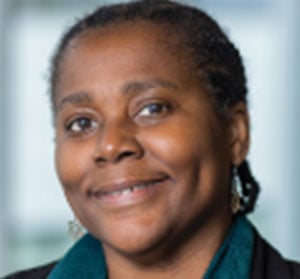
Dr. Cynthia L. Whitaker joined the Deaf Services Program at Greater Nashua Mental Health as its director 19 years ago and became CEO of the center in 2020.
Greater Nashua Mental Health (GNMH) is home to New Hampshire’s only team specializing in mental health and substance use care for individuals who are Deaf and Hard-of-hearing.
The Deaf Services Program was started in 1995. Before this, there were virtually no linguistically appropriate counseling services available in New Hampshire.
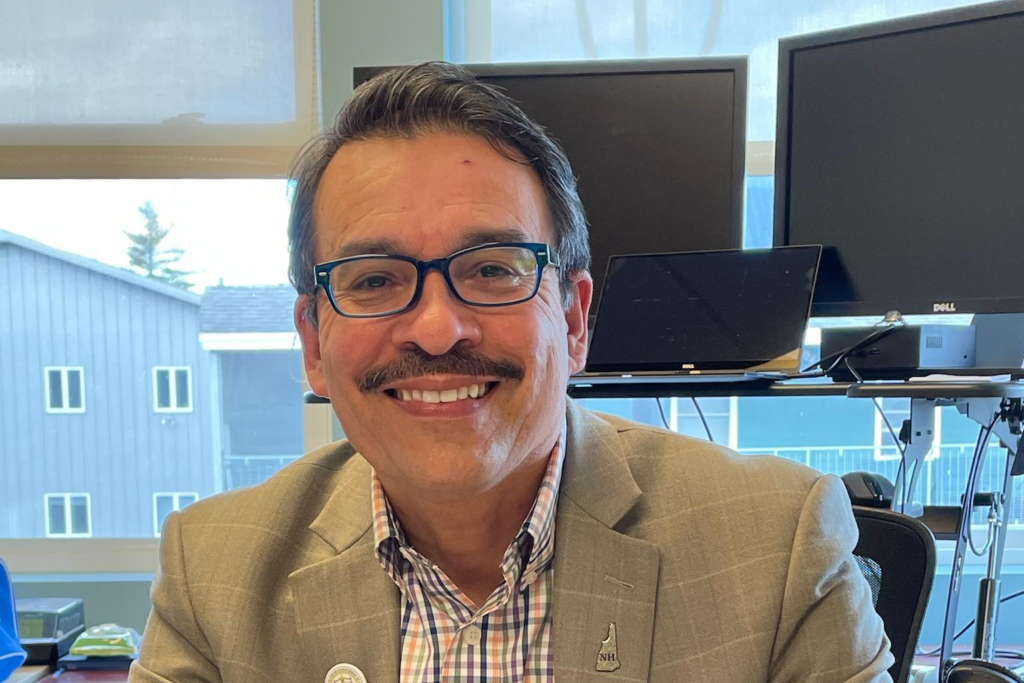
Dr. Cynthia Whitaker joined the team as its director 19 years ago. Then there was a small team of a therapist and a case manager. The team now includes director Adam Lemay, LICSW, a team of therapists, a case manager, and a supported employment specialist, Greg Quirion.
Whitaker is currently the CEO of GNMH. All the staff in the program are Deaf except for Whitaker and an American Sign Language interpreter.
Three experiences early in life led Whitaker to learn ASL at the age of 5.
“I was introduced to sign language at the age of 5, because an organization that my parents belonged to, the Grange, had a relationship with the Rhode Island School for the Deaf and promoted Deaf awareness in all kinds of ways, including basic sign language classes and contests for kids that I was part of starting at the age of 5,” Whitaker said.
“As I was growing up, my uncle married an interpreter/social worker who worked with the Deaf community — their wedding included Deaf guests and was interpreted. My boyfriend, when I was a teenager (now my husband), also had an uncle who married a sign language interpreter.”
When Whitaker attended college, she double-majored in psychology and speech and hearing sciences, taking formal ASL classes and interacting even more with the Deaf community.

The Deaf Services team at Greater Nashua Mental Health, left to right: Greg Quirion, supported employment specialist; Adam Lemay, director of deaf services and language access; Amy McCollom, therapist (on the screen); Michelle Woodruff, case manager; Lauranna Turano, therapist; Gwen Tyrie, therapist; and Michaela Borstel, therapist.
“Upon graduation, I worked at a local psychiatric hospital. One day, a Deaf patient came in (this was before the passage of the ADA). There were no interpreters, so with only a B.A. in psychology, I ended up asking all the assessment questions and working with the psychiatrist to ensure she could get admitted,” Whitaker said. “I was off for the next few days, and when I returned, she came to me grateful to see me again and crying about not being understood, having had been given an injection of medication against her wishes, and unsure what to do.”
Two things happened as a result. Whitaker didn’t take another day off for the remainder of the patient’s admission. And she decided she would apply to doctoral programs and work to improve access to mental health care for the Deaf community.
“I was accepted into the Clinical Psychology PsyD program at Antioch University in Keene, NH, and I also enrolled in a sign language interpreting program at the University of New Hampshire to improve my fluency and understanding further. My dissertation was on interpreting in mental health settings, and the rest, as they say, is history,” she said.
“Within five months of my official graduation with my doctorate, I joined GNMH as the director of our Deaf Services Program, which I called my ‘dream job,’ a role I held for almost four years before taking on larger and larger leadership roles, and ultimately becoming the CEO in 2020.”
There is a small percentage of the population in New Hampshire who are Deaf. GNMH saw about 75 clients in 2025.
Lauranna Turano, MSW, said a lot of the clients she sees are depressed and have language deprivation.
“I see clients from a whole age spectrum, from children to senior citizens,” she said during a Zoom interview through an interpreter for this story.
“There is a lot of trauma and anxiety from children who can’t communicate with their parents, people who struggle with ASL and the English language in reading and writing. There is a feeling of discrimination. It’s interesting to have a Deaf Service Team. We know their experiences, as well as Audism. We help support them and are a role model to provide support until they thrive.”
Audism refers to the discrimination or prejudice against individuals who are Deaf or Hard-of-hearing. This discrimination can manifest in various forms, including the belief that hearing individuals are superior to Deaf individuals, the systemic exclusion of Deaf people from social, educational or employment opportunities, and the imposition of hearing-centric norms and practices without consideration for Deaf culture and communication preferences.
Greg Quirion, supported employment specialist for the program, agreed with Turano. He, too, is Deaf, and joined the Zoom meeting for this story.

Holly Rioux, LICSW, previous director of Deaf Services at Greater Nashua Mental Health, and Adam Lemay, LICSW, current director of Deaf Services at GNMH. Rioux is now with the NH Office of Health Equity.
“We help our clients support navigating everyday life at home and in school where they keep being told, ‘you can’t, you can’t.’ We help our clients navigate the hearing world and inspire them to become more independent,” he said. “This newest service we added has so much success with us serving as role models.”
There are 10 centers for mental health throughout the state that GNMH partners with for services, including the Deaf Service Program. They offer telehealth sessions and intake meetings at other mental health centers around the state.
Turano and the other social workers at GNMH collaborate with Quirion to provide treatment services, while also acting as role models of successful Deaf people for their clients.
“One concept of being a role model is to show clients how to respond to someone who is yelling without overreacting,” Turano said. “To be collaborative instead of depending on emotions. Our clients have different treatment schedules depending on their needs.”
Quirion said he tries to meet weekly with different clients to motivate them to look for employment. He prefers to meet them in person to see what their environment is like and to understand more about them — if they are an immigrant or have a language barrier.
Whitaker said that, just as other communities are becoming more diverse, the Deaf community has also seen an increase in individuals immigrating who are Deaf, many of whom are not fluent in ASL. When they come to GNMH for treatment, the team works to break down language barriers by working with other interpreters who are fluent in other signed or spoken languages.
The Deaf Service Program is trained in evidence-based practices, including play therapy, Dialectical Behavior Therapy, and others, that allow them to effectively support youth, adults and families. A psychiatrist dedicated to the team is experienced in working with interpreters and Deaf clients. The team can accommodate various preferred communication modalities and tailor services to meet the unique needs of the Deaf and Hard-of-hearing community.
For more information about this program, visit gnmhc.org