Community Gardens Help Us Grow Together
Community gardens cultivate food and sense of belonging, while connecting people to the land
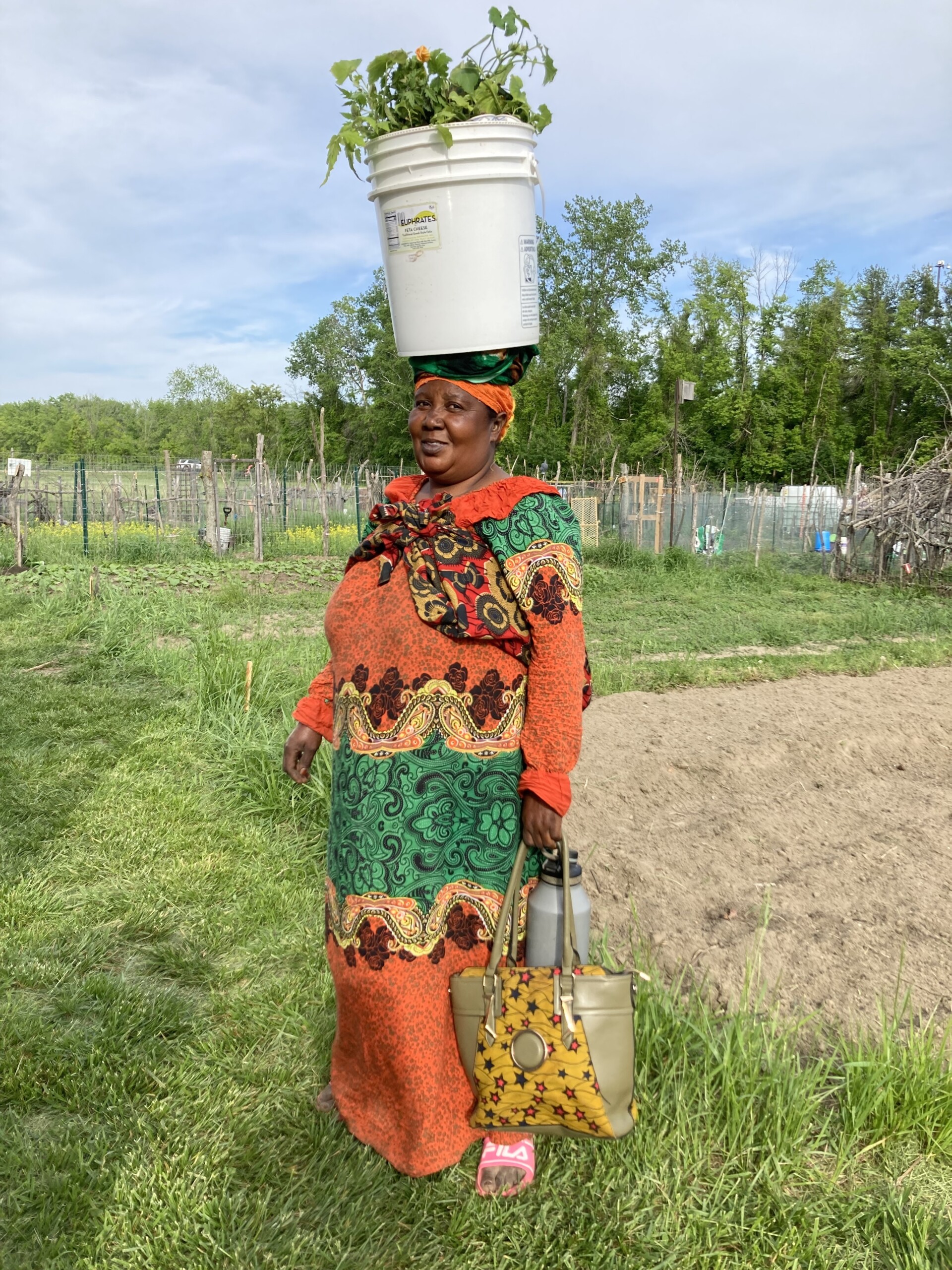
A member at Sycamore Gardens in Concord carries a bucket of plants as she leaves for the day. Courtesy Photos
When the mayor of Detroit kickstarted the first official community gardens in the United States in the 1890s, the idea that one might need to go out of their way to touch grass every day would have seemed absurd.
Organizers formed those early communal plots — the “victory gardens” that sprouted in vacant city lots and saw booms in popularity each time there was a World War — with the goal of supporting a population struggling with economic recessions.
In 2026, New Hampshire’s community garden scene is quite robust, particularly in larger cities where people are less likely to own land where they could raise plants. Exactly how each one works varies (for instance, some are free to join, others charge a small fee; some provide plants or seeds and others provide gardening education), but the general idea is that community members who sign up will get their own little plot to care for throughout the growing season.
These organizations have the primary goal of increasing access to fresh food. “Our mission is all about connecting folks to the land, their food and each other,” says Melissa Grella, founder and executive director at Taproot, which runs the Lancaster Community Garden.
In addition to the plots that members can rent out each summer to grow their own crops, Taproot dedicates six beds to growing food for the organization’s food pantry. Grow Nashua has a community garden, and runs the Little Free Farm Stand, which the group fills with extra produce donated by local gardeners and farms.
Even if you do have the space to grow at home, community gardens can be a valuable resource for anyone whose green thumb is looking a bit dull. Grella keeps a plot at the Lancaster garden specifically to be used as an education bed, and brings in outside farmers to teach workshops. The Sycamore Community Garden in Concord is currently working with the USCA Farm Service Agency to teach members about cover cropping every fall, Ruth Heath, the board president, says.

There are 37 plots at Lancaster Community Garden, which is in its 15th growing year.
On top of all the fresh fruits and veggies, there’s arguably an even bigger focus on growing community. For starters, finding a buddy is crucial to success when the garden isn’t right in your backyard. “If you miss a week of watering, your plants are dead, and that’s pretty much the end of your season,” Justin Monroe, a co-founder of Grow Nashua, says. Buddies can chip in when the other person is on vacation or has to pick up extra shifts at work.
While these gardens are open to all, both Grow Nashua’s community garden and Sycamore Community Garden were started to support new-to-America families, particularly refugees and immigrants who’ve recently landed in the Granite State.
“(My wife and I) were like, ‘Oh, I wonder what I would do if I was stuck in another country, and I had to work two jobs and I lived in the inner city and I couldn’t grow the vegetables that I wanted to grow for my family recipes?’” Monroe recalls. He started asking people he’d meet while volunteering if they’d be interested in a free place to grow some food. “People kept saying yes,” Monroe says.
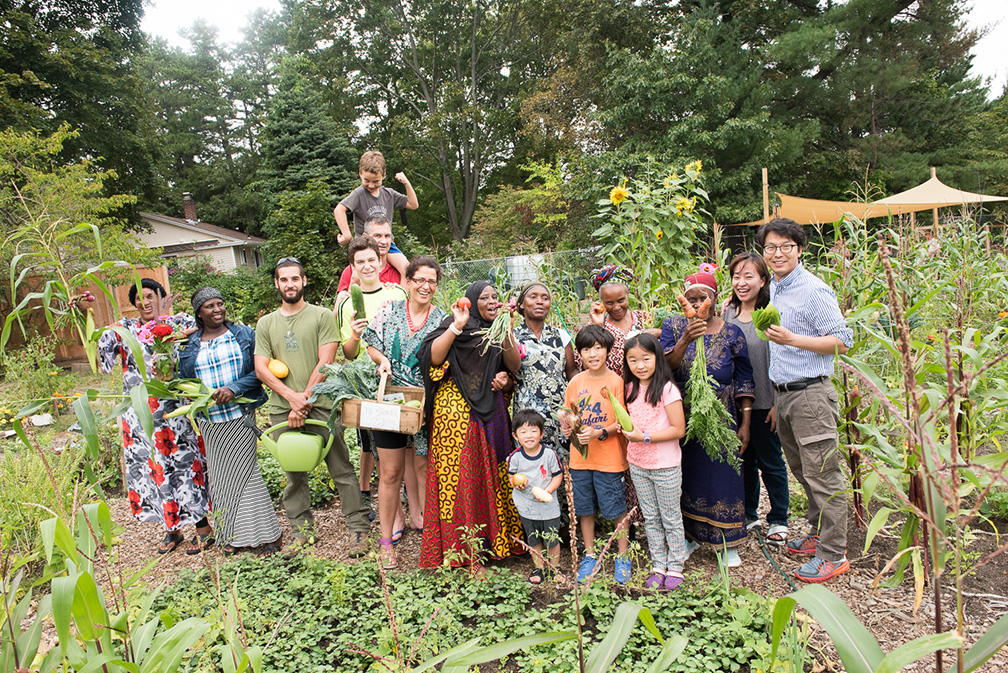
Members gather outside one of Grow Nashua’s community growing spaces.
The low barrier to entry (Grow Nashua’s gardens are free; Sycamore and Lancaster both charge $20 to reserve a plot) means these plots can become third spaces for people from many parts of the local community. “One of our secondary missions is to provide a cross-cultural experience so there’s more cross-cultural understanding,” Heath says. “It’s nice to get (other members of the community) sprinkled in there with the refugee and immigrant population.” She says that for the past three years, they’ve been successfully integrating interested gardeners onto the board so they can be involved in the group’s policy- and decision-making.
Monroe seconds this sentiment. “The garden is really just a tool to connect with families,” he says. “Once families are connected with us, (we ask) ‘How can we better care for this family? What else can we do that would help them? How can we get their voice heard?’” Monroe says.
Grow Nashua uses Palabras Consulting, a local translation company, to ensure their documentation is in a language families can understand. The organization passes out fliers for other programs — like childcare or fuel assistance — that their members might need. And Monroe says bringing in members across the income spectrum helps open doors for new Americans who might otherwise have had a harder getting through.
“If your circle and your network only is working at low-income jobs, then that is often the circle that you’ll end up stuck in,” he says. “Grow Nashua provides a foundation for the gardens and we provide the seeds, but then all that happens beyond that is up to the people that are gardening.”
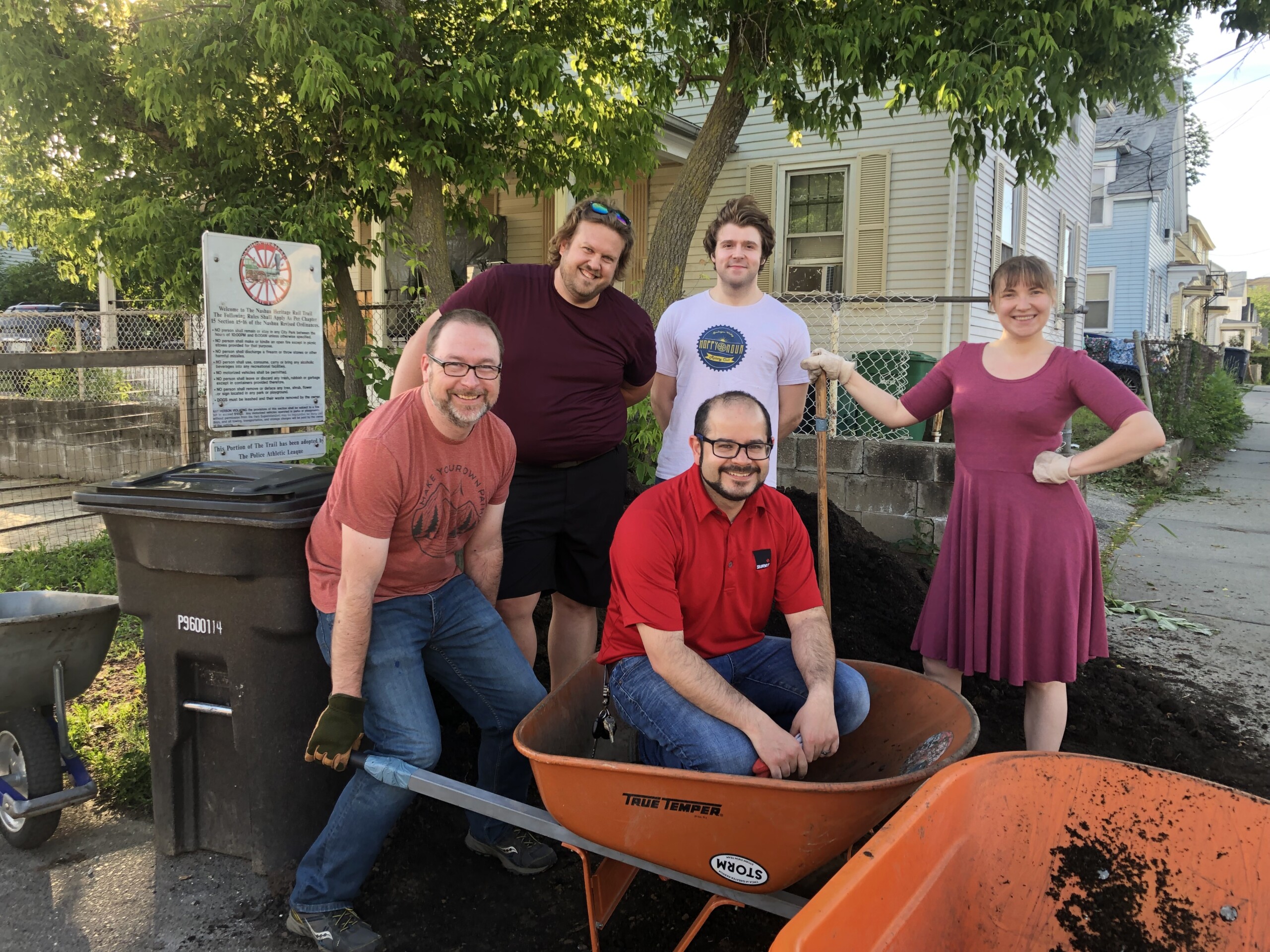
Garden plots are maintained with the help of members and local volunteers. Courtesy Photos
The desire for more third spaces (particularly ones that involve the aforementioned grass-touching) is only growing in our increasingly isolated, online age. If a community garden sounds appealing, all three mentioned in this story have volunteering opportunities that range from tending the gardens to doing fundraising and running educational programs.
Don’t live nearby? You may be able to start one in your own community. Grella found the space for the Lancaster gardens simply by wandering around town. When she’d see a plot that looked like a good spot for a garden, “I would go into the town clerk’s office and ask the tax collector, ‘Who owns this property?’” Then, she’d reach out and ask if they might be interested in donating the space.
If you’re going this route, the most important thing to keep in mind is access, both to the garden (“You don’t want it to be on the outskirts (of town) where everybody has to get in their car” to get there, Grella says, as most of her members bike or walk), and to water. When the Sycamore gardens first opened, members had to carry buckets from a nearby pond “through a poison ivy patch over a pallet bridge,” Heath says. Now, they have a solar-powered well pump that puts everyone in the 2-acre garden within 50 feet of a water source.
In keeping with the community-building theme, the people running these gardens are typically happy to help others get started. “Our logo is designed so that the city name can come off and another one can go on,” Monroe says. “People can just call me or email me, and I’ll help them.”
Community Gardens Near You
Monadnock Farm and Community Coalition • Monadnock Region • mfcommunitycoalition.org
Keene Community Garden Connections • Keene • antioch.edu
Ken Kasarian Community Garden Moultonborough • Facebook
Hanover Community Gardens • Hanover • hanovergardens.org
Sterns-Davis Community Garden • Amherst • Facebook
Dover Community Garden • Dover • dovercommunitygarden.wordpress.com
Tasker Hill Community Garden • Conway • grassrootsfund.org
Hampton Victory Garden • Hampton • hamptonnh.gov/393/The-Victory-Garden